Places to Visit in Pushkar (2026): Temples, Ghats and the Real Pushkar Beyond the Fair
A local guide to the best places to visit in Pushkar in 2026 with honest picks, timing tips and what to skip beyond the famous camel fair.
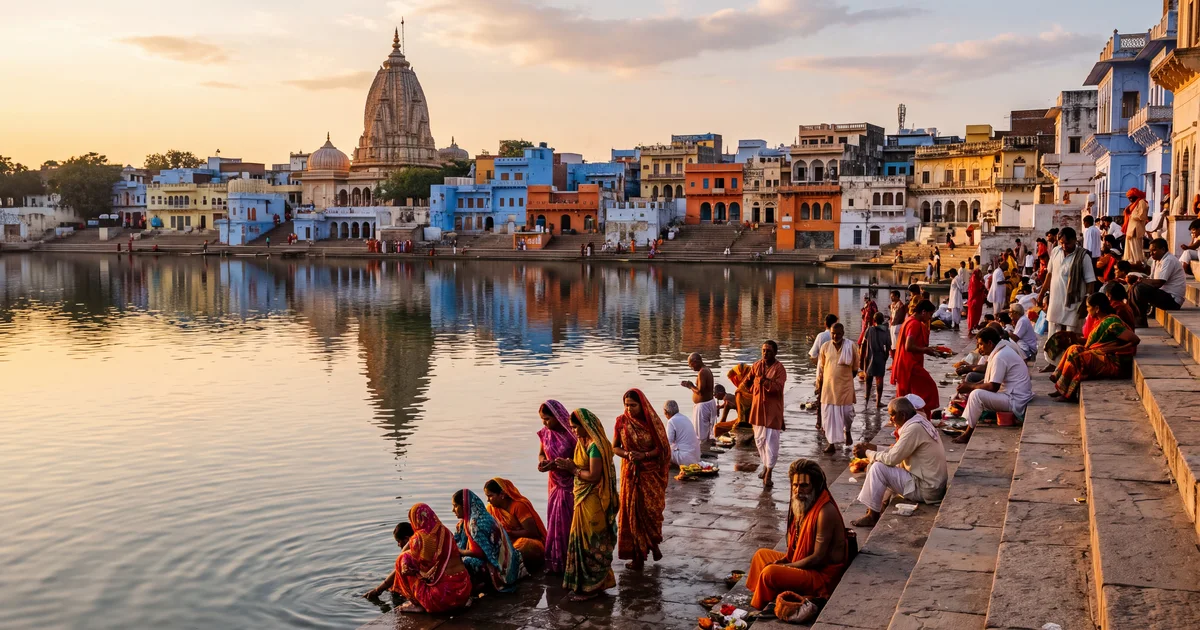
Pushkar has a population problem that works in two directions. During the November camel fair, this tiny Rajasthan town of 22,000 swells to something closer to 200,000. The rest of the year, it empties out so much that half the guesthouses drop their rates below ₹600 a night.
Most travel blogs treat Pushkar as a one day stop on the Jaipur to Jodhpur highway. That undersells it. The town sits in a valley ringed by the Aravalli hills on three sides, with a lake at its centre that Hindu scripture considers one of the five sacred pilgrimage sites. The only Brahma Temple in India that anyone actually visits is here. So are 52 bathing ghats, a 400 year old marketplace, and a sunrise hike that rivals anything in Rajasthan for the effort involved.
This guide covers what is worth your time in Pushkar, what to skip, and the practical details that most itineraries leave out.
TL;DR
- Two days is the right amount; three if you add a day trip to Ajmer
- October to March is ideal (15°C to 28°C), the camel fair falls in November
- The Savitri Temple sunrise hike is the single best experience in town
- Pushkar Lake aarti at sunset is free and worth rearranging your evening for
- Pair Pushkar with a broader Rajasthan itinerary or Jaipur trip for the best value
What are the must visit places in Pushkar?
The town is small enough to walk end to end in 25 minutes. That makes sightseeing efficient but also makes it easy to assume you have seen everything after a morning stroll. You have not.
Pushkar Lake is the anchor. It measures about 8 km in circumference and has 52 ghats (bathing steps) around its perimeter. Varaha Ghat, Brahma Ghat, and Gau Ghat are the busiest. The lake is sacred, so leather goods and alcohol are officially banned in the town (though enforcement is relaxed in tourist cafes on the outskirts). Swimming is not allowed. The water level fluctuates with the monsoon; by March the lake can look more like a large pond.
The evening aarti at Varaha Ghat starts around 6:30 PM in winter. Priests chant, small oil lamps float on the water, and the sound carries across the still lake surface. It is not choreographed for tourists. Show up, sit on the steps, and watch. Free.
One caveat: the ghat priests who approach you are not official. They will offer a puja ceremony, tie a red thread on your wrist, and then name a price. Saying no politely but firmly is the move. Actual temple donations go through labelled counters.
Brahma Temple sits barely 200 metres from the lake, marked by a red spire (shikhara) against the Aravalli skyline. This is the only significantly worshipped Brahma temple in India. The structure dates to the 14th century, though the idol is believed to be much older. The temple is small inside. You can see everything in 15 to 20 minutes outside of festival rush. Remove shoes at the entrance. Photography is allowed in the courtyard but not inside the sanctum.
Mornings before 8 AM are quiet. By 10 AM the first bus loads from Ajmer arrive.
Is the Savitri Temple sunrise hike worth the climb?
Yes. If you do one thing in Pushkar, make it this.
Savitri Temple sits on a hilltop behind Pushkar Lake, dedicated to Goddess Savitri (Brahma's first wife, according to local legend). The hike takes 30 to 45 minutes from the base, about 750 steps carved into the hill. A ropeway exists and runs ₹75 one way, but it opens at 8:30 AM, after sunrise.
To catch sunrise, start climbing at 5:15 AM in winter. The path is lit but bring a phone torch for the steeper stretches. At the top, the valley spreads below you: Pushkar Lake reflecting the first light, the Aravalli ridgeline turning gold, and on clear mornings, the desert edge visible to the west. On a November morning the temperature at the summit can drop to 10°C. Carry a layer.
The descent takes 20 minutes. Most people are back at their guesthouse by 7:30 AM, in time for breakfast.
One honest note: if you have knee problems, the ropeway is the better option, but you will miss sunrise. The steps are uneven in places and there is no handrail on the final stretch.
What should you see in the Pushkar bazaar?
The main bazaar runs along the eastern shore of Pushkar Lake, roughly 1 km from Ajmer Bus Stand to Brahma Temple. It has been a trading street for over 400 years. Today it sells a mix of silver jewellery, leather goods (technically banned but widely sold), embroidered textiles, and rose products.
Pushkar is called Gulab Nagri (Rose City) for a reason. The Nag Pahar rose farms on the town's edges produce enough roses to supply most of Rajasthan's attar (rose perfume) industry. Rose water, rose tea, rose jam, gulkand, and rose scented everything line the bazaar stalls. The rose oil is genuine; the "pure saffron" sold next to it usually is not.
For silver, the shops near Varaha Ghat have better quality than the ones near the bus stand. Expect to bargain 30% to 40% off the first quoted price. If a shopkeeper refuses to bargain at all, walk away. Three more shops sell the same thing.
The bazaar is loud and crowded between 10 AM and 1 PM. For a calmer walk, go before 9 AM or after 5 PM when the light is better for photos anyway.
My recommendation: skip the tie dye workshops that every café advertises. They are a 20 minute tourist activity priced at ₹500. The real block printers work in Ajmer, not Pushkar.
Which temples beyond Brahma are worth visiting?
Pushkar has over 500 temples in a 14 sq km area. You cannot and should not try to visit even a fraction. Here are the ones that earn the detour.
Old Rangji Temple is a 19th century Dravidian style temple built by a South Indian merchant family. It looks out of place in Rajasthan, with a towering gopuram (gateway tower) that would fit in Madurai. The temple is dedicated to Rangji (a form of Vishnu) and is usually quiet outside morning puja hours. It is a 10 minute walk from the main bazaar towards Ajmer Road.
Apteshwar Mahadev Temple sits slightly below ground level, which is unusual. Dedicated to Shiva, the lingam here is partially submerged and the chamber stays cool even in the 42°C Pushkar summer. It is less than 5 minutes from Brahma Temple. Few tourists visit, which is part of the appeal.
Pap Mochani Temple is on the town's edge, about 1.5 km from the lake, on a small hill. The name translates to "sin redeemer." The walk there passes through quieter residential lanes that feel like a different town from the bazaar. Go in the late afternoon; the hilltop gets direct sun all morning.
Skip the Gurudwara Singh Sabha unless you have a specific interest. It is architecturally modern and does not compare to the older temples for heritage value.
How does the Pushkar Camel Fair actually work?
The Pushkar Camel Fair (Pushkar Mela) usually runs for five days in November, timed to the Kartik Purnima full moon. The Rajasthan Tourism department publishes exact dates by September each year.
What most people do not realize is that the fair is a livestock trading event first. The camel and cattle trading happens in the sandy grounds on the western edge of town, starting several days before the "official" tourist fair begins. If you arrive two days early, you will see thousands of camels, horses, and cattle being walked in from surrounding villages. Traders sleep in the open beside their animals. It is the most photogenic phase and the least crowded.
The official fair adds cultural programs, moustache competitions, camel races, and a large crafts bazaar. Accommodation prices triple. A tent at the RTDC camp (the government option) costs around ₹8,000 to ₹12,000 per night during fair week; in January the same tent is ₹2,000.
One honest caveat: the fair has become increasingly commercialized. The hot air balloons and "luxury desert camps" are a recent addition, aimed at Instagram tourists rather than the livestock trade. If you want the traditional fair experience, stay at the western grounds, not the eastern tourist area.
What about day trips from Pushkar?
Ajmer is the obvious one. It is 11 km away (20 minutes by auto, ₹150 to ₹200).
Ajmer Sharif Dargah is the shrine of Sufi saint Moinuddin Chishti, one of the most important Muslim pilgrimage sites in India. The tomb complex is beautiful, crowded, and emotionally intense. Remove shoes before entering, cover your head (scarves available at stalls near the entrance for ₹20 to ₹50), and be prepared for aggressive flower sellers who hand you rose petals and then demand payment. Politely refuse unless you want to offer them.
Adhai Din Ka Jhonpra is a partially ruined mosque behind the Dargah, originally a Sanskrit college that was converted in 1199 AD. The arched screen wall is some of the finest Indo Islamic stonework in Rajasthan. Most Ajmer visitors miss it because it is behind the Dargah and poorly signposted. Walk through the Dargah's back lane, past the marble sellers, for about 300 metres. Entry is free.
Ana Sagar Lake in Ajmer is pleasant for an evening walk but not a destination worth a special trip. If you are already in Ajmer for the Dargah, add 30 minutes for a walk along the lakeside gardens (built by Mughal emperor Jahangir).
For something different: the drive from Pushkar towards Pali (about 90 km west) crosses the Aravalli foothills and passes through the Godwar region's dry, barren terrain, which looks like a different state entirely. It is not a standard tourist route, which is exactly the point.
How do you reach Pushkar from Jaipur and Delhi?
From Jaipur: 150 km, 3 to 3.5 hours by road. RSRTC Volvo and semi deluxe buses run every 30 to 45 minutes from Sindhi Camp bus station. Fare is ₹250 to ₹400 depending on bus type. Private cabs cost ₹2,500 to ₹3,000 one way. Trains run from Jaipur to Ajmer Junction (2 hours, ₹120 to ₹350), then a 30 minute auto to Pushkar.
From Delhi: 420 km, about 7 hours by road. The fastest option is a train to Ajmer (Shatabdi takes 6.5 hours, ₹700 to ₹1,200) plus a local auto. Driving from Delhi via Jaipur on NH48 is a direct route but long. Most group trips from Delhi include Pushkar as part of a 3 to 5 day Rajasthan circuit that also covers Jaipur and either Jodhpur or Udaipur.
From Bangalore: No direct trains. The practical route is a flight to Jaipur (2.5 hours, ₹3,500 to ₹7,000) and then a road transfer. Group trips from Bangalore to Rajasthan typically run as 6 to 8 day packages covering Jaipur, Pushkar, Jodhpur, and Udaipur together.
What should you skip in Pushkar?
The desert camel safari operations that approach you on the main road are mostly 30 minute rides around the same sandy patch behind the fairgrounds. If you want a genuine desert experience, Jaisalmer or Bikaner are better choices. Pushkar's desert edge is real but the "safari" is a markup on a camel walk.
The rooftop cafes on the main bazaar serve banana pancakes, hummus, and "Israeli breakfast" menus that have not changed since the 1990s backpacker era. The food is adequate. The prices are 2x to 3x what you would pay in Ajmer for the same thing. For better (and cheaper) Rajasthani food, eat at the dhabas on Ajmer Road: dal baati churma, kachori, and mirchi vada that cost ₹60 to ₹100 for a full meal.
Skip the boat rides on Pushkar Lake if the water level is low (March onwards). When the lake shrinks, the "ride" is a 5 minute paddle in a muddy pool. During and after monsoon (August to November), the lake is full and the boat ride is pleasant.
The sound and light show at Brahma Temple (when it runs) is skippable. The evening aarti at the ghats is free and more atmospheric.
Practical tips most guides leave out
Alcohol and meat: Pushkar is officially a vegetarian, dry town. No restaurant serves alcohol or meat within the municipal limits. Some cafes on the outskirts bend this rule with coded menus ("special lassi" is an open secret) but the quality is unreliable. If you need a drink, Ajmer is 20 minutes away and has normal restaurants.
Shoes and leather: Remove shoes at every temple and ghat. Leather is technically banned in the sacred zone around the lake. In practice, nobody checks your belt, but wearing visible leather shoes into a temple area will draw objections.
Budget: Pushkar is cheap. Guesthouses run ₹600 to ₹2,000 per night outside fair season. Meals cost ₹80 to ₹250 at local eateries. Auto rickshaws within town are ₹20 to ₹50. A two day trip (accommodation, food, autos, and temple visits) costs roughly ₹3,000 to ₹5,000 per person.
Photography: Pushkar Lake and the ghats are some of the most photogenic spots in Rajasthan, especially during golden hour. Ask before photographing people at the ghats, particularly during puja. Some sadhus pose for photos and then demand ₹200 to ₹500. Decide beforehand whether you want that exchange.
Pushkar works best as part of a broader Rajasthan trip. Two nights here, combined with Jaipur and one of the western Rajasthan cities, gives you the full range of what the state offers without the frantic pace of a single day stop. Check group departures to Rajasthan for packages that include Pushkar on the route.
Frequently asked questions
- How many days are enough for Pushkar?
- Two full days covers Pushkar Lake, Brahma Temple, Savitri Temple hike and one day trip to Ajmer. Most people stretch to three if they want to explore the desert edges and Old Rangji Temple without rushing. One day works only if you skip the Savitri Temple climb and Ajmer entirely.
- What is the best time to visit Pushkar?
- October to March is ideal, with daytime temperatures between 15°C and 28°C and cool evenings. The Pushkar Camel Fair usually falls in November and draws massive crowds. If you want the fair experience, book at least two months ahead. If you prefer quiet, come in October or February.
- Is Pushkar safe for solo female travellers?
- Pushkar is one of the calmer towns in Rajasthan for solo women. The main bazaar and ghats are busy with pilgrims and tourists until late evening. Stick to well lit areas at night, avoid isolated dunes after dark, and dress conservatively near the temples. Most hassle comes from souvenir sellers, not safety threats.
- Can you visit Pushkar as a day trip from Jaipur?
- Yes, Pushkar is about 150 km from Jaipur, roughly 3 hours by road. A day trip lets you see Pushkar Lake, Brahma Temple, and the bazaar. But you miss the sunrise at Savitri Temple and the evening aarti, which are the town's best experiences. An overnight stay is worth the extra ₹800 to ₹1500 on a guesthouse.
- Is there an entry fee for Pushkar Lake and the ghats?
- No entry fee. The ghats are public. However, self appointed priests at the ghats will approach you for a puja ceremony and ask for a donation, often starting at ₹500 or more. Politely decline if you are not interested. Legitimate temple donations go through a counter, not a person on the steps.