Best Places to Visit in Jaipur (2026): Forts, Markets and What to Skip
A practical guide to the best places to visit in Jaipur in 2026 with honest picks, timing tips and what most tourists waste time on.
Jaipur is one of those cities where the list of "must visit" places is so long that most tourists end up sprinting between forts, overheating by noon, and remembering nothing except queue lengths. The city has roughly 15 ticketed attractions within a 20 km radius. You do not need to see all of them.
This guide is selective. Some things in Jaipur are genuinely worth your time and money. Others are there because every travel blog copies the same list. I have separated the two, with timing notes that actually matter, because visiting Amber Fort at 8 AM and visiting at 11 AM are completely different experiences.
TL;DR
- Three full days is the right amount for Jaipur; two days if you are efficient
- October to March is ideal (8°C to 25°C), avoid April to June entirely (44°C+)
- Amber Fort at 8 AM opening beats the 10 AM crowd by a wide margin
- Skip elephant rides, the Wax Museum, and Chokhi Dhani unless you have spare evenings
- Pair Jaipur with a broader Rajasthan trip for better value on group departures
Which Jaipur sights are actually worth the entry fee?
Not every pink sandstone building justifies the ₹200 tourist ticket. Here are the ones that do.
Amber Fort is the clear number one. It is 11 km outside the city on the Amer road, built over 150 years between the 16th and 18th centuries, and it is massive. The Sheesh Mahal (mirror palace) alone makes the climb worth it. Budget 2 to 3 hours minimum. Go at 8 AM when gates open. By 10:30 the courtyards fill with tour groups and the Sheesh Mahal becomes a selfie bottleneck where you cannot see the mirrors for the phones.
One honest warning: the walk up to Amber is steep in the heat. Auto rickshaws and jeeps run from the parking area for ₹100 to ₹150 per person. Do not take the elephant ride. The queues are 45 minutes long, animal welfare is questionable, and you end up at the same entrance.
Nahargarh Fort works best at sunset. It sits on the Aravalli ridge above the city and the panoramic view of Jaipur at dusk, with the pink city turning golden, is the best viewpoint you will find. The fort interiors are less impressive than Amber, so come for the view and the rooftop restaurant (Padao, run by RTDC). Go by car or auto; the uphill road takes 20 minutes from the city centre.
City Palace is right in the middle of old Jaipur and still partly occupied by the royal family. The Pritam Niwas Chowk (peacock courtyard) with its four ornate doorways representing the four seasons is the architectural highlight. The textile and arms collection is genuinely interesting if you have the patience. Spend 90 minutes. The audio guide at ₹200 is worth it here because the signage is minimal.
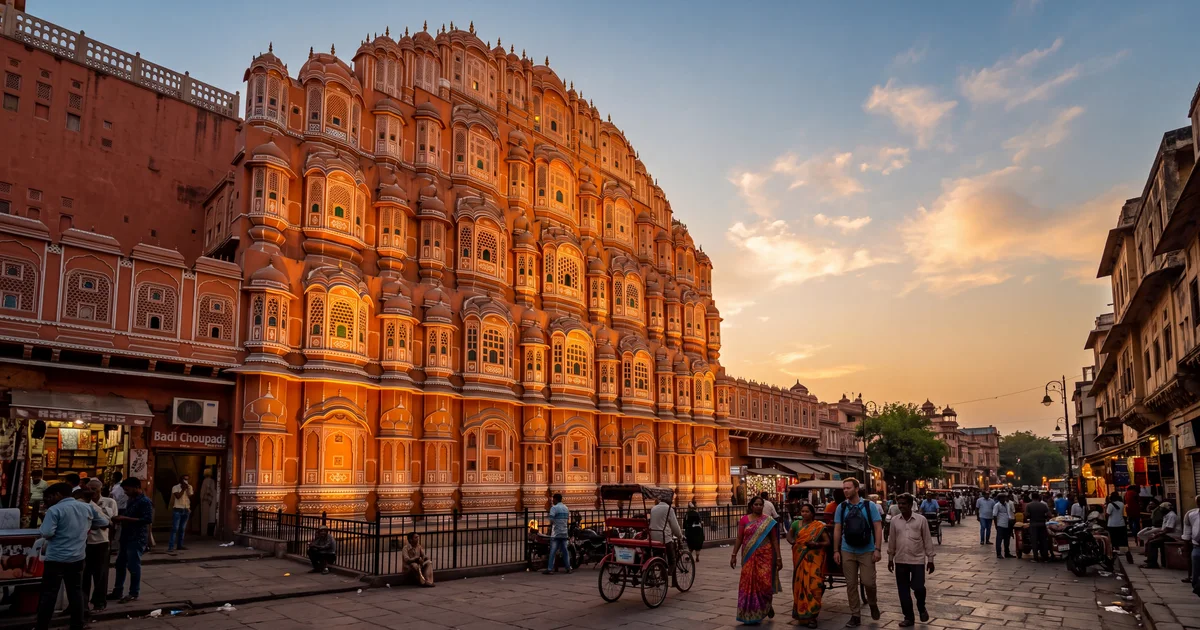
Hawa Mahal is a five minute stop, not a destination. The famous pink facade with 953 small windows looks best from the street opposite (the chai stall on the first floor of the building across gives you the classic angle). You can enter for ₹50 but the interiors are underwhelming and the rooftop view is partially blocked by fencing. Photograph it from outside. Move on.
What about the stepwells and off beat spots?
If you have a third day or want a break from fort fatigue, these are worth the detour.
Chand Baori is not in Jaipur. It is 95 km away near Abhaneri village, roughly a 90 minute drive toward Agra. But it is one of India's deepest stepwells at 13 stories, and the geometric patterns of the 3,500 steps are genuinely stunning. You cannot descend into the well anymore, but the viewing platforms give you the full effect. Go early, take water, and combine it with the Agra route if that is your onward direction.
Panna Meena ka Kund is a smaller stepwell just 1 km from Amber Fort and completely free. It is photogenic, quiet before 9 AM, and takes 20 minutes. Add it to your Amber morning.
Galtaji (Monkey Temple) is a complex of natural springs and small temples in a rocky gorge east of the city. The macaques are bold and will grab food or bags. It is an interesting 45 minutes but skip it if monkeys make you nervous. Early morning is best when the monkeys are calmer.
How to plan your days in Jaipur
Day 1 (forts): Amber Fort at 8 AM opening (2.5 hours), Panna Meena ka Kund on the way back (20 minutes), lunch on MI Road, Nahargarh Fort for sunset (leave by 4 PM to get good light).
Day 2 (old city): City Palace at 9 AM (90 minutes), Hawa Mahal from outside (10 minutes), Jantar Mantar if astronomy interests you (45 minutes, otherwise skip), then walk the old city markets: Johari Bazaar for jewellery and textiles, Bapu Bazaar for handicrafts. Lunch at LMB or Laxmi Mishthan Bhandar on Johari Bazaar for authentic Rajasthani thali.
Day 3 (optional extras): Chand Baori day trip (morning, 3 hours round trip plus one hour there), Albert Hall Museum in the afternoon (Victoria era building, decent textile and craft collection), or Jal Mahal from the roadside (the floating palace on Man Sagar Lake looks good from the road but you cannot enter).
Getting around Jaipur
Auto rickshaws are the default. Always agree on the price before getting in. From Hawa Mahal to Amber Fort costs ₹200 to ₹300. Ola and Uber work in Jaipur and are usually cheaper than autos for longer hops.
A full day hired car with driver costs ₹1,500 to ₹2,500 and is the most comfortable option for the fort circuit (Amber plus Nahargarh plus Jaigarh if you add it). Your driver will know where to park and when to avoid traffic. Ask your hotel to arrange one.
The Delhi to Jaipur Shatabdi Express (Train 12015) takes about 4.5 hours and drops you at Jaipur Junction by early afternoon. The Vande Bharat cuts it to under 3 hours on good days. From Delhi, the train is far better than driving unless you plan to continue onward to Jodhpur or Udaipur by road.
Best time to visit and what to pack
October to February: The best window. Day temperatures sit between 15°C and 25°C, mornings drop to 5°C to 8°C in December and January. Pack layers for early fort visits. The light for photography is warm and low, especially the golden hour at Nahargarh.
March: Still tolerable, mid 30s by afternoon. Crowds thin out.
April to June: Brutal. The city hits 44°C to 47°C regularly. Forts have no shade in the courtyards. Even locals avoid outdoor plans between 11 AM and 4 PM. Do not visit unless you have no other option.
July to September (monsoon): Temperatures drop to the low 30s and the Aravalli hills behind Nahargarh turn green. Occasional heavy rain makes stepwells photogenic. Not a bad time to visit, but some outdoor spots get slippery.
Planning your Jaipur trip
Jaipur works well as a standalone weekend or as part of a larger Rajasthan circuit (Delhi to Jaipur to Jodhpur to Udaipur is the classic Golden Triangle extension). If you are looking for group trips that include Jaipur, most fixed departure Rajasthan tours cover the city for one or two nights.
For route planning from other cities, check departures from Delhi on TripzSearch. The platform shows real operator names, verified reviews, and current prices so you are not booking a Rajasthan trip on faith.
If you are self planning: book your Amber Fort tickets online at the Rajasthan tourism portal to skip the ticket window queue. It saves 20 to 30 minutes on busy mornings. Hotels in the old city (near Hawa Mahal and City Palace) put you within walking distance of the markets but are noisier. The MI Road and C Scheme area is quieter and still central.
One last thing. Jaipur's charm is in the details you notice between the big attractions: the painted haveli facades in the old city, the way shopkeepers fold block printed fabric with practiced speed, the first light hitting the pink walls at 6:30 AM before the traffic starts. If you are just checking forts off a list, you will miss all of it.
Frequently asked questions
- How many days are enough for Jaipur sightseeing?
- Three full days covers the major forts, the old city markets, and one or two lesser known spots without rushing. Two days works if you skip Nahargarh and the stepwells outside the city. Anything under two days means you are only scratching Amber Fort and Hawa Mahal.
- What is the best time to visit Jaipur?
- October to March is ideal. Temperatures stay between 8°C and 25°C, mornings are crisp, and the light is warm for photography. Avoid April to June when the city regularly crosses 44°C. Monsoon (July to September) is pleasant temperature wise but some outdoor spots get muddy.
- Is Jaipur safe for solo travellers?
- Yes. Jaipur's tourist areas around the old city, Amber, and MI Road are well policed and accustomed to visitors. Solo women should stick to busier streets after dark and use auto or Uber rather than walking in unfamiliar lanes. The main annoyance is persistent touts near Hawa Mahal, not safety.
- Can you visit Jaipur as a day trip from Delhi?
- Technically yes, since the Shatabdi takes about 4.5 hours each way. But a day trip lets you see Amber Fort or the old city, not both. An overnight stay is far more practical. Most group trips from Delhi include one or two nights in Jaipur as part of a Rajasthan circuit.
- What should I skip in Jaipur?
- Skip the Wax Museum (overpriced and underwhelming), Chokhi Dhani if you are short on time (it is a dinner show, not a cultural experience), and the elephant rides at Amber Fort (animal welfare concerns and long queues). The City Palace audio guide is worth it though.