Best Places to Visit in Rajasthan (2026): Forts, Desert and Beyond the Triangle
14 best places to visit in Rajasthan in 2026, from Jaipur forts to Jaisalmer dunes, with honest tips on timing, heat, and what to skip.
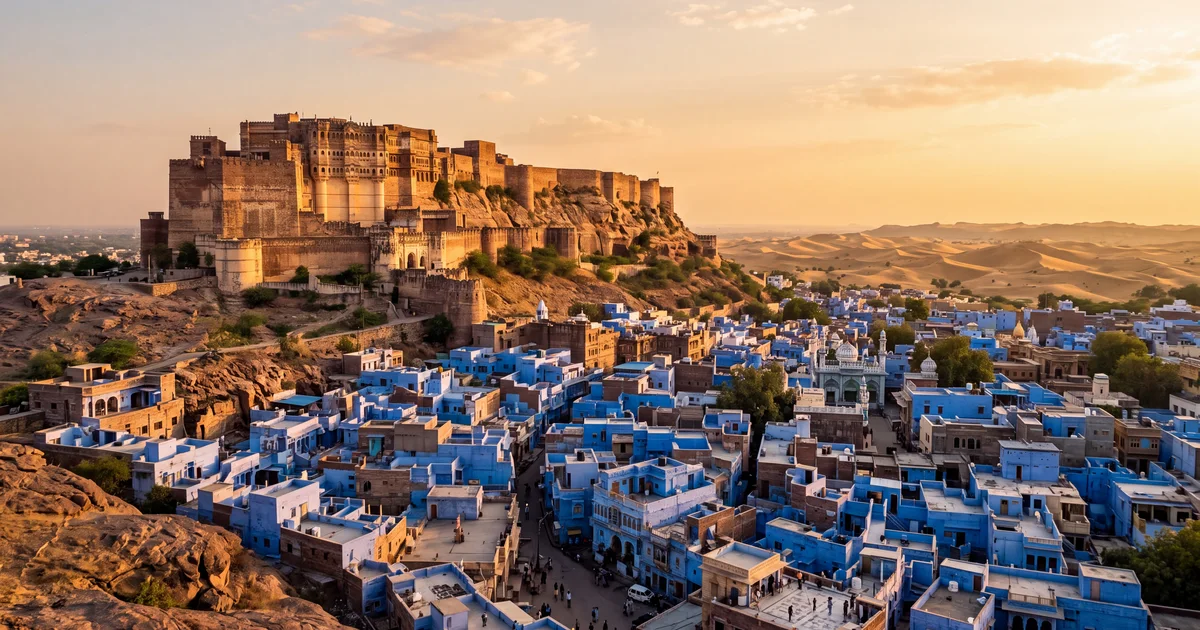
Rajasthan is 342,239 square kilometres of desert, scrubland, Aravalli hills, and some of the most aggressively photogenic architecture in Asia. The state has 6 national parks, over 30 major forts, 4 lake cities, and one desert that stretches to the Pakistan border. It also has 45°C summers that will rearrange your travel plans if you time them wrong.
I first visited Rajasthan as a college student on the classic Golden Triangle package: Delhi, Agra, Jaipur in 3 days. I remember being herded through Amber Fort, spending 20 minutes at Hawa Mahal, and calling it "Rajasthan done." It took two more trips (a solo Jodhpur to Jaisalmer train in December, and a group Udaipur cycling trip the following year) to realize I had barely started.
This is the honest version of what is worth your time and what is not.
TL;DR
- October to March is the only sensible window. December and January are best.
- Jaipur needs 2 full days minimum. Most people rush it in one and regret it.
- Udaipur is the most beautiful city. Jaisalmer is the most memorable.
- The desert safari is worth doing once, but skip Sam Dunes on weekends.
- Budget ₹2,500 to ₹4,000 per day for mid range (hotel, food, transport, entry fees).
What Makes Jaipur More Than a Golden Triangle Stop?
Jaipur deserves at least 2 full days, which the Golden Triangle format rarely allows. The city was planned on a grid in 1727 by Maharaja Sawai Jai Singh II, one of the few Indian cities designed from scratch rather than grown organically.
Amber Fort (11 km from the city centre) is the headliner. It is a 16th century Rajput fort complex built from red sandstone and marble, spread across four courtyards. The Sheesh Mahal (mirror palace) inside uses thousands of convex mirrors that reflect a single candle into a constellation. Get there by 8 AM to avoid the tour bus crowd that arrives by 10. The ₹500 entry for foreigners (₹100 for Indians) includes the Sheesh Mahal.
Hawa Mahal is the pink sandstone facade with 953 small windows. It is a photo stop, not a destination. You can see the entire structure in 15 minutes from the outside, which is how most locals experience it. The interior is cramped and underwhelming.
Nahargarh Fort above the city is where you go for the view, not the history. The sunset from the ramparts shows the entire pink city grid below. The cafe at the top serves overpriced chai but the panorama justifies it. The fort is a 6 km drive from Hawa Mahal or a 45 minute uphill walk.
City Palace is still partially occupied by the royal family. The Mubarak Mahal courtyard and the armoury section are worth the ₹500 entry. The textile gallery holds one of the finest collections of Rajput garments in India.
Jantar Mantar (the astronomical observatory) sits next to City Palace. Sawai Jai Singh II built it in 1734. The Samrat Yantra is the world's largest stone sundial (27 metres tall, accurate to 2 seconds). It looks like abstract sculpture but it is precision engineering. Give it 45 minutes.
My honest take: Jaipur's best experience is not a monument. It is the old city markets. Johari Bazaar for jewellery, Bapu Bazaar for textiles, and Tripolia Bazaar for lac bangles. Walk through between 5 and 7 PM when the shops are lit, the streets are alive, and the hawkers are in full form.
For group trips that include Rajasthan, operators typically combine Jaipur with Jodhpur and either Udaipur or Jaisalmer in 7 to 10 day packages.
Is Udaipur Really the Most Beautiful City in India?
It has a strong case. The city sits around Lake Pichola at the southern edge of the Aravalli range. Five interconnected palaces line the lake's eastern shore. The City Palace complex (76,000 square metres) took 400 years to build across 22 maharanas. The Lake Palace hotel floats on a natural island in the lake's centre.
The best way to see Udaipur is from the water. A sunset boat ride on Lake Pichola costs ₹400 to ₹800 (depending on the boat type) and runs for 1 hour. You pass the Jag Mandir island palace, the City Palace's lakeside face, and the Aravalli hills turning orange behind Sajjangarh (Monsoon Palace) on the western ridge.
Sajjangarh itself is a 20 minute drive from the city. The hilltop palace was built in 1884 as a monsoon retreat. The building is modest inside, but the 360 degree view of Udaipur, its lakes, and the surrounding countryside is the best vantage point in the city. Go at 5 PM.
Bagore Ki Haveli on the lake's Gangaur Ghat hosts a nightly Rajasthani folk dance show at 7 PM (₹150). The puppetry and Ghoomar performances are touristy but genuinely skilled. The haveli itself, a 138 room mansion from 1751, is worth 30 minutes during the day.
The caveat: Udaipur's lakes depend on the monsoon. In dry years (like 2023), Fateh Sagar Lake shrinks visibly and Pichola's water level drops. The boat rides still run, but the city looks different when the lakes are low. Check recent photos before booking a hotel for the "lake view."
Walk the old city lanes between the City Palace and Jagdish Temple. The 17th century Jagdish Temple has the most detailed carved facade in Udaipur. Miniature painting studios cluster in the lanes around it. Most let you watch artists work if you step inside.
What Is It Like to Actually Visit Jaisalmer?
Jaisalmer is 560 km west of Jodhpur and 280 km from the Pakistan border. The town exists because of the 12th century Jaisalmer Fort, one of the only "living forts" in the world: roughly 3,000 people still live inside its walls. The fort rises from the Thar Desert floor like a sandcastle, which is roughly what it resembles in afternoon light.
Inside the fort, the narrow lanes hold Jain temples (Rishabhadeva and Parsvanath, both 12th to 15th century) with carvings so intricate they look like lace cut from yellow sandstone. The Maharawal's palace occupies the top. The fort entry is free; the palace museum costs ₹100.
Patwon Ki Haveli is the most elaborate of Jaisalmer's merchant houses. Five interconnected havelis built between 1805 and 1860 by a wealthy Jain trader family. The jharokha (projecting balcony) carvings are the finest in Rajasthan. Entry is ₹100. Spend 30 minutes inside and 10 minutes photographing the exterior.
The desert is the other half of the Jaisalmer experience. Sam Sand Dunes (42 km from town) have the tallest dunes and the most tourists. On a December weekend, expect 50+ jeeps and a small village of tent camps. The sunset is dramatic regardless. A camel ride to the dune crest for sunset followed by an overnight tent stay costs ₹2,000 to ₹5,000.
For something quieter, try the Khuri dunes (48 km, smaller dunes but a fraction of the crowd) or the Desert National Park (40 km, entry ₹100, good for Great Indian Bustard sightings if you are lucky).
One thing nobody mentions: Jaisalmer is remote. The train from Jodhpur takes 5 hours (Delhi Jaisalmer Express runs overnight, 12 hours). Flights exist but are expensive and infrequent. The isolation is part of the charm, but plan your connections carefully.
Why Does Jodhpur Deserve More Than a Transit Stop?
Because Mehrangarh Fort is one of the 5 best preserved forts in India, and the blue city below it is not a gimmick.
Mehrangarh sits on a 125 metre cliff above Jodhpur. The fort took 500 years to build (started 1459, last additions in the 1800s). The museum inside is outstanding: period rooms, elephant howdahs, palanquins, miniature paintings, and a Turban Gallery showing 400 years of headwear evolution. Entry is ₹200 for Indians and the audio guide (included) is one of the best in any Indian museum.
The blue houses visible from the fort ramparts are real. The old Brahmin quarter below the fort painted houses with a lime and indigo wash that repelled insects and kept rooms cool. The practice spread. Today, a bird's eye walk along the fort's northern wall shows a sea of blue cube houses extending to the clock tower.
Clock Tower Market (Sardar Market) is the old city's commercial heart. Spice shops, local sweets (mawa kachori from a 60 year old shop on the main lane, ₹25), and handicraft stalls crowd the narrow lanes. The shopping is less polished than Jaipur but more authentic.
Jaswant Thada (a cenotaph 1 km from Mehrangarh) is built entirely from thin marble sheets that glow when backlit by the sun. Most tourists skip it in favour of the fort, which means you often have the carved gazebos and lake to yourself at 8 AM.
The flying fox zip line over the fort (runs from the fort ramparts to the city below, 6 lines, 90 minutes, ₹2,500) is the best adventure activity in any Rajasthan city. Not a must do, but if heights do not bother you, the perspective on the blue city from a zip line 100 metres above it is unmatched.
What About Pushkar, Ajmer, and the Smaller Towns?
Pushkar is a small temple town on the edge of a sacred lake, 14 km from Ajmer. The Brahma Temple (one of very few in the world dedicated to the creator god) is the main draw. The lake has 52 ghats. The town is vegetarian and alcohol free within city limits, which gives it a different rhythm from other Rajasthan cities.
The Pushkar Camel Fair (usually November) transforms the town. Over 200,000 camels, horses, and cattle fill the desert fairground. Moustache competitions, turban tying contests, and camel races happen alongside the serious livestock trading. Book accommodation 3 months ahead or camp in the RTDC tent city.
Outside fair season, Pushkar is peaceful. The Savitri Temple hike (a 45 minute climb up a hill with 700 steps) offers a panoramic view of the lake at sunrise. Rose farms on the outskirts (Pushkar produces most of India's rose water) let you walk through fields in January when the blooms peak.
Bundi is 200 km south of Jaipur and gets almost no foreign tourists. The Taragarh Fort and the step wells (the 13th century Raniji Ki Baori has 46 metre deep carved pillars) are worth the detour alone. The town's miniature painting tradition dates to the 17th century and several families still practice it. Bundi in November with its empty lanes and painted havelis is one of the most atmospheric small towns in India.
Chittorgarh Fort (112 km from Udaipur) is the largest fort in India: 700 acres on a plateau. The Vijay Stambha (Tower of Victory, 37 metres, built 1448) and the Kirti Stambha (Tower of Fame, Jain, 22 metres, 12th century) are the landmarks. The fort is too vast for a casual visit. Budget 3 to 4 hours and bring water.
Mount Abu is Rajasthan's only hill station (1,220 metres) and houses the Dilwara Jain Temples, built between the 11th and 13th centuries. The marble carving in the Vimal Vasahi and Luna Vasahi temples is often compared to the Taj Mahal for precision. The town itself is not remarkable, but the temples justify a day trip from Udaipur (185 km, 3.5 hours).
How Hot Does Rajasthan Actually Get?
This is not a minor detail. Rajasthan's climate shapes every aspect of trip planning.
April to June: Jaisalmer and Barmer hit 46 to 48°C. Jaipur and Jodhpur hover at 42 to 44°C. Even Udaipur, the coolest major city, reaches 38°C. Air conditioned transport becomes mandatory, not optional. Most desert camps shut from April to September. The forts are unbearable by noon.
July to September: The monsoon brings patchy relief. Eastern Rajasthan (Jaipur, Kota, Bundi) gets meaningful rain. The Thar Desert gets little. Udaipur and its lakes fill up, making it the one city that is arguably better in August than December. Roads in eastern Rajasthan flood occasionally.
October to March: This is Rajasthan. Daytime temperatures range from 15°C (December in Jaisalmer) to 28°C (October in Jaipur). Nights in the desert drop to 5°C or lower in January, so pack layers for camping. Clear skies, zero humidity, and the forts look their best in low angle winter light.
Honest advice: if you visit Rajasthan between April and September, you are fighting the weather for every photograph and every fort climb. Reschedule for winter if you can.
How Do I Plan a Rajasthan Road Trip?
The classic circuit runs Jaipur to Jodhpur to Jaisalmer to Udaipur and back to Jaipur (or out via Ahmedabad). That loop is roughly 1,500 km and takes 10 to 12 days at a comfortable pace with one to two nights per city.
Road quality varies. NH 48 (Jaipur to Udaipur via Ajmer and Chittorgarh) is a decent four lane highway for most of its length. The Jodhpur to Jaisalmer stretch (285 km, 5 hours) is a two lane desert road with sparse fuel stations: fill up at Pokhran. The Barmer road from Jaisalmer is narrow and slow.
Self drive is popular in Rajasthan. Roads are flat and mostly straight. The danger is other traffic: trucks use the wrong side, camels and cattle cross without warning, and village crossings have no speed breakers. Night driving on rural Rajasthan roads is risky. Plan all drives for daylight.
RSRTC buses are the budget option. The Jaipur to Udaipur Volvo (7 hours, ₹800 to ₹1,000) and Jaipur to Jodhpur Volvo (5 hours, ₹600 to ₹800) are reliable. Book on the RSRTC website 2 days ahead for AC seats.
Trains connect all major cities. The Jaipur to Jaisalmer run (12 hours overnight) is the classic route. First AC costs around ₹1,800. The Jodhpur to Udaipur Chetak Express (6 hours) is a scenic daytime ride through the Aravalli foothills.
Explore Rajasthan group trips or departures from Delhi for packages that handle the logistics between cities.
What Does a Rajasthan Trip Cost in 2026?
Budget (₹1,500 to ₹2,500 per day per person): RSRTC buses and general class trains, ₹500 to ₹800 hotel rooms (basic AC rooms in old city areas), thali meals at ₹100 to ₹150, and free or ₹100 entry to most monuments.
Mid range (₹3,000 to ₹5,000 per day): AC Volvo buses or shared taxis between cities, ₹1,500 to ₹3,000 hotel rooms (boutique havelis in Jaipur, Jodhpur, and Udaipur have converted historic houses into hotels), restaurant meals at ₹300 to ₹500, and guided fort tours.
Luxury: Rajasthan does luxury well. The Taj Lake Palace in Udaipur (₹30,000+ per night), Suryagarh in Jaisalmer (₹15,000+), and the Umaid Bhawan Palace in Jodhpur are genuine palace hotels. The Palace on Wheels train (8 days, ₹3.5 lakh per person) is the luxury rail option.
Entry fees add up. Amber Fort (₹500 foreigner / ₹100 Indian), Mehrangarh (₹200), City Palace Udaipur (₹300 foreigner / ₹75 Indian), and Jaisalmer Fort Palace (₹100). Camera fees at some monuments run ₹50 to ₹200 extra. Budget ₹1,000 to ₹1,500 per city for monument entries.
Which Rajasthan Itinerary Fits Your Time?
4 to 5 days (Golden Triangle plus one): Delhi, Agra, Jaipur, and a day trip to Pushkar or Amber Fort. This is the minimum for a first timer. You will see Jaipur properly and get a taste of Rajasthan's architecture.
7 to 8 days (the fort circuit): Jaipur (2 nights), Jodhpur (2 nights), Jaisalmer (2 nights including desert camp), fly out from Jodhpur or overnight train to Delhi. This covers the three strongest fort cities and the desert.
10 to 12 days (the full loop): Jaipur (2), Pushkar (1), Jodhpur (2), Jaisalmer (2), Udaipur (3), return via train or flight. This is the ideal first Rajasthan trip. You get variety: forts, desert, lake city, small town pilgrimage.
14+ days (deep cut): Add Bundi (2 nights), Chittorgarh (1 day), Mount Abu (1 night), and Bikaner (1 night for Junagarh Fort and camel research centre). This itinerary is for people who have seen the big four and want the Rajasthan that tourists skip.
Rajasthan rewards planning more than most Indian states. The distances are long, the heat is punishing outside winter, and the best experiences (desert camps, haveli stays, sunrise at Mehrangarh) need advance booking. Get the timing right and you get one of the best travel experiences in Asia. Get it wrong and you get sunburn and bus delays.
Browse Rajasthan trip options or all group departures to find departures that fit your schedule.
Frequently asked questions
- What are the top 5 must visit places in Rajasthan?
- Jaipur for forts and markets, Udaipur for lakes and palaces, Jaisalmer for the Thar desert and havelis, Jodhpur for Mehrangarh and the blue city, and Pushkar for the Brahma temple and camel fair. These five span history, geography, and culture without needing more than 12 days.
- How many days are enough for a Rajasthan trip?
- A 5 day trip covers Jaipur and one other city (Udaipur or Jodhpur). The classic Golden Triangle (Delhi, Agra, Jaipur) takes 4 days. A proper Rajasthan circuit hitting Jaipur, Jodhpur, Jaisalmer, and Udaipur needs 10 to 12 days. Most group tours run 7 to 10 day itineraries.
- What is the best time to visit Rajasthan?
- October to March. December and January are ideal (15 to 25°C daytime, 5 to 10°C nights in the desert). Avoid April to June when Jaisalmer hits 48°C and Jaipur stays above 42°C. The monsoon (July to September) brings some relief but unreliable rain, flooding in eastern Rajasthan, and closed desert camps.
- Is Rajasthan safe for solo female travellers?
- Tourist cities like Jaipur, Udaipur, and Jodhpur are generally safe with visible police presence and well trafficked areas. Rural Rajasthan can feel conservative. Dress modestly outside hotels. Avoid empty streets after 9 PM in smaller towns. Many group tour operators now run women only Rajasthan departures.
- How do I travel between cities in Rajasthan?
- RSRTC Volvo buses connect major cities (Jaipur to Udaipur 7 hours, ₹800 to ₹1,000). Trains are cheaper and sometimes faster: Jaipur to Jodhpur takes 5 hours by Mandore Express. Self drive is popular but roads between cities are narrow with erratic traffic. Domestic flights connect Jaipur, Udaipur, and Jodhpur.
- Is the Jaisalmer desert safari worth it?
- Yes, but choose carefully. The Sam Sand Dunes (42 km from Jaisalmer) are the most popular and the most touristy, with 50 plus jeeps on a busy evening. Khuri dunes (48 km, less crowded) or Thar Desert National Park offer quieter experiences. An overnight camp with a sunset camel ride and dinner under stars costs ₹2,000 to ₹5,000 per person.
- What should I skip in Rajasthan?
- Skip the Jaipur wax museum (poor quality for ₹500), the Nahargarh Biological Park (far from the fort and not worth the detour), and Ajmer city itself (unless you are visiting the Dargah). The Chokhi Dhani cultural village near Jaipur is heavily commercialized. Pushkar is better experienced outside camel fair season if you dislike crowds.