Places to Visit in Jaisalmer (2026): Desert Forts, Sand Dunes and What Most Guides Skip
15 best places to visit in Jaisalmer in 2026 with real tips on the fort, Sam Sand Dunes, havelis, and the desert camp scams to avoid.
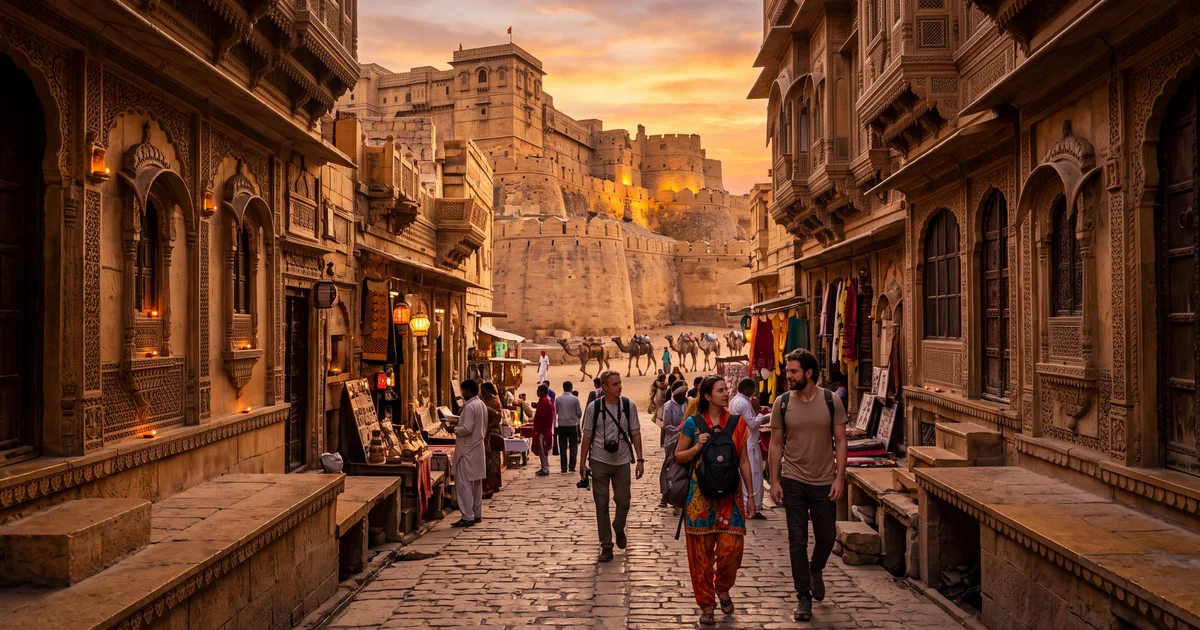
Jaisalmer sits 575 km west of Jodhpur, closer to the Pakistan border than to any other major Indian city. The landscape changes around the 400 km mark on NH 15. Green scrub disappears. The soil turns pale. By the time you see the fort rising from the flat desert like a sandcastle that refused to wash away, you understand why this place has a different reputation than the rest of Rajasthan.
The city is small. The permanent population is around 65,000. The fort, which is the main reason anyone comes here, still has about 3,000 people living inside its walls. This is not a museum fort. Families hang laundry from 800 year old jharokha windows. Shops sell cold drinks next to 12th century carvings. That collision of daily life and medieval architecture is what makes Jaisalmer different from Jodhpur or Udaipur.
TL;DR
- Jaisalmer Fort is a living fort with residents, temples, and guesthouses inside. Go early morning.
- Sam Sand Dunes are 42 km from town. The sunset is real, but most budget camps are a letdown.
- October to March is the visiting window. The Desert Festival in February is worth timing your trip around.
- Two days minimum, three days recommended. The desert excursions eat half days.
- Book desert camps directly online. Street touts will sell you a ₹1,500 package that costs ₹600.
Why Is Jaisalmer Fort Unlike Any Other Fort in India?
Because people live in it. That sounds like a minor detail until you walk through the main gate at 7 AM and pass a man carrying milk packets to his apartment on the second floor of a structure built in 1156 by Rawal Jaisal.
The fort sits on Trikuta Hill, 76 metres above the town. Its walls are yellow sandstone that turns gold at sunset (the "Golden Fort" name is earned, not marketing). Inside, the lanes are narrow enough that two people with backpacks need to negotiate passage. Jain temples from the 12th and 15th centuries line the main path. The Maharaja's Palace occupies the highest point.
Start at Suraj Pol (the main gate) early. By 10 AM, the tour groups arrive and the narrow lanes get congested. The Jain temples (Chandraprabhu and Parsvanath) are open from 7 AM and contain some of the finest stone carving in western India. The ceiling work in Parsvanath temple took 50 years to complete. Every surface is carved.
One caveat worth knowing: the fort has a drainage problem. Decades of tourist footfall and plumbing from the residences have weakened sections of the foundation. Parts of the outer walls have collapsed in the past. Conservation efforts are ongoing, but the fort's long term survival depends on managing the water that seeps through its sandstone base. Visit now. It may not look the same in 30 years.
Entry to the fort itself is free. The Maharaja's Palace Museum charges ₹100 (Indian) and ₹500 (foreign). The Jain temples have no entry fee but request a ₹30 donation.
What Makes Patwon Ki Haveli Worth the Walk?
Patwon Ki Haveli is actually five connected havelis built between 1805 and 1862 by a family of Jain traders who made their fortune in brocade and opium (both legal trades at the time). The facade faces a narrow lane and stretches 60 metres. You see it and stop.
The sandstone carving here is more detailed than the fort's. Jharokha balconies, lattice screens, and floral patterns cover every external wall. The first haveli is government maintained and open as a museum. The interior has painted walls, original mirror work, and carved doorways that frame each room.
The other four havelis are privately owned. One houses shops. Two are locked. One has a resident family that occasionally allows entry.
Skip the government museum's audio guide (₹100, outdated and inaudible in places). Walk through at your own pace. The building speaks for itself. Allow 45 minutes to an hour.
The haveli sits 500 metres from the fort's main gate. Walk there, do not auto. The lanes between the fort and the haveli pass through the town's busiest market, and the shopfronts are built into sandstone facades that are worth seeing on their own.
Nathmal Ki Haveli, 300 metres south, was carved by two brothers who each did one half of the facade. The two sides are subtly asymmetric. It takes a minute to notice. This is a 15 minute stop, free, and on the walking route between the fort and Patwon Ki Haveli.
Sam Sand Dunes: How Do You Separate the Real Experience from the Tourist Trap?
The Sam Sand Dunes sit 42 km west of Jaisalmer, and they are the Thar Desert experience that most visitors come for. The dunes reach 30 to 60 metres in height. At sunset, the sand shifts from tan to deep orange. Wind carves ripple patterns that change every day. It is photogenic in a way that does not need a filter.
The problem is the infrastructure around the dunes. Camps range from ₹800 per person (a mattress on the ground, a shared toilet, and a bonfire with reheated dal) to ₹8,000 per person (a Swiss tent with an attached bathroom, a multi course Rajasthani dinner, and folk musicians). The gap between the two is enormous.
Book above ₹3,500 per person if you want to sleep on the dunes rather than the flat ground behind them. Camps at this price point typically sit on the dune crests, which means you wake up to sand in every direction rather than a parking lot.
Camel safaris operate from a staging area near the dunes. A 1 hour sunset ride costs ₹300 to ₹500 per person. The animals are well fed in the better operations (look for camels that are not thin around the ribs). Longer overnight safaris into the deeper desert cost ₹2,000 to ₹4,000 per person and include a night sleeping under open sky on a cot. Those are worth it if you want actual silence. No generators, no music, no camp neighbours.
My strong advice: do not book through your Jaisalmer hotel or street touts. They add a 40% to 60% commission. Search camp names online, check Google reviews posted in the last 6 months, and call the camp directly.
The drive from town takes 45 minutes on a good road. Leave by 3:30 PM for the sunset. Return by 8 PM if you are not staying overnight.
Is Gadisar Lake Better in the Morning or Evening?
Morning. Not even close.
Gadisar Lake is an artificial reservoir built in 1367 by Maharawal Gadsi Singh as the city's primary water source. It sits 1 km southeast of the fort. The tilon ki pol (archway) at the entrance was built by a courtesan named Tillon, and the king could not demolish it because she placed a Krishna temple on top. That story alone is worth the visit.
At 6:30 AM, the lake is still. Migratory birds (coots, pintails, demoiselle cranes in winter) sit on the water. The fort reflects in the surface behind the temple spires along the ghats. By 9 AM the boating operators start their engines and the mirror breaks.
Rent a rowboat (₹50 for 30 minutes) if you want to get onto the water without motor noise. The paddleboats and motorboats cost more and ruin the quiet for everyone.
The lake dries partially in summer. Visit between November and February for full water levels and bird activity.
Kuldhara: Is the Abandoned Village Worth 18 Kilometres?
Kuldhara was a Paliwal Brahmin village abandoned overnight in 1825. The entire community of 1,500 people left because of oppressive taxation by the local prime minister, Salim Singh. They cursed the village as they departed: no one would ever settle here again. Nobody has.
The ruins sit 18 km southwest of Jaisalmer. Stone houses, temples, and streets remain intact. There are no roofs. The walls stand at full height. Walking through it takes 30 minutes, and the empty doorways opening onto empty rooms create an atmosphere that photographs struggle to capture.
Is it worth the trip? If you have a third day, absolutely. If you only have two days, the fort, havelis, and Sam Dunes take priority. The drive takes 25 minutes each way, and the village itself needs only an hour.
Entry is ₹25 (Indian) and ₹100 (foreign). There is no shade inside the ruins, so visit before 11 AM or after 3 PM.
One thing guides do not mention: Kuldhara is one of 84 Paliwal villages abandoned that night. Most others are unexcavated and unmarked. Only Kuldhara has been developed for visitors.
How to Spend Three Days in Jaisalmer
Day 1: Fort exploration from 7 AM (2.5 hours inside, including the Jain temples and Maharaja's Palace). Walk to Patwon Ki Haveli (1 hour). Nathmal Ki Haveli (15 minutes). Lunch inside the fort at a rooftop restaurant with desert views. Afternoon at Gadisar Lake (1 hour). Evening walk through the town bazaar below the fort.
Day 2: Morning drive to Kuldhara (leave by 8 AM, back by 11 AM). Rest and lunch. Depart for Sam Sand Dunes at 3:30 PM. Sunset camel ride. Overnight at a desert camp.
Day 3: Sunrise at the dunes (set an alarm for 5:30 AM, it is worth it). Return to Jaisalmer by 9 AM. Desert National Park excursion if you want wildlife, or a relaxed morning in the fort lanes buying textiles and silver jewellery.
Auto rickshaws within Jaisalmer town charge ₹50 to ₹100 per trip. For Sam Dunes and Kuldhara, hire a private car for the day (₹1,500 to ₹2,000). Shared jeeps to Sam Dunes leave from the bus stand (₹150 per person, less comfortable).
Jaisalmer pairs naturally with Jodhpur (5 hours east) and Udaipur (9 hours south) for a full Rajasthan circuit. If you are coming from Delhi, the overnight train drops you in Jaisalmer by early morning. Browse group trips that cover the Rajasthan triangle if you prefer fixed departures over self planning.
Frequently asked questions
- What are the top places to visit in Jaisalmer?
- Jaisalmer Fort (the living fort with 3,000 residents inside), Patwon Ki Haveli for sandstone carvings, Sam Sand Dunes for the camel safari, Gadisar Lake for the morning light, and Kuldhara abandoned village. These five cover the essentials in two to three days.
- How many days are enough for Jaisalmer?
- Two full days cover the fort, havelis, and a Sam Sand Dunes sunset trip. Three days let you add Kuldhara, the Desert National Park, and a longer camel safari into the dunes. Most travellers find three days ideal because the desert excursions need a full half day each.
- What is the best time to visit Jaisalmer?
- October to March when daytime temperatures stay between 15 and 30°C. November and February are the sweet spot. The Desert Festival in February adds folk music and camel races. Avoid April to June when temperatures cross 45°C and the sand radiates heat well after sunset.
- Is Jaisalmer worth visiting?
- Yes, especially if you care about architecture and open space. The fort is unlike anything else in Rajasthan because people still live inside it. The Thar Desert at sunset is genuinely striking. But manage expectations for the town itself: it is small, dusty, and the tourist infrastructure is basic outside the fort area.
- How do I reach Jaisalmer from Delhi?
- The most popular option is the overnight train from Delhi (Delhi Jaisalmer Express, 18 hours). Flights go to Jaisalmer airport but schedules are limited and fares run ₹5,000 to ₹9,000 one way. Driving from Jodhpur (285 km, 5 hours on NH 15) is the fastest road option if you are already in Rajasthan.
- Are the Sam Sand Dunes worth it or a tourist trap?
- The dunes are real and the sunset is worth the 42 km drive from town. The trap is the overnight camp booking. Most budget camps (below ₹2,000 per person) are tents on flat ground with a bonfire and mediocre food. Camps above ₹3,500 per person tend to be on actual dunes with better facilities. Book directly, not through hotel touts.
- What should I skip in Jaisalmer?
- Skip the Bada Bagh cenotaphs unless you are into royal tomb architecture (it is a 15 minute photo stop at best). Skip the Thar Heritage Museum (small, overpriced at ₹100). Skip any camel safari operator who approaches you on the street. The Desert National Park is worth it only if you want to spot the Great Indian Bustard, which requires a full day.