Best Places to Visit in Jodhpur (2026): Blue City, Forts and Desert Edges
A local minded guide to Jodhpur in 2026 covering Mehrangarh, the blue lanes, Umaid Bhawan and Thar desert edges with honest timing tips.
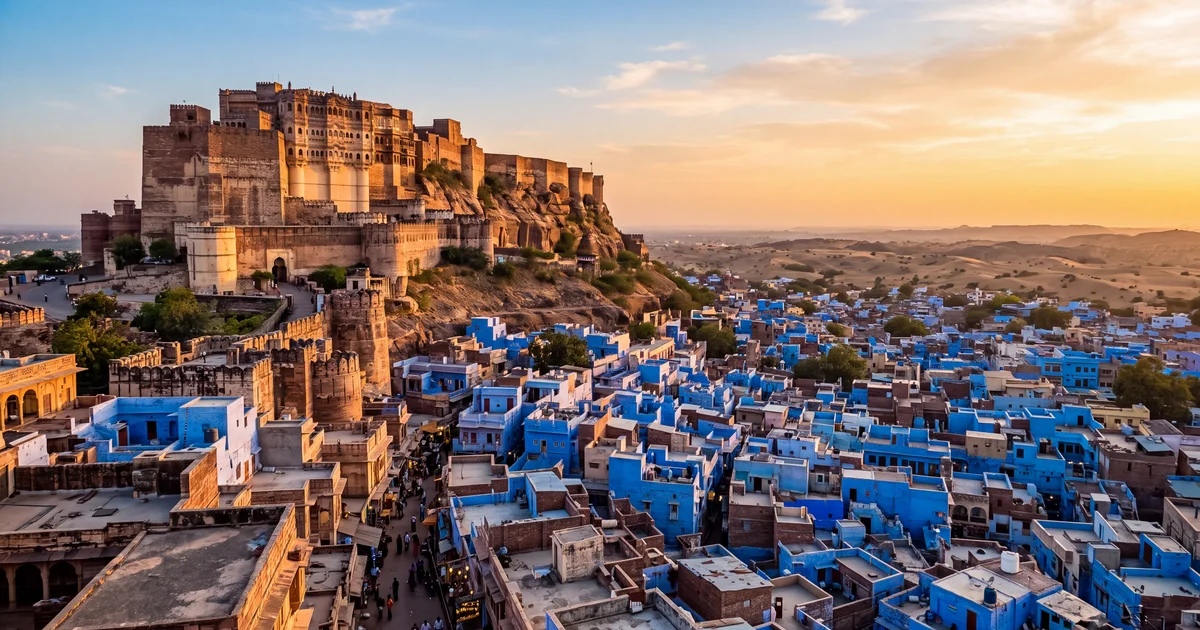
Jodhpur hits you the moment you climb up Mehrangarh and look down. The city below is blue. Not postcard blue, not filtered blue. Actual indigo and cerulean walls stretching in every direction, broken by terracotta rooftops and satellite dishes. No other Indian city looks like this from above.
The fort is the obvious draw. Everyone goes there. But Jodhpur is also the last major city before the Thar desert begins in earnest, and that position shapes everything about the place: the food (dal baati churma exists because desert dwellers needed calorie dense food that travels), the architecture (the sandstone is local, quarried from the same ridges the fort sits on), and the pace (slower than Jaipur, less hectic than Udaipur).
Here is what to actually see, what to skip, and how to time it so you are not melting in a 43°C queue.
TL;DR
- Mehrangarh Fort is the single best fort in Rajasthan. Give it at least 3 hours.
- The blue city lanes below the fort are best explored on foot between 7 and 10 AM.
- October to February is the only comfortable window; summers are brutal.
- Two days is the right pace. Three if you add Osian or a Thar desert camp.
- Jodhpur connects easily to Jaisalmer (5h west) and Udaipur (5h south) for longer Rajasthan trips.
Is Mehrangarh Fort really the best fort in Rajasthan?
I think so. Others will argue for Amber in Jaipur or Kumbhalgarh near Udaipur. But Mehrangarh has something neither of those has: it is built into the cliff. The walls rise directly from 125 metres of vertical rock. When you stand at the ramparts and look straight down, the old city starts where the cliff ends. There is no moat, no gradual slope. Just rock, then city.
The fort was started in 1459 by Rao Jodha and expanded by every subsequent Rathore ruler for 500 years. The result is a layered palace complex, not a single building. You walk through seven gates, each one with cannon ball marks and hand prints (the sati marks at Loha Pol are unsettling and you should know about them before you encounter them).
Inside, the museum is genuinely excellent. The collection includes original howdahs, a cradle room with miniature cradles from five centuries, and the Phool Mahal (flower palace) with its original gold leaf ceiling intact. Give the museum 2 hours minimum. Most guided tours rush it in 45 minutes, which is a waste.
Timing tip: The fort opens at 9 AM. Arrive at 9:15 and you will have the first hour largely to yourself. By 11, tour bus groups arrive. The sunset view from the ramparts is popular, but the morning view with fog in the valley is better and emptier.
One caveat: the audio guide is worth the extra ₹200. The placards inside are brief and skip the interesting stories. The audio guide was designed by a historian and it tells you things like why one gate is deliberately low (to force invading elephants to bow their heads, exposing the riders).
What is worth seeing in the old city below the fort?
The blue lanes. That is the answer. But it needs qualifying.
The "Blue City" is not a single neighbourhood. It is the dense old city spread beneath Mehrangarh's north and east walls, roughly the area between Sardar Market and Fateh Pol. The houses are painted various shades of blue, from pale powder to deep indigo. Some are freshly painted. Others are peeling and faded, which looks better in photographs.
Walk it between 7 and 10 AM. After 10, the lanes heat up and the shadows disappear. The Stepwell Cafe (just below the fort walls, on Makrana Mohalla Road) is a good starting point; it has a working stepwell in the basement and decent coffee. From there, wander west towards Navchokiya.
You will get lost. The lanes are not on Google Maps in any useful sense. That is fine. Every lane either leads up towards the fort or down towards the market. You cannot go truly wrong.
What to skip in the old city: the Clock Tower market is a standard tourist bazaar. Overpriced spices, identical metalwork, and aggressive touts. If you want to buy something, the wholesale shops on Station Road (south side of town) sell the same goods at half the price.
Umaid Bhawan Palace: is it worth the entry fee?
Half of it. The palace is split: one wing is a Taj hotel (guests only), one wing is the royal family's private residence (closed), and one wing is a museum open to visitors (₹100 entry, camera extra). The museum wing has vintage cars, clocks from the 1930s, and Art Deco furniture that the Maharaja imported from England.
The building itself is the draw. It took 3,000 workers and 15 years (1929 to 1943) to build, using the same buff sandstone as the fort. The dome is visible from most of the city. The gardens are manicured and empty on weekday mornings.
Is it worth ₹100? Yes, for the architecture alone. Is it worth paying ₹5,000 for high tea at the Taj wing just to see the interior? That depends on your budget and your feelings about colonial nostalgia dressed up as luxury.
Where does the Thar desert start from Jodhpur?
Technically, Jodhpur is already in the Thar. The arid zone begins east of the city. But the sand dunes and camel country that most people picture start about 60 km west, past the town of Phalodi, becoming properly dramatic around Khuri (100 km) and of course at Jaisalmer (285 km).
For a desert experience without driving to Jaisalmer, two options work:
Osian (65 km north, 1.5 hours by road) has 8th to 11th century Jain and Hindu temples in the sand plus camel safaris that run from October to March. The temples at Osian are older than anything in Jodhpur and the carvings are Khajuraho quality, though nobody calls them that because there are only three busloads of tourists per day instead of three hundred.
Bishnoi Village Safari (25 km south) is the more commonly sold experience. Jeep tours run through Bishnoi community villages where you see blackbuck antelope (the Bishnoi have protected them for 500 years), potters working, and opium tea ceremonies for tourists. The opium tea thing is theatricalised at this point but the blackbuck sightings are real.
If you are doing a longer Rajasthan circuit, save the deep desert for Jaisalmer and use your Jodhpur day for the fort and old city.
Jaswant Thada and the quiet spots
Jaswant Thada is a marble cenotaph 5 minutes from Mehrangarh, built in 1899. The thin marble sheets glow translucent at sunset. Most visitors spend 20 minutes here between the fort and the city. It is worth more time than that. The gardens behind the main cenotaph are empty and face the fort wall directly, giving you the classic postcard view without climbing back up.
Rao Jodha Desert Rock Park sits on the fort's northeast slope. 70 hectares of restored desert ecology, opened in 2011. The park had been overrun by an invasive shrub (Prosopis juliflora) and was restored to native species: you walk through desert thorn, succulents, and the distinctive grey rock that gives Jodhpur its foundation. Early morning or late afternoon. Flat shoes. 1.5 to 2 hours.
Mandore Gardens (9 km north) has the old Marwar capital's cenotaphs and temples in a public park. It is locally popular as a picnic spot. The architecture is interesting (pre Jodhpur era Rathore buildings) but the maintenance is poor and the crowds on Sundays make it hard to appreciate.
Food: what to eat and where
Jodhpur food is distinct from the rest of Rajasthan. Heavier, spicier, more ghee.
Mirchi Bada is the street food that defines the city. A large green chilli stuffed with potato masala, battered and deep fried. Every street corner sells it. The stall outside the Clock Tower (southeast corner, no name, just a cart) has been there for 40 years.
Dal Baati Churma is the full Marwari meal. Hard wheat balls (baati) baked in a clay oven, served with five dal preparation and crushed churma sweetened with ghee and jaggery. Janta Sweet Home on Nai Sarak does a reliable version for ₹180. Tourist restaurants charge ₹400 for the same thing.
Makhaniya Lassi at Shri Mishrilal Hotel near the Clock Tower is Jodhpur's famous saffron lassi. The shop has operated since 1927. The lassi is thick, saffron coloured, and served in terracotta cups. Expect a queue after 4 PM.
Skip the rooftop restaurants that advertise "fort view dining" on booking apps. The food is mediocre, the prices are triple, and the fort is so close that you cannot actually see all of it from any rooftop in the old city. You see more fort from the Stepwell Cafe for a quarter of the price.
Getting to Jodhpur and getting around
By air: Jodhpur Airport (JDH) has direct flights from Delhi (1.5 hours), Mumbai (2 hours), and Bangalore (2.5 hours with connection). Budget carriers run daily Delhi to Jodhpur routes from ₹3,500 one way.
By train from Delhi: The Mandore Express takes about 10 hours overnight. The Suryanagri Express to Jaisalmer stops at Jodhpur (9.5 hours). Both are comfortable in sleeper or AC class.
By road: Delhi is 600 km (9 to 10 hours via NH48). Udaipur is 250 km (5 hours). Jaisalmer is 285 km (5 hours on a single lane highway, so the actual time depends on truck traffic).
Getting around: Auto rickshaws cover the city. No meters; negotiate before sitting. A full day auto costs about ₹800 to ₹1,000 covering all major spots. For Osian or Bishnoi, you need a taxi or group tour.
A practical 2 day Jodhpur itinerary
Day 1: Wake early. Walk the blue city lanes from 7 to 9:30 AM (start at Stepwell Cafe area, wander towards Navchokiya). Then climb to Mehrangarh Fort by 9:30 (opens at 9, aim for 9:15). Spend 3 hours in the fort and museum. Walk down to Jaswant Thada for 30 minutes. Afternoon: Rao Jodha Desert Rock Park (2 hours). Evening: mirchi bada from the Clock Tower cart, makhaniya lassi from Mishrilal.
Day 2: Morning at Umaid Bhawan museum (opens 9 AM, 1 hour is enough). Then choose: Osian temples and camels (full afternoon, return by sunset), or Bishnoi village safari (half day, back by 2 PM leaving time for Mandore Gardens). Evening: dal baati churma dinner at Janta Sweet Home.
If you are continuing to Jaisalmer, take the morning train or drive out early on Day 3.
Is Jodhpur a one day stop or does it deserve more?
Two days minimum. One day gives you the fort and a rushed walk through the lanes. That is like visiting Rome and only seeing the Colosseum. The old city below Mehrangarh has texture that only reveals itself when you are not rushing between checkpoints. The desert edges add another dimension entirely.
For group trips to Rajasthan that cover Jodhpur, Jaisalmer, and Udaipur in one itinerary, compare fixed departure options on TripzSearch where you can check the operator, route, and reviews before committing.
Frequently asked questions
- How many days are enough to see Jodhpur?
- Two full days cover the fort, the old city, and one desert excursion. If you want both the Thar camel safari and a day trip to Osian temples, add a third day. Most people rush it in one, which means they skip the old city lanes entirely.
- What is the best time to visit Jodhpur?
- October to February. Daytime temperatures hover between 20°C and 28°C and nights drop to 8°C. The desert light in November and December is especially good for photography. Avoid April to June when afternoon temperatures regularly cross 42°C.
- Why is Jodhpur called the Blue City?
- The old city houses below Mehrangarh are painted blue. The commonly told reason is that Brahmins painted their houses blue to distinguish them, but today houses of all communities carry the colour. From the fort ramparts, the effect is striking, with entire blocks forming a blue grid.
- Is Jodhpur safe for solo travellers?
- Yes. The old city and tourist areas around the fort are busy through the day and well lit until 9 PM. Auto rickshaws are common, though meters are rare; fix the price before you sit. Most hotels and guesthouses cater to solo travellers and backpackers.
- Can you visit Jodhpur and Jaisalmer in one trip?
- Yes, and most Rajasthan itineraries do exactly that. Jaisalmer is 285 km west (5 hours by road, overnight train available). A common route is Delhi to Jodhpur (2 days) to Jaisalmer (2 days) to Udaipur. See group trip options on TripzSearch for fixed departure itineraries.