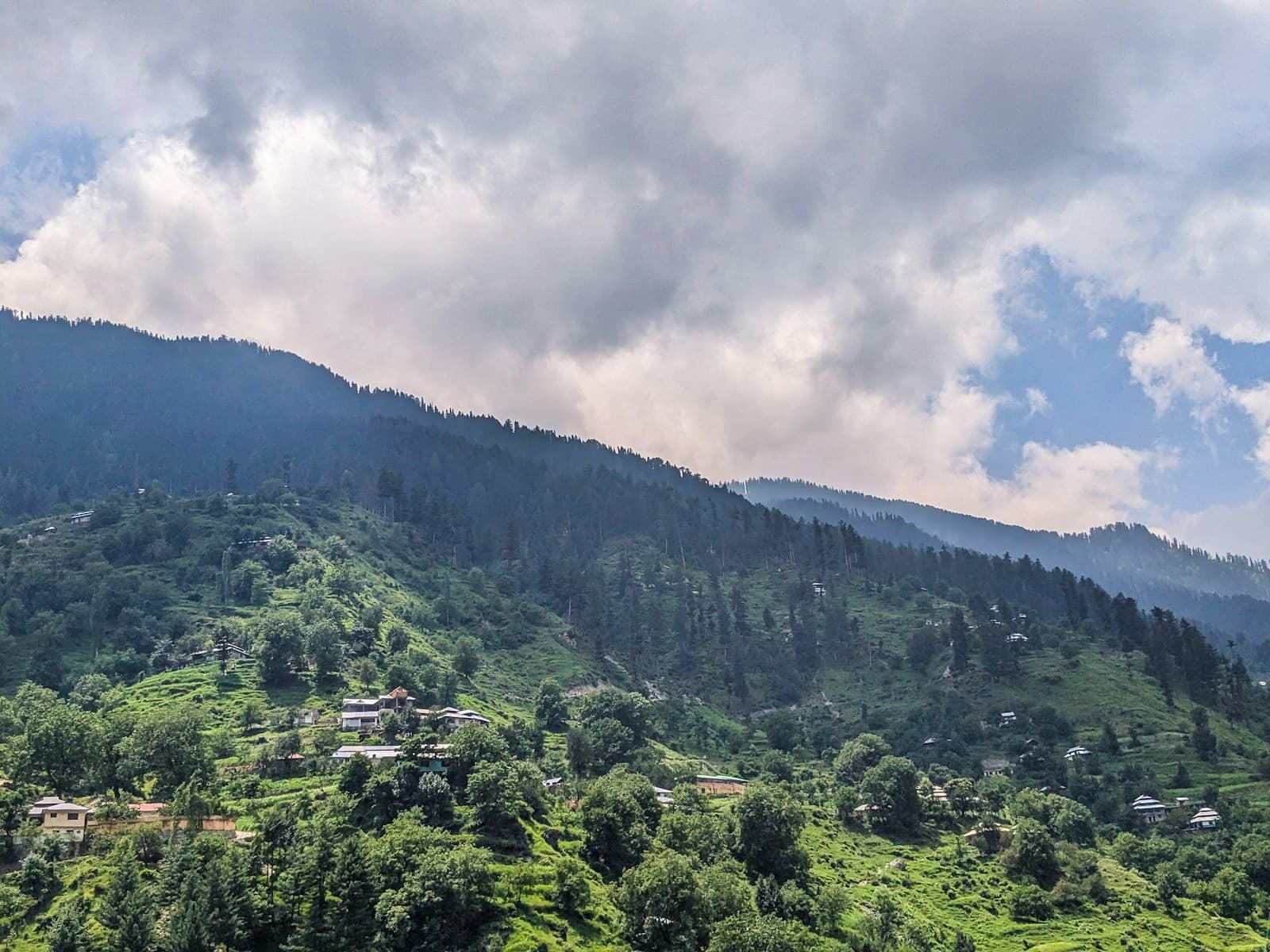
Tirthan
India
Himachal's quietest valley — trout rivers, pine forests and homestays instead of mall roads.
Tirthan Valley is what people mean when they say Himachal 'before the crowds'. It's the valley carved by the Tirthan river in Kullu district, gateway to Great Himalayan National Pa...
Photos
Top Operators
Browse by month
Upcoming trips (1)

When to Go
Explore Nearby
If you like Tirthan, you might also enjoy these destinations.



Trips by Departure City
Find Tirthan trips departing from your city.
What to Expect
Expect a genuinely rural valley: single-lane roads, homestays run by local families, patchy Airtel/Jio signal (BSNL is the most reliable), and power cuts that are just part of the deal. Days fill up with short hikes to Chhoie waterfall or Serolsar Lake, trout fishing permits, riverside reading, and drives to Jibhi's wooden temple or Shangarh's meadows. Food is home-cooked — rajma-chawal, siddu, trout if you're lucky. Nights are cold even in summer after 9pm. Crowds are thin compared to Kasol or Manali, but weekends and the Dec 31 week do fill up, so book homestays ahead.
- Roads inside the valley are narrow and badly maintained in stretches — expect 1-2 hours to cover 20km, and motion sickness is real on the Aut-Banjar climb.
- ATMs are unreliable beyond Banjar. Carry enough cash for your whole trip; UPI works in bigger homestays but not small shops.
- Mobile data is patchy. Airtel and Jio work in Banjar/Gushaini, BSNL is best deeper in. Don't plan to 'work from Tirthan' unless your homestay confirms WiFi.
- GHNP treks need a forest permit booked in advance at Sai Ropa — you cannot just show up and walk in.
- Leeches in monsoon (Jul-Aug) on forest trails, and landslides can shut the Aut-Banjar road for hours.
Things to Do
Plan Your Trip
By air: nearest airport is Bhuntar/Kullu (KUU), 50km away, with limited flights from Delhi. By train: nearest broad-gauge station is Chandigarh (200km), then bus. By bus: overnight HRTC/private Volvo from Delhi to Aut (10-12 hours, ₹900-1,600), then local taxi to Banjar (30 min, ₹500-800) and Gushaini/Jibhi (20-40 min more). By car: Delhi-Manali highway to Aut, turn right onto the Banjar road — 12-13 hours total, best done overnight with two drivers.
Local Guide
Must try: Siddu — steamed wheat bun stuffed with walnut or poppy paste, served with ghee, Trout — grilled or fried, fresh from the Tirthan river (₹400-700 a plate), Rajma-chawal made with local kidney beans — genuinely different from city rajma, Kullu-style chicken curry with whole spices, Babru — deep-fried lentil-stuffed bread, breakfast staple, Local honey and apricots in season
Eat at your homestay — it's cheaper, fresher and supports the family. The riverside cafés in Gushaini (there are maybe four) do decent coffee and trout but service is slow; order an hour before you're hungry.
FAQs
Is Tirthan Valley worth it compared to Kasol or Manali?
Do I need a permit for Great Himalayan National Park?
How do I reach Tirthan Valley from Delhi?
Is there mobile network and WiFi in Tirthan?
What's the best time to visit Tirthan Valley?
Are there ATMs in Tirthan Valley?
Can I do Tirthan Valley in 3 days from Delhi?
Is Tirthan Valley safe for solo female travelers?
What is there to do in Tirthan besides trekking?
Do group tours to Tirthan include GHNP permits?
Group Trips to Tirthan
Group trips to Tirthan Valley are quietly becoming the smart alternative to the crowded Kasol-Manali circuit, and for good reason. Tirthan sits in Kullu district at the gateway to Great Himalayan National Park, a UNESCO World Heritage site, and offers something increasingly rare in Himachal — a valley where the forest still outnumbers the tourists. Group tours to Tirthan typically run 4-6 days from Delhi, covering the overnight bus to Aut, homestay stays in Gushaini or Jibhi, guided hikes to Chhoie Waterfall and Serolsar Lake, and day trips to Shangarh and Sainj Valley. Prices for Tirthan Valley group packages start around ₹22,999 per person and usually include transport, homestay accommodation, most meals, local guides and buffer-zone permits — though multi-day GHNP trek permits often cost extra. The valley suits groups who want trekking, bonfires, riverside cafés and genuine digital detox rather than nightlife. October and April-May are the best months for Tirthan group tours, with December popular for New Year bonfire trips. If your group wants pine forests, trout streams and homestays run by local families instead of mall roads, Tirthan Valley is the Himachal trip worth booking.
Destination data helps you shortlist trips quickly. Refreshed periodically.