Bara Bhangal
India
India's last roadless village — earn your arrival over a 4,800m pass.
Bara Bhangal is the kind of place that makes you question why you booked a flight to Goa instead. Tucked in the Kangra district of Himachal Pradesh, at around 2,500m, this is a rem...
Photos
Top Operators

Browse by month
Upcoming trips (1)
Explore Nearby
If you like Bara Bhangal, you might also enjoy these destinations.

Trips by Departure City
Find Bara Bhangal trips departing from your city.
What to Expect
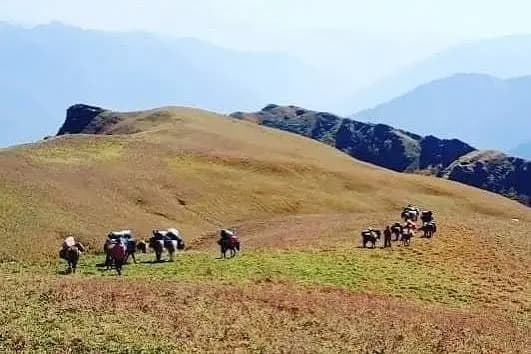
Expect a proper expedition, not a vacation. Days of 6-8 hours walking, nights in tents or basic homestays, food cooked over firewood, and zero connectivity. The scenery is genuinely world-class — think green U-shaped valleys, snow bridges, and herds of sheep moving like clouds. The village itself is 30-odd houses, a small temple, and a government school. Locals are Gaddi tribals who migrate to lower altitudes in winter. You'll likely be the only outsiders there. Weather changes fast; a sunny morning can turn into hail by noon. Group tours handle logistics — mules, porters, permits, guide, cook — and that's genuinely the only sane way to do it if you're not an experienced self-supported trekker.
- This is NOT a beginner trek. The Thamsar Pass crossing is 4,800m and genuinely dangerous in bad weather — people have died here.
- Zero mobile network, zero internet, zero ATMs. Carry all cash and don't expect to call home for a week.
- No medical facilities beyond basic first aid. A serious injury means a helicopter evacuation that may not come for days.
- The village is cut off from roads for ~6 months (roughly November to May). Winter crossings are expert-only.
- Do not attempt this solo without a guide unless you have serious Himalayan trekking experience. Several trekkers have gone missing.
Things to Do
Plan Your Trip
Fly or train to Delhi, then overnight bus/train to Pathankot or Kangra. From there, a 3-4 hour drive to Bir/Billing (the roadhead). Billing is the start point for the Thamsar Pass route. Alternatively, approach from Chamba side via Kalihani Pass (harder). There is NO road to Bara Bhangal village itself — the final approach is 5-6 days of trekking. Group tours typically arrange pickup from Bir or Dharamshala. Nearest airport: Gaggal (Kangra), 2 hours from Bir. Nearest railhead: Pathankot, 4 hours.
Local Guide
Must try: Siddu (steamed wheat bread stuffed with walnuts/poppy), Dham (traditional Kangri rice-dal dish), Local rajma and madra, Gaddi-style mutton (rare, only on special occasions), Butter tea and local herbal chai
Eat what the group kitchen serves — it's fresh, hot, and calibrated for trekking energy. Don't expect restaurant food. Carry your own dry snacks (nuts, energy bars, electral) for trail days.
FAQs
Can I do the Bara Bhangal trek without a guide?
Is Bara Bhangal safe for solo female travellers?
How fit do I need to be?
What's the best month to go?
Do I need permits?
Is there any phone signal or internet?
What about altitude sickness?
Can I get food and stay in the village?
How much cash should I carry?
Is the ₹49,000 group tour worth it?
Group Trips to Bara Bhangal
A group trip to Bara Bhangal is not your average Himachal holiday — it's a proper Himalayan expedition to one of India's last roadless villages, tucked into the Dhauladhar range in Kangra district. Most travellers reach Bara Bhangal by trekking over the 4,800m Thamsar Pass from Billing near Bir, a route that takes 5-6 days each way and rewards you with alpine meadows, glacier crossings, and a Gaddi shepherd village that stays cut off for six months a year. Group tours to Bara Bhangal start around ₹49,000 and typically include a certified guide, mules, porters, a cook, camping gear, forest permits, and all meals — which is genuinely the only sensible way to do this trek unless you're a seasoned self-supported mountaineer. The best time for a Bara Bhangal trek is October, with June and September as strong alternatives; the monsoon months of July and August are dangerous and most operators suspend departures. If you're searching for offbeat Himachal treks or adventure group tours that go beyond Manali and Kasol, Bara Bhangal delivers the kind of raw, unpolished Himalayan experience that's increasingly hard to find. Expect zero phone signal, basic homestays or tents, and a level of remoteness that demands respect — this is a trek for people with prior high-altitude experience, not first-timers.
Destination data helps you shortlist trips quickly. Refreshed periodically.