15 Best Treks Near Bangalore (2026): Weekend Trails That Start Before the City Wakes
The best treks near Bangalore for 2026, from 3 hour scrambles to 2 day Western Ghats crossings. Real distances, honest crowd reports, and group booking tips.
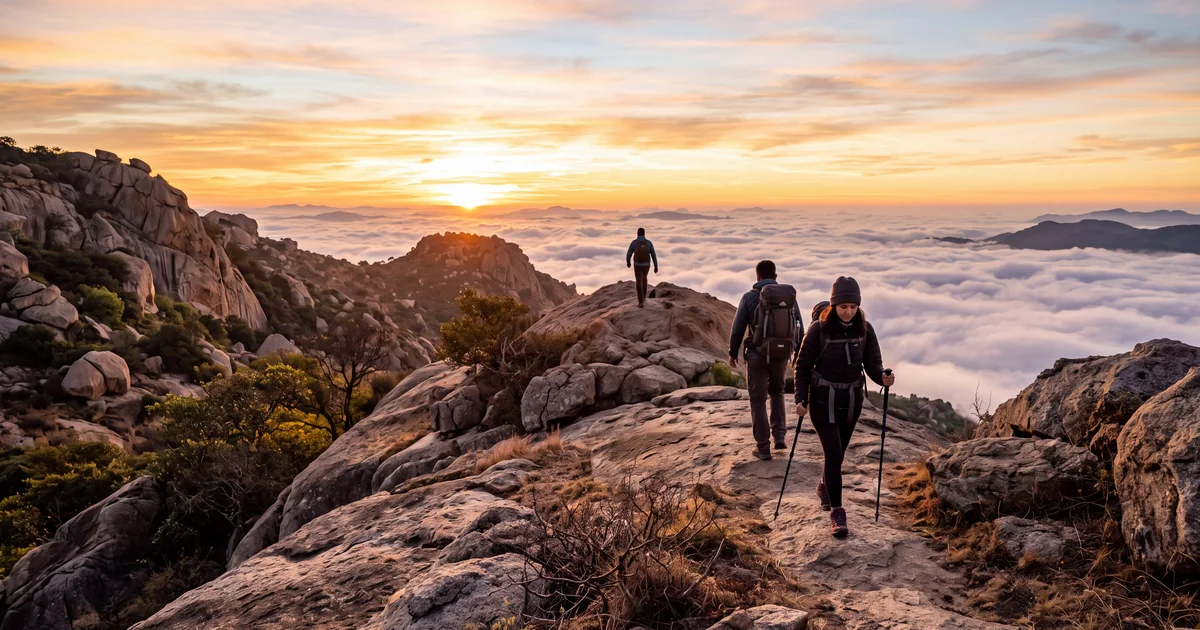
The first time you stand on a granite summit outside Bangalore at 6am, watching cloud fill the valley below, you understand why people set their alarms for 3am on a Saturday.
Bangalore sits at 920 metres above sea level. The Deccan plateau rolls east, flat and dry. The Western Ghats climb west, starting about 150 km away. Between these two geographies lies a strip of boulder hills, scrub forests, and river gorges that produces some of the best short treks in South India. Fifteen of them sit within 250 km of the city, which means you can leave after Friday dinner and be back for Sunday lunch.
This is not a list of "top 10 treks" pulled from a template. Every trail here has been checked against actual group departures, real elevation numbers, and honest crowd levels. Some will disappoint you on a holiday weekend. Others will surprise you on a random Tuesday in November.
TL;DR
- Best sunrise trek: Skandagiri (70 km, go on a weekday between October and January)
- Best beginner trail: Nandi Hills (60 km, easy, done by 9am, KSRTC bus accessible)
- Best weekend overnight: Kumara Parvatha (270 km, 2 day climb, real Ghats wilderness)
- Best uncrowded option: Makalidurga (60 km, similar effort to Skandagiri, a quarter of the crowd)
- Peak season: October to February for clarity; monsoon for green but muddy trails
What makes Bangalore a trekking base?
Most Indian cities need an eight hour drive to reach proper trails. Bangalore doesn't.
The city is surrounded by hills on three sides. Nandi Hills is 60 km north. Ramanagara's granite cliffs are 50 km southwest. Savandurga, the largest monolith hill in Asia, sits less than an hour from the outer ring road. For the Western Ghats, Coorg and Chikmagalur are a four to five hour drive, close enough for a weekend trip.
The climate helps too. Bangalore's elevation keeps winter mornings cool enough for comfortable climbing without the extreme cold that limits Himalayan trekking seasons. You can trek here 10 months a year. Only peak summer (March to May) makes early morning starts feel like a chore rather than a choice.
One thing Bangalore does not have: solitude on popular trails during peak weekends. If you want quiet, read the crowd notes under each trek and plan accordingly.
Day treks under 100 km from Bangalore
Skandagiri (70 km, easy to moderate)
The cloud sea at Skandagiri on a clear December morning has launched more Instagram accounts than any other trail in Karnataka. You start climbing at 2am in complete darkness, reach the summit ridge by 5:30am, and spend the next hour watching the world below vanish under a white blanket.
The trail is rocky but not technical. A reasonable fitness level gets you up and down in about five hours total. The descent is harder on the knees than the climb, so shoes with ankle support matter.
The catch: weekend batches in December and January routinely hit 500 to 1,000 people on the same trail. The summit ridge looks like a concert venue. Go on a weekday. The mountain does not change; the crowd does.
Nandi Hills (60 km, easy)
Nandi Hills is where most Bangaloreans start. The drive takes about 90 minutes from the city centre, the climb is gentle, and you are back in the car by 9am. The sunrise from Tipu's Drop viewpoint earns its reputation, especially between October and January when the air is crisp and visibility stretches past the Nandi river valley.
It is not really a trek in the traditional sense. There is a paved road to the top, and most people drive up. But the walking path from the base village adds about 45 minutes of effort and earns you the view in a way that a car park does not.
Skip it on a Saturday in winter. The parking lot fills by 5:30am and the viewpoint feels like a railway platform.
Savandurga (50 km, moderate)
Savandurga is a different beast. At 1,226 metres, it is one of the largest monolith hills in Asia, and the ascent is a steep granite scramble that punishes smooth soled shoes. The trail splits into two routes: Karigudda (the harder, darker rock face) and Biligudda (the lighter, marginally easier one).
Most groups take Biligudda. It takes about two and a half hours up and two hours down. The views from the top stretch across the Arkavathi reservoir when water levels are decent, which means post monsoon through January.
The honest warning: this is where people get hurt. The granite is smooth, and one section near the top has a 60 degree incline with no rails. Do not attempt this in the rain, in sandals, or without a group that knows the route.
Makalidurga (60 km, easy to moderate)
If someone told you there was a Skandagiri equivalent with a tenth of the crowd, you would be suspicious. Makalidurga is that place. The trail starts near a railway station on the old Goa highway, crosses a set of train tracks (check the timetable), and climbs through scrub to a ruined fort at the summit.
The effort is comparable to Skandagiri. The sunrise is comparable. The number of people is not. On a December weekend when Skandagiri has 800 trekkers, Makalidurga might have 80.
The downside: there are no organised facilities at the base. Carry your own water. The approach road is rough, and auto rickshaws from the nearest town charge whatever they feel like after dark.
Anthargange (70 km, easy)
Anthargange combines a hill climb with a cave scramble, which makes it popular with groups that want variety. The trek itself is a gentle climb through volcanic rock formations. The caves near the summit are the real draw: narrow passages between boulders that require you to crawl, slide, and occasionally contort yourself through gaps.
Night treks at Anthargange are common and safe with organised groups. The combination of darkness, headlamps, and boulder caves creates an atmosphere that pure summit treks do not have. Most batches depart Bangalore around 10pm and return by early morning.
It is not a difficult trek. But the caves are not suitable for anyone with claustrophobia. That is not a disclaimer; it is a real observation. The passages narrow to about half a metre in places.
Ramanagara (50 km, easy)
You know Ramanagara from the movie Sholay, even if you have never been there. The boulders in the film were shot here, and the terrain still looks like a Western set. Flat, dry, scattered with massive granite formations that jut out of the earth.
The trek options here are varied: rappelling sessions, short climbs to viewpoints, and a longer trail to Ramadevara Betta, a vulture sanctuary. The Ramadevara Betta trail is about 3 km each way with mild elevation gain. You finish in under three hours and can still make it to lunch in the city.
Good for families and beginners. Not the place for anyone looking for a summit push or serious elevation.
How crowded are Bangalore treks on weekends?
This is the question most trail guides avoid. Here are real numbers based on peak season (December to January) Saturday mornings:
Skandagiri gets 500 to 1,000 people. Nandi Hills gets even more, but most drive up. Savandurga sees 200 to 400 trekkers. Makalidurga: 50 to 100. Anthargange: 150 to 300 for night batches. Ramanagara: depends on the event, but usually under 100 for actual treks.
If crowd is your concern, the solution is simple. Go on a weekday. Go in February instead of December. Or pick one of the trails further from the city that this list covers in the next section.
Weekend overnight treks (100 to 250 km)
Kumara Parvatha (270 km, difficult)
Kumara Parvatha is the real thing. At 1,712 metres, it is the highest peak in Coorg and one of the toughest weekend treks accessible from Bangalore. The standard route from Kukke Subramanya is about 13 km one way, with roughly 1,300 metres of elevation gain. You camp at Bhattara Mane (a clearing about 8 km in) and summit the next morning.
The trail passes through thick Shola forests, open grasslands, and a final rocky scramble to the peak. On a clear day, the view from the top stretches to the Arabian Sea coast. That is not an exaggeration. You can see the Netravathi River valley below and the coastal strip beyond it.
The honest caveat: this trek is not for beginners. The trail beyond Bhattara Mane is steep, unmarked in places, and the weather changes fast. Carry rain gear even in "dry" season. Also, the forest department requires permits, and they occasionally close the trail. Check before you book.
Kodachadri (400 km, moderate to difficult)
Kodachadri is a two day trek best done between October and February. The peak sits at 1,343 metres in Shimoga district, and the trail through Hidlumane Falls is one of the most scenic in the Western Ghats. The route involves crossing a stream, climbing through dense forest, and emerging onto grasslands near the summit.
The sunset from Kodachadri summit is the main event. Most groups camp near the top and watch the sun drop behind the Ghats. The Hidlumane waterfall section is slippery and requires some scrambling, so this is not a beginner trail.
Getting here takes about seven hours from Bangalore. Most operators run Friday night departures that reach the base by early Saturday morning.
Tadiandamol (250 km, moderate)
Tadiandamol at 1,748 metres is technically the highest peak in Coorg. The trek is about 8 km round trip from the base near Nalaknad Palace, and the trail passes through coffee estates and Shola forest before opening into high grassland.
Compared to Kumara Parvatha, this is a gentler climb. You can finish it in a single long day, though many groups make it an overnight trip with a campsite near the midpoint. The sunrise from the peak is particularly good between November and January, when the air is cold enough (below 10 degrees Celsius at 5am) to keep the visibility sharp.
The drive to the trailhead from Bangalore is about five hours via Mysore and Madikeri. Most weekend batches leave Friday evening.
Kudremukh (350 km, moderate to difficult)
Kudremukh means "horse face" in Kannada, and the peak does look like one from the right angle. At 1,894 metres, it is the third highest peak in Karnataka, and the trek through the national park is one of the best in the state.
The trail is about 12 km one way through rolling grasslands and Shola patches. The terrain is moderate for the first half and steeper in the final approach. You need a forest permit from the Kudremukh National Park office, and group sizes are capped.
The best window is October to February. Monsoon treks are spectacular but extremely muddy, and leeches are unavoidable from June to September. That might sound like a minor detail. It is not. Leeches in Kudremukh are persistent and plentiful.
Chikmagalur Trails: Mullayanagiri and Baba Budangiri (250 km, easy to moderate)
Chikmagalur is where Bangalore trekkers go when they want hills without the full commitment of Kumara Parvatha. Mullayanagiri at 1,930 metres is the highest peak in Karnataka, and the trek from the road is a gentle 3 km walk up a well marked path. Baba Budangiri, a few kilometres away, involves a similar effort with added historical interest (the caves are tied to both Hindu and Sufi history).
These are not challenging treks. They are high altitude walks with excellent views and nearby coffee estate stays. The combination of trekking, coffee plantations, and homestay meals is why Chikmagalur fills up every long weekend from October onwards.
Book your stay early. Homestays in the Chikmagalur belt sell out two weeks ahead for long weekends.
What should you carry for treks near Bangalore?
The specific packing list depends on whether you are doing a three hour day trek or a two day Ghats crossing, but some things are constant.
Water: carry at least 2 litres for any trek. No trail near Bangalore has reliable water sources until you get deep into the Western Ghats. Shoes: proper grip shoes, not sneakers, not sandals, not anything with a smooth sole. Headlamp: mandatory for night and sunrise treks. Phone battery: fully charged, because that is your map and your emergency device.
For overnight treks, add a fleece (Western Ghats camps drop to 8 to 12 degrees Celsius at night), rain gear (even in dry season, you can catch a shower), and a tent if your operator does not provide one.
One thing you do not need: expensive gear. The trails near Bangalore are not Himalayan expeditions. Functional shoes and a daypack handle 90% of what this list covers.
How to find the right group trek from Bangalore
The trekking market in Bangalore is massive and unregulated. There are excellent operators running safe, small batches. There are also groups that pack 50 people onto a trail with two inexperienced guides and a WhatsApp number for support.
The difference between them matters more than which trail you pick.
Look for operators that list a clear group size cap (20 to 30 is reasonable for day treks), a trekker to guide ratio, and actual reviews from people who have done the specific trek you are booking. Avoid anyone who does not tell you the real operator name until after payment.
On TripzSearch, every listing shows the actual operator, real verified ratings, and departure details before you pay. You can compare batch sizes, check inclusions, and find group departures from Bangalore that match your preferred date and difficulty level.
Are treks near Bangalore worth it compared to the Himalayas?
This is a question people ask in trekking forums and the answer depends on what you are looking for.
If you want high altitude, snow, and multi day expeditions above 4,000 metres, Bangalore treks are not that. The highest point on this list is under 2,000 metres, and even the toughest trek finishes in two days.
What Bangalore treks offer is accessibility. You can decide on Thursday and be on a trail Saturday morning. You do not need altitude acclimatisation, specialised gear, or a week of leave. For a working professional in Bangalore, the ability to summit a real hill and be back in the city for Monday morning is not a compromise. It is a feature.
The Western Ghats also have their own character. Dense Shola forests, mist rolling through coffee estates, granite boulders older than the Himalayas. The scenery is different, not inferior.
For those who want longer expeditions, browse the full trek collection across India or check out Himalayan treks accessible from Bangalore.
Frequently asked questions about treks near Bangalore
The FAQs above cover the most common search queries about trekking near Bangalore. If you have a specific trail question, check the individual trek guides linked throughout this post or browse all trip options from Bangalore for current group departures, pricing, and availability.
Frequently asked questions
- Which are the easiest treks near Bangalore for beginners?
- Nandi Hills, Anthargange, and Manchanabele are the easiest options, all under 70 km from the city. None require prior trekking experience, and most organised batches finish by noon. Wear proper grip shoes even on easy trails because loose gravel on the descent catches people off guard.
- What is the best time to go trekking near Bangalore?
- October to February gives you the clearest skies and the coolest temperatures, usually between 12 and 22 degrees Celsius on summit mornings. Monsoon treks from June to September are dramatic in the Western Ghats but trails get slippery. Summer works if you start before 5am.
- Can I do treks near Bangalore without a car?
- Yes. Most organised group departures include pickup from hubs like Majestic, Silk Board, and Marathahalli. For independent trips, KSRTC runs buses to trailheads like Nandi Hills, Sakleshpur, and Ramanagara from Shivajinagar and Kempegowda bus stations.
- How much does a group trek near Bangalore cost?
- Budget group departures for a day trek run between 800 and 1,500 rupees per person including transport. Weekend overnight treks to places like Kumara Parvatha or Kodachadri cost 2,500 to 4,500 rupees. Prices vary by batch size and operator. Check current listings on TripzSearch for exact pricing.
- Are night treks near Bangalore safe for solo women?
- Organised night treks with reputable operators are generally safe, but verify the operator's batch size, trekker to leader ratio, and real reviews before booking. Avoid unverified groups that run massive 50 person batches with two guides. On TripzSearch, every listing shows the actual operator name and verified ratings.
- Which trek near Bangalore has the best sunrise?
- Skandagiri is the most famous sunrise trek near Bangalore, and the cloud sea on a clear winter morning is worth it. Makalidurga offers a similar experience at 60 km from the city with fewer crowds. For something different, the Huttari Betta sunrise gives you a 270 degree view of the Nandi Hills range.