Himalayan Treks from Bangalore (2026): Fixed-Departure Group Trips Worth the Flight
Planning a Himalayan trek from Bangalore? Which routes are worth the flight, what the trip costs, and how to find a group departure you can trust.
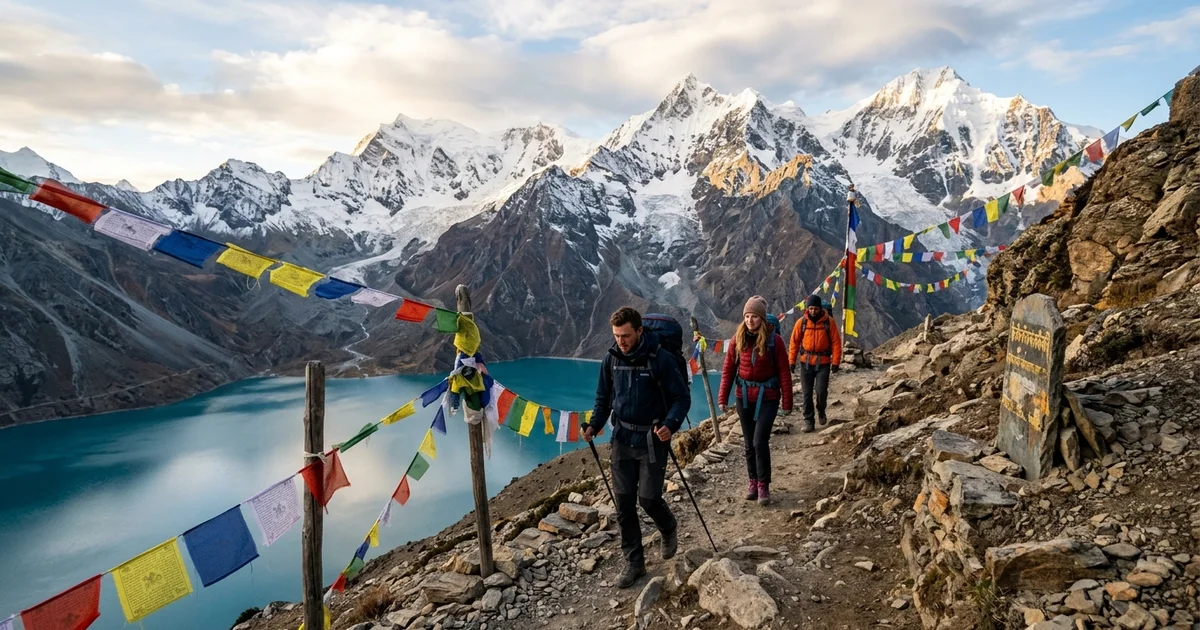
Flying from Bangalore to a Himalayan trailhead is a real commitment. The flight to Delhi or Dehradun, followed by 8 to 10 hours of road, means the approach alone costs a full day each way. But people who do Himalayan treks from Bangalore once almost always go back. The altitude changes everything. The snow, the open ridgelines above 12,000 feet, and the silence you cannot find anywhere near Electronic City make the logistics worth tolerating.
This is a shortlist, not a directory. It covers the routes that make sense as fixed-departure group trips from Bangalore: the ones with reliable operator supply, manageable total trip lengths, and an honest entry point for people who have never climbed above 10,000 feet.
TL;DR
- Best beginner snow trek: Kedarkantha, 12,500 ft, season December to March
- Best post-monsoon option: Hampta Pass or Chopta Tungnath, September to November
- Getting there: fly to Dehradun or Delhi for Uttarakhand routes, Chandigarh for Himachal (1 to 1.5 days each way)
- Total door-to-door trip: 7 to 10 days
- Browse fixed-departure departures at TripzSearch
Why a fixed-departure group tour makes sense here
A solo Himalayan trek has a logistical overhead that a solo Western Ghats trip simply does not. You need a road transfer from the airport to the base camp (6 to 10 hours from Dehradun), camp permits that are not easy to arrange from Bangalore, and a working protocol for altitude sickness above 11,000 feet. A fixed-departure group tour handles all of that. The guide, the camp bookings, the transfers, and the emergency plan come built in.
The real opinion: for a first Himalayan trip from Bangalore, the group format is the right call. Solo saves money on paper, but the unknowns compound fast at altitude.
The honest caveat: group tours lock in your dates months ahead. The best Kedarkantha batches for December and January fill by October. If you cannot plan that far ahead, look at shoulder-season departures in September or November, which usually have more open slots.
From Bangalore, the entry points are a flight to Dehradun or Delhi for Uttarakhand treks (Kedarkantha, Har Ki Dun, Roopkund) and a flight to Chandigarh for most Himachal routes (Hampta Pass, Triund, Pin Bhati). Most operators include the road transfer to base camp in the package, but confirm that before you pay.
Which Himalayan treks are worth booking from Bangalore?
The right route depends on your experience, available days, and which season you can travel.
First-time Himalayan trekkers: Kedarkantha is the standard starting point, and it earns that reputation. The summit sits at 12,500 feet, the ascent is gradual, and the snow cover from late November through February is reliable. Most group batches run from Sankri in Uttarakhand, about 200 km northeast of Dehradun. On a clear summit morning in January, you get sightlines to Swargarohini, Bandarpunch, and the Kedarkantha ridge. That view is not easy to replicate anywhere else at this difficulty level.
Triund (Himachal Pradesh, 9,350 feet) is the gentler option. One day to summit, one night at the top, back the next morning. It functions as the lightest possible introduction to Himalayan altitude. Go on a weekday in October or November if you want actual quiet. Weekends have turned Triund into a heavily crowded overnight camp.
The caveat for this group: both Kedarkantha and Triund are popular enough that bad operators have moved into them. Check reviews before booking.
Trekkers with 2 or 3 hikes done: Hampta Pass (14,100 feet) stands out. The route crosses from the green Kullu valley into the grey, arid landscape of Spiti in a single day. That shift is hard to explain and harder to forget. Most group departures are 5 days from Manali.
Chopta Tungnath sits at 13,123 feet and holds the highest Shiva temple in the world. The summit push is short (roughly 3.5 km each way), but the altitude demands respect. April to May and October to November are the two windows. The road to Chopta closes for winter and reopens late, so check conditions before you commit.
Trekkers with a high-altitude route already done: Rupin Pass (15,250 feet) takes 8 days and crosses multiple high camps. The snow bridge section around day 5 is one of the most photographed stretches on any Indian Himalayan route. Roopkund (16,400 feet, Uttarakhand) is harder and takes longer. Both require real physical conditioning. Neither is a trip to compress into fewer days.
Browse operator-verified departures by route on TripzSearch.
What does a Himalayan trek from Bangalore actually cost?
The trek fee and the flight are two separate budgets, and conflating them is the most common planning mistake.
Most operators quote a trek fee that covers camp accommodation, meals on trail, guide, forest permits, and sometimes the airport transfer to base. That is the number you see on the listing. Flights from Bangalore to Dehradun or Chandigarh are on top of that and are entirely variable by how far in advance you book.
One specific thing to check: some operators include the Dehradun to Sankri road transfer in their base price. Others quote it separately, and that transfer is 8 to 10 hours of vehicle hire. The line item adds up.
The honest point: a Himalayan group trip from Bangalore is a planned-budget trip, not a spontaneous one. For current trek prices and exact inclusions per package, check the listings on TripzSearch.
How to vet a group operator before you book
Trek photographs look identical across every website. The differences that matter are not visual.
Ask three specific questions. First: do they carry supplemental oxygen on treks above 13,000 feet and does the guide carry a pulse oximeter? Second: what is the leader-to-trekker ratio on the specific route you are booking? Third: what is their protocol if someone shows altitude sickness on summit day?
Good operators give direct answers. "We will handle it" is not a plan above Roopkund or Rupin Pass.
Also check the actual group size cap, not the stated maximum. An operator who runs Kedarkantha batches of 8 with one leader is running a fundamentally different trip from one who fills a bus of 25 with the same staffing. Both may list the same route at similar prices. The difference shows up on the trail.
On TripzSearch, every Himalayan listing shows the real operator name, the actual group size limit, and verifiable reviews. It takes about 10 minutes to compare two operators side by side without reading through multiple Instagram accounts.
Frequently asked questions
- Which Himalayan trek is best for beginners from Bangalore?
- Kedarkantha (Uttarakhand, 12,500 ft) is the standard starting point for good reason. The ascent is gradual, the snow from December to March is reliable, and the operator ecosystem around Sankri is mature and well-tested. Triund (Himachal Pradesh, 9,350 ft) is even shorter and a gentler option if you want a single overnight introduction before committing to a full multi-day trek.
- How do you get from Bangalore to a Himalayan trek base camp?
- Almost always by flight. For Uttarakhand routes like Kedarkantha, Har Ki Dun, and Roopkund, fly to Delhi or Dehradun, then take a 8 to 10 hour road transfer to the base camp. For Himachal routes like Hampta Pass or Triund, fly to Chandigarh and then drive to Manali or Dharamshala. Most fixed-departure group operators include the road transfer from the airport in their package price, but confirm this before booking.
- What is the best season for Himalayan treks from Bangalore?
- It depends on what you want. December to March for snow treks like Kedarkantha (cold nights, expect below 0 degrees Celsius at camp). May to June for summer meadow treks like Valley of Flowers and Hampta Pass. September to November for the post-monsoon window: best visibility, stable trails, and comfortable temperatures at altitude. July and August bring heavy rain to most Himalayan zones and trail conditions deteriorate.
- How long does a Himalayan trek trip from Bangalore take?
- A typical Himalayan trek trip is 7 to 10 days door-to-door. That includes 1 to 1.5 days each way for travel (flight plus road transfer) and 5 to 7 days on the trek itself. Routes above 14,000 feet like Rupin Pass or Roopkund usually add an acclimatisation day, so budget 9 to 11 days for those.
- Are fixed-departure Himalayan treks safe for solo women from Bangalore?
- Many are, but the safety standard depends on the operator, not just the route. Look for operators who specify their leader-to-trekker ratio (1:8 or better for high-altitude treks), carry supplemental oxygen above 13,000 feet, and have a clear altitude sickness protocol. On TripzSearch, every Himalayan listing shows the operator name, the real group size cap, and verified reviews so you can check before paying.
- What does a fixed-departure Himalayan group trek from Bangalore cost?
- The trek fee and the flight are two separate budgets. Most operators quote a trek fee that covers camp accommodation, meals on trail, guide, and forest permits. Flights from Bangalore to Dehradun, Delhi, or Chandigarh are not included in that number. Some operators include airport transfer to base camp; others quote it separately. For current trek prices and what each package includes, see the listings on TripzSearch.