20 Best Places to Visit in Srinagar (2026): Dal Lake, Old City and Beyond the Usual List
20 places to visit in Srinagar in 2026 with local tips on timing, transport and what most travel blogs skip.
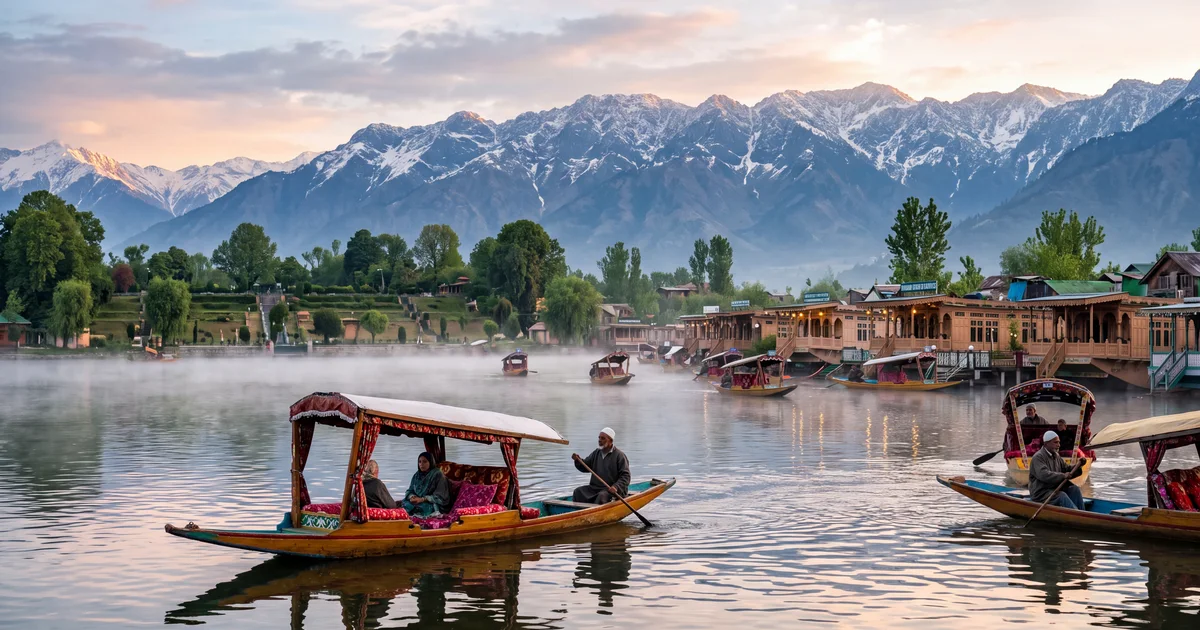
Places to visit in Srinagar fill every travel blog on the internet, usually as a list of gardens, a shikara photo, and the word "paradise" repeated seven times. This guide is different. I spent 6 days walking the city in October 2026, including the parts most tourists drive past: the Old City lanes, the Jhelum ghats, the papier mache workshops that have been running since the 14th century.
Srinagar sits at 1,585 metres in the Kashmir Valley, pressed between the Zabarwan hills on the east and Hari Parbat fort on the west. The city stretches along both banks of the Jhelum River, connected by seven historic bridges. Dal Lake dominates the northeast. The Mughal Gardens line its eastern shore. The Old City occupies the dense, older quarters around Nowhatta and Rainawari. That is where the character lives.
This is not a rehash of the standard 10 places list. It includes spots that need context, honest notes on what is overrated, and timing advice that accounts for weather, crowds, and your budget.
TL;DR
- Dal Lake, the Mughal Gardens, and the Old City are the core. Three to four days covers them without rushing.
- April and October are the best months. Peak summer (July to August) brings crowds and Amarnath Yatra traffic.
- Budget ₹2,000 to ₹4,000 per person per day for stays, meals, auto rides, and entry fees.
- One houseboat night is enough. Spend the rest at a Dalgate or Boulevard hotel with consistent hot water.
- The Old City is Srinagar's best kept open secret. Most tourists miss it entirely.
What Makes Dal Lake More Than Just a Shikara Ride?
Dal Lake covers 18 square kilometres across four basins: Gagribal, Lokut Dal, Bod Dal, and Nagin. At 1,583 metres elevation it reflects the Zabarwan range on calm mornings with a clarity that looks edited but isn't.
The standard shikara ride costs ₹500 to ₹800 for an hour. That is the tourist version. The real lake hides behind the first row of houseboats. Ask your boatman to enter the interior channels where floating vegetable gardens grow tomatoes, cucumbers, and lotus on woven reed beds. These channels have no tourist traffic. You hear only water and birds.
The floating vegetable market operates daily from 5 AM to 7 AM near the western shore of Bod Dal. It has shrunk. Expect 30 to 40 boats on a good morning, not the hundreds from photographs taken in the 1990s. Getting there means hiring a shikara at 4:30 AM. Worth it once.
Char Chinari, a tiny island with four chinar trees, sits in the middle of Lokut Dal. From there the lake feels enormous, with houseboats reduced to small shapes along the shore. The boatman will anchor while you sit. Bring your own chai.
Dal Lake's water quality is a legitimate concern. Weed growth covers sections of the surface in August and September. The ₹1,200 crore cleaning project (started 2023) shows results on the Boulevard side but interior basins remain patchy. It is not the pristine alpine lake from postcards. It is still worth two mornings of your trip.
Are the Mughal Gardens Worth a Full Afternoon?
Three Mughal era gardens line Dal Lake's eastern shore within a 6 km stretch. Nishat Bagh (1633, 12 terraces), Shalimar Bagh (1619, 4 terraces), and Chashme Shahi (a smaller spring garden). You can cover all three in 3 hours.
Nishat Bagh is the standout. Twelve terraces descend from the Zabarwan foothills to the lakeshore, each representing a zodiac sign. Water channels flow from original Mughal aqueducts. In October the chinar trees turn copper and the upper terraces become one of the most photogenic spots in the valley.
Shalimar Bagh feels more formal. The fourth terrace, once reserved for royal women, still has high enclosing walls and a black marble pavilion at the far end. The acoustics inside the pavilion are oddly good.
Chashme Shahi takes 5 minutes to walk through but has a natural spring at 4°C year round. Locals line up with bottles.
Entry is ₹24 per person for Indian nationals. The gardens open at 9 AM. Go between 4 and 6 PM when the tour bus crowds thin and the light softens across the lake.
My actual recommendation: skip the selfie circuit. Sit on Nishat Bagh's upper terrace with chai from the stall outside the gate. Zabarwan behind you, Dal Lake below. Twenty minutes there does more than speed walking all three gardens in 45 minutes.
Pari Mahal: The View That Beats Shankaracharya
Pari Mahal sits on a Zabarwan hillside above Chashme Shahi at roughly 1,620 metres. Built in the mid 1600s by Mughal prince Dara Shikoh as a Buddhist monastery turned Sufi school, it is now an archaeological ruin with six terraced gardens.
The view from the top terrace is the draw. You see Dal Lake's full expanse, the Boulevard road, the Mughal Gardens below, Hari Parbat fort across the valley, and the Old City beyond. At sunset the lake catches orange and pink bands. This single viewpoint gives you more of Srinagar's geography than an hour long shikara ride.
Most tourists go to Shankaracharya Temple for the panoramic view. That is fine, but the 1,000+ step climb is steep, photography restrictions exist inside the temple compound, and the view faces largely the same direction as Pari Mahal with less comfort. Pari Mahal has benches, no crowd on weekdays, and no entry queue. You drive right up.
The caveat: Pari Mahal closes at 5 PM. If you want the sunset, you need the guard's goodwill or you need to arrive by 4:30 PM in October when dusk comes early. The ruins themselves are sparse. Come for the view, not the architecture.
The Old City: Why Most Tourists Miss Srinagar's Real Character
The Old City occupies the dense quarters around Nowhatta, Rainawari, and Khanyar on the Jhelum's right bank. This is where Srinagar existed before the lake became a tourist attraction. Most visitors never cross Zero Bridge to reach it.
Jamia Masjid, built in 1394 by Sultan Sikandar, sits at Nowhatta's centre. 378 wooden pillars support the structure. The courtyard holds 33,000 people during Friday prayers. The pillars are made from deodar trunks brought from Kashmir's hill forests, each one roughly 30 feet tall. Even if you are not visiting for prayer, the architecture alone justifies 30 minutes.
Walking from Jamia Masjid toward Khanqah e Moula (1395, the oldest Muslim shrine in Kashmir) takes 10 minutes through lanes that have not changed width in 600 years. Along the way: copper workshops where artisans hammer samovars by hand, papier mache studios producing lacquerwork that takes 3 months per piece, and bakeries selling tsot (Kashmiri bread) from tandoors embedded in the pavement.
Noon chai (pink salt tea) from any of the Old City tea shops costs ₹10 to ₹20 per cup. Harissa, a slow cooked mutton dish served at dawn, is available only before 9 AM from a handful of stalls near Nowhatta. It is a winter dish traditionally, but the stalls operate year round.
This is not sanitized heritage tourism. The lanes are narrow, sometimes muddy after rain, and you will need to navigate around parked scooters. That is what makes it real. Budget 3 to 4 hours for a proper walk through the Old City, ideally with a local guide who can open workshop doors.
Hazratbal Shrine and the Western Shore
Hazratbal sits on Dal Lake's western shore, distinct from the tourist concentrated Boulevard side. The white marble mosque, completed in 1979, houses what is believed to be a relic of the Prophet Muhammad. It draws large congregations on Fridays and during Eid.
Non Muslim visitors are welcome to enter the outer courtyard. Remove shoes, dress modestly, and maintain silence near the prayer hall. The setting is the quieter side of Dal Lake, with fewer houseboats and more reeds. The Zabarwan range fills the eastern skyline.
The shrine area has a small market selling dried fruits, saffron, and walnut wood items. Prices are lower here than the Boulevard shops. Kashmir saffron (Mongra grade, ₹300 to ₹500 per gram depending on quality) is one of the more reliable purchases if you buy from shops displaying FSSAI certification.
The walk along the western shore from Hazratbal toward Naseem Bagh (a Mughal era chinnar grove belonging to Kashmir University) takes 20 minutes and shows you the lake from a perspective that most tourists never see. Naseem Bagh has roughly 700 chinar trees, some over 400 years old. In October the ground is covered in leaves and the light filters through yellow canopy.
Hari Parbat Fort: The Hilltop Srinagar Forgot
Hari Parbat is a fortified hill in the centre of Srinagar, visible from almost everywhere in the city. The Mughal wall surrounding it was built by Akbar in 1590. The Durrani fort on top dates to the 18th century Afghan period. Below, the slopes hold three religious sites: a Hindu temple (Sharika Devi), a Sikh gurudwara (Chatti Padshahi), and a Muslim shrine (Makhdoom Sahib).
The fort itself requires a permission from the ASI (Archaeological Survey of India) office near Lal Chowk to enter. The permission is free but bureaucratic. Most visitors settle for the walk around the base, which takes about an hour and passes through almond orchards. In March these orchards bloom white and pink, and the hill becomes one of Srinagar's most photographed spots.
From inside (if you get the ASI pass), the 360 degree view includes Dal Lake, the Old City, the Jhelum's winding path through the valley, and the ring of mountains around Srinagar. On a clear day you see the Pir Panjal range to the south.
Worth the effort? For the base walk and almond orchards, absolutely. For the fort interior, only if you enjoy historical ruins and do not mind the paperwork.
Where Should You Eat in Srinagar Beyond Hotel Food?
Wazwan is the formal Kashmiri feast: 36 courses of meat dishes served on a trami (large copper plate shared by four diners). You will not stumble into this at a restaurant. Wazwan happens at weddings and private events. Some Boulevard restaurants offer abbreviated versions (7 to 12 courses) for ₹1,500 to ₹2,500 per person. Ahdoos on Residency Road and Mughal Darbar near Dalgate are the reliable options.
For everyday eating, rogan josh (slow braised lamb), yakhni (yogurt based mutton), and dum aloo (baby potatoes in spice gravy) are on every restaurant menu. Quality varies sharply. Lhasa Restaurant near Dal Gate serves solid Kashmiri and Tibetan food at ₹200 to ₹400 per dish.
Bakeries matter more than you would expect. Srinagar runs on bread. Tsochvor (sesame studded bread), lavasa (thin and crispy), and sheermal (saffron milk bread, sweet) come hot from tandoors throughout the day. The bakeries near Bohri Kadal bridge in the Old City have been operating for generations.
Street food peaks in winter. Harissa stalls open at 5 AM. Tujj (grilled mutton skewers) appears at evening market stalls. In summer, the Boulevard food stalls sell kebabs and kulcha that are perfectly fine for a ₹100 to ₹150 dinner while watching the lake.
One honest note: vegetarian options exist but Srinagar's food culture is overwhelmingly non vegetarian. If you are vegetarian, stick to dum aloo, nadru yakhni (lotus stem), and rajma chawal. Most restaurants handle the request, but the vegetarian versions of Kashmiri dishes lack the depth of the originals. That is just how it is.
Dachigam National Park: Can You Spot a Hangul?
Dachigam sits 22 km from the city centre, spread across 141 square km of the Zabarwan range. It is the only habitat of the Hangul (Kashmir stag), a critically endangered species with an estimated population of around 260 animals.
The lower Dachigam zone (up to 2,400 metres) is open to visitors with a wildlife department permit from October to March. Summer access is restricted due to breeding season. The entry fee is ₹50 for Indians. You must be accompanied by a park guide (₹500 to ₹800 depending on duration).
Hangul sightings are not guaranteed. They are most visible in early morning (6 to 8 AM) during November and December when they descend to lower elevations. Your odds improve significantly with a 2 to 3 hour trek into the inner meadows rather than staying near the gate. Black bears and leopards also inhabit the park but are rarely spotted on tourist trails.
The park's landscape alone justifies the visit. Dense conifer forests, alpine meadows, and the Dagwan River running through a valley that feels remote despite being 45 minutes from Lal Chowk.
Do not expect a safari vehicle experience. Dachigam is walking territory. Wear proper shoes, carry water, and be prepared for steep paths on the inner trails.
Manasbal Lake: The Quieter Alternative to Dal
Manasbal Lake sits 30 km north of Srinagar near Safapora village. It is smaller than Dal (roughly 3 square km) but deeper, and its water is cleaner. The lotus cover is the densest in Kashmir, peaking between July and September when pink flowers blanket large sections of the surface.
Fewer tourists come here. On a weekday you might share the lake with five or six fishing boats and nobody else. Shikaras operate from the village ghat for ₹300 to ₹500 per hour.
The 15th century Mughal sarai (rest house) on the lake's southern bank is largely ruined but atmospheric. Jarokha Bagh, a Mughal garden on the western shore, is smaller than the Srinagar gardens and quieter by a factor of ten.
Manasbal works best as a half day trip paired with the drive to Wular Lake (another 20 km north, the largest freshwater lake in India). The road passes through apple orchards and rice paddies that are vivid green from June to September.
If you have already seen Dal Lake and want a lake experience without the commerce, Manasbal is the answer. Skip it if you have only 3 days in Srinagar. Prioritize it if you have 5 or more.
How to Get Around Srinagar Without Overpaying
Srinagar's public transport is limited. Most visitors rely on autos, taxis, and hotel arranged vehicles.
Auto rickshaws run within the city. A Dalgate to Lal Chowk ride should cost ₹50 to ₹80 but tourists regularly pay ₹150 or more. Fix the price before getting in. There are no meters.
Full day taxi hire costs ₹1,500 to ₹2,500 depending on the route. For Mughal Gardens and Pari Mahal, a taxi from Boulevard Road makes sense. For the Old City, walk. Autos cannot navigate the narrower lanes and the whole point is being on foot.
App based cabs exist but coverage is inconsistent outside the Boulevard and Dalgate areas. When they work, they are the cheapest option.
Shikaras double as water taxis on Dal Lake. If your houseboat is in the Nagin basin and you need to reach Boulevard Road, a shikara to the nearest ghat takes 15 to 20 minutes and costs ₹100 to ₹200. Cheaper than an auto for the same distance, and infinitely more pleasant.
For day trips to Gulmarg (51 km, 1.5 hours) or Pahalgam (90 km, 2.5 hours), shared taxis from the TRC (Tourist Reception Centre) near Dalgate cost ₹500 to ₹700 per seat. Private cabs cost ₹2,500 to ₹3,500 for the return trip. The shared option fills up by 8 AM.
If you are planning a trip from Delhi, direct flights land at Sheikh ul Alam Airport, 14 km from the city centre. Airport to Dalgate takes 30 to 45 minutes depending on traffic. Pre booked hotel transfers are the least stressful option on arrival.
When Is the Best Time to Visit Srinagar?
This depends on what you want. The city changes completely by season.
April: Tulip Garden opens (mid March to mid April, exact dates vary). Asia's largest tulip garden holds 1.5 million bulbs across 30 hectares. This is the only month it is worth visiting. The rest of the year it is a fenced empty lawn. Daytime temperatures hover around 12 to 20°C.
May to June: Pleasant weather, 18 to 30°C. Gardens are green. The lake is calm. This is the most comfortable window for sightseeing. Hotel prices start climbing.
July to August: Monsoon rain, Amarnath Yatra crowds, and peak hotel pricing. The city gets congested. Landslides occasionally block the Srinagar to Jammu highway for a day or two.
September to October: The underrated window. Crowds thin after August. Chinar trees start turning in late September and peak colour hits by mid October. The light gets warmer and mornings are crisp (8 to 15°C). This is when photographers come.
November to February: Cold. Night temperatures drop below 0°C by December. Dal Lake's surface can partially freeze in January. Hotel rates drop to their lowest. Snow covers the city 2 to 3 times per winter, usually for a few days each time. The city is quiet, atmospheric, and very cold. Pack thermal layers.
My preference is October. Fewer tourists than summer, better light, and chinar colour across the entire city. The trade off is shorter days and cold mornings.
Srinagar's Shopping: Saffron, Pashmina, and Walnut Wood
Three things are worth buying in Srinagar. Everything else you can find cheaper elsewhere.
Saffron: Buy only from shops with FSSAI and GI (Geographical Indication) certification. Mongra grade (pure stigma, no yellow threads) runs ₹300 to ₹500 per gram. Anything dramatically cheaper is either cut with corn silk or is Iranian saffron sold as Kashmiri. The Pampore saffron fields (15 km south of Srinagar) harvest in October and November.
Pashmina shawls: A genuine hand woven Pashmina starts at ₹5,000 for plain and goes up to ₹50,000 or more for hand embroidered (sozni). The burn test (real Pashmina smells like burnt hair, synthetic smells like plastic) is the simplest authentication. Government emporia near Lal Chowk are reliable but not cheap. Lal Chowk market shops offer bargaining room but quality varies.
Walnut wood: Carved items (boxes, trays, furniture pieces) from Kashmiri walnut are distinctive. The workshops near Hari Parbat and in the Old City sell direct. A small carved box starts at ₹500. Larger furniture pieces run into the lakhs. The craft has UNESCO recognition under intangible cultural heritage.
The Boulevard shops near the houseboats are the most expensive option for all three. They cater to day tourists. If you have time, go to the source: Pampore for saffron, Old City workshops for walnut wood, and the government Handloom department for certified Pashmina.
How to Plan 3, 5, and 7 Day Srinagar Itineraries
3 days (city only): Day 1: Dal Lake shikara (morning), Boulevard walk, houseboat check in. Day 2: Mughal Gardens, Pari Mahal, Chashme Shahi (afternoon circuit). Day 3: Old City walk (Jamia Masjid, Khanqah e Moula, workshops), Lal Chowk market, departure.
5 days (city plus one day trip): Add Day 4: Gulmarg gondola day trip (leave by 7 AM, return by 5 PM). Day 5: Dachigam National Park morning trek, Hazratbal Shrine afternoon, evening at Naseem Bagh.
7 days (comprehensive): Add Day 6: Manasbal Lake and Wular Lake half day, Pampore saffron fields (October only). Day 7: Pahalgam day trip (Betaab Valley, Aru Valley, Lidder River).
For group departures and packages to Kashmir, most operators run 6 to 8 day itineraries that split time between Srinagar (2 to 3 nights), Gulmarg (1 night), and Pahalgam (1 to 2 nights). That structure makes sense for a first visit.
If you are coming from a southern city, check group trip options from Bangalore where several operators offer direct Kashmir packages with flights included. For more on what to see across the Kashmir valley, including Gulmarg, Pahalgam, and Sonmarg, the full Kashmir guide covers the wider region.
Final Notes for First Time Visitors
Carry valid photo ID everywhere. Hotels register guests with the local police, and checkpoints on highways require ID verification.
Dress modestly at religious sites. Both mosques and temples in Srinagar expect covered arms and legs. Women should carry a scarf.
Cash is still king in the Old City and smaller shops. ATMs exist near Lal Chowk and Dalgate but not deeper in the Old City lanes.
Mobile networks work in Srinagar city but signal drops in Dachigam and on the road to Gulmarg between Tangmarg and the gondola station. Download offline maps before leaving the hotel.
The Srinagar to Jammu highway (NH44) closes periodically for security convoys and landslide clearance, especially during monsoon. If you are driving to or from Jammu, check the highway status the night before.
Srinagar rewards slow visitors. The people who rush through the Mughal Gardens and take a 30 minute shikara ride miss most of what makes the city worth visiting. Give it time. Walk the Old City. Sit by the lake at 6 AM. This is one of those places where the less you plan per day, the more you end up seeing.
Frequently asked questions
- What are the top 10 must visit places in Srinagar?
- Dal Lake, Nishat Bagh, Shalimar Bagh, the Old City's Jamia Masjid, Shankaracharya Temple, Pari Mahal, Hazratbal Shrine, Chashme Shahi, the Jhelum riverfront markets, and Dachigam National Park. These ten cover Mughal heritage, spiritual sites, lake life, and wildlife without leaving Srinagar district. Six days is enough for all of them.
- How many days are enough for Srinagar?
- Three days cover the essentials: Dal Lake, two Mughal gardens, the Old City, and Pari Mahal. Four to five days let you add Dachigam, the tulip garden (April only), and quieter spots like Manasbal Lake and Char Chinari island. Most group itineraries pair 2 to 3 Srinagar days with day trips to Gulmarg and Pahalgam.
- What is the best time to visit Srinagar?
- April brings the tulip festival and pleasant 12 to 20°C days. May to June is warm enough for shikaras without peak crowds. July and August see monsoon rain and Amarnath Yatra traffic. September to November is the quietest window with chinar leaf colour peaking in late October. December to February brings snow and subfreezing nights but also the cheapest hotel rates.
- Is Srinagar safe for tourists in 2026?
- Srinagar airport handled record passenger numbers in 2025. The main tourist belt around Dal Lake, Boulevard Road, and the Mughal Gardens sees heavy security presence and regular tourist flow year round. Stick to established areas, carry valid ID, register at your hotel, and check travel advisories before visiting areas outside the city.
- How do I reach Srinagar from Delhi or Bangalore?
- Direct flights from Delhi to Sheikh ul Alam Airport take about 1 hour 20 minutes. From Bangalore, connect through Delhi or Mumbai for a 5 to 6 hour total journey. The Jammu Tawi Express from Delhi takes 12 hours to Jammu, then a 270 km road journey to Srinagar adds another 7 to 8 hours. The upcoming USBRL rail link will eventually connect Srinagar directly.
- What should I not miss in Srinagar that tourists usually skip?
- The Old City around Nowhatta and Rainawari has Khanqah e Moula (1395), copper and papier mache workshops, and street food stalls selling harissa and noon chai. Most tourists never cross the Zero Bridge to this side. Also worth seeking out: the floating vegetable market at dawn (5 to 7 AM) and the walnut wood carving workshops near Hari Parbat.
- Is a houseboat stay on Dal Lake worth the cost?
- Heritage houseboats with carved walnut interiors run ₹3,000 to ₹8,000 per night with meals included. One night is the sweet spot for most visitors. The sunrise over Zabarwan hills from the boat is worth the early alarm. After two nights the novelty fades, hot water gets unreliable, and you will want a proper hotel. Book through verified operators listed on the tourism department site.