Best Places to Visit in Kashmir (2026): Dal Lake, Pahalgam and the Valley
15 best places to visit in Kashmir in 2026 with honest tips on timing, costs, and what most guides leave out.
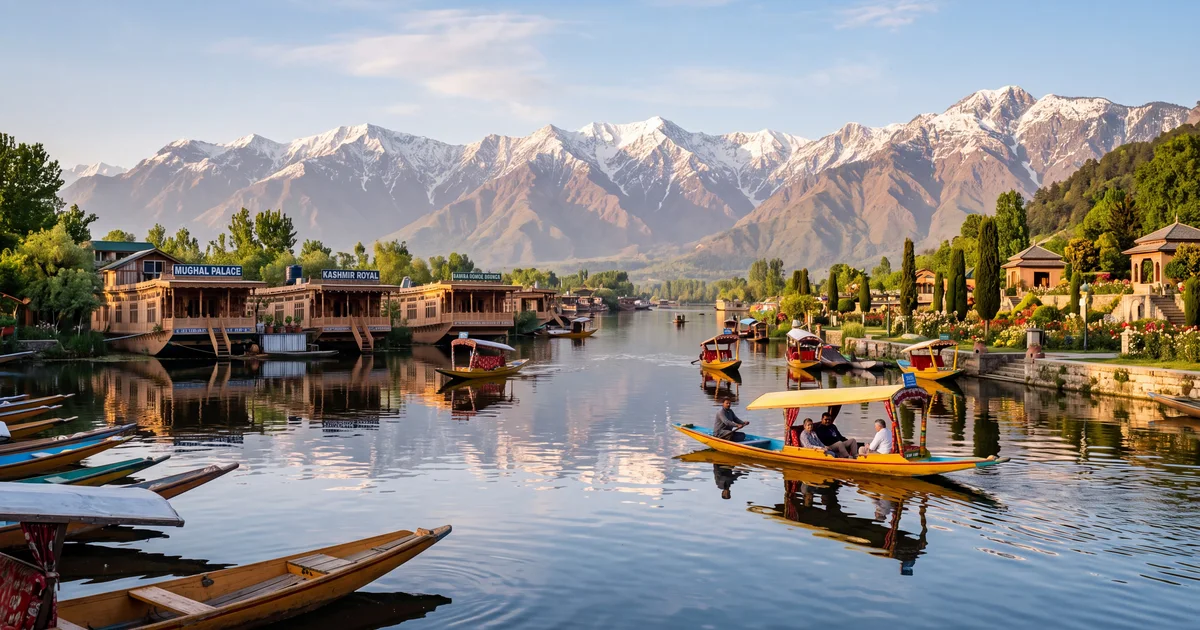
Kashmir gets called paradise so often the word has lost meaning. Here is what it actually is: a 135 km long valley between the Pir Panjal and the Great Himalayan Range, sitting at 1,600 metres, with lakes, meadows, glaciers, and Mughal gardens packed into a space smaller than Goa. The density of things worth seeing is what makes it unusual. Not the superlatives.
I am writing this after a September trip where we spent seven days between Srinagar, Gulmarg, Pahalgam, and Sonmarg. Some of what the travel brochures promise held up. Some did not. The floating market on Dal Lake has shrunk to a handful of boats. The Gulmarg gondola is genuinely world class. Pahalgam's Betaab Valley is more parking lot than valley in July. The trick is going at the right time and knowing what to prioritize.
TL;DR
- Srinagar, Gulmarg, Pahalgam, and Sonmarg are the core four. Six days covers them without rushing.
- March to May and September to October are the best windows. Peak summer (June to August) means crowds and inflated prices.
- Budget ₹2,500 to ₹5,000 per person per day including stays, meals, and local transport.
- One night on a Dal Lake houseboat is enough. Two is fine. Three is testing your patience.
- Book the Gulmarg Gondola Phase 2 ticket early. The queue crosses 2 hours on weekends.
What Makes Dal Lake More Than a Photo Opportunity?
Dal Lake covers 18 square kilometres in the heart of Srinagar at 1,583 metres. Four basins (Gagribal, Lokut Dal, Bod Dal, Nagin) connect through narrow channels lined with willow trees. The houseboats have been moored here since the British era, when colonial officers were banned from buying land in Kashmir and took to the water instead.
A shikara ride costs ₹500 to ₹800 for an hour depending on the season and your bargaining. Early morning is when the floating vegetable market operates. It runs from 5 AM to 7 AM on the western shore of Bod Dal, and the boats are fewer each year. Expect 30 to 40 boats on a good morning, not the hundreds from old photographs.
The real surprise is the lake's interior. Narrow channels cut through floating gardens where lotus, tomatoes, and cucumbers grow on woven reed beds. These channels are quiet. No tourist shikaras come here. Ask your boatman to take the back route toward Char Chinari island and you will have the water to yourself.
The caveat: Dal Lake's water quality has declined. Weed growth covers sections of the surface, especially in August and September. The government's ₹1,200 crore cleaning project (started 2023) has made visible progress along the Boulevard side, but the interior basins still struggle. It is not pristine. It is still worth seeing.
If you are planning a trip to Kashmir, spend your first evening on the Boulevard road watching the sunset over the lake before you decide on the houseboat.
Are the Mughal Gardens in Srinagar Worth Your Afternoon?
Three Mughal Gardens line the eastern shore of Dal Lake. Nishat Bagh (1633, 12 terraces), Shalimar Bagh (1619, 4 terraces with a royal pavilion), and Chashme Shahi (the smallest, with a natural spring). All three sit within a 6 km stretch and can be covered in 3 hours.
Nishat Bagh is the largest and the best maintained. Twelve terraces step down from the Zabarwan foothills to the lake, each terrace representing a zodiac sign. The water channels still flow from the original Mughal aqueducts. October brings chinar trees turning copper and gold across the upper terraces.
Shalimar Bagh is more formal. The fourth terrace (the Zenana garden) was reserved for royal women and still feels enclosed by high walls. The black marble pavilion at the far end is the best preserved Mughal structure in Kashmir.
Chashme Shahi is smaller (5 minutes to walk through) but has a freshwater spring that locals consider medicinal. The water is genuinely cold, around 4°C year round.
Entry is ₹24 per person for Indian nationals. The gardens are open from 9 AM to 7 PM in summer. Go between 4 and 6 PM. The light is better, the crowds thin after lunch groups leave, and the lake beyond the lower terraces catches the pre sunset colours.
My honest take: most people spend 20 minutes, take photos at the fountain, and leave. That is a waste. Sit on the upper terraces of Nishat Bagh with chai from the stall outside the gate. The Zabarwan hills behind you and Dal Lake below. This is where the gardens actually work.
How High Does the Gulmarg Gondola Actually Take You?
Gulmarg sits 51 km west of Srinagar at 2,650 metres. The gondola, operated by the Gulmarg Gondola Project, runs in two phases. Phase 1 goes from Gulmarg to Kongdoori (3,080 metres). Phase 2 continues to Apharwat Peak at 3,979 metres, making it one of the highest cable cars in the world.
Phase 1 costs ₹780 return. Phase 2 costs ₹1,340 return (both phases combined). The ride takes 12 minutes per phase. At Apharwat, you step out onto a ridge where the Pir Panjal Range stretches in both directions. On a clear day, Nanga Parbat (8,126 metres, 200 km away) is visible as a white spike on the northern horizon.
The queue is the problem. Phase 2 has 36 cabins. On a July Saturday, the wait exceeds 3 hours. Arrive before 9 AM or go on a weekday. Winter visitors come for skiing (December to March). Gulmarg has 3 ski lifts and runs up to 4 km long. Equipment rental starts at ₹1,500 per day.
Below the gondola station, Gulmarg's meadow is a wide, flat grassland ringed by pine and fir forests. The golf course (at 2,650 metres, among the highest in the world) is open May to November. Even if you do not play, walking the course at sunrise is peaceful. You will spot the Alpather Lake trail starting from the second fairway.
One thing the brochures skip: Gulmarg town itself has limited accommodation quality for the price. A decent hotel room costs ₹4,000 to ₹7,000 in summer, and some have intermittent hot water. Many travellers prefer staying in Srinagar and making Gulmarg a day trip. The 51 km drive takes about 1.5 hours through Tangmarg.
Pahalgam: Betaab Valley, Aru Valley, and the Lidder River
Pahalgam is 90 km southeast of Srinagar at 2,130 metres. The drive follows the Jhelum River and takes about 2.5 hours. This is where the Amarnath Yatra base camp sits (every July to August), and the town gets crowded during that period.
Betaab Valley (named after the 1983 Bollywood film) is 7 km from Pahalgam centre. It is a wide meadow where the Lidder River meets the Sheshnag stream. The valley is genuinely beautiful in May and June when the snow has just melted and the grass is electric green. In July and August, it fills with ponies, hawkers, and day trippers from the yatra. The ₹100 entry fee includes access to a fenced meadow area.
Aru Valley is 12 km from Pahalgam and much less developed. The road is rough for the last 4 km, which keeps the bus groups away. This is the starting point for the Kolahoi Glacier trek (16 km one way, moderate difficulty). Even without trekking, the valley floor with scattered Gujjar huts and the Aru stream is worth the drive.
The Lidder River itself is Pahalgam's best free attraction. The water is glacier fed, clear enough to see the riverbed stones, and cold enough that putting your feet in for more than 2 minutes hurts. The stretch between the main market and Mamaleshwara temple is walkable and quiet.
The honest caveat: pony rides in Pahalgam are aggressive. Pony wallahs will follow you for 15 minutes quoting prices. The unionized rate to Betaab Valley is ₹1,200 return, but you do not need a pony. The walk is flat and takes 40 minutes. Same for Baisaran, which pony wallahs call "Mini Switzerland" and charge ₹1,500 for. Walk it in an hour. The meadow is pleasant but not Swiss.
Is Sonmarg Worth the Extra Day Trip from Srinagar?
Sonmarg is 80 km northeast of Srinagar on the road to Leh. The drive takes 2.5 to 3 hours through the Sind Valley. The name means "meadow of gold," and in late May the grasslands around the village genuinely turn yellow with wild marigold.
The main draw is Thajiwas Glacier, a 3 km walk (or pony ride, ₹800) from the town. The glacier sits in a bowl between two ridges, and even in July there is enough ice for tourists to walk on. The approach trek crosses alpine meadow and a cold stream. Go before noon when the sun softens the snow.
Sonmarg is also the starting point for three longer treks: Vishansar and Krishansar lakes (2 day trek), Gangabal Lake (3 days), and the Great Lakes Trek (7 days, one of the most scenic in India). If you are looking at Kashmir group treks, the Great Lakes route from Sonmarg to Naranag is the one that shows up most on operator itineraries.
The road from Srinagar to Sonmarg passes through Kangan and Gagangir, with the Sind River running alongside. The scenery in this stretch is better than most destinations. Keep your window down.
The catch: Sonmarg's road closes from November to April due to snow on the Zoji La pass section. Hotels in Sonmarg are seasonal and basic. The town has no ATM (as of 2025), so carry cash. If you have only 5 days in Kashmir, Sonmarg is the one you drop. If you have 7 days, it earns its slot.
Doodhpathri: Kashmir's Least Crowded Valley
Doodhpathri is 42 km southwest of Srinagar at 2,730 metres. The road passes through Budgam district and the last 10 km are forest lined. The name means "valley of milk," and the Shaliganga stream that runs through it carries a milky colour from glacial sediment.
Almost no foreign tourists come here. Domestic visitors have started trickling in since 2022 when the road was improved, but on a weekday in September you might share the meadow with 20 people. The grassland is flat, wide, and ringed by pine forests with the Pir Panjal peaks behind.
There is no developed tourism infrastructure. No hotels in the valley itself. One JKTDC guesthouse and a few dhabas. You visit as a day trip from Srinagar (1.5 hour drive). Bring food. The lack of infrastructure is the point: this is what Gulmarg looked like 30 years ago.
If you have already covered the main four and want one more day, Doodhpathri is the answer. But manage expectations. It is a meadow, not a destination with activities. The value is in the quiet and the space.
Pari Mahal: The View That Beats Shankaracharya Temple
Pari Mahal sits on the Zabarwan Range above Shalimar Bagh at 1,620 metres. It was built in the 1660s by Dara Shikoh (the Mughal prince who was later executed by his brother Aurangzeb) as an observatory and a school for astrology.
Six terraces of arched brick walls step down the hillside, each with open windows framing Dal Lake and the city below. The view is wider than what you get from Shankaracharya Temple (the other hilltop viewpoint) and the approach is less steep. No 243 step climb here.
Entry is ₹50. The ruins are illuminated at night and visible from the Boulevard road. Most tourists visit during the day, which is fine, but the sunset view from the top terrace is the reason to go. The lake turns copper, the houseboats switch on their lights, and the Hazratbal mosque's white dome catches the last sun.
The terraces are uneven. Wear proper shoes. The stairway between levels has no railing in sections. But as a quick 45 minute stop between Mughal Gardens and dinner, Pari Mahal delivers more per minute than most attractions in Srinagar.
Yusmarg, Aharbal Falls, and the Day Trips Most Visitors Miss
Yusmarg is 47 km from Srinagar at 2,396 metres, a forest meadow in the Pir Panjal foothills. It was the picnic ground of Yusuf Shah Chak (the last independent king of Kashmir) and it still feels like a place for a long lunch. Pony rides to Sang Safed and Nilnag Lake start from the meadow edge (₹500 to ₹700 return). The lake is 2 km away through dense pine.
Aharbal Waterfall is 75 km south of Srinagar and rarely appears on standard itineraries. The Vishav River drops 25 metres in a horseshoe falls that some local guides compare to Niagara. That comparison is generous, but the falls are impressive in June and July when glacial melt swells the river. The drive from Srinagar takes about 2 hours through Shopian (apple country, if you visit in September the orchards are heavy with red fruit).
Neither destination has hotel infrastructure. Both work as day trips. Pack lunch, start early, and plan for 3 to 4 hours at the destination. These are the places that Kashmir regulars recommend. First time visitors usually do not know they exist.
How to Plan a Kashmir Trip Without Overpaying
The cost structure in Kashmir is straightforward once you understand it. Accommodation in Srinagar ranges from ₹1,200 (basic guesthouse) to ₹8,000 (heritage houseboat or boulevard hotel). Meals cost ₹200 to ₹500 per person at local restaurants. A Wazwan meal (the traditional multi course feast) runs ₹600 to ₹1,000 and is worth trying once.
Transport is the variable. Hiring a private car with driver for 6 days costs ₹18,000 to ₹25,000 depending on the vehicle. Shared Sumo taxis from Srinagar to Pahalgam or Gulmarg cost ₹300 to ₹500 per seat. Srinagar's local transport includes auto rickshaws (₹100 to ₹200 for city rides) and city buses (₹10 to ₹20).
The tips that save money: book houseboats directly through the J&K Tourism website or through the Houseboat Owners Association, not through aggregators who add 40% markup. Buy Pashmina and saffron at Lal Chowk or the government emporium, not on Dal Lake where prices triple. Eat at local dhabas near the Hazratbal area instead of the Boulevard restaurants.
If you want a group trip to Kashmir from Delhi, fixed departure packages start around ₹12,000 to ₹18,000 per person for 5 to 6 days including transport, stays, and meals. Compare operators on TripzSearch before booking.
What Is the Best Month to Visit Kashmir?
Every month offers something different, and picking the wrong one for your interests wastes the trip.
March to April: Tulip Garden opens (Asia's largest, 1.5 million bulbs). Almond blossoms across the valley. Snow still on Gulmarg. Weather between 8 and 20°C. Tourist numbers are moderate.
May to June: Peak green. All roads open including Sonmarg. The meadows are at their best. Prices start climbing. Betaab Valley is at its greenest. Gulmarg gondola queues grow.
July to August: Amarnath Yatra fills Pahalgam. Monsoon hits (Kashmir gets 60 to 80 mm rain per month in July). Cloud cover blocks mountain views regularly. Avoid this window unless you are on the yatra.
September to October: The post monsoon sweet spot. Chinar trees turn red and gold in October. Tourist numbers drop 40% from summer peak. Saffron harvest in Pampore (late October). Apple orchards in Shopian are heavy with fruit. This is when photographers come.
November: Transition month. Some hotels close in Gulmarg and Sonmarg. Srinagar stays operational. First snow can fall late November. Prices drop.
December to February: Snow. Gulmarg skiing season. Dal Lake looks different with bare chinars and a dusting of white. Srinagar temperatures drop to minus 4°C at night. Houseboats are cold. But the valley under snow is genuinely spectacular.
For most first time visitors, late September or early October is the best combination of weather, crowds, and colour. If you want snow, January is the safest bet.
FAQ
Check the FAQ section at the top of this page for answers to common questions about visiting Kashmir, including safety, budget, and how to reach from Bangalore or Delhi. For group trip options across destinations, check TripzSearch destinations in Kashmir.
Frequently asked questions
- What are the top 5 must visit places in Kashmir?
- Dal Lake for the shikara experience and floating markets, Gulmarg for the gondola ride to 3,979 metres, Pahalgam for trekking and river walks, Sonmarg for glacier views on the way to Thajiwas, and the Mughal Gardens in Srinagar for an afternoon that costs almost nothing. These five cover Kashmir's range without needing more than six days.
- How many days are enough for Kashmir?
- Five to six days cover Srinagar, Gulmarg, and Pahalgam comfortably. Add two more for Sonmarg or Doodhpathri. Most group trips run 6 to 8 day itineraries. Less than four days means you skip either Gulmarg or Pahalgam, which defeats the purpose.
- Is Kashmir safe for tourists in 2026?
- Tourism has been running at record numbers since 2023. Srinagar airport handled over 4 million passengers in 2025. The main tourist belt of Srinagar, Gulmarg, Pahalgam, and Sonmarg sees heavy deployment and regular tourist flow. Stay on established routes, register at hotels as required, and check advisories before visiting remote areas.
- What is the best time to visit Kashmir?
- March to May for tulips, green meadows, and pleasant 15 to 25°C weather. June to August is peak season with crowds and higher prices. September and October offer golden chinar leaves and fewer tourists. December to February brings snow and skiing in Gulmarg, but roads to Sonmarg close.
- How do I reach Kashmir from Bangalore or Delhi?
- Direct flights from Delhi to Srinagar take 1 hour 20 minutes. From Bangalore, you connect through Delhi or Mumbai, total travel time around 5 to 6 hours. The Jammu Tawi train from Delhi (12 hours) followed by a 270 km drive to Srinagar is the budget option but takes a full day.
- What should I skip in Kashmir?
- Skip Shankaracharya Temple if you are short on time. The view is good but not better than what you get from Pari Mahal, which also has Mughal ruins. Avoid the Tulip Garden outside April as it is just a fenced lawn. The Dal Lake market boats charge 3x for the same Pashmina you can buy at Lal Chowk.
- Is a houseboat stay on Dal Lake worth it?
- Yes, for one or two nights. Heritage houseboats with carved walnut wood interiors run ₹3,000 to ₹8,000 per night including meals. The water is calm at sunrise and the Zabarwan mountains reflect in the lake. After two nights the novelty fades, the plumbing gets questionable, and you want a proper hotel. One night is the sweet spot for most visitors.