Yulla Kanda Trek (2026): Price, Route and the World's Highest Krishna Temple
Yulla Kanda trek cost, Delhi and Chandigarh pickup options, days needed and package inclusions. Compare current departures before requesting details.
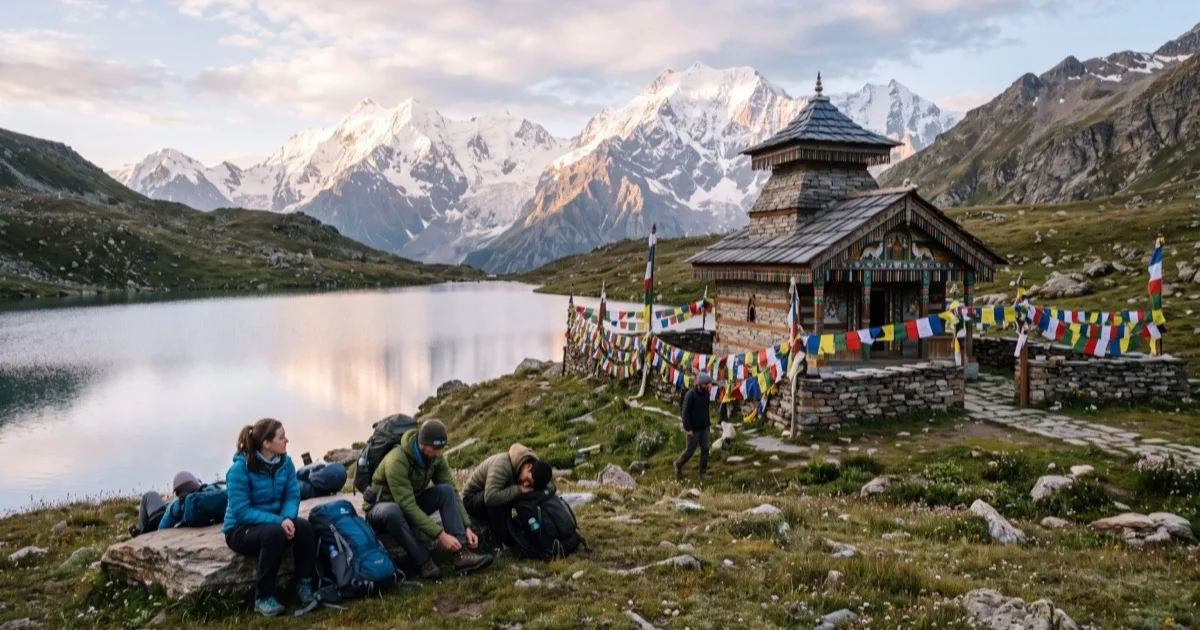
Every year one Himalayan trail jumps from local secret to national obsession. In 2026 it is the Yulla Kanda trek. Search interest has roughly tripled in a year, and the reason fits in one sentence: a glacial lake at about 3,900 metres in Kinnaur, Himachal Pradesh, with a small wooden shrine beside it that is widely called the highest Krishna temple in the world.
The surprise, once you look past the reels, is how honest a trek it is. Twelve kilometres up from a working Kinnauri village. No permits circus, no crowds of hundreds, no traverse logistics. A proper two day Himalayan walk that regular fit people can complete.
Here is the full picture: route, season, access from the metros, and what moves the price. Start with current Yulla Kanda departures and prices, then open a matching trip to ask about your date and pickup point.
TL;DR
- Lake at roughly 3,900 m (about 12,800 ft) in Kinnaur, Himachal Pradesh
- Trail starts at Yulla Khas village near Tapri on NH 5
- About 12 km one way, around 1,300 m of climbing, best as 2 days
- Home of the world's highest Krishna temple; Janmashtami fair in August
- Best months: mid May to June, September to mid October
- Fly into Chandigarh or Shimla; the road leg takes most of a day
Why is Yulla Kanda suddenly everywhere?
Three things collided. The temple story gives the trek a hook that generic alpine lakes lack. The village to summit format photographs beautifully at every stage, deodar forest, thatch roofed meadows, ridge line, lake. And Kinnaur itself has been rising on every India travel list as the Spiti circuit's quieter neighbour.
Add the numbers: this is a rare famous trek that fits a weekend plus one leave day from Delhi or Chandigarh. The distance is short. The altitude is real. The story is unique. Social feeds did the rest.
A caveat that the reels skip: fame is arriving faster than infrastructure. Yulla Khas is a small village, not a trek hub like Manali. Homestays fill early in festival season, and there is no rescue post on the mountain. Treat it as a remote trek that happens to be trending, not a commercial trail that happens to be pretty.
Opinion: go now, in the shoulder months. Trails this photogenic and this accessible do not stay quiet for more than a couple of seasons.
How difficult is the Yulla Kanda trek?
Moderate, with altitude as the real variable. The trail gains around 1,300 metres over about 12 km, which on a Sahyadri hill would be a routine day. At nearly 3,900 metres it is a different proposition. Air thins noticeably above the meadows, and the final climb to the lake ridge slows almost everyone down.
The walking itself is friendly. Forest paths out of the village, then open grazing meadows, called thachs locally, where groups camp, then a rockier ridge line to the lake bowl. There is no technical section and no exposure that needs hardware in season.
Three practical markers of the grade. Day one is four to five hours. Day two summits and returns in six to eight. Water sources exist but carry two litres anyway.
The honest risk here is speed, not terrain. Because the trek is short, fit trekkers fly up from the plains and climb too fast to acclimatise, and altitude headaches at the campsite are common for exactly that reason. Sleep a night at Shimla, Rampur or Yulla Khas before climbing. If a one day push tempts you, be sure your body has met 3,500 metres before.
The route: Yulla Khas to the lake
Yulla Khas sits above the Sutlej gorge, reached by a side road that climbs off NH 5 near Tapri. The village is the last point of supplies and the first point of hospitality; homestays here are simple and warm, and staying one night supports the community that maintains this trail.
From the village the path rises through deodar and blue pine, crosses streams that run hard in early summer, and opens onto the meadow belt after three to four hours. This is the camping zone. Shepherds use these grasslands all summer, and their dogs consider your dinner negotiable. Store food inside the tent.
Summit day starts before dawn. The trail leaves the grass, works up a broad rocky shoulder, and crests the bowl that holds the lake. The temple sits small and dark beside the water, prayer flags moving, big peaks layered behind. Trekkers circle the lake, pay respects at the shrine, and start down before the afternoon cloud builds. Mountain weather here flips fast after noon. That afternoon window is the trek's one hard rule.
Pack for four seasons in two days. A warm layer and a shell matter in every month, because the ridge wind cuts even in June. Sunscreen matters more than people expect at 3,900 metres. And carry your rubbish down, all of it. The lake has no cleanup crew, and the shrine's caretakers should not be picking up wrappers after the trend passes.
What the trek costs and what the price should include
The Yulla Kanda destination listings show current starting prices from more than one operator, and they differ on trip duration and pickup options. A guide cannot keep a price current, so read the listing for the departure you select and compare packages like for like.
Compare like for like. A trek package, a base-camp stay and a bus ticket are different purchases. Ask whether the quoted total covers transport from your pickup city, accommodation before the trek, camping equipment, meals and guide support. Check taxes, optional extras and cancellation terms separately.
A useful inquiry includes your preferred date, number of travellers and whether you are joining from Delhi, Chandigarh, Shimla or near the trailhead. Compare Yulla Kanda trips and use the details or availability action on your chosen listing to confirm the full amount before paying.
When should you go?
Mid May to June is the first window. Snow has cleared the route, streams are lively, meadows are green and the big views stay open most of the day. September to mid October is the second, drier and sharper, with the year's clearest mountain light. Nights at camp drop below 5°C in both windows.
July and August are monsoon months, wet trails and cloud, but they contain the trek's cultural heart: on Janmashtami, villagers from Yulla and surrounding hamlets climb to the lake to celebrate at the temple, and the mountain briefly becomes a festival. Joining that pilgrimage is a different experience from a quiet shoulder season trek. Choose which trek you want.
From late October the route snows in. The lake freezes. Winter attempts are mountaineering, not trekking, and no fixed departures run then.
How do you reach Yulla Kanda from Delhi or Chandigarh?
Yulla Kanda is a fly and drive trek. From Delhi, road or rail to Chandigarh or Shimla, then NH 5 through Rampur to Tapri: the road leg alone is a full day, and HRTC buses toward Reckong Peo pass Tapri around the clock. From Shimla, count seven to eight hours of hill driving. This is why itineraries that look "short" still need four to five days door to door.
From Bangalore, Mumbai or Hyderabad, fly to Chandigarh, or to Delhi if fares are better, and let the package handle the hill roads. Most fixed departures assemble at Shimla or Chandigarh for exactly this reason. If you are coming from the south, browse group trips departing from Bangalore to see which Himalayan batches include the flight leg in their plan.
Caveat for the road: NH 5 beyond Rampur is a mountain highway with landslide closures after heavy rain. Build one buffer day into any monsoon window plan. Flights home do not wait for cleared debris.
Fixed departure or do it yourself?
Independent is viable here in a way it is not on bigger treks: bus to Tapri, homestay at Yulla Khas, local guide, walk. It suits experienced trekkers who enjoy logistics as part of the trip.
The fixed departure earns its keep on the road stage and the gear. Someone else drives NH 5, carries the tents, cooks at altitude and holds the buffer day. For first time Himalayan trekkers, that support changes the trip from a project into a holiday. Compare the current fixed departure Himalayan treks to see how operators structure it.
Either way, the mountain sets the terms. Walk in slowly, summit early, and leave the lake as quiet as the temple keepers expect. The highest home of Krishna has managed 3,900 metres of silence for a very long time. It will outlast the trend, too.
Frequently asked questions
- Where is Yulla Kanda located?
- Yulla Kanda is a high altitude lake in the Kinnaur district of Himachal Pradesh, above Yulla Khas village near Tapri on the old Hindustan Tibet road, NH 5. The nearest big towns are Rampur toward Shimla and Reckong Peo deeper into Kinnaur. A small Krishna temple stands at the lake.
- What is the height of Yulla Kanda?
- The lake sits at roughly 3,900 metres, close to 12,800 ft above sea level. That altitude is high enough for thin air and fast weather changes, so the climb deserves respect even though it is short by Himalayan standards. Most people feel the height on the final climb to the ridge.
- How long is the Yulla Kanda trek?
- About 12 km one way from Yulla Khas village, normally done as a two day trek with a night in camp on the meadows. Strong trekkers do it as one very long day, but the two day plan is kinder at this altitude. The trail climbs around 1,300 metres from the village.
- Why is the Yulla Kanda temple famous?
- The lake holds what is widely described as the highest Krishna temple in the world, a small wooden shrine linked by local belief to the Pandavas, who are said to have built it during their exile. On Janmashtami, villagers from Yulla and nearby hamlets trek up to celebrate at the lake. That festival trek is the event of the year here.
- How much does the Yulla Kanda trek cost?
- Prices differ by operator, departure date and pickup city, so check the current starting prices on the Yulla Kanda destination page rather than a figure quoted in a guide. Compare what each package includes, such as transport, stays, meals and guide support, plus any extra charges, before requesting the final price.
- What is the best time for the Yulla Kanda trek?
- Mid May to June and then September to mid October are the reliable windows, with open trails and clear mountain views. July and August bring monsoon rain, slippery sections and clouds, but also the Janmashtami festival at the lake in August. From late autumn the route holds snow, and the lake area stays winterbound until spring.
- How do I reach Yulla Kanda from Delhi or Bangalore?
- Fly or take a train toward Chandigarh or Shimla, then travel the NH 5 route through Rampur to Tapri, the road base for Yulla Khas. The road leg from Chandigarh takes the better part of a day, so most itineraries add a night at Shimla or Rampur. From Bangalore and Mumbai, fixed departure groups usually assemble in Shimla or Chandigarh.