Winter Treks in India (2026): Snow Trails Worth the Cold
Best winter treks in India with trail difficulty, altitude, and what to expect from December to February. Snow routes for beginners to advanced trekkers.
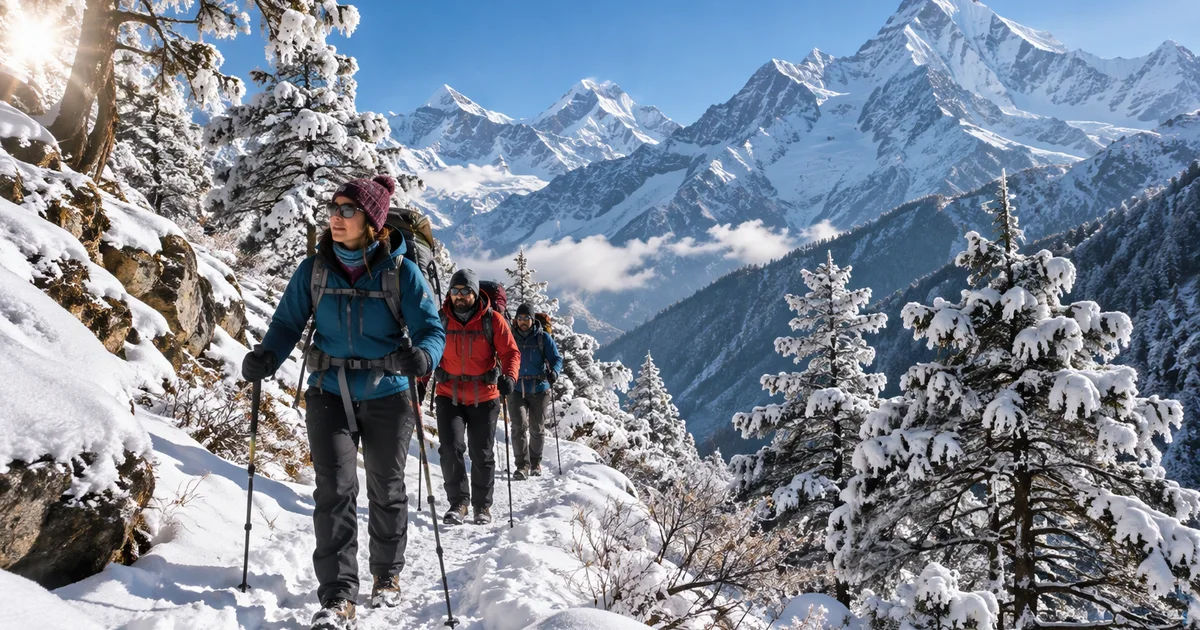
Winter treks in India are quieter and harder than their October counterparts. The trails clear out, the sky turns that high-altitude blue that photos can't quite capture, and summit views carry a different weight when the snowpack is fresh and the air temperature is well below zero. The season runs from November through February across Uttarakhand, Himachal Pradesh, and parts of West Bengal.
This guide covers eight winter treks in India worth booking this season, with honest difficulty levels, distances, altitude data, and the caveats operators tend to leave out.
TL;DR
- Best beginner winter treks: Kedarkantha (12,500 feet) and Nag Tibba (9,915 feet), both with departures from December through February.
- Best month for snow: January and early February across Uttarakhand and Himachal Pradesh.
- Non-negotiable gear: sleeping bag rated to minus 10 degrees Celsius and microspikes above 11,000 feet.
- Book 6 to 8 weeks ahead for January departures. Slots fill faster than any other season.
- Browse all Himalayan winter departures on TripzSearch and filter by difficulty and city.
Which winter treks in India are worth doing?
Eight routes stand out for consistent snow, manageable logistics, and operators with multiple winters of experience on each trail.
Kedarkantha Trek, Uttarakhand. The most popular winter trek in India. Base camp sits at Sankri village, 6,400 feet, 200 kilometres from Dehradun and reachable by road year-round. Summit: 12,500 feet. Standard itinerary: six days. The last two kilometres to the summit are steep and icy, requiring microspikes, but nothing technical. January weekends often have 20 or more groups on the trail at once. If you expected solitude, Kedarkantha in peak season is not it. That said, the route is well-marked, the operators are experienced, and the summit sunrise over Swargarohini and Bandarpunch is worth every rupee.
Brahmatal Trek, Uttarakhand. Altitude 12,100 feet. The main draw is Brahmatal and Bekaltal lakes, which freeze solid by January. Trail starts at Lohajung, 265 kilometres from Rishikesh. Six to seven days, moderate difficulty. The frozen lake camp on day four is worth the extra day of walking. Unlike Kedarkantha, group sizes stay smaller and the trail sees a fraction of the foot traffic. This is the better choice if you want fewer people on the ridge.
Kuari Pass Trek, Uttarakhand. The winter version of the Lord Curzon Trail. 12,516 feet, departing from Auli or Joshimath. Five to six days. Views of Nanda Devi (25,643 feet), Dronagiri, and Hathi Ghoda peaks spread across the horizon from the pass. Better for wide-angle Himalayan photography than any other route at this altitude. The road to Joshimath can close after heavy January snowfall; confirm with your operator in the week before departure.
Nag Tibba Trek, Uttarakhand. The easiest winter trek on this list. Summit at 9,915 feet, accessed from Pantwari village, 90 kilometres from Dehradun. Snow from December through February. Two days. No high-altitude acclimatisation needed. Good choice for a first Himalayan winter trip or for testing gear before a longer route.
Chopta Tungnath Trek, Uttarakhand. Chopta at 8,790 feet is the base. The Tungnath temple sits at 12,073 feet, one of the highest Shiva shrines in the world. The temple closes in November, but the trail stays accessible and the summit plateau gets reliable snowfall from December. Combine with Chandrashila (13,123 feet) on day two for extended views. The road to Chopta from Ukhimath sometimes closes after snowfall. Have a backup plan.
Sandakphu Trek, West Bengal. The only eastern India option on this list. 11,929 feet. Starts from Manebhanjang, 26 kilometres from Darjeeling. Five to six days. November and December give clear sightlines to Kanchenjunga, Makalu, and on cold mornings, the Everest massif. The Singalila Ridge is exposed; wind chill drops well below the air temperature reading. January brings occasional trail closures. December is safer if this is your first visit.
Triund Trek, Himachal Pradesh. Short and self-contained. 9,350 feet above Dharamshala. The trek takes 8 to 9 hours roundtrip from McLeod Ganj. No camping permit required at the base. Snow from December to February turns the ridge white, and Dhauladhar range views from the top match anything on a trail three times as long. The final 300 metres to Triund ridge get slippery in January. Take care without microspikes on that section.
Yulla Kanda Trek, Himachal Pradesh. Less known than the others. 11,000 feet in the Kullu district, starting from Shangarh meadow, 65 kilometres from Kullu town. Four to five days. Deep snow by December and almost no other trekkers in January. The low infrastructure means fewer rescue options if something goes wrong. Only attempt this with an experienced local guide, not a package operator who has never been there.
What difficulty level should I expect on winter treks?
The altitude number tells only half the story. Terrain, temperature, and camp altitude determine how hard the trek actually feels.
Nag Tibba and Triund are beginner-level in winter because they peak below 10,000 feet and can be completed before temperatures drop severely overnight. Kedarkantha and Sandakphu are moderate: multi-day, sustained effort, cold nights, but established camps with experienced staff. Brahmatal and Kuari Pass are upper-moderate. Camp altitudes push above 11,000 feet, January nights drop to minus 15 degrees Celsius at altitude, and six days at cold and altitude adds up.
Yulla Kanda is the outlier. The route is not technically difficult, but the low infrastructure means any injury or weather change requires self-reliance that most packaged treks don't build in. It belongs in a different category.
Standard fitness advice: six to eight weeks of weighted walks and stair climbing before departure. Cold exposure deserves equal attention. If you have never slept below 5 degrees Celsius, your first night in a tent at minus 8 will be memorable in the wrong way. Some operators run acclimatisation trips from Delhi in October for people planning a Himalayan winter trek in December. Worth looking into.
How do I prepare for winter trekking in India?
Layering is the first question, and the system works like this: moisture-wicking base layer next to skin, insulating mid-layer of down or fleece, waterproof shell on the outside. Gloves with wool liners, not just gloves. Wool socks rated to minus 10 degrees Celsius. Microspikes for icy sections above 11,000 feet. You won't need full crampons on any route listed above.
Sleeping bag rating matters more than the jacket. A bag rated to minus 10 degrees Celsius handles Kedarkantha and Brahmatal. Kuari Pass in January needs minus 15. Most operators include sleeping bags; confirm the rating before you book, not the day before you leave.
Altitude sickness: AMS can hit below 13,000 feet, and fitness level is not a reliable predictor. Ascend slowly, hydrate aggressively (3 to 4 litres per day on trail), and descend if symptoms appear. Take the symptoms seriously.
Group departures from Delhi for Uttarakhand winter treks typically include pickup from Dehradun railway station or bus stand. Overnight trains from Hazrat Nizamuddin to Dehradun run daily and cost 500 to 1,500 rupees depending on class. It is a seven-hour drive from Delhi if you prefer a taxi. See group trips departing from Delhi for logistics options.
When is the best time for winter treks in India?
January and early February are peak snow months across Uttarakhand and Himachal Pradesh. Trails are fully covered, skies are clear between weather windows, and summit views are at their sharpest.
December is the transition month. Snow accumulates above 9,000 feet by mid-December. Daytime temperatures are milder than January and the trail is less icy. Easier for beginners, slightly less dramatic for photography.
Mid-February becomes unpredictable. Early February usually continues January conditions. After that, snowfall gets heavier on routes above 12,000 feet and trails may close for two to three days after a storm. Book February departures only with an operator who offers rescheduling.
One thing that often catches people off-guard: nights in tents are far colder than daytime temperatures suggest. At Kedarkantha high camp (11,250 feet), January nights average minus 12 degrees Celsius. That is a different experience from a cold Delhi winter night.
What mistakes do people make on winter treks in India?
Packing too much is the most common. Every extra kilo costs on the ascent. If the operator provides sleeping bags and tents, leave yours at home. Pack to 10 to 12 kilograms maximum.
Skipping the warmup day. Arrive a day early and spend a night at altitude. Dehradun itself is 2,183 feet. One night in Mussoorie (7,005 feet) before Kedarkantha makes the first trail day noticeably easier.
Choosing the cheapest option. The gap between a 4,500 rupee and 7,000 rupee Kedarkantha package usually shows up in sleeping bag quality, guide experience, and rescue equipment. Winter treks have narrow safety margins. The wrong sleeping bag rating becomes a medical situation above 11,000 feet. Check what is included.
Ignoring the forecast. Weather windows matter. Most experienced operators monitor forecasts for the five days before departure. If yours does not, that tells you something. A good forecast window makes the difference between a clear summit and a whiteout.
You can filter group departures by difficulty, month, and departure city at /trips on TripzSearch.
Frequently asked questions
- Which is the best winter trek in India for beginners?
- Kedarkantha and Nag Tibba are the top picks for first-timers. Kedarkantha reaches 12,500 feet in six days with gradual ascents and established camps at Sankri and Juda Ka Talab. Nag Tibba at 9,915 feet can be done in a weekend and needs no technical skill or acclimatisation. Both run guided departures through December, January, and February.
- Which trek is best in December in India?
- December is the sweet spot for Kedarkantha and Brahmatal. The first significant snowfall arrives above 10,000 feet by mid-November, so December trails are snow-covered but not buried. Daytime temperatures stay around 2 to 5 degrees Celsius on trail, manageable even with standard winter gear. Avoid high passes above 14,000 feet in December unless you have winter camping experience.
- Are winter treks in India safe?
- Yes, with a reputable operator and proper gear. The real risks are hypothermia from inadequate layering and icy footing without microspikes above 11,000 feet. Operators running established routes like Kedarkantha and Brahmatal provide sleeping bags rated to minus 10 degrees Celsius and have rescue protocols. Never solo trek high-altitude routes from December to February.
- Which treks are open in January in India?
- Kedarkantha, Brahmatal, Kuari Pass, Nag Tibba, and Sandakphu all run January departures. These trails get heavy snow but remain passable with proper gear. High passes like Roopkund (15,750 feet) and Hampta Pass (14,100 feet) are closed until April. Confirm with your operator closer to the date since road closures to base camps can shift departure logistics.
- What gear do I need for a winter trek in India?
- Three base layers, a down insulated jacket, and a waterproof outer shell are the minimum. Add microspikes for icy sections above 11,000 feet, thermal wool socks, and a sleeping bag rated to minus 10 degrees Celsius. The sleeping bag rating matters more than the jacket. Most operators include sleeping bags and tents; confirm the temperature rating before booking.
- What is the best month for winter trekking in India?
- January and early February give the most snow cover and clearest skies for photography. December is a good balance of snow and milder temperatures, easier for beginners. By mid-February, snowfall gets heavier and less predictable above 12,000 feet, with occasional trail closures after storms. Book February departures only with operators who offer flexible rescheduling.