Waterfalls Near Pune (2026): 12 Monsoon Falls Worth the Drive
12 waterfalls near Pune with distances, best months, road conditions and honest notes on which ones are worth the crowd.
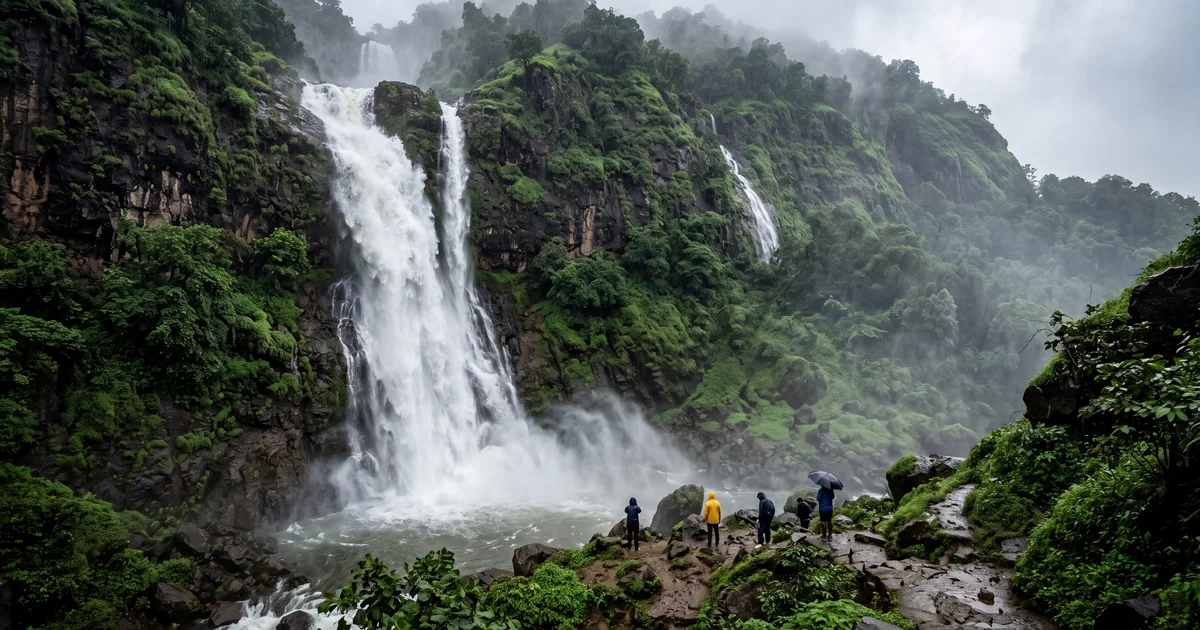
Pune is 90 minutes from the Western Ghats escarpment. That matters between July and September, because the monsoon turns every valley fold in the Sahyadris into a waterfall. Some are 500 metre drops you can spot from the highway. Others hide behind a two hour scramble. The quality varies wildly.
Here are 12 waterfalls near Pune that are worth the drive, sorted roughly by distance. The honest notes include which ones get overcrowded, which need a real trek, and which are best left for a weekday. All distances are from Pune city centre (Shivajinagar).
TL;DR
- Tamhini Ghat falls are closest (about 50 km) and need zero trekking. Best visited mid week.
- Devkund Waterfall near Bhira Dam is the most photogenic but requires a 4 km trek with stream crossings.
- Kune Falls and Bhivpuri Falls are easy roadside options near Lonavala and Karjat.
- Peak season is mid July to early September. Before that, most falls are dry. After that, flow fades fast.
- If you are combining with a trek, pair with the Rajmachi Fort trail or the Andharban descent. Both sit close to good falls.
Which waterfalls near Pune are within 50 km?
Three falls sit within 50 km of Pune city centre, all in the Tamhini and Mulshi belt. Getting to them takes about 90 minutes on a good monsoon day, but the ghat roads slow down in heavy rain. Add 30 minutes for that.
Tamhini Waterfall
Distance: 50 km from Pune | Trek: None, roadside | Best months: July to September
The most popular waterfall near Pune, mostly because you do not have to walk anywhere. The falls cascade right along the Tamhini Ghat road (SH 92), and people park on the shoulder to watch. In peak monsoon, the volume is hard to ignore. Multiple threads of water pour over basalt ledges on both sides of the road. The sound alone makes the stop.
The problem is the weekend traffic. From Saturday afternoon through Sunday, the ghat road crawls. Parking turns chaotic. If you can go on a Thursday or Friday, do it. The same waterfall, a fraction of the crowd.
Pack a raincoat. You will get wet from spray even standing at the road edge. The rocks near the base are slippery, and every monsoon a few people end up in the clinic because they wandered onto the ledge for a selfie.
Mulshi Dam area falls
Distance: 45 to 55 km | Trek: Short walks (under 1 km) | Best months: July to September
The Mulshi reservoir area has several unnamed cascades that appear during heavy monsoon rain. None are individually famous. But driving the Mulshi road in August is a waterfall sampler: you round a corner, another one. The biggest concentration sits between Mulshi Dam and the Tamhini turn.
One caveat: these are seasonal overflow falls. They depend on the dam level and daily rainfall. A dry week in August and they vanish. A heavy week in July and they are everywhere.
Good for a leisurely drive with stops. Not a destination by itself unless the rain has been continuous.
Best waterfalls near Pune within 100 km
This is the sweet spot. Under two hours of driving, and the falls get larger and less crowded.
Kune Waterfall (Khandala)
Distance: 68 km | Trek: 10 minute walk from the road | Best months: July to September
Kune Falls is a three tiered drop near Khandala on the Lonavala belt. Total height is around 200 metres. You can see the upper tiers from the road, and a short footpath leads to the base pool. The pool is shallow enough that locals wade in, though the rocks are algae covered and treacherous in places.
This one gets crowded on weekends but not as badly as Tamhini because the viewpoint is off the main highway. Combine it with a Lonavala chikki stop and you have a solid half day loop.
Bhivpuri Waterfall (Karjat)
Distance: 80 km | Trek: 2 km walk from Bhivpuri Road railway station | Best months: July to September
You can reach Bhivpuri by local train from Pune (change at Karjat) or by road. The waterfall is a pleasant 2 km walk through a small settlement from the railway halt. Height is modest (about 20 metres), but the pool at the base is large and the setting is green and quiet.
This is a good one for families. The walk is flat. The waterfall itself is not overwhelming, which honestly makes it safer for small children. On weekdays you might have the pool to yourself.
Zenith Falls (near Khopoli)
Distance: 90 km | Trek: 1 km walk from the road | Best months: July to September
Zenith Falls drops about 30 metres into a rocky pool near Khopoli. The approach is a short downhill walk from the road. In heavy monsoon, the spray reach extends 10 metres from the base.
It is a decent stop if you are driving to or from Mumbai via the expressway, but not a standalone destination worth a 90 km drive from Pune. Combine it with Bhivpuri or Karjat for a full day.
Devkund Waterfall (Bhira)
Distance: 95 km | Trek: 4 km one way with stream crossings | Best months: August to early September
This is the one people photograph. Devkund sits at the end of a 4 km trek from Bhira village, and the final stretch involves crossing the Kundalika river multiple times. The waterfall drops about 80 metres into a deep emerald pool, black basalt cliffs on three sides. On a clear August morning, you understand why people make the trek.
The trek itself is moderate but the stream crossings can turn dangerous after heavy rain. Water levels rise fast. Two people have drowned at Devkund in recent monsoons. Go with a local guide, check the weather, and do not attempt the crossing if the water is above knee level.
The Bhira Dam backwaters (where the trek starts) are a separate attraction. Some people camp at the dam and trek to Devkund the next morning, which is a smarter plan than rushing both ways in one day.
Check /trips for guided treks that cover the Devkund route with safety gear and experienced guides. The Pune departures page also lists group options leaving on weekends.
Madhe Ghat Waterfall
Distance: 85 km | Trek: 3 km walk from base village | Best months: July to September
Madhe Ghat is a tall, narrow waterfall on the Velhe plateau, roughly 85 km south of Pune. The approach follows a forest path from the base village, and the last 500 metres is a rocky scramble. The fall drops about 150 metres in stages. In heavy monsoon, the spray makes it hard to get close.
This is less crowded than Tamhini or Devkund, mainly because the approach is rougher. The road to the base village is unpaved for the last 5 km and becomes slushy after rain. A high clearance vehicle helps.
Honest opinion: if you are going to trek 3 km for a waterfall, Devkund gives you a better pool. But if Devkund feels overcrowded (it does on August weekends), Madhe Ghat is the quieter alternative.
Waterfalls near Pune between 100 and 200 km
Longer drives, but the falls get taller and the crowds thinner.
Bhambavli Vajrai Waterfall (Satara)
Distance: 130 km | Trek: None, viewpoint access | Best months: July to October
Vajrai stands roughly 520 metres tall, one of the highest waterfalls in India. It falls in stages down a cliff near Bhambavli village in the Satara district. You see the full drop from a viewing platform on the opposite side of the valley. No trek required. Just a 15 minute walk from the parking lot.
The scale is hard to grasp until you are standing there. The upper tier alone is about 250 metres. In August, the entire cliff face is white with water.
Because it is 130 km from Pune, this gets fewer casual visitors. The drive via NH48 and the Satara turn takes about three hours. Pair it with Kas Plateau (the flower plateau, active in September and October) if you want a full day in the Satara region.
Thoseghar Waterfall (Satara)
Distance: 135 km | Trek: None, viewpoint access | Best months: July to September
Thoseghar is a series of falls near Satara, the main drop at about 200 metres. The Maharashtra Tourism Development Corporation (MTDC) has built viewing platforms, safety railings, and a food court near the main viewpoint. It is the most developed waterfall experience in the region, for better or worse.
That development is both the appeal and the limitation. You get clean access, safe viewpoints, and actual toilets. You lose the wild, muddy Sahyadri feel. If you are bringing parents or grandparents to a waterfall, Thoseghar is the one.
Lingmala Waterfall (Mahabaleshwar)
Distance: 120 km | Trek: Short walk from road | Best months: July to October
Lingmala sits in the Mahabaleshwar forest area, about 6 km from the main market. A short walk from the road leads to a viewpoint overlooking the 500 metre cascading falls. The lower pool is accessible via a steeper path, and in monsoon the flow is heavy enough to drench you from 20 metres away.
Mahabaleshwar itself gets tourist crowds year round, and the roads fill up on long weekends. The waterfall is quieter than the town because most visitors stick to the viewpoints (Elephant's Head, Arthur's Seat). That works in your favour.
Randha Falls (Akole, Ahmednagar)
Distance: 170 km | Trek: Short walk to viewpoint | Best months: July to September
Randha Falls on the Pravara river drops about 170 metres into a gorge near Bhandardara. The volume is enormous after a good monsoon week because the river drains the catchment above Wilson Dam. In August 2024, the flow was at its highest in five years.
The drive takes about four hours from Pune via Sangamner and Akole. Combine it with Bhandardara Lake and Ratangad Fort for a proper weekend. On its own, 170 km each way for one waterfall is a stretch.
Dudhsagar Waterfall (day trip context)
Distance: 190 km via Kolhapur | Trek: Jeep safari from Castle Rock or trek from Kulem | Best months: July to October
Technically this is in Goa, not Maharashtra. It appears on every "waterfalls near Pune" list because it is reachable in under four hours. Dudhsagar is a 310 metre four tiered fall on the Mandovi river, and in full monsoon flow it looks exactly like the photographs suggest. The milky white cascade against green jungle is one of those scenes that actually delivers in person.
The railway route through the waterfalls is currently closed to foot traffic (as of 2025). The jeep safari from Castle Rock is the legal access route. Book it through a licensed operator; the Goa forest department fines unlicensed jeep operators.
If you are going, commit a full weekend. The drive back to Pune after a day at Dudhsagar will wreck you if you try it in one go.
Practical tips for monsoon waterfall trips from Pune
The ghat roads between Pune and the Konkan side (Tamhini, Mulshi, Lavasa belt) flood during heavy rain. Check the Pune traffic police Twitter feed before driving. Closures happen without much notice, especially on the Tamhini Ghat road.
Footwear matters more than anything else. Proper grip sandals or trekking shoes with good tread. Smooth soles on wet basalt will put you in a hospital. This is not a figure of speech; Tamhini Ghat alone sends dozens of people to Sassoon Hospital every monsoon.
Carry a dry bag for your phone. Not a zip lock bag (they fail). A proper dry bag that seals.
Start early. Monsoon afternoons bring low visibility and heavier rain. Aim to reach the waterfall by 10 AM and start your return by 2 PM.
If you would rather skip the logistics, browse group trips from Pune on TripzSearch. Operators run weekend treks to Devkund, Rajmachi, and other waterfall spots with transport and guides included. The full trips page has everything searchable by date, destination, and budget.
Frequently asked questions
- Which is the best waterfall near Pune within 50 km?
- Tamhini Ghat has several falls within 50 km of Pune, and Tamhini Waterfall itself is the most accessible. It sits right along the ghat road, needs no trekking, and flows hard from July through September. The downside is the crowd on weekends, so go on a weekday if you can.
- What is the best time to visit waterfalls near Pune?
- Mid July to early September. Most Sahyadri waterfalls are seasonal and depend entirely on monsoon rain. By late September the flow drops off. October visits are a gamble. Before July, most falls are either dry or a trickle.
- Are waterfalls near Pune safe to visit during heavy rain?
- Not always. Flash floods and slippery rocks are real risks, especially at Devkund and Madhe Ghat. Avoid visiting during red alert weather warnings from IMD. Stick to falls with paved access roads like Tamhini or Bhivpuri during heavy downpours.
- Can I swim at waterfalls near Pune?
- Some allow it, but none are officially safe for swimming. Kune Waterfall has a shallow pool that locals wade into. Devkund has a deeper pool but the current picks up after heavy rain. Never swim alone, and check locally before getting in.
- Which waterfall near Pune is best for a one day trip?
- Tamhini Waterfall and Kune Waterfall both work for a comfortable one day trip from Pune. They are within 70 km, need no long treks, and you can drive back the same evening. Pair either with a lunch stop in Lonavala or Mulshi.
- Is there any waterfall near Pune open in winter?
- Most waterfalls near Pune dry up by November. Bhambavli Vajrai near Satara has a thin flow into December because of its height (around 520 metres), but it is not the monsoon spectacle. For guaranteed water, visit between July and September.