Waterfalls Near Mumbai (2026): Monsoon Chasing Done Right
Best waterfalls near Mumbai for the 2026 monsoon, from Pandavkada in Navi Mumbai to Bhivpuri in Karjat. Best time, how to reach, what to expect.
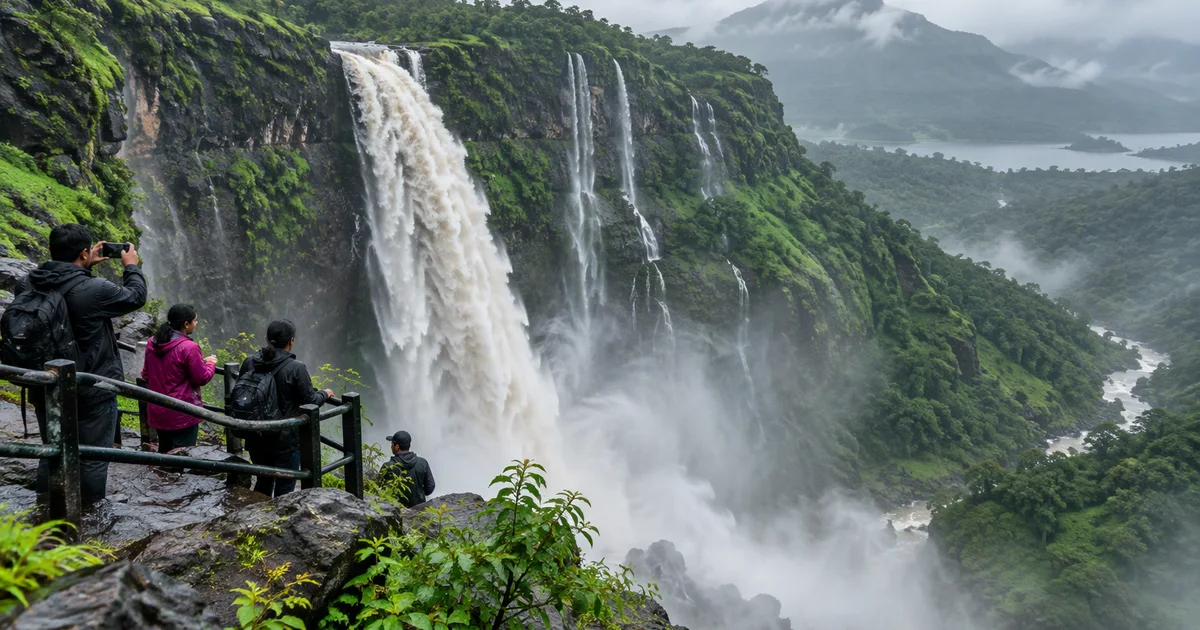
The Mumbai monsoon is not subtle. It arrives in June with 48 hours of darkness and doesn't apologize. By July, every hill within 150 km has at least one waterfall running. Finding good waterfalls near Mumbai means knowing which ones justify the expressway traffic, the parking scramble, and the risk of arriving to find 500 people crowded around the same pool.
This covers the spots worth the drive in 2026, with honest notes on how to reach each, when to go, and what to expect when you get there.
TL;DR
- Pandavkada Falls (Navi Mumbai): 107 metres, easiest access, free on weekdays. Saturdays get packed by 9 AM.
- Chinchoti Waterfall (Vasai): closest from the western suburbs. 25-minute uphill walk, three-tier cascade, manageable crowds on weekdays.
- Bhivpuri Falls (Karjat): train-accessible from CST, 90 minutes. The best option if you want a walk rather than a viewpoint.
- Vihigaon Waterfall (Kasara): underrated, easy auto ride from Kasara station, rarely crowded on weekdays.
- Dudhiware Falls (Murbad): tall and remote. Better combined with an overnight rather than a day trip.
- Best window: July 15 to September 15. October visits often disappoint.
Which waterfalls near Mumbai are worth the drive?
Not every spot that trends on Instagram in August is worth four hours of highway traffic.
Pandavkada Falls, Kharghar (Navi Mumbai)
At 107 metres, Pandavkada is the most dramatic waterfall you can reach without leaving the Mumbai metropolitan area. It sits inside Kharghar Hills, 45 minutes from Vashi by road. The Navi Mumbai Municipal Corporation charges a small entry fee at the main viewpoint on weekends; weekday access is typically unregulated.
The drop is at its best between late July and mid-August, when the plateau above Kharghar is fully saturated. After September 20, the flow narrows. If you're visiting on a Saturday, arrive before 8:30 AM. The main viewpoint sees upwards of 2,000 visitors by noon, and the area near the edge of the viewing platform turns dangerous when people press forward.
Chinchoti Waterfall, Vasai (60 km from Andheri)
For the western suburbs, Chinchoti is the practical choice. The trailhead is near Vasai, about 1.5 hours from Andheri by road on a clear weekday morning. From the base village it is a 25 to 30 minute uphill walk through secondary forest. The main fall splits into three tiers; the upper tier carries the most volume and the best spray.
No formal parking lot exists. Leave the car at the village junction and walk in. Chinchoti stays manageable on weekdays. That changes fast on Sundays in August, when groups from Mira Road and Virar arrive in numbers by 10 AM. The trail itself is wide enough that it rarely feels dangerous, though the last 10 minutes to the upper tier are steep on wet days.
Bhivpuri Falls, Karjat (90 km from CST)
You don't need a car. Central Railway locals run to Bhivpuri Road station in roughly 90 minutes from Chhatrapati Shivaji Maharaj Terminus. From the station, the trail runs 2 to 3 km across paddy fields and over low rocky ridges. The falls drop from a cliff face into a wide pool below.
The pool at the base looks calm from the bank. It isn't, particularly after three or more days of continuous rain. The current underneath is invisible from above. Avoid swimming at peak monsoon. The walk through green paddy and low mist is the actual draw here, not the pool. The 6:30 AM Karjat local from CST reaches Bhivpuri Road by around 8 AM on most days. Buy the return ticket before the outbound journey.
Vihigaon Waterfall, Kasara (100 km from Mumbai)
The Central Railway main line goes to Kasara station. Shared autos cover the 15 to 20 minutes to Vihigaon village from there. The waterfall here is wide rather than tall, with a natural pool at the base and few safety barriers. The right choice if you want a quieter monsoon morning rather than a managed tourist spot.
Kasara sits 20 minutes from Igatpuri by road, so this pairs well with a morning trail if you want more than the waterfall alone. The group trips from Mumbai on TripzSearch include some Kasara and Igatpuri circuits if you prefer a fixed departure with transport sorted.
Dudhiware Falls, Murbad (90 km via Kalyan)
This one requires more commitment. The drive from Mumbai takes 2 to 2.5 hours depending on the Kalyan bypass. Dudhiware is a tall, narrow cascade in dense forest near Murbad. It sees far fewer visitors than the Karjat or Vasai spots, partly because the access trail is muddy and the access road itself is unmarked for the last 4 km. Better combined with a Bhandardara overnight or a full Sahyadri weekend rather than as a standalone day trip.
What is the best time to visit waterfalls near Mumbai?
July to September. August 1 to September 15 is the strongest window for most falls within 150 km of Mumbai. The Western Ghats near Mumbai receive 3,000 to 4,000 mm of rainfall between June and September; waterfalls downstream peak about 10 to 14 days after a major rain event in the catchment above.
A practical caveat: heavy rain can close access roads without warning. The route toward Bhivpuri Road and ghat sections near Khandala flood during extreme rain years. Check MSRDC road advisories and local news before you drive anywhere during a continuous rain spell. The Maharashtra government typically posts closures on the MSRDC website within 24 hours.
October is not the right month for peak flow. By mid-October most falls within 150 km of Mumbai have dropped to 30 to 40% of their August volume. If your schedule only permits October, Mahabaleshwar and the Sahyadri ridge above Kolhapur hold water longer due to higher elevation. Those are worth the drive in October; the spots on this list are not.
Waterfalls you can reach by train from Mumbai
A car is optional for most of these trips. The Central Railway makes several waterfall stops viable for a day out without touching a highway:
- Bhivpuri Road station (Karjat direction): Bhivpuri Falls, 3 km walk from the platform
- Kasara station (main line): Vihigaon Falls, 15 to 20 minutes by shared auto
- Neral station: base for Matheran, plus seasonal cascades on the ghat path up
The train option adds some travel time but removes expressway stress and parking. For a Sunday trip in August, the 6:30 AM Karjat local from CST is the standard choice. Carry cash for the return auto back to the station from the trailhead.
If you're sorting out a group trip rather than a solo outing, the trips listed on TripzSearch include curated monsoon waterfall departures from Mumbai where transport and return logistics are handled. These make sense when you're coordinating six or more people who cannot all fit in one car.
Safety
Wet basalt is not grippy. The rocks around Western Ghats waterfalls are dark basalt that gets slick within seconds of water contact. Canvas sneakers and floaters belong at the beach. Rubber lug soles are the minimum for any spot on this list.
Don't go alone to Bhivpuri or Vihigaon on weekdays. Signal drops to near-zero at both, and the trails are remote enough that a twisted ankle becomes a real problem. Tell someone your destination and expected return time before you leave.
Crowds carry their own risk at Pandavkada. The viewpoint area has had incidents in past monsoon seasons from people pressing toward the edge. With first-timers or children, visiting Pandavkada on a weekday morning is a qualitatively different and safer experience than arriving on a Saturday afternoon in August.
For multi-day Sahyadri circuits that combine waterfalls with treks or overnight camping, the destinations guide on TripzSearch lists operators running fixed July and August departures. See current prices on /trips.
Frequently asked questions
- Which waterfall is closest to Mumbai?
- Pandavkada Falls in Kharghar (Navi Mumbai) is the most accessible, about 45 minutes from Vashi by road. For the western suburbs, Chinchoti Waterfall near Vasai is closer, roughly 60 km from Andheri and 1.5 to 2 hours by road.
- What is the best time to visit waterfalls near Mumbai?
- July to September covers peak monsoon season in the Western Ghats. The window from August 1 to September 15 gives the heaviest flow at most falls. By mid-October, volume drops to 30 to 40% of the August peak at most locations within 150 km of Mumbai.
- How do I reach Bhivpuri Waterfall from Mumbai?
- Take a Central Railway local train to Bhivpuri Road station, about 90 minutes from CST. From the station it is a 2 to 3 km walk across paddy fields to the base of the falls. Autos do not ply this route regularly, so plan to walk.
- Are waterfalls near Mumbai safe to visit during monsoon?
- Popular spots like Pandavkada and Chinchoti have weekend guard presence, but conditions change fast after continuous rain. Avoid swimming in pools below falls after two or more days of heavy rain. Wet basalt is extremely slippery; grip footwear with lug soles is non-negotiable.
- What should I carry for a waterfall trip near Mumbai?
- Waterproof shoes with rubber soles, a dry bag for phone and cash, a change of clothes, and ORS packets. Phone signal is unreliable at Bhivpuri and Vihigaon. Carry cash because most trailheads have no ATMs nearby.
- Are there waterfalls inside Mumbai city limits?
- Pandavkada Falls in Kharghar (Navi Mumbai) is the closest thing. At 107 metres, it falls within the broader Mumbai metropolitan area and is reachable by metro from central Navi Mumbai. There are no waterfalls within the island city itself.
- Which waterfall near Mumbai is good for first-timers?
- Pandavkada (Navi Mumbai) and Chinchoti (Vasai) are both suitable for first-timers. Neither requires a long trek. Chinchoti is a 25 to 30 minute uphill walk; Pandavkada is a flat 10-minute walk from the nearest parking. Both have some guard presence on weekends.