Best Treks Near Pune (2026): 12 Weekend Treks in the Sahyadris
12 treks near Pune for 2026 with difficulty, drive time, best months, and group departure options in the Sahyadris.
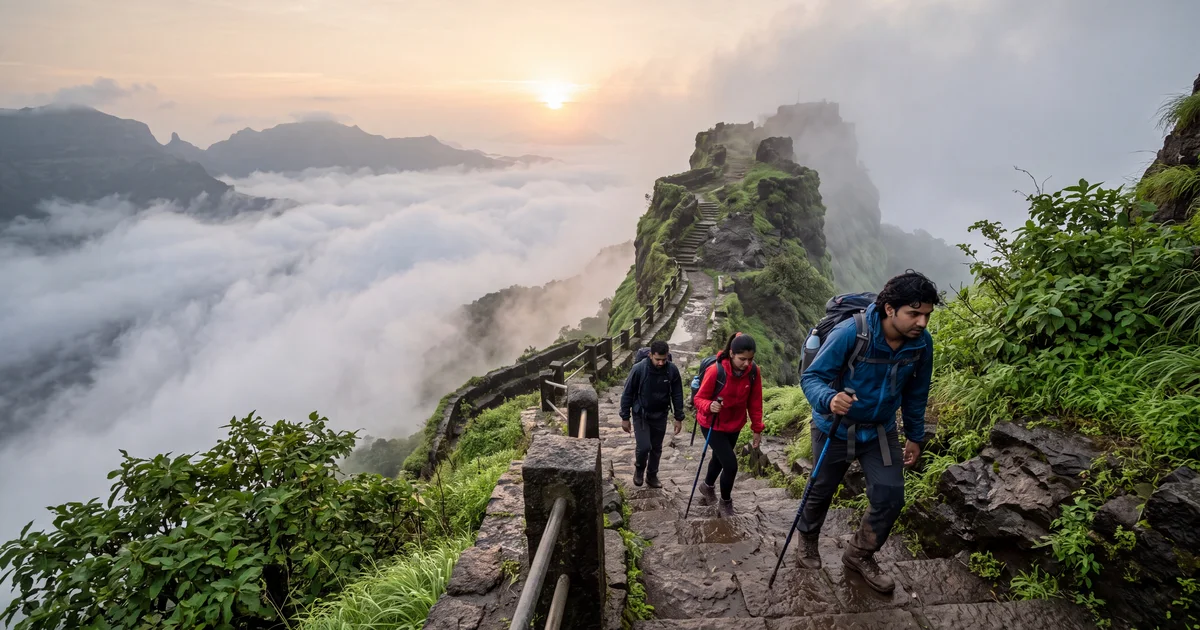
Pune sits in the lap of the Western Ghats. Within 100 km of Shivajinagar bus stand, more than 30 hill forts break through the Sahyadri skyline. Every weekend, treks near Pune pull thousands of people out of the city before sunrise.
The problem is not finding a trek. It is finding the right one for your Saturday. Some forts take 45 minutes. Others need ropes. Some are paved tourist walks. A few will empty your legs and humble your ego.
This list covers 12 treks near Pune sorted by difficulty and drive time, with honest calls on when to go, what to expect, and which ones work for groups.
TL;DR
- Easiest: Sinhagad (45 min climb), Lohagad (stone steps, 1 hour)
- Moderate: Tikona, Visapur, Rajmachi, Torna
- Hard: Rajgad traverse, Harishchandragad (Khireshwar route)
- Expert: Alang Madan Kulang
- Best months: June to September for monsoon waterfalls, October to February for clear skies
- Most treks are 50 to 100 km from Pune, under 2 hours drive
What makes the Sahyadris near Pune different from other trekking regions?
The Western Ghats here are not high altitude. The tallest fort tops out around 1,400 metres. But the terrain packs a punch because these are volcanic basalt plateaus with steep scarps, ancient rock-cut steps, and monsoon waterfalls that appear from nowhere in June and vanish by October.
The forts are the draw. Shivaji Maharaj's military engineers turned these flat-topped hills into defended strongholds. The trekking routes often follow the same supply paths used 350 years ago: narrow gullies, hidden traverses, iron pegs hammered into vertical rock.
One honest caveat: the Sahyadris are not wilderness in the Himalayan sense. You will find chai stalls on most popular summits. Crowds are real on long weekends. If solitude matters, go on a Tuesday or pick one of the lesser known forts below.
Easy treks near Pune: under 2 hours, no experience needed
Sinhagad
Distance from Pune: 30 km. Drive time: 45 minutes from Swargate.
Sinhagad is where Pune learns to trek. The path from Donaje village is a steady climb that takes 40 to 50 minutes at a normal pace. The fort top has food stalls serving pithla bhakri and buttermilk. On weekends between June and September, the approach road gets clogged enough that parking takes longer than the actual hike.
Start before 6:30am. Seriously. By 9am the path becomes a queue.
The view from Tanaji's memorial looks across to Torna on clear mornings. If you squint southeast, the Purandar plateau is visible too.
Lohagad
Distance from Pune: 52 km. Drive time: 1 hour 15 minutes via the expressway exit.
Lohagad has proper stone steps from base to summit. The climb takes about an hour and the route has zero ambiguity. Malavli railway station sits 5 km from the base village, so you can do this trek without owning a car. Take the local train, auto to base, climb, return. Done by lunch.
The Vinchukata (scorpion tail) fortification wall is genuinely impressive. In monsoon, Pawna lake fills up below and the green carpet stretching to Visapur next door looks unreal.
If Lohagad feels too easy, walk across to Visapur from the saddle between them. That adds another hour and a half and a lot more leg.
Tikona
Distance from Pune: 60 km. Drive time: 1 hour 20 minutes.
Tikona means triangle, and the fort shape is exactly that from a distance. The trek takes about an hour. The last section has rock patches that need hands in places, which pushes it slightly above Lohagad in effort.
Best part: the summit view includes Pawna, Tung, and Lohagad in a single sweep. Carry breakfast. Eat it up top.
One limitation: the base village Tikona Peth has limited parking on weekends. Arrive by 6am or you are walking an extra kilometre from the road.
Moderate treks near Pune: 3 to 5 hours, some fitness needed
Torna (Prachandgad)
Distance from Pune: 50 km. Drive time: 1 hour 30 minutes from Sinhagad Road.
Torna was the first fort Shivaji captured. He was 16. The trek to the top takes about 2.5 to 3 hours and involves a couple of exposed rock sections near the Zunjar Machi that need care in wet weather.
At 1,403 metres, Torna is one of the highest points in this section of the Sahyadris. The summit plateau is vast. You can camp here (groups do, especially October to February) and the night sky at that altitude is noticeably better than Pune's light pollution allows.
Honest caveat: the descent route through Budhla Machi confuses people. Multiple trails branch off with no markers. If you are going without a group, download the GPX track beforehand.
Rajmachi
Distance from Pune: 65 km (Udhewadi route). Drive time: 1.5 hours.
Two approaches exist. The Lonavala side is a long 15 km walk through the forest. The Udhewadi side (accessible from the expressway) is a steep, shorter climb of about 2 hours that deposits you directly at the twin bastions of Shrivardhan and Manaranjan.
Rajmachi is monsoon magic. The Kataldhar waterfall near the fort base hits full flow in July and August. The 200 metre cascade is visible from the trail and worth the detour if you have an extra hour.
Group treks to Rajmachi run almost every weekend from Pune during monsoon. Check available group departures from Pune for dates.
Visapur
Distance from Pune: 55 km. Drive time: 1 hour 15 minutes (same approach as Lohagad).
Visapur is Lohagad's tougher twin. The trail from Patan village takes 2 to 2.5 hours and has a rock patch in the last section that gets slick in rain. The fort is larger than Lohagad, less crowded, and has better camping spots.
Multiple water cisterns on the plateau stay full through monsoon. Carry a filter bottle if you plan to use them.
One real opinion: Visapur deserves more attention than Lohagad. It is harder to reach, so it stays quieter, and the panorama from the top is wider because the plateau sits 50 metres higher.
Hard treks near Pune: full day, good fitness required
Rajgad
Distance from Pune: 48 km. Drive time: 1 hour 15 minutes to Gunjavane base.
Rajgad was Shivaji's capital for 26 years before Raigad. The fort has three machis (plateaus) connected by ridges and the full traverse takes 5 to 7 hours. Most groups camp overnight on Padmavati Machi where a temple provides shelter and water.
The climb from Gunjavane to Padmavati takes about 2 hours. It is steep, direct, and unforgiving in afternoon sun. Start early.
If you do the full Sanjivani Machi to Suvela Machi traverse, carry 3 litres of water. There are no refill points on Suvela and the exposed basalt gets above 40 degrees Celsius in pre-monsoon.
Harishchandragad (Khireshwar route)
Distance from Pune: 110 km. Drive time: 3 hours via Malshej Ghat.
The Tolar Khind route from Khireshwar takes 3 to 4 hours and is moderate to hard depending on conditions. The reward is Kokan Kada, a concave cliff with a vertical drop into the Konkan. Sunrise here is among the finest single moments any Sahyadri trek offers.
Most groups leave Pune near midnight and summit for dawn. The drive is long but the payoff justifies it. Read the full Harishchandragad guide for route details.
Torna to Rajgad traverse
This is not a separate location but a connecting ridge between two major forts. The traverse takes a full day (8 to 10 hours of walking) and requires navigation through unmarked forest sections between Budhla Machi on Torna and Alu Darwaza on Rajgad.
Do not attempt this alone or without someone who has done it before. Water is scarce on the connecting section. A group with local knowledge is non-negotiable here.
What is the best season for treks near Pune?
The Sahyadris have two good seasons and two bad ones.
June to September (monsoon): This is peak trekking season around Pune, which surprises people from other regions. The hills turn electric green. Waterfalls appear on every cliff face. Temperatures stay between 18 and 25 degrees Celsius on summits. Cloud games at places like Rajmachi and Harishchandragad are surreal.
The trade off: slippery rock, leeches on forested trails (carry salt or tobacco), and occasional trail closures during extreme rainfall.
October to February (post monsoon and winter): Clear views, dry trails, and 10 to 15 degree nights make this perfect for camping. The waterfalls are gone but the visibility extends for 50+ km on good days. Night treks peak in this window because the cold keeps exertion comfortable.
March to May (summer): Brutal. Basalt absorbs heat and the forts become ovens by 10am. If you must go, start before 5am and descend before noon. Carry more water than you think you need.
Stick to monsoon treks in the Western Ghats if you are visiting between June and September specifically.
How to find group treks from Pune
Solo trekking is fine for easy forts like Sinhagad or Lohagad. For moderate and hard treks, a group adds safety, transport, and local route knowledge that GPS tracks alone cannot replace.
Multiple operators run fixed departure group treks from Pune every weekend. Batch sizes range from 15 to 40 people. Most include pickup from Swargate or Shivajinagar, a local guide, and basic meals. Prices typically sit between 800 and 2,500 rupees depending on distance and whether camping is involved.
What to check before booking: group size (smaller is better for hard treks), whether the guide is local or just a trip leader, cancellation policy for weather, and whether transport is a tempo traveller or a cramped Innova.
Browse current weekend trips with dates and reviews to compare options.
Expert level: Alang Madan Kulang (AMK)
Distance from Pune: 130 km. Drive time: 3 hours to Ambewadi base.
AMK is three forts connected by ridges, forming what most Sahyadri trekkers consider the hardest non-technical trek in Maharashtra. The full circuit takes two days minimum. Exposed rock traverses, one short rappel section, and the infamous ladder patch on Alang sort out who should be there from who should not.
Do not underestimate this. People have died here. Go only with an experienced group, carry proper gear (harness, helmet, rope), and do not attempt it in heavy rain. The rock on Madan becomes genuinely dangerous when wet.
If you have cleared Rajgad, Torna, and Harishchandragad comfortably, AMK is the next step. Not before.
Quick reference: all 12 treks compared
Easy (under 2 hours)
- Sinhagad: 30 km, 45 min climb, all year
- Lohagad: 52 km, 1 hour, all year, train accessible
- Tikona: 60 km, 1 hour, best June to February
Moderate (3 to 5 hours)
- Torna: 50 km, 2.5 to 3 hours, best June to February
- Rajmachi: 65 km, 2 hours (Udhewadi), best monsoon
- Visapur: 55 km, 2 to 2.5 hours, best June to November
Hard (full day)
- Rajgad: 48 km, 5 to 7 hours traverse, best October to February
- Harishchandragad: 110 km, 3 to 4 hours climb, all year
- Torna to Rajgad: full day, guides essential
Expert
- Alang Madan Kulang: 130 km, 2 days, October to February only
Check current group departures for treks from Pune to find dates that match your weekend. For Himalayan options from Pune, browse the available trips page which includes fixed departure batches with transport.
Frequently asked questions
- Which is the best trek near Pune for beginners?
- Sinhagad is the most accessible trek near Pune. The trail from Donaje village is about 45 minutes of steady climbing on a paved-then-dirt path, and you can drive halfway if your knees disagree. Lohagad is a close second with proper stone steps the entire way and public transport access from Malavli station.
- Can I do a one-day trek near Pune without prior experience?
- Yes. Sinhagad, Lohagad, Visapur, and Tikona are all under four hours round trip and need no technical climbing. Wear proper shoes with grip, carry two litres of water, and start before 7am in summer months to avoid heat.
- What are the best months for trekking near Pune?
- June to September is peak season. The Sahyadris come alive with waterfalls, green valleys, and cool weather below 25 degrees Celsius at most fort tops. October and November offer clear views with lingering greenery. December to February suits night treks because temperatures drop to 10 to 12 degrees on summits like Rajgad.
- Are there group treks from Pune available on weekends?
- Multiple operators run fixed departure group treks from Pune every weekend. Batch sizes range from 15 to 40 people, with transport included from Swargate or Shivajinagar. You can browse available group departures on TripzSearch at /from/pune and filter by date.
- Which is the hardest trek near Pune?
- Alang Madan Kulang (AMK) is widely considered the hardest Sahyadri trek accessible from Pune. It involves exposed rock patches, rappelling, and a minimum of two days. Even experienced trekkers should go with a group that carries proper gear. Nalichi Vaat on Harishchandragad is another technical option for the day trek category.
- Is it safe to trek near Pune during heavy monsoon rains?
- Moderate rain is part of the charm. Heavy rain days with wind warnings from IMD Pune are genuinely dangerous because of loose rock, slippery basalt, and reduced visibility. Avoid exposed ridges like Rajmachi or Torna summits during active thunderstorms. Check the forecast morning of and be willing to turn back.