Best Treks from Delhi (2026): Weekend Himalayan Trails Within Reach
12 proven treks from Delhi for weekends and long weekends, with honest route notes, group departure tips, and what each trail demands.
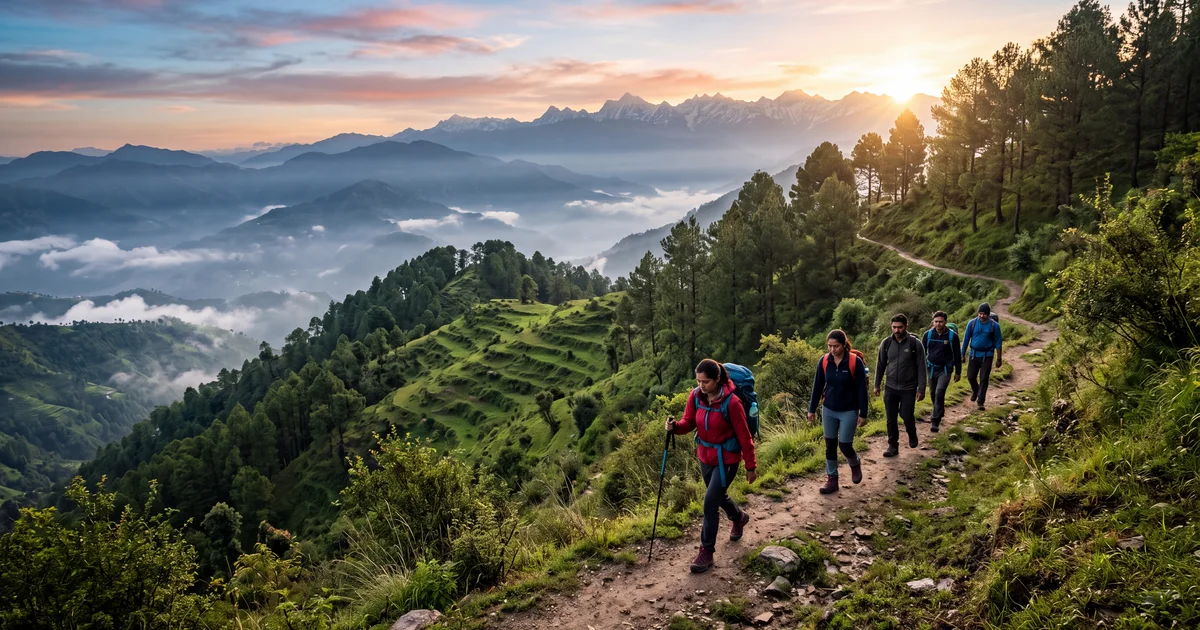
Treks from Delhi have one massive advantage over most Indian cities. The lower Himalayas start less than 300 km north. That is 5 to 7 hours by road, or a short overnight bus from Kashmere Gate ISBT. By Saturday morning you can be at a trailhead above 7,000 feet, breathing pine air instead of NCR smog.
The flip side: everyone in Delhi knows this. Popular trails like Triund and Kheerganga get packed between October and December. But move past the Instagram top 3 and the options open up fast. Nag Tibba, Dayara Bugyal, Har Ki Dun. Trails where you share the ridge with maybe 15 people instead of 150.
Here is a list built on two filters. First, can you realistically get there and back without taking more than one day off work? Second, does the trail reward the travel? I have skipped a few famous names that sound good but deliver mostly road walking or a disappointing summit. Honest notes below.
TL;DR
- Delhi to lower Himalayan trailheads is 5 to 7 hours; perfect for weekend trips departing Friday night.
- Best windows: March to June and September to November. Winter treks need snow gear.
- Triund and Nag Tibba are the easiest entries. Kedarkantha and Brahmatal are the best winter options.
- Group trek operators from Delhi run fixed departures nearly every weekend in season. Compare them on TripzSearch.
- Budget for 3,000 to 12,000 per person depending on the trail and duration.
What makes Delhi a good trekking base?
The geography is simple. The Shivalik foothills begin around Mussoorie and Dehradun (280 km). The Dhauladhar range sits behind Dharamshala (480 km). The Garhwal and Kumaon Himalayas stretch from Uttarkashi to Munsiyari. All of this is reachable by overnight Volvo, train to Dehradun or Kathgodam, or a 1 hour flight to Dehradun.
Transport has improved. The Rishikesh to Badrinath highway (NH7) is mostly four laned now until Devprayag. Delhi to Manali via Chandigarh takes 10 to 12 hours by bus, which sounds long until you realise you sleep through most of it.
One honest caveat: road conditions above 2,500 metres deteriorate fast during monsoon. Landslides on the Manali highway between July and September delay buses by 3 to 8 hours. Plan monsoon treks only on established routes with experienced operators.
Which weekend treks from Delhi can beginners do?
Triund (McLeodganj, Himachal Pradesh)
9 km one way. Elevation gain: about 1,100 metres from McLeodganj market. The trail is wide, well trodden, and rarely confusing. You walk through oak and rhododendron forest for the first 7 km, then break onto an open ridge with the Dhauladhar snow wall in your face.
Most groups leave Delhi Friday night (bus to Dharamshala, 8 to 9 hours), trek Saturday, camp at the top, and descend Sunday morning. The top gets cold after sunset, even in October. Carry a proper sleeping bag rated to 0°C.
The crowd problem is real. On a long weekend in October 2025, over 200 tents were counted at the summit meadow. Weekdays in March or April are a different experience entirely.
Nag Tibba (Uttarakhand)
The highest peak in the lower Garhwal at 3,022 metres, and one of the shortest Himalayan treks you can do from Delhi. Drive to Pantwari village (7 hours from Delhi via Mussoorie), then a 4 hour hike to the campsite at 2,800 metres. Summit push is 45 minutes from camp.
Nag Tibba works year round except deep monsoon. Winter brings snow from December, which makes the trail prettier but adds difficulty. The summit gives you a 360 degree view of Bandarpoonch, Swargarohini, and Kedarkantha if the sky is clear.
Parashar Lake (Himachal Pradesh)
Not technically a trek in the traditional sense. The lake sits at 2,730 metres with a floating island and an ancient pagoda temple. The approach from Baggi village is 7 km, mostly uphill through forest, taking 3 to 4 hours. From Delhi, you drive to Mandi (10 hours) or take a bus to Kullu and backtrack.
The reward here is not adrenaline; it is silence. The lake reflects the sky on calm mornings, and the temple is atmospheric enough to make the drive worthwhile on its own.
What are the best winter treks from Delhi?
Winter (December to February) closes most Himalayan trails but opens a few that are spectacular in snow.
Kedarkantha (Uttarakhand)
The most popular winter trek in India for good reason. Base at Sankri village (10 hours from Delhi via Dehradun). The trail passes through pine forests, open meadows at Juda Ka Talab, and summits at 3,810 metres with panoramic Himalayan views.
Summit day is the crux. Steep snow for the final 2 km, and temperatures drop to minus 10°C before sunrise. Operators provide gaiters and microspikes. Group sizes average 15 to 20 people, and fixed departures run every Thursday and Saturday from December to March.
This is not a casual weekend trip. You need 4 nights minimum (Delhi to Sankri, 3 trek days, return). But it is the single best snow trek accessible from Delhi without mountaineering skills.
Brahmatal (Uttarakhand)
Less crowded than Kedarkantha but equally scenic. You walk past two frozen alpine lakes (Bekaltal and Brahmatal) and summit at 3,450 metres. The trail stays in forest longer, so wind exposure is lower.
Access from Delhi: train to Kathgodam (6 hours), then road to Lohajung (8 hours). Total trek duration is 5 days. The highlight is the sunrise view from Brahmatal summit, where you see Trishul and Nanda Ghunti up close.
A genuine downside: the road from Kathgodam to Lohajung is rough and can take up to 10 hours in winter. Budget an extra buffer day for transport delays.
How difficult is Har Ki Dun compared to other treks from Delhi?
Har Ki Dun sits in the Govind Wildlife Sanctuary, Uttarakhand. It is rated moderate, about the same effort as Kedarkantha but spread over 4 to 5 days instead of 3. The daily distances are 12 to 14 km with moderate elevation gain.
What sets it apart: the valley itself. Har Ki Dun is one of the few valleys in the western Himalayas with a flat, wide glacial floor surrounded by 5,000 metre peaks. The villages along the route (Osla, Seema) are traditional Kinnauri style timber houses with carved wooden balconies.
Best months are April to June and September to November. Winter makes the trail significantly harder (waist deep snow above Osla). Access is from Dehradun via Purola and Taluka, roughly 12 hours from Delhi.
One strong opinion: Har Ki Dun is a better first multi day trek than Kedarkantha for anyone who does not enjoy steep snow scrambles. The trail is gentler, the valley is more rewarding, and the campsites are more sheltered.
Best monsoon alternatives: Dayara Bugyal and Chopta
Most people avoid trekking from Delhi in July and August. The trails are slippery, the leeches appear above 2,000 metres, and road access gets unpredictable. But two trails hold up well because they are above the leech line and below the snow line.
Dayara Bugyal (Uttarakhand)
A high altitude meadow (bugyal) at 3,400 metres near Uttarkashi. The trek from Raithal village is 9 km and takes 5 to 6 hours. The meadow stretches for several kilometres, entirely flat, and turns deep green during monsoon. You can see Draupadi Ka Danda, Bandarpoonch, and Black Peak from the meadow edge.
Road access from Delhi to Uttarkashi takes 10 hours via Rishikesh and Chinyalisaur. In monsoon the last 2 hours can be slow, but the main highway stays open.
Chopta to Tungnath (Uttarakhand)
A 3.5 km paved trail from Chopta (2,680 metres) to Tungnath temple (3,680 metres), the highest Shiva temple in the world. In monsoon the clouds part and close every few minutes, and the surrounding bugyals turn emerald.
From Delhi, drive or bus to Ukhimath (12 hours), then 30 km to Chopta. The trek is doable in a single day, and you can extend to Chandrashila peak (4,000 metres) for another 1.5 km from Tungnath. No camping needed if you stay in Chopta village.
How to choose a group trek operator from Delhi
Three things separate a reliable operator from a weekend hustler running cheap batches.
First, check whether they publish the actual guide to trekker ratio. Anything above 1:12 means your guide cannot manage the group on a difficult section. Good operators maintain 1:8 or better.
Second, look at the itinerary. A serious operator names the exact campsites, the daily distance, and the backup plan for bad weather. Vague descriptions like "camping in the mountains" are a red flag.
Third, verify reviews independently. Check Google Maps reviews for the registered business, not just their Instagram testimonials. On TripzSearch you can compare every Delhi based operator's real reviews and fixed departure dates in one place.
Pricing varies widely. A 2 day Triund group costs 3,000 to 5,000 per person from Delhi. A 6 day Kedarkantha with transport, meals, tents, and a guide runs 7,000 to 11,000. The cheapest option is rarely the best: operators cutting costs usually cut guide ratios first.
The honest ranking: 12 treks from Delhi by effort
For a quick comparison, here is how these treks stack against each other on effort and reward.
Triund is the gentlest. One day of walking, big views, zero technical skills. Do it first.
Nag Tibba and Parashar Lake sit in the same easy to moderate range but reward differently. Nag Tibba is about the summit panorama. Parashar is about the lake and solitude.
Kedarkantha and Brahmatal are the winter headliners. Both are moderate but require 4 to 5 days and snow fitness. If you have never walked on snow, Brahmatal is slightly more forgiving.
Har Ki Dun and Dayara Bugyal are the green, gentle multi day options. Less adrenaline, more immersion. Better for people who want to walk at their own pace in a valley rather than charge a summit.
Chopta Tungnath is the easiest high altitude experience. Paved trail, manageable distance, and the temple at the top provides a tangible goal beyond "reaching the top."
For anything beyond these, you are looking at treks that require 5 or more days and proper acclimatization. Valley of Flowers, Roopkund, Rupin Pass. Worth it, but they are not weekend trips from Delhi. They are expeditions that happen to start from Delhi.
Planning your first trek from Delhi: a checklist
Start with transport. Friday night Volvo buses from Delhi ISBT Kashmere Gate reach Rishikesh by 5 AM, Dehradun by 6 AM, and Dharamshala by 7 AM. Book through RedBus or the operator's own transport (most include pickup from Delhi).
Pack for two seasons. Delhi at 200 metres might be 35°C in April. Your trailhead at 2,500 metres will be 12°C in the morning. Carry layers, not bulk. A good down jacket, a rain shell, and a fleece cover most scenarios from October to March.
Check the operator's cancellation policy. Weather delays happen often in the Himalayas. Good operators reschedule the batch at no extra cost. Bad ones keep your money and point to the fine print.
Finally, do not skip the acclimatization. If a trek goes above 3,000 metres, spend one night at an intermediate altitude before pushing up. Kedarkantha does this naturally with the Juda Ka Talab campsite. Operators who skip the acclimatization night to save a day are not worth the savings.
Browse Himalayan treks with fixed departures from Delhi to compare options, dates, and operator reviews side by side.
Frequently asked questions
- Which is the easiest trek from Delhi for beginners?
- Triund above McLeodganj is the most forgiving Himalayan trail reachable from Delhi. The trail is 9 km one way with a well marked path, and most people finish the ascent in 4 to 5 hours. No technical sections, no snow gear needed between March and November.
- Can I do a trek from Delhi over a single weekend?
- Yes. Nag Tibba (base camp 6 hours from Delhi by road), Triund, and Parashar Lake all fit into a Friday night departure plus Saturday and Sunday on trail. You return by Sunday evening if you skip the overnight camp, or Monday morning if you camp at the top.
- What is the best time for Himalayan treks from Delhi?
- March to June and September to November are the two windows. Winter treks like Kedarkantha, Brahmatal, and Har Ki Dun run from December to February but need snow gear and warmer layers. Monsoon (July to August) closes most trails due to landslides and leeches.
- How do I find reliable group trek operators from Delhi?
- Look for operators who publish their guide to trekker ratio, state the exact itinerary with campsites, and have verifiable reviews. On TripzSearch you can compare fixed departure dates, group sizes, and real reviews for every listed operator.
- Is Kedarkantha doable without prior trekking experience?
- Kedarkantha is rated moderate, not easy. The summit day covers steep snow above 11,000 feet. If you are reasonably fit (can walk 12 km uphill in a day) and the operator provides gaiters and microspikes, first timers manage it. Skip it if you have never walked on snow.
- How much does a weekend trek from Delhi cost in a group?
- Budget group treks like Triund or Nag Tibba run between 2,500 and 5,000 per person including transport from Delhi. Multi day Himalayan treks (Kedarkantha, Valley of Flowers) range from 6,000 to 12,000 depending on duration and inclusions. Check current prices on TripzSearch for exact operator rates.