Torna Fort Trek (2026): Route from Pune, Difficulty and Monsoon Tips
Torna fort trek from Pune: Velhe route, difficulty grade, monsoon conditions, time needed and group departures for Shivaji's first fort.
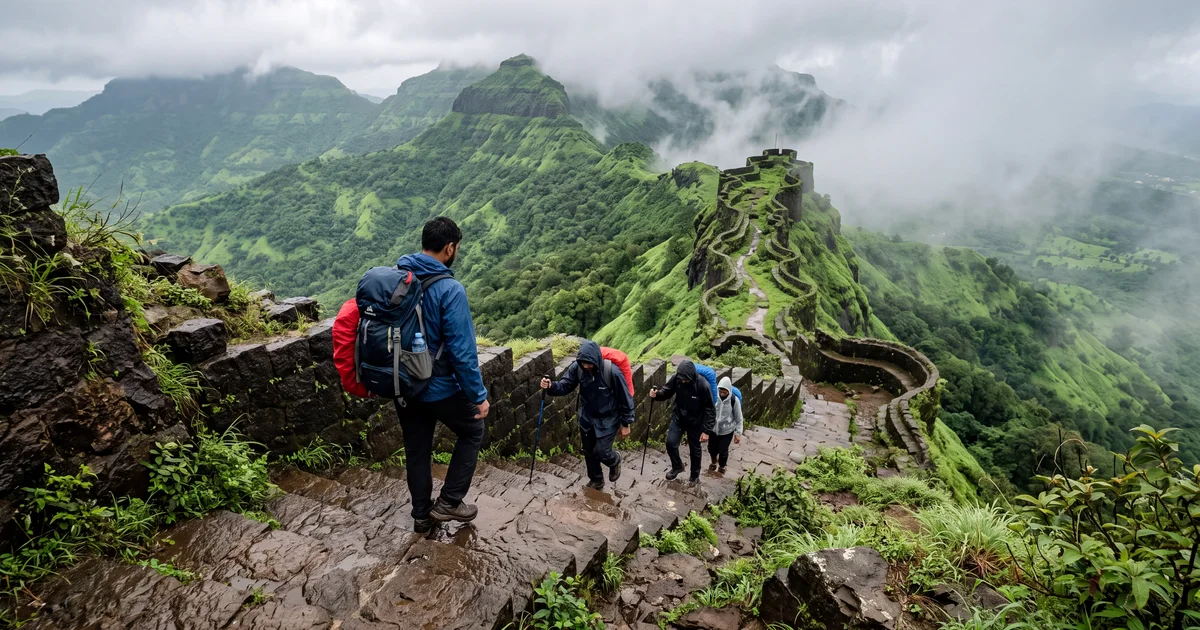
Torna fort sits 1,403 metres above sea level and about 50 km southwest of Pune. It was the first fort Shivaji captured in 1646, at age 16. That fact alone draws thousands of trekkers each year, but the real pull is simpler: from the top, on a clear day, you see Rajgad, Sinhagad, and Purandar laid out across the Sahyadri ridgeline like a map of Maratha ambition.
The trek starts from Velhe village and climbs roughly 800 metres in elevation over about 4 km. That makes it steeper than Sinhagad, shorter than Harishchandragad, and a solid half day effort for anyone based in Pune.
TL;DR
- Distance from Pune: 50 km to Velhe base, about 1.5 to 2 hours by road
- Trek time: 3 to 4 hours up, 2 to 2.5 hours down
- Difficulty: moderate (steep basalt steps, one scramble section at Bini Darwaza)
- Best months: June to September for monsoon drama, October to February for visibility
- The fort is free to enter; no tickets or permits needed
What makes Torna different from the easier Pune forts?
Sinhagad takes 45 minutes. Lohagad is an hour. Torna takes three to four hours and earns every metre of it. The difference is elevation gain: you climb 800 metres over exposed basalt, with no tree cover on the upper half in dry months. The fort rewards that effort with a plateau so large you could lose someone on it.
Torna was renamed Prachandagad ("the fierce fort") by Shivaji after he took it. The name fits. The fortifications still stand at two gates, Bini Darwaza at the lower entrance and Zunjar Machi to the northwest. Between them stretches a saddle ridge connecting two distinct sections of the fort.
One caveat worth knowing: there is no reliable water source above the base village between October and May. Two litres per person is the minimum. In monsoon, streams appear everywhere and the problem reverses: you are walking through running water on every step.
How to reach Torna fort from Pune
The most common route runs through Sinhagad Road, past Khadakwasla dam, through Pabe Ghat, and into Velhe village. Total distance is about 50 km. Budget 90 minutes without traffic, two hours on weekends when Sinhagad Road chokes near the dam.
An alternate approach via the Pune Bangalore highway and Bhor adds about 15 km but avoids the Sinhagad Road bottleneck. Few groups use it, which is a mistake if you are leaving after 6am on a Saturday.
From Velhe village, the trail starts behind the Menghai Devi temple. You cannot miss it. Locals point the way, and on weekends there are usually groups ahead of you within five minutes of starting.
Bus option: MSRTC runs buses to Velhe from Swargate bus stand in Pune. The first morning bus departs around 6am. Journey time is about two hours. Return buses stop around 5pm, so factor that into your descent deadline.
My honest opinion: if you can drive or ride, do that. The bus schedule limits you to starting the trek around 8am, which means you are climbing the exposed upper section in full sun by 10am between October and February.
How difficult is the Torna fort trek from Pune?
The trail breaks into three distinct sections, each with its own character.
Lower trail (Velhe to the tree line, 60 minutes): Gentle incline through scrub forest and farmland. The path is wide, obvious, and shaded. Leeches here in monsoon, so tuck your trousers into your socks or accept some blood loss.
Middle section (tree line to Bini Darwaza, 90 minutes): The gradient increases sharply. You are climbing carved basalt steps with drops of 30 to 40 cm per step. The path narrows. In monsoon, water runs down the steps like a stream. The rock stays grippy when wet, which is one advantage basalt has over laterite.
Upper section (Bini Darwaza to plateau, 60 minutes): The Bini Darwaza gate requires a short scramble over rock. Hands are needed for about 10 metres. After the gate, the trail crosses the saddle ridge with exposure on both sides, then opens onto the northern machi of the plateau.
Total elevation gain: approximately 800 metres. Trek distance: about 4 km one way. This is a moderate trek by Sahyadri standards. It is harder than Visapur, comparable to Rajgad via Pali, and easier than Alang or Harishchandragad via Nalichi Vaat.
One thing that surprises first timers: the descent is harder than the climb. Those high basalt steps punish the knees, and by afternoon in dry months the rock radiates stored heat. Start early enough to descend before 1pm if visiting between October and February.
What to see on Torna fort
The plateau is divided into two sections connected by a central ridge.
Zunjar Machi (northwest section): Contains the remains of granaries, water cisterns, and the old living quarters. The cisterns still hold water year round, though it is not drinkable without treatment. The views from the northwest edge face Rajgad directly across the valley, about 4 km as the crow flies.
Budhla Machi (southeast section): Higher ground with the Menghai goddess temple at the summit point (1,403 metres). On clear winter mornings you can see Purandar fort to the east and the Sahyadri main ridge stretching south toward Mahabaleshwar.
The saddle ridge: The connecting path between the two sections is exposed and narrow in places. In high wind or poor visibility, stick to the marked path. A fall here would be serious.
Allow at least 45 minutes to explore the plateau properly. Most groups rush through in 15 minutes, take photos at the flag, and head down. That misses half the fort.
When to do the Torna fort trek
June to September (monsoon): The fort transforms. Clouds sit at plateau level, grass turns electric green, and seasonal waterfalls appear on the cliff faces. Visibility can drop to 10 metres for hours, which makes navigation on the plateau harder than you expect. Temperature stays between 18 and 24 degrees Celsius. Leeches are active on the lower trail.
October to February (post monsoon and winter): Clear skies, dry trail, best views of the surrounding forts. Morning temperatures on top can drop to 8 to 10 degrees Celsius in December and January. The fort gets crowded on weekends in this window, particularly around Diwali and Christmas.
March to May (summer): No shade on the upper two thirds of the climb. Rock surface temperature crosses 45 degrees Celsius by midday. Only attempt this if you start before 5am and are back at base by 10am. Most groups skip these months entirely.
The honest take: monsoon is the best time if you do not mind wet feet and zero views some days. The atmosphere is unmatched. But if you want to actually see the forts around you, come in November or December.
Group treks to Torna from Pune
Multiple operators run weekend group treks to Torna. Most follow the same pattern: a midnight or 4am departure from Pune, sunrise at the top, descent by 11am, and back in the city by 1pm.
What to look for in a group departure:
- Batch size matters. Anything over 25 people means you are queuing at the Bini Darwaza scramble for 20 minutes. Ask the operator.
- Some groups camp on the plateau overnight. This is the best way to experience the fort if you have the time. Sunset from Zunjar Machi, stars, and then sunrise from Budhla Machi.
- Check whether the price includes transport from Pune or just the trek coordination. Many operators assume you are meeting at Velhe.
Browse current group departures to Torna on /trips or filter by treks from Pune for operators running Sahyadri weekend treks.
Packing for Torna (the short version)
You do not need much for a day trek. But three things catch people out on Torna specifically:
- Water. Two litres minimum in dry months. There is nothing between Velhe and the cisterns on top, and the cisterns need purification.
- Shoes with ankle support. The basalt steps have irregular heights. Sandals and running shoes lead to twisted ankles here more than on flatter trails. In monsoon, drainage holes in the shoe sole help more than waterproofing.
- Sun protection for the upper half. No shade for 90 minutes on the exposed middle section. A cap, sunscreen, and a light full sleeve shirt make the difference between comfort and mild heatstroke in October.
Skip the trekking poles unless your knees are already compromised. The scramble at Bini Darwaza needs free hands.
Torna compared to other Sahyadri treks near Pune
If you have done Sinhagad and want to step up, Torna is the logical next fort. If Torna felt comfortable, Rajgad via Pali or Harishchandragad via Khireshwar are the next tier.
For more options, see treks from Pune or explore destinations across the Sahyadris.
Frequently asked questions
- How difficult is the Torna fort trek?
- Torna is a moderate grade trek. The climb from Velhe base takes three to four hours over roughly 1,100 steps cut into basalt and a few scramble patches near the Bini Darwaza. Most reasonably fit adults manage it without issue, though the steepness is relentless and your knees will know about it on the way down.
- How long does the Torna fort trek take?
- Plan for three to four hours up and two to two and a half hours down, plus an hour exploring the plateau. A full day trip from Pune, including the 50 km drive each way, takes about ten to eleven hours door to door.
- Is Torna fort trek safe in monsoon?
- Yes, with the right footwear. The basalt steps get slippery when wet, and the Bini Darwaza section needs care in rain. Visibility drops often below 20 metres on the upper plateau. Leeches are common on the lower trail between June and September. Avoid the trek during active heavy rainfall warnings from IMD.
- How far is Torna fort from Pune?
- The Velhe base village is approximately 50 km from Pune city centre via the Sinhagad road and the Bhor ghat route. The drive takes about one and a half to two hours depending on traffic through Khadakwasla.
- What is the best time to visit Torna fort?
- June to September for the full monsoon green (clouds, waterfalls, lush grass on the plateau), and October to February for clearer views of the surrounding Sahyadri range. Avoid March to May when temperatures on the exposed summit cross 38 degrees Celsius.
- Can beginners do the Torna fort trek?
- Yes, though it is harder than Sinhagad or Lohagad. Beginners with basic cardiovascular fitness can complete it. The climb is steep but not technical. Start early, carry two litres of water minimum, and descend before afternoon heat in the dry months.