Best Places to Visit Near Lucknow (2026): Heritage, Nature and Weekend Drives
12 places to visit near Lucknow with distances, travel times and honest tips on which day trips and weekend drives are worth it in 2026.
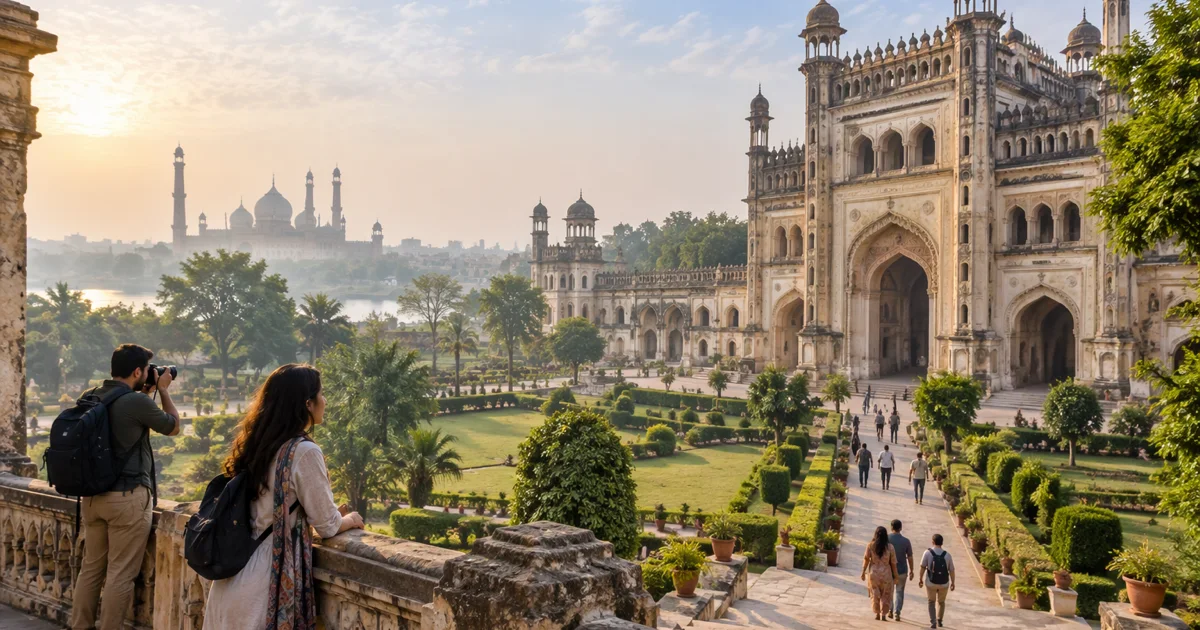
Places to visit near Lucknow get over 3,600 searches a month, and most results list the same Mughal gardens and Kanpur malls that show up in every UP travel guide. Lucknow is well connected by road and rail. It sits in the middle of the Gangetic plains with decent highways spreading in four directions. The problem is not connectivity. The problem is that flat Awadhi terrain does not hand you obvious weekend escapes the way a coastal or mountain city does.
That makes the good options less visible. There are a few that work: a world class tiger reserve 5 hours north, an ancient pilgrimage forest 90 km out, a heritage city on the Yamuna 300 km south, and a handful of stops in between. This list covers the ones that deliver something Lucknow itself does not.
TL;DR
- Dudhwa National Park (230 km) is the best nature escape from Lucknow. Tigers, rhinos, swamp deer.
- Ayodhya (135 km) is a comfortable day trip, especially post 2024 with the Ram Mandir.
- Chitrakoot (280 km) has forested hills and riverside temples without the tourist crowd.
- Nawabganj Bird Sanctuary (45 km) is the closest quick escape for birding.
- Skip Kanpur unless you have specific business there. The drive is short, but there is not much for a tourist.
What Counts as "Near Lucknow"?
For this list, the cutoff is 350 km. Beyond that, you are looking at Varanasi, Agra, or the Kumaon hills, which are separate trips. Within 350 km, the destinations split into three categories: day trips (under 150 km), weekend drives (150 to 300 km), and long weekends (300+ km with a stop).
Lucknow's highway network is better than most UP cities. The Agra Lucknow Expressway covers the southwest. The Purvanchal Expressway heads east toward Ayodhya. NH30 runs north through Sitapur toward the Terai. Drive times on the expressways are predictable. Once you exit onto state highways, add 30 to 40 percent to the GPS estimate for trucks and speed bumps.
Nawabganj Bird Sanctuary: The 45 Minute Escape
Distance from Lucknow: 45 km via Kanpur Road (about 50 minutes) Best months: November to February (migratory season)
Nawabganj is a modest 2.25 square km wetland near Unnao, and between November and February it hosts thousands of migratory birds including sarus cranes, painted storks, and bar headed geese. The rest of the year, it is a quiet lake with resident kingfishers and cormorants.
The sanctuary has a watchtower, a walking path around the lake (about 3 km), and basic UP Forest Department signage. Bring binoculars. The best viewing is between 6 AM and 9 AM when the birds are active and the light is low. There is no restaurant inside, so carry water and snacks. Entry is ₹50, and it takes about two hours to cover the loop.
The honest take: this is a morning outing, not a full day trip. Combine it with a breakfast stop in Unnao or pair it with the Kanpur drive if you want to fill a day.
Naimisharanya: Pilgrimage Forest 90 Minutes Out
Distance from Lucknow: 90 km via Sitapur Road (about 2 hours) Best months: October to March
Naimisharanya is one of those places most North Indians have heard of but few have visited. Hindu texts call it a forest where 88,000 sages meditated. The modern reality is a small temple town on the banks of the Gomti river, with the Chakratirtha temple as the central point. The Vyasa Gaddi, Hanuman Garhi, and the 12 month long parikrama route draw pilgrims year round.
For a non pilgrim, the draw is the relative quiet and the riverbank walks. The Gomti at Naimisharanya is narrower and calmer than in Lucknow, and the ghats are largely empty on weekdays. The Lalita Devi temple (8 km from the main complex) is a Shakti Peeth with an interesting carved entrance.
The catch: infrastructure is basic. Dharamshalas outnumber hotels. Food options are vegetarian and limited. Go in the morning, walk the temples and ghats, and drive back by afternoon. The road from Lucknow via Sitapur is a two lane state highway with heavy truck traffic past Sitapur town.
Is Ayodhya Worth a Day Trip from Lucknow?
Distance from Lucknow: 135 km via Purvanchal Expressway (about 3 hours) Best months: October to March (avoid summer heat above 42°C)
Since the Ram Mandir consecration in January 2024, Ayodhya has become one of the busiest pilgrim cities in India. The temple complex is the central draw, and the Saryu river ghats, especially at sunset, add a second experience worth the visit.
The Purvanchal Expressway has cut the drive time to about 3 hours from Lucknow, making it a comfortable day trip if you start by 6 AM. Leave early because the temple queues grow through the morning. Weekend waits can exceed 3 hours during peak months (October to January). Weekday visits are significantly calmer.
Beyond the main temple, Hanuman Garhi is a hilltop temple with city views, and the Ram Ki Paidi ghat area has 14 ghats along the Saryu. The evening aarti at Ram Ki Paidi runs daily at sunset and draws large crowds during festivals.
One practical note: Ayodhya's food scene is entirely vegetarian and mostly street food. The city does not have many sit down restaurants. Carry water because the temple area gets dusty and hot even in November.
For group trips that include Ayodhya, some operators run Lucknow plus Ayodhya itineraries on fixed departure weekends. Check current departures on TripzSearch.
Dudhwa National Park: The Best Wildlife Option
Distance from Lucknow: 230 km via NH30 through Sitapur (about 5 hours) Best months: November to March (park closes mid June to mid November)
Dudhwa is 490 square km of Terai grassland and sal forest on the India Nepal border, and it is one of the few places in India where you can see Indian rhinos outside the northeast. The rhinos were reintroduced from Kaziranga in 1984, and a small population survives in the Sonaripur enclosure. Tiger sightings are less reliable than Ranthambore or Jim Corbett, but the forest is far less crowded. Morning jeep safaris regularly spot deer herds, wild boar, sloth bears, and if the timing is right, a tiger at one of the waterholes.
The park has two zones: Dudhwa (core) and Kishanpur (satellite, 40 km south). Kishanpur is quieter and better for birdwatching. The Suheli river runs through both zones, and the swamp deer (barasingha) herds along its banks are a sight that Dudhwa shares with only Kanha in Madhya Pradesh.
Accommodation is limited to UP Forest Department rest houses (book through UP Tourism, ₹1,000 to ₹2,500 per night) and a handful of private lodges. Book two weeks ahead for December and January. The drive from Lucknow is 5 hours on a mix of highway and rural road. The last 50 km through Lakhimpur Kheri district is slow. Start early to reach by noon and do an afternoon safari.
The honest note: Dudhwa's infrastructure is basic compared to Rajasthan parks. There are no luxury safari lodges. But the low footfall means you get the forest to yourself most mornings.
Chitrakoot: Forested Hills on the MP Border
Distance from Lucknow: 280 km via Prayagraj Highway (about 5.5 to 6 hours) Best months: October to February (July to September for waterfall season)
Chitrakoot sits where the Vindhyan plateau meets the Gangetic plains, straddling the UP and Madhya Pradesh border. It is the only destination on this list with actual elevation change. The Kamadgiri hill (a 5 km parikrama loop) and the Mandakini river ghats form the core area. Ram Ghat has sunrise boat rides, and Gupt Godavari has a walk through cave with a stream running through it.
The landscape is different from anything near Lucknow. Rocky outcrops, dry deciduous forest, and the river cutting through low hills. Hanuman Dhara (a hilltop temple with a natural spring) requires a 400 step climb but rewards with views over the valley and the Sphatik Shila rock below.
The catch is distance. Six hours of driving through UP plains means this is a two night trip minimum. The town itself has limited hotels, mostly pilgrim oriented dharamshalas and a few MPTDC (Madhya Pradesh Tourism) properties on the MP side. Food is vegetarian, simple, and adequate.
One real opinion: Chitrakoot is better in monsoon than most people think. The waterfalls around Raneh Falls (25 km away, technically in MP) are dramatic in August, and the canyon formations there are unusual for central India, a granite gorge with pink and red rock layers.
Kanpur: The Underwhelming 80 km
Distance from Lucknow: 80 km via Agra Lucknow Expressway (about 1.5 hours) Best months: October to March
Kanpur makes every "places near Lucknow" list because of the distance. The reality for a tourist is limited. Allen Forest Zoo is decent for families (entry ₹50, a morning covers it). The Ganga ghats at Bithoor (25 km north of Kanpur) have historical significance (Nana Sahib's rebellion in 1857) and a quieter riverside feel than Varanasi. Massacre Ghat and Sati Chaura Ghat are sober but important historical sites.
The honest take: Kanpur is an industrial city. Unless you have a specific reason to visit (the IIT campus is worth a walk through, the leather markets if you are buying), it does not justify a dedicated trip from Lucknow. If you pass through on the way to Chitrakoot or somewhere south, stop for the Bithoor ghats. They are the highlight.
Prayagraj (Allahabad): Sangam and Kumbh City
Distance from Lucknow: 200 km via Purvanchal Expressway and NH19 (about 3.5 to 4 hours) Best months: October to February
Prayagraj is where the Ganga, Yamuna, and the mythical Saraswati meet. The Sangam boat ride (₹50 to ₹100, negotiate before boarding) is a morning experience that works regardless of your beliefs. The water colour difference between the rivers is visible.
Anand Bhavan and Swaraj Bhavan (the Nehru family estates) are well maintained museums that cover the independence movement without the usual government museum staleness. The Allahabad Fort is partially military controlled, but the Akshay Vat tree and Patalpuri temple inside are accessible.
Street food at Loknath or Civil Lines gives you the kachori sabji and lassi that Prayagraj is known for across UP. During Magh Mela (January to February), the Sangam area fills with millions of pilgrims, tents, and a completely different energy. Outside the mela months, the ghats are manageable.
This trip pairs well with a Chitrakoot extension (80 km further south) if you have three days.
How to Pick the Right Trip
For a morning outing, Nawabganj (45 km) or Naimisharanya (90 km) fill half a day without exhausting you.
For a proper day trip, Ayodhya (135 km) or Kanpur plus Bithoor (80 km) make sense. Both are expressway connected with predictable drive times.
For a weekend (two nights), Dudhwa or Chitrakoot are the strongest options. Dudhwa if you want wildlife and forest quiet. Chitrakoot if you want river temples, low hills, and a pace that feels pre modern.
For a long weekend (three nights), combine Prayagraj and Chitrakoot. Drive to Prayagraj on day one, Chitrakoot on day two, explore, and return on day four.
Check TripzSearch for current group trips from Lucknow and nearby destinations with operator managed departures.
Frequently asked questions
- Which places near Lucknow can I visit in one day?
- Dudhwa National Park is too far for a comfortable day trip (230 km each way). For genuine day trips, Kanpur (80 km) and Nawabganj Bird Sanctuary (45 km) work well. Naimisharanya (90 km) is doable too if you start early. Anything beyond 150 km one way makes more sense as an overnight.
- What are the best places near Lucknow within 100 km?
- Nawabganj Bird Sanctuary (45 km) is the closest green escape. Kakori (30 km) is a quick heritage stop, and Naimisharanya (90 km) combines pilgrimage with forest walks. Kanpur at 80 km has the Allen Forest Zoo and the Ganga ghats. None of these need more than a morning to cover.
- Is Dudhwa National Park worth visiting from Lucknow?
- Dudhwa is one of the most underrated wildlife parks in North India. It has tigers, Indian rhinos reintroduced from Assam, and swamp deer herds. The 230 km drive takes about 5 hours. Go between November and March when the grasslands dry out and animal sightings improve. Book forest rest houses through UP Tourism at least two weeks ahead.
- What is the best time to visit places near Lucknow?
- October to March is ideal for all destinations on this list. Temperatures range between 8°C and 25°C, which makes driving and sightseeing comfortable. Summers from April to June hit 45°C in the plains. Monsoon (July to September) turns Dudhwa and the Terai green, but roads flood and many parks close.
- Are there any hill stations near Lucknow?
- Nainital (340 km, about 8 hours) is the closest proper hill station. Mussoorie and Lansdowne are in the same range. These work as long weekend trips, not day trips. Closer options like Chitrakoot (280 km) have hilly terrain but no real hill station climate. For a Lucknow weekend escape, the forested Terai belt (Dudhwa, Katarniaghat) is more practical than the hills.
- Can I visit Ayodhya as a day trip from Lucknow?
- Yes, Ayodhya is 135 km from Lucknow and reachable in about 3 hours via the Purvanchal Expressway. The Ram Mandir complex and the ghats along the Saryu river are the main draws. Start by 6 AM to avoid highway traffic and temple queues, and you can be back by evening. Weekdays are less crowded than weekends.