12 Best Places to Visit in Yercaud (2026): Coffee Plantations, Lake and Shevaroy Hills
12 best places to visit in Yercaud in 2026 with lake timings, viewpoint routes, and coffee estate walks near Salem.
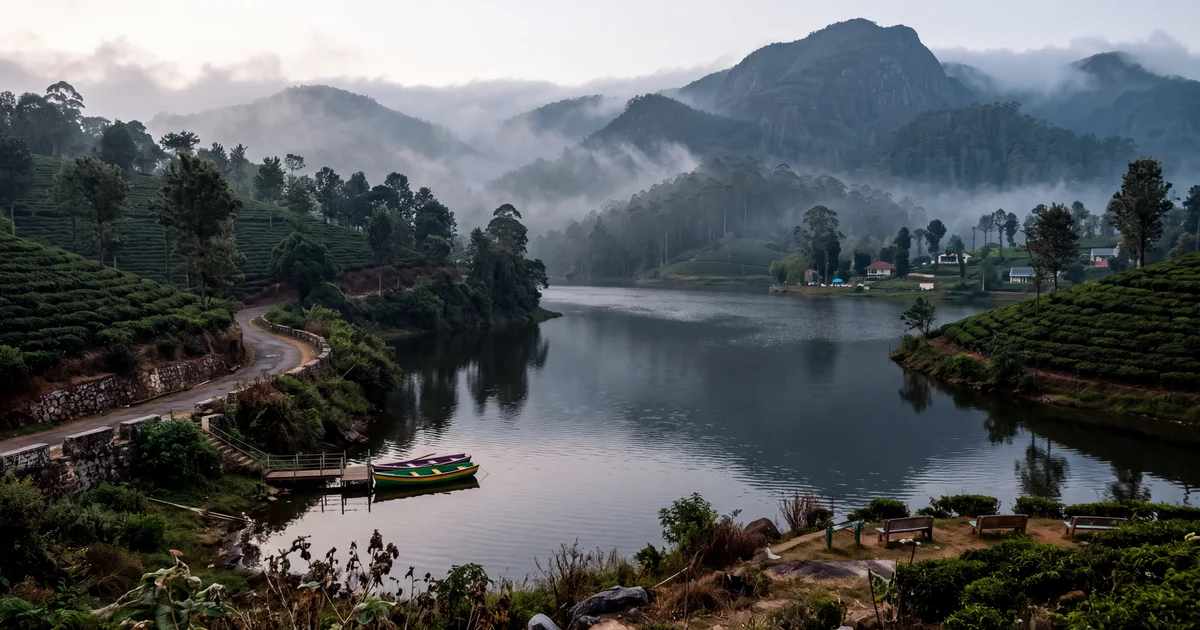
Yercaud sits on the Shevaroy Hills in Tamil Nadu's Eastern Ghats, 30 km from Salem and about 1,500 metres above sea level. The name comes from the Tamil "yeri kaadu," meaning lake forest. That describes it accurately. A lake in the centre of town, coffee plantations covering the surrounding slopes, and a forest reserve on the higher ridges. The hill station is compact: you can drive from one end to the other in 20 minutes.
Places to visit in Yercaud cluster around the lake in the town centre and along the roads that radiate out to viewpoints, waterfalls, and the Shevaroy peak. Unlike Ooty or Kodaikanal, Yercaud has not been over-developed. The roads are narrow, the restaurants are basic, and most of the land between attractions is coffee estate or forest. That is its appeal, and also its limitation if you expect shopping streets or nightlife.
The population is under 10,000. Tourist traffic is mostly weekend visitors from Salem (30 km, 45 minutes), Chennai (370 km, 6 hours), and Bangalore (350 km, 5.5 hours). Peak season is October to January and the May Summer Festival. The 20 hairpin bends on the ghat road from Salem are the only way up.
TL;DR
- Yercaud Lake plus two viewpoints (Lady's Seat and Pagoda Point) fills a solid day.
- The coffee is the real reason to visit. Walk an estate along the Pagoda Point road.
- October to February is best. December mornings drop to 10°C.
- Budget ₹1,000 to ₹2,000 per person per day covering stays, food, and transport.
- One weekend from Chennai is the sweet spot. Two days covers everything without padding.
Why Does Everyone Start at Yercaud Lake?
Yercaud Lake sits in the centre of town and serves as the default gathering point. The lake is artificial, roughly 800 metres long and 400 metres wide, surrounded by a paved walking path and eucalyptus trees. The Tamil Nadu Tourism Development Corporation (TTDC) runs pedal boats (₹100 for 30 minutes) and rowboats (₹150 for 30 minutes) on the lake.
The morning walk around the lake is 1.5 km and takes 20 to 25 minutes at a comfortable pace. At 7 AM on a December morning, the temperature hovers around 12°C, mist sits on the water, and the eucalyptus trees drip condensation. By 10 AM, the mist burns off and the tour buses arrive. If you are staying overnight, the early walk is non-negotiable.
The boating is fine. Not exciting. The lake is too small for much exploration, and the pedal boats move slowly. Children enjoy it. Adults will get more from the walk and the coffee stalls at the lake's eastern end, where ₹15 buys a steel tumbler of filter coffee made from beans grown 2 km away.
One caveat: the lake gets crowded on weekends, especially between 11 AM and 4 PM when day trippers from Salem arrive. Saturday and Sunday afternoons see queues for boating that stretch 30 to 45 minutes. Visit early or late.
What Can You Actually See from Lady's Seat?
Lady's Seat is a rock outcropping 3 km south of the lake with a viewpoint over the Salem plains. On a clear day, you can see the plains stretching flat to the horizon, 1,400 metres below. The Mettur Dam reservoir is visible on very clear mornings, 50 km to the northwest. Named after a British colonial era practice of ladies watching the sunset from this spot, the viewpoint now has a small garden, a telescope (₹10 per look), and a few snack stalls.
The sunset here is the main event. Between October and February, the sun drops behind the Shevaroy ridge to the west, and the last light catches the plains in orange and gold. Get there by 5 PM to find a spot. The viewing area is small and fills up fast on weekends.
My honest opinion: Lady's Seat is Yercaud's most hyped viewpoint, and it is good but not extraordinary. The Grange and Pagoda Point offer similar elevation views with fewer people. But if you have time for only one viewpoint, Lady's Seat's combination of sunset angle and clear sightlines makes it the default choice.
Getting there: auto from the lake for ₹80 to ₹100, or a 30 minute walk along the road heading south from the lake. The road is paved and gently uphill.
Is Kiliyur Falls Worth the Walk Down?
Kiliyur Falls is a 90 metre waterfall about 3 km from the lake, in a valley on the eastern side of the Shevaroy Hills. The water drops in stages over a rock face surrounded by forest. Getting to the falls requires descending roughly 200 steps from the road, and the path is uneven, slippery after rain, and poorly maintained in sections.
The falls are seasonal. October and November, right after the monsoon, bring the heaviest flow. By February, the falls narrow to a trickle. In April and May, there is often no water at all. Time your visit accordingly.
The walk down takes 15 to 20 minutes. The walk back up takes 30 minutes and will leave you sweating even in December. There is no handrail for most of the descent. Wear shoes with grip, not sandals. The mist at the base of the falls makes the rocks slick.
The pool at the base is shallow and inviting, but swimming is officially not recommended due to the rocks and slippery surfaces. People wade in anyway, especially families with children. The water is cold, around 18°C in November.
Is the 400 step round trip worth it? In October to December, when the falls run full, yes. The forest canopy, the sound of water, and the 20°C microclimate at the base make it one of Yercaud's better experiences. In dry season, skip it. You will walk 400 steps for a damp rock face.
What Happens at Shevaroy Temple?
Shevaroy Temple (Servarayan Temple) sits at the highest point of the Shevaroy Hills, 1,623 metres above sea level, about 8 km from the lake. The temple is dedicated to Servarayan and Kaveri Amman, the presiding deities of the hills. It sits inside a small cave at the summit, and the entrance is narrow enough that you need to duck.
The drive up is the real experience. The road from Yercaud town climbs through dense coffee plantations for the first 4 km, then transitions to montane forest with pepper vines and silver oak. The final 2 km is a rough dirt road. Cars can make it in dry season, but an SUV or bike handles the ruts better. An auto from the lake costs ₹300 to ₹400 for the round trip with a 30 minute wait.
At the summit, the views open in all directions. On a clear day, the entire Salem plateau sits below you to the north, and the higher ranges of the Eastern Ghats are visible to the south. December mornings are best for visibility. By noon, haze builds from the plains.
The temple itself is small. Five minutes inside covers it. The significance is more spiritual than architectural. Local Malaiyali tribal communities consider the hill sacred and perform annual ceremonies here. The Servarayan festival in May draws thousands.
If you are skipping one thing in Yercaud, do not skip the drive up here. The coffee estate road alone is worth the auto fare.
What Makes the Coffee Estates Worth Visiting?
Yercaud's economy runs on coffee. Arabica plantations cover most of the slopes between 1,200 and 1,500 metres, and the beans have been growing here since the British introduced the crop in the 1820s. The coffee is shade grown under silver oak and pepper vine canopies, which gives the beans a different character than sun grown varieties.
There are no big branded plantation tours in Yercaud. This is not Coorg with its Tata Coffee and Club Mahindra estates. Most of the plantations here are family owned, 10 to 50 acre operations. The experience is informal. Walk along the Pagoda Point road or the road to Shevaroy Temple, and you will pass estate entrances. Many owners are happy to let visitors walk through if you ask. Some will show you the processing area where beans are pulped, fermented, and dried on raised beds.
Harvest season runs November to January. This is when you see workers handpicking the red cherries, and the smell of fresh pulped coffee fills the air near any processing shed. Outside harvest season, the plantations are green and quiet, and the coffee plants carry white flowers (March to April) or green unripe berries.
Buy beans directly from estate owners. A kilogram of fresh roasted Yercaud Arabica costs ₹400 to ₹600, roughly half the retail price in Chennai. The quality varies by estate, but the freshness is consistent because the roast to sale gap here is days, not months.
One thing to know: the best estates are not on any tourist map. The ones closest to the road get the most visitors. If you hire a local guide or ask your hotel staff, they can point you to estates 2 to 3 km off the main road where the walks are quieter and the coffee often better.
What Is Worth Seeing at the Botanical Garden?
The Botanical Garden (officially the National Orchidarium) sits 1 km east of the lake. It was established in the 1960s and covers about 60 acres of maintained gardens plus adjacent forest. The orchid house has over 250 species, including several endemic to the Eastern Ghats. The kurinji flower, which blooms once every 12 years, grows on the slopes behind the garden.
The garden itself is well kept by Indian standards. Paved paths wind through sections of tropical trees, flowering beds, a small rose garden, and a eucalyptus grove. The standout is the orchid collection. If you have any interest in plants, the orchidarium alone justifies the ₹15 entry fee. The best months for flowering are August to November.
Plan 45 minutes to 1 hour. The garden is flat and wheelchair accessible on the main paths. There is a small cafe near the entrance selling tea and biscuits. Skip the weekends if possible. School groups visit on Saturdays, and the paths get noisy.
Beyond the orchids, the garden serves as a good short walk for people who do not want to descend 200 steps to Kiliyur Falls or drive 8 km to the Shevaroy peak. It is also the only attraction in Yercaud with proper restrooms.
Is Pagoda Point Viewpoint Better Than Lady's Seat?
Pagoda Point sits 5 km northeast of the lake at the edge of the Shevaroy Hills. The name comes from a small pagoda shaped pillar at the viewpoint. The view faces north over the Salem plains, and on a clear morning, you can see the Mettur Dam and the Kaveri River channel 60 km away.
The viewpoint itself is less maintained than Lady's Seat. No garden, no telescope, no snack stalls. Just a railing, a narrow clearing, and the view. That is its advantage. On weekday mornings, you might have it entirely to yourself. Lady's Seat never empties on a weekend.
The drive to Pagoda Point passes through some of Yercaud's best coffee estates. The road is lined with shade grown Arabica under silver oak canopy, and the air smells like wet earth and coffee flowers in season. If you are renting a bike or scooter (₹300 to ₹350 per day), the ride to Pagoda Point is one of the better short routes in Yercaud.
Sunrise from Pagoda Point works better than sunset (Lady's Seat wins for sunset). The eastern exposure means the first light hits the plains directly, and in December, the 6:30 AM light through the mist is worth the early alarm.
The practical trade off: Lady's Seat for sunset, Pagoda Point for sunrise or a quiet morning visit.
How Do You Reach Yercaud from Chennai, Bangalore, or Salem?
From Salem, Yercaud is 30 km and 20 hairpin bends. The ghat road takes 45 minutes by car and 30 minutes by bike. The bends are well paved but narrow. Overtaking on the bends is common and dangerous. If you are driving up for the first time, go slowly and honk before each blind bend.
From Chennai, the total distance is about 370 km. Most people drive via NH48 through Villupuram and Attur to Salem, then take the ghat road up. Drive time is 5.5 to 6.5 hours depending on highway traffic around Villupuram. SETC buses from Chennai CMBT to Salem run every 30 minutes (₹400 to ₹600 depending on AC or non AC), and the ride takes 5 to 6 hours. From Salem bus stand, local buses to Yercaud run roughly every hour (₹30, 1 hour including the ghat section).
From Bangalore, it is 350 km via Hosur and Dharmapuri. Drive time is 5 to 6 hours. The last 50 km through Dharmapuri to Salem can be slow due to town traffic.
By train, Salem Junction is the nearest railhead. The Shatabdi Express from Chennai Central takes 4.5 hours. The Cheran Express is an overnight option. From Salem Junction, pre book a taxi to Yercaud (₹800 to ₹1,000 for the 45 minute climb) or take a shared auto from Salem New Bus Stand (₹60 per person, departs when full).
There is no railway station in Yercaud. There is no airport closer than Salem (domestic, limited flights) or Trichy (130 km, 2.5 hours).
Where Should You Stay and Eat in Yercaud?
Yercaud's accommodation ranges from basic lodges near the lake (₹800 to ₹1,500 per night) to the GRT Nature Trails resort on the western slopes (₹5,000 to ₹8,000 per night). Most mid range options cluster within 1 km of the lake. Booking ahead is essential during the May Summer Festival and October to December weekends.
For budget stays, the TTDC Hotel Tamil Nadu near the lake is government run, clean, and predictable at ₹1,200 to ₹1,800. The Sterling Yercaud resort offers package stays with meals and guided walks. For atmosphere, look at the smaller estate bungalows on the Pagoda Point road. A few coffee estate owners rent out colonial era cottages for ₹2,000 to ₹3,000 per night. These are not on Booking.com. Ask at the Yercaud tourist office near the lake or check with local taxi drivers.
Food in Yercaud is basic South Indian. The restaurants around the lake serve dosa, idli, vada, and meals (thali). Quality is consistent but unremarkable. The GRT resort restaurant offers better food (multi cuisine, ₹400 to ₹800 per plate) if you want something beyond standard fare.
Two things worth seeking out. The filter coffee at the stalls near the lake's eastern end is genuinely good because the beans are local. And the corn on the cob vendors near the boating point in the evening (₹30 per ear, roasted over charcoal) are the best street snack Yercaud offers. That is about the extent of the food scene.
How Do You Plan a Weekend in Yercaud?
A Saturday to Sunday plan that covers the highlights.
Saturday morning: leave Chennai or Bangalore by 5 AM to reach Yercaud by 11 AM (or take a Friday night bus to Salem and a morning taxi up). Check in. Walk the lake perimeter (30 minutes). Lunch near the lake. Afternoon: drive or auto to Kiliyur Falls (if visiting October to December) or the Botanical Garden. Return to the lake by 4 PM. Auto to Lady's Seat for sunset (arrive by 5 PM). Dinner in town.
Sunday morning: rent a bike or auto for the day (₹300 to ₹400). Early start to Pagoda Point for sunrise or morning views. Then continue to a coffee estate along the same road (ask your hotel for a recommendation). Drive to Shevaroy Temple (8 km, 30 minutes). Spend an hour at the summit. Return via the ghat road to Salem by 2 PM. Catch the afternoon Shatabdi or bus back to Chennai. Or start driving.
If you have a third day, use it for Bear Shola Falls (a short walk 2 km from the lake, best in monsoon), Anna Park near the Botanical Garden, and a longer coffee estate visit. The third day is where Yercaud relaxes from a sightseeing trip into an actual hill station break.
Yercaud fits neatly into a weekend trip from Chennai. It pairs with Salem's temples (the Sugavaneswarar Temple and Kottai Mariamman Temple) if you have time on the drive down. For longer south India itineraries, it works as a 2 day pause between Chennai and Bangalore, or as a quieter alternative to Ooty when you do not want a 7 hour drive into the Nilgiris. Check destination options for more hill stations in the region.
Frequently asked questions
- What are the top 5 must visit places in Yercaud?
- Yercaud Lake for the boating and the morning walk around the 1.5 km perimeter, Lady's Seat for the sunset viewpoint over the Salem plains, Shevaroy Temple at the highest point of the hills (1,623 metres), Kiliyur Falls for the 90 metre waterfall after the monsoon, and a coffee plantation walk at any of the estates along the Pagoda Point road. These five cover the lake, the views, and the coffee that define Yercaud.
- How many days are enough for Yercaud?
- One full day covers the lake, two viewpoints, and a coffee estate walk. Two days let you add Kiliyur Falls, Shevaroy Temple, the botanical garden, and a relaxed pace without rushing between stops. Most visitors from Chennai or Bangalore come for a weekend and that works well.
- What is the best time to visit Yercaud?
- October to February gives you 15°C to 25°C weather with clear skies and the best viewpoint visibility. The Summer Festival in May draws crowds and hotel rates spike. Monsoon from June to September brings heavy rain and makes Kiliyur Falls spectacular, but the viewpoints stay fogged in most mornings. December and January mornings drop to 10°C, so carry a jacket.
- How do I reach Yercaud from Chennai?
- Drive or take a bus to Salem (340 km, 5 to 6 hours on NH48), then climb 20 hairpin bends for 30 km to Yercaud (45 minutes). SETC buses run from Chennai CMBT to Salem every 30 minutes. From Salem bus stand, shared autos and local buses go up to Yercaud every hour. Alternatively, take the Shatabdi or Cheran Express to Salem Junction (4.5 to 5 hours) and a taxi up. There is no railway station in Yercaud.
- Is Yercaud worth visiting or should I go to Ooty instead?
- Yercaud is smaller, quieter, and much less crowded than Ooty. It works better for a short weekend getaway, especially from Salem, Chennai, or Bangalore. Ooty has more variety in terms of attractions, restaurants, and the Nilgiri Mountain Railway. If you want a relaxed 2 day break with coffee plantations and empty viewpoints, Yercaud. If you want a 4 to 5 day hill station experience, Ooty.
- Are there good coffee plantations to visit in Yercaud?
- Several estates along the Pagoda Point road and the road to Shevaroy Temple allow visitors. Most are private and do not have formal tours, but the owners or workers often let you walk through if you ask. The GRT Nature Trails resort has a guided coffee walk included for guests. During harvest season (November to January), you can see the picking and processing. Yercaud coffee is Arabica, grown at 1,200 to 1,500 metres.
- What food should I try in Yercaud?
- Filter coffee from a local estate. The stuff here is grown and roasted in the same hills. Beyond that, most restaurants around the lake serve standard South Indian food: dosa, idli, meals. The GRT resort restaurant has better fare if you are willing to pay 3x. For street food, the stalls near the lake boating point sell bajji and tea in the evening. Yercaud is not a food destination. Come for the views, not the menu.