Best Places to Visit in Vrindavan (2026): Temples, Ghats and What to Know
Places to visit in Vrindavan in 2026: top temples, ghats, Mathura side trips, real timings, crowd tips and how to plan from Delhi or Agra.
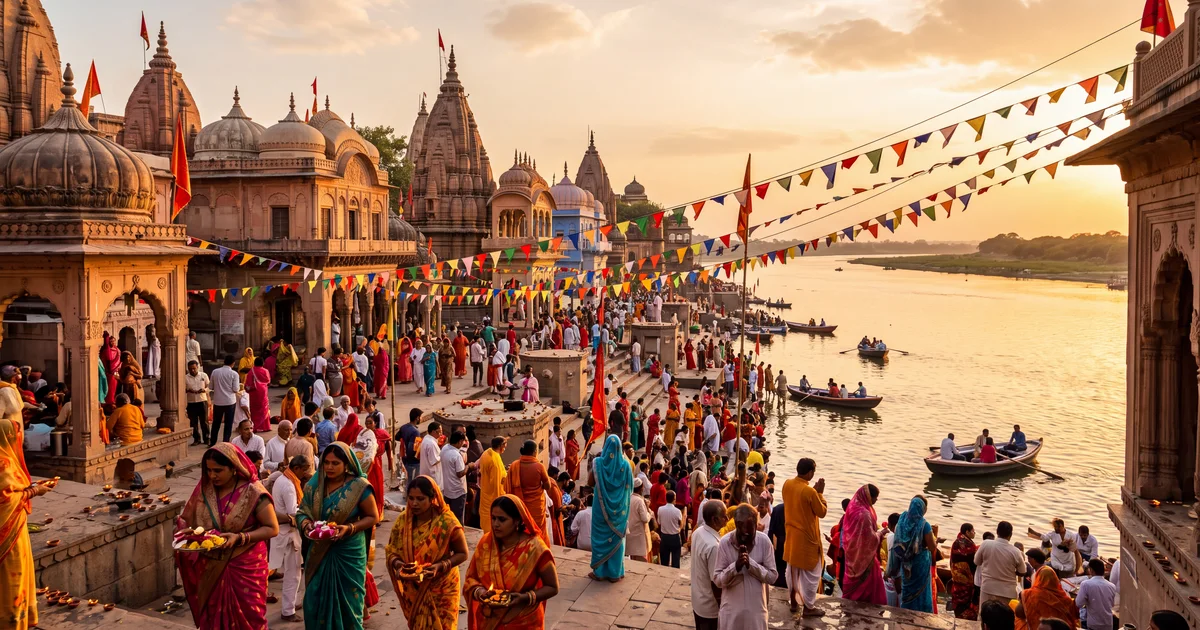
Vrindavan is 150 km from Delhi and several centuries removed from it. The town sits on the western bank of the Yamuna in Mathura district, and its entire identity is built around Krishna. Over 5,500 temples crowd into an area of about 10 square km. That is roughly one temple every two metres, though the math is approximate and the reality is chaotic.
The place runs on devotion, not tourism infrastructure. Streets are narrow, autorickshaws do not follow lanes (or any discernible traffic pattern), and monkeys will take your sunglasses if you wear them on your head. But the temples are extraordinary, the ghats have a warmth that Varanasi's often lack, and the town moves to a rhythm that is completely its own.
This guide covers what is worth seeing, what to skip, and the practical details that most travel sites forget to mention.
TL;DR
- Banke Bihari Temple: the main event, go early (before 8 AM) or expect 45+ minute queues
- Prem Mandir: white Italian marble, best at the 7:30 PM light show
- ISKCON Vrindavan: well organized, good for first timers to temple culture
- Kesi Ghat: the quietest Yamuna ghat, best at sunrise
- One day covers the main spots; two days if you add Mathura and Govardhan
Which Temples in Vrindavan Should You Not Miss?
Not all 5,500 temples need your attention. Five do.
Banke Bihari Temple is the centre of gravity. Built in 1864, it sits in the old town and houses one of the most revered Krishna idols in North India. The atmosphere inside is intense: the curtain over the idol opens and closes every few minutes (the belief is that Krishna's gaze is too powerful for continuous viewing), devotees surge forward with each opening, and the priests manage the crowd with practiced authority.
Visit before 8 AM. By 10, the queue wraps around the block and wait times hit 45 minutes to an hour. The temple closes from noon to 5:30 PM. Evening darshan (5:30 to 9:30 PM) is atmospheric but even more crowded. Leave your phone in the car or hotel: photography is strictly banned inside, and attendants enforce it.
The honest caveat: Banke Bihari is claustrophobic during festivals and weekends. The narrow lanes around the temple become one way human currents. If you have anxiety in dense crowds, the early morning slot or a weekday visit is worth the planning.
Prem Mandir is the opposite experience. Built by Jagadguru Kripalu Maharaj and inaugurated in 2012, this white Italian marble temple complex took 12 years and an estimated 150 crore rupees to build. The carvings are meticulous. Scenes from Krishna's life wrap around every exterior panel, and the detail holds up even under close inspection.
The temple is open from 5:30 AM to 8:30 PM. Come for the 7:30 PM light show: the entire marble exterior cycles through colours for about 15 minutes. It is free. The grounds are spacious and well maintained, a sharp contrast to old town Vrindavan.
My opinion: Prem Mandir is architecturally the finest temple in Vrindavan. Purists prefer Banke Bihari for its age and intensity. Both are correct.
ISKCON Vrindavan (Sri Sri Krishna Balaram Mandir) sits on Bhaktivedanta Swami Marg and was founded in 1975 by A.C. Bhaktivedanta Swami Prabhupada. It is the most organized temple in town: clear signage, a structured darshan queue, a restaurant serving sattvic meals, and a gift shop. For people unfamiliar with Hindu temple culture, this is a comfortable starting point.
The evening aarti at 7 PM is the highlight. Kirtans (devotional songs) run for an hour with harmoniums and mridangam drums, and the energy builds steadily. The samadhi (memorial) of Prabhupada is on the same campus and worth a quiet visit.
Nidhivan is small and strange. This dense grove of tulsi (basil) and kadamba trees is believed to be the spot where Krishna danced the Raas Leela. The grove closes at sunset, and local tradition holds that anyone who stays inside after dark goes mad or blind. Whether you believe the mythology or not, the grove has an unusual stillness during the day.
The caretaker will ask for a donation (50 to 100 rupees is standard). The grove itself takes 10 minutes to walk through.
Radha Raman Temple, built in 1542, is one of the oldest in Vrindavan. The deity here is a self manifested shaligrama shila (a naturally formed stone), and the temple maintains a 500 year old fire that has never been extinguished. The temple is small, unflashy, and deeply atmospheric. Morning aarti at 5 AM is for the committed.
What Are the Best Ghats to Visit in Vrindavan?
Vrindavan has about 25 ghats along the Yamuna, and most are in disrepair. Three are worth your time.
Kesi Ghat is the main bathing ghat and the best maintained. Named after the demon Keshi whom Krishna is said to have slain here, the ghat has wide steps leading to the river, a few small shrines at the top, and morning activity from 5 AM when devotees come for their bath. By 8 AM it quiets down. The sunrise light on the sandstone steps and the Yamuna is the most photogenic moment in Vrindavan.
The Yamuna at Vrindavan is polluted. Severely. Industrial and municipal waste from upstream cities means the river water has dangerously high coliform counts. Many devotees still bathe as an act of faith, but swimming is inadvisable. The ghats themselves are clean enough for sitting, walking, and photographing.
Chir Ghat is where, according to tradition, Krishna hid the clothes of the gopis while they bathed. The ghat is quieter than Kesi and has a small Krishna temple at the top of the steps. It is a 10 minute walk south along the riverfront.
Vishram Ghat is technically in Mathura (11 km away) but worth mentioning because many Vrindavan visitors combine the two towns. This is the ghat where Krishna is said to have rested after killing the tyrant Kamsa. The evening Yamuna aarti here at 7 PM has a quieter, more intimate feel than the one at Varanasi.
How Do You Plan a Vrindavan Trip from Delhi?
The most common itinerary is a weekend trip. Here is what works.
Saturday: Leave Delhi by 6 AM. The Yamuna Expressway (150 km) takes 2.5 to 3 hours, including the toll plaza stop at Greater Noida. Arrive Vrindavan by 9 AM. Check into a hotel or dharamshala. Hit Banke Bihari first (late morning is less crowded than midday), then lunch at a local thali place (50 to 80 rupees for unlimited), then Nidhivan and Radha Raman in the afternoon. Evening at Prem Mandir for the light show. Dinner at ISKCON restaurant (clean, 100 to 200 rupees per person).
Sunday: Morning at Kesi Ghat for sunrise. Then drive to Mathura (20 minutes) for the Krishna Janmabhoomi temple and Vishram Ghat. Head back to Delhi by 2 PM to beat the evening expressway traffic. You reach South Delhi by 5 to 6 PM.
Budget for two people (excluding transport): hotel 800 to 2,000 rupees per night for a decent room with AC, food 400 to 600 rupees for the day, autorickshaws 200 to 300 rupees total, temple donations 100 to 300 rupees. Total: about 2,000 to 3,500 rupees for the weekend excluding fuel or train tickets.
For transport, the Yamuna Expressway toll is about 415 rupees one way for a car. Train to Mathura Junction (Taj Express, 7 AM from Hazrat Nizamuddin, 1.5 hours, 80 rupees in general class or 750 in AC Chair Car) is the cheapest option. From Mathura station, shared autos to Vrindavan cost 20 to 30 rupees.
Check Delhi departure trips for group options that include transport and guided temple visits.
When Should You Avoid Visiting Vrindavan?
Three periods test your patience.
Janmashtami (August to September): The biggest festival, celebrating Krishna's birth. The entire town fills with pilgrims. Hotel rates triple. Temple queues stretch to 3 to 4 hours. The atmosphere is electric if you can handle the crowd, but plan nothing else that day.
Holi (March): Vrindavan's Holi celebrations start a week before the official date. The Lathmar Holi at nearby Barsana (50 km) and the colour play at Banke Bihari are famous. But the town becomes unnavigable for about 5 days. Water, colour, and crowds everywhere. Go for the experience, not for temple darshan.
May to June: Temperatures hit 44 to 47 degrees Celsius. The temples themselves are cool inside, but walking between them in open streets at 2 PM is punishing. If you must visit in summer, do all outdoor movement before 8 AM and after 5 PM.
The sweet spot is October to November (Kartik month). Temples hold special evening aartis. Ghats are lit with oil lamps. Weather is 20 to 28 degrees. Crowds exist but remain manageable outside Diwali week.
What Else Is Near Vrindavan Worth Visiting?
Mathura is 11 km south and the two towns are almost always visited together. The Krishna Janmabhoomi temple complex (where Krishna is believed to have been born) is the main draw. Entry is free but security is airport level: bags scanned, phones checked, belts removed. Allow 45 minutes for the queue plus darshan.
The Government Museum in Mathura has one of the finest collections of Mathura school sculpture in India, dating from the 2nd century BCE to the 12th century CE. Entry is 20 rupees. It is small enough to cover in 40 minutes and frequently overlooked.
Govardhan is 25 km west of Vrindavan. The Govardhan Parikrama is a 21 km barefoot circuit around Govardhan Hill, the hill Krishna is said to have lifted on one finger. Pilgrims walk this circuit year round, and it takes 5 to 7 hours at a steady pace. A shorter drive to Mansi Ganga (the tank at the base of the hill) and Daan Ghati temple takes an hour.
Barsana (50 km northwest) is associated with Radha and hosts the Lathmar Holi. Outside festival season, the Radha Rani temple on top of a hill offers views over the Braj countryside. The climb is 200 steps. Worth it for the perspective.
Browse group trips from Delhi or check destination pages for more ideas around Uttar Pradesh and Rajasthan.
Practical Tips That Save Time
Shoes come off frequently. Wear slip ons. Socks help on hot stone floors in summer.
Carry small change. Autorickshaws, temple donation boxes, and chai stalls all run on 10 and 20 rupee notes. UPI works at some shops but not at most street vendors or older temples.
Dress conservatively. Full length clothes that cover shoulders and knees are expected at every temple. Some temples turn away visitors in shorts.
Monkeys are a real problem. Do not carry open food bags. Do not wear reflective sunglasses on your head (they grab them). Keep your phone in a zipped pocket. The langurs near Banke Bihari are aggressive between 10 AM and 2 PM when tourists offer them food.
Water. Carry 2 litres minimum. Tap water is not safe. Bottled water is available everywhere (20 rupees for 1 litre) but prices spike near temple entrances during festivals.
For organized group visits with a guide who knows the temple timings and skip the line logistics, browse what is available on TripzSearch.
Frequently asked questions
- How many days are enough for Vrindavan?
- One full day covers the main temples and a ghat walk. Two days lets you include Mathura (11 km away), the Govardhan Parikrama (21 km circuit), and evening aartis without rushing. Most Delhi visitors do a weekend trip: arrive Saturday morning, leave Sunday evening.
- What is the best time to visit Vrindavan?
- October to March offers comfortable temperatures between 12 and 28 degrees Celsius. Janmashtami (August) and Holi (March) are the most famous festivals but bring extreme crowds. If you want the cultural intensity without the crush, visit during Kartik month (October to November) when temples hold special evening aartis and the ghats are lit with oil lamps.
- Is Vrindavan safe for solo female travellers?
- Yes, generally safe. The town is a major pilgrimage centre with police presence at all main temples. Crowds can get pushy during festival season and evening aartis. Stick to well lit main roads after dark. Autorickshaw rates are fixed for most routes within town (20 to 50 rupees), so you do not need to negotiate alone.
- How do I reach Vrindavan from Delhi?
- Drive via the Yamuna Expressway: 150 km, about 2.5 to 3 hours depending on toll plaza queues. Trains to Mathura Junction run from Delhi (1.5 to 2 hours, Taj Express or Shatabdi), then a shared auto or bus covers the 11 km to Vrindavan in 20 minutes. State buses from ISBT Sarai Kale Khan take 3 to 4 hours.
- Can I combine Vrindavan and Agra in one trip?
- Yes. Agra is 60 km south of Vrindavan via NH 19. A common itinerary is Delhi to Vrindavan (Saturday), Vrindavan to Agra (Sunday morning, 1.5 hours), Taj Mahal, then back to Delhi via expressway (Sunday evening, 3 hours). It is tight but doable if you skip the Agra Fort.
- Is there an entry fee for temples in Vrindavan?
- Most temples are free to enter, including Banke Bihari, ISKCON, and Prem Mandir. ISKCON may have a separate queue or VIP darshan option (100 to 500 rupees). Prem Mandir light show is free. Some smaller temples accept donations but do not charge entry. Camera fees of 50 to 100 rupees apply at a few heritage temples.