21 Best Places to Visit in Visakhapatnam (2026): Beaches, Araku Valley and Submarine Museums
21 best places to visit in Visakhapatnam in 2026 with timings, costs, and what actually works for a 3 day trip.
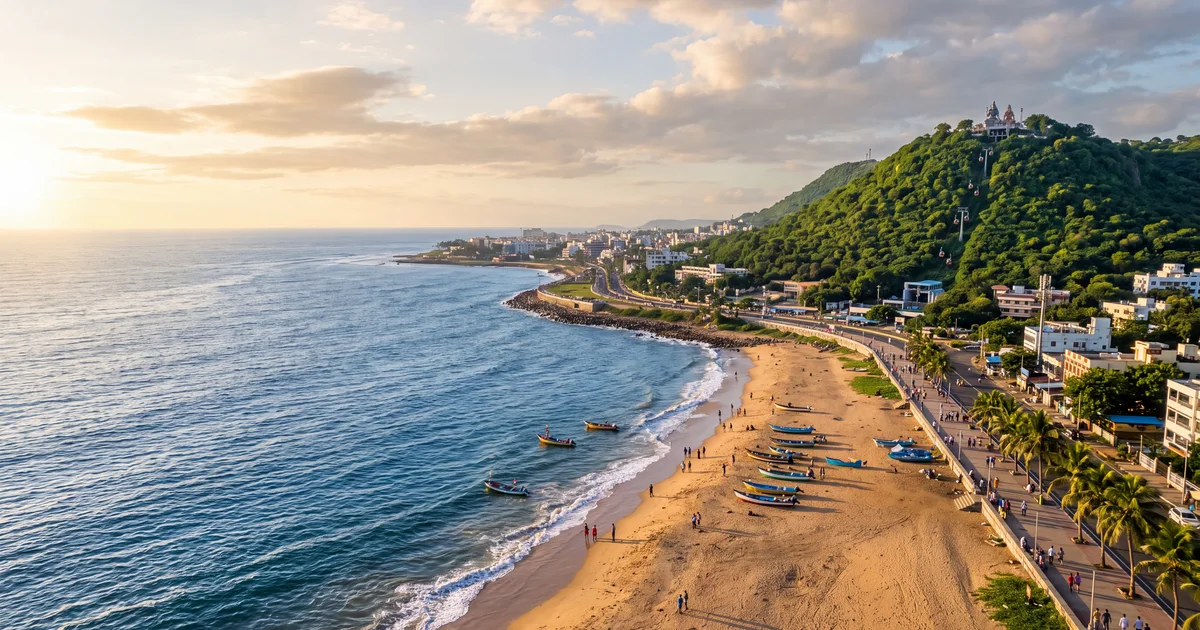
Visakhapatnam sits on the eastern coast of India where the Eastern Ghats drop into the Bay of Bengal. The city has 2.1 million people, a major naval base, a steel plant that employs tens of thousands, and 40 km of coastline. Locals call it Vizag. Most tourists call it "that beach city in Andhra Pradesh" before discovering it has a submarine museum, a million year old cave system, and a hill station 120 km away that produces some of India's best coffee.
The places to visit in Visakhapatnam fall into three zones. The coastal strip from Bhimili Beach in the north to Yarada Beach in the south. The city centre with its museums, temples, and seafood restaurants. And the Eastern Ghats hinterland, where Araku Valley and Borra Caves sit at 900 metres above sea level. You can cover the coast and city in two days. Araku needs a full day. Budget three days minimum, four if you want to add Lambasingi, which locals call "the Andhra Kashmir" (a stretch, but the 4°C December mornings are real).
TL;DR
- RK Beach, Kailasagiri, and the Submarine Museum cover the city essentials in one day.
- Araku Valley by the Kirandul Express (4 hours, 50+ tunnels) is the best day trip from Vizag.
- October to February is the ideal window. Monsoons flood roads and shut Araku drives.
- Budget ₹1,500 to ₹3,000 per person per day for stays, food, and transport.
- Eat bamboo chicken in Araku. It does not taste the same anywhere else.
What Makes RK Beach the Centre of Vizag's Evening Life?
RK Beach (Ramakrishna Beach) runs for 3 km along Beach Road, starting from the INS Kursura Submarine Museum and ending near the Fishing Harbour. It is not a swimming beach. The undertow is strong and the Bay of Bengal here has unpredictable currents. What it is: Vizag's living room after 5 PM.
The promenade fills up by 6 PM every evening. Families walk the paved path, street vendors sell boiled corn for ₹20 and bajji plates for ₹30, and the Kali temple at the southern end lights up against the dark water. The stretch between the submarine and the aquarium (about 1.5 km) has the most activity. Kids ride rented cycles, couples sit on the rocks, and someone will inevitably be flying a kite.
The sunset from here is not the best in Vizag (that goes to Kailasagiri). But the atmosphere beats any viewpoint. Go around 5:30 PM, walk the full 3 km, eat corn from a street stall, and turn back when the mosquitoes arrive after dark. That is RK Beach done right.
One honest caveat: the beach itself is not clean. Municipal workers sweep the promenade but the sand below has plastic and debris, especially near the fishing harbour end. Stick to the paved walkway.
Is the INS Kursura Submarine Museum Worth Visiting?
INS Kursura is a decommissioned Soviet era submarine (Foxtrot class, commissioned 1969) parked on dry land at the southern end of RK Beach. The Indian Navy retired it in 2001 after 31 years of service and turned it into a museum. You walk through the actual submarine, from the torpedo room at the bow to the engine room at the stern.
The interior is exactly as cramped as you would expect. The bunks are 1.7 metres long and stacked three high. The torpedo tubes sit at eye level. The periscope still rotates (you can look through it, though all you see is the parking lot). The control room has the original dials, the sonar station, and the navigation table with paper charts under glass.
Entry costs ₹40 for adults, ₹10 for children. The museum is open 2 PM to 8:30 PM (closed Mondays). A guided tour takes 20 to 30 minutes. Go on a weekday afternoon when the queue is under 10 minutes. Weekend waits can stretch to 45 minutes.
My take: if you have any interest in naval history or engineering, this is the single best attraction in Vizag. Walking through a submarine that patrolled the Indian Ocean during the Cold War is an experience most cities cannot offer. For context, only four countries in the world have submarine museums open to the public on dry land.
How Far Is Araku Valley from Visakhapatnam and How Do You Get There?
Araku Valley is 120 km from Vizag by road, about 3.5 hours through the Eastern Ghats. By train, the Kirandul Express (Train 18513) leaves Visakhapatnam Junction at 6:45 AM and reaches Araku by 10:45 AM. The return train departs Araku at 4:45 PM. This schedule gives you 6 hours in Araku, which is enough for the coffee plantations, the Tribal Museum, and lunch.
The train journey is the reason to choose rail over road. The 120 km track passes through 50+ tunnels, crosses 80+ bridges, and climbs from sea level to 900 metres. The section between Borra Caves and Araku runs along a ridge with valley views on both sides. Sit on the left side of the coach for the best views going up.
Tickets cost ₹50 for general class, ₹185 for sleeper. Book at least 5 days ahead on IRCTC because weekend trains sell out by Wednesday. If the train is full, hire a car with driver (₹2,500 to ₹3,000 return). The road is good until Ananthagiri, then narrows with hairpin bends for the last 30 km.
In Araku, the two essentials are bamboo chicken and the Tribal Museum. Bamboo chicken is chicken marinated in local spices, stuffed into a section of green bamboo, and slow cooked over an open fire. The bamboo steams the meat while adding a smoky, slightly sweet flavour you cannot replicate in a pot. Every roadside shack in Araku sells it (₹300 to ₹500 per bamboo). The preparation takes 40 minutes so order first, then visit the museum.
The Tribal Museum (₹10 entry) documents the customs, tools, and living patterns of the Kondh and other tribal communities in the Eastern Ghats. The displays include traditional huts rebuilt to scale, agricultural tools, and ritual objects. It takes 30 to 40 minutes and provides context for the villages you pass on the drive back.
The problem with Araku as a day trip: 7 hours of travel for 6 hours on the ground. If you have the time, stay overnight at one of the Araku resorts (₹1,500 to ₹4,000 per night) and drive back the next morning, stopping at Borra Caves on the way.
Are Borra Caves the Oldest Natural Attraction in Andhra Pradesh?
Borra Caves sit 90 km from Vizag, about 30 km before Araku on the Araku Ghat Road. The caves are a karstic limestone formation estimated at 1 to 1.5 million years old, carved by the Gosthani River flowing through the limestone of the Ananthagiri Hills. They were "discovered" by William King George of the Geological Survey of India in 1807 (local tribes knew about them long before).
The cave system extends 200 metres deep, though tourists access only the illuminated section, which takes about 30 minutes to walk through. The stalactites and stalagmites have formed shapes that guides will enthusiastically identify as Shiva, Parvati, a cow, and a brain. The formations are impressive regardless of what you see in them. The largest stalagmite is over 3 metres tall.
Entry costs ₹75 for adults. The caves are open 10 AM to 5 PM. The path inside is paved but wet and slippery in places. Wear shoes with grip. The temperature inside stays around 20°C year round, noticeably cooler than the 35°C+ outside in summer.
One caveat: the coloured lighting (installed to highlight formations) is garish. It would look significantly better with neutral white light. Accept the purple and green spotlights as part of the experience. The formations themselves are worth it despite the aesthetic choices of the lighting department.
Combine Borra Caves with Araku Valley as a single day trip. Stop at Borra on the way up (it opens at 10 AM, which aligns with arriving from Vizag by car around 10:30 AM), spend 45 minutes, then continue to Araku for lunch and the museum.
What Can You See from Kailasagiri Hill?
Kailasagiri is a 360 metre hilltop park overlooking the city and the Bay of Bengal. The main draw is the view: from the summit you see the port, the steel plant's smokestacks, the full curve of RK Beach, and on clear days, the horizon line where the Bay of Bengal meets the sky. At sunset, the water turns copper and the city lights start switching on below. It is the best viewpoint in Visakhapatnam.
Getting up: a ropeway runs from the base station (near the VUDA Park entrance) to the summit. The ride takes 8 minutes each way and costs ₹100 for a round trip. The cable cars are two seaters with open sides, which means the view is unobstructed. You can also drive up via a 4 km road from the base, but the ropeway is the experience.
At the top, a large Shiva and Parvati statue (40 feet) marks the highest point. A toy train circles the summit for ₹50 (kids love it, adults tolerate it). There are a few food stalls selling tea, maggi, and ice cream. The park is open 11 AM to 8 PM. Go at 5 PM for the ropeway ride up and catch the sunset from the top.
The honest take: Kailasagiri is a municipal park with municipal park infrastructure. The benches are concrete, the signage is bureaucratic, and the toy train is noisy. But the view compensates for all of it. On a December evening with 24°C weather and zero haze, there are few better spots on the east coast to watch the sun go down.
Is Yarada Beach Really the Cleanest Beach in Vizag?
Yarada Beach sits 15 km south of the city centre, past the naval restricted zone on Dolphin's Nose Road. It is a 700 metre crescent of sand flanked by rocky hills on both sides, with no commercial development. The water is calmer here than at RK Beach because the hills create a partial bay.
The beach is cleaner than RK Beach for one reason: fewer people visit. The 15 km drive (30 to 40 minutes from city centre) and lack of public transport keep the crowds down. On a weekday morning, you might share the beach with 20 other people. Weekends are busier but still manageable compared to the city beaches.
There are no lifeguards. Swimming is possible in the shallower sections near the rocks, but the water depth increases quickly. Stay within wading depth unless you are a confident swimmer. A few snack vendors set up on weekends, but bring your own water and food on weekdays.
The drive to Yarada passes Dolphin's Nose, a rocky headland that juts 174 metres above the sea with a lighthouse at the tip. The road beyond Dolphin's Nose drops through a forested section before reaching Yarada. Stop at the viewpoint above the beach before descending. The aerial view of the crescent bay against the green hills is the best photograph opportunity in Vizag.
The caveat: reaching Yarada requires your own vehicle or a hired auto (₹500 to ₹600 return from city centre with 1 hour waiting). There is no Ola or Rapido coverage past the naval area. Plan the trip as a half day outing, ideally morning when the light is good and the sand has not heated up.
Where Should You Eat Seafood in Visakhapatnam?
Vizag is a port city. The fishing harbour at the northern end of RK Beach brings in catches before dawn, and by 7 AM the fish market near the harbour is operating. This means the seafood you eat for lunch was in the ocean that morning. That freshness is the baseline. The question is where to eat it.
Dharani on Beach Road does Andhra style fish curry and prawn fry. The fish is typically vanjiram (seer fish) or chepala (local reef fish), fried whole with a red chilli coating. A fish thali with rice, rasam, and two curries costs ₹180 to ₹250. The portions are large by restaurant standards. Go between 12:30 and 1:30 PM for the lunch rush when the fish is freshest.
For street food, the evening stalls on RK Beach sell fried prawns (₹100 to ₹150 a plate) and fish tikka. The quality varies by stall. Look for the ones with the longest queue. Vizag's seafood pricing is roughly 40% lower than what the same varieties cost in Bangalore or Hyderabad, because the supply chain is a 5 km truck ride from the harbour to the restaurant.
In Araku Valley, skip the seafood and eat bamboo chicken. In the city, skip the North Indian restaurants (they exist for naval personnel who miss home food) and eat Andhra. The city's strength is its local cuisine. Let it play to that strength.
One thing to note: most seafood restaurants in Vizag close between 3 PM and 6:30 PM. Lunch and dinner are the only windows. Plan accordingly.
What Is Special About Simhachalam Temple?
Simhachalam (Lion's Hill) Temple sits 16 km north of the city centre at 300 metres elevation. It is dedicated to Varaha Lakshmi Narasimha, an avatar of Vishnu depicted as half lion, half boar. The temple dates to the 11th century under the Eastern Ganga dynasty, with later additions by the Chola and Vijayanagara empires. The Kalinga style architecture, with its layered tower and stone chariot in the courtyard, is the finest example of medieval temple building in coastal Andhra.
The main deity is covered in sandalwood paste for 364 days a year. On a single day (Akshaya Tritiya, usually in May), the paste is removed and the original stone sculpture is visible. That one day draws over 100,000 visitors. On every other day, you see the sandalwood coated form, which has its own presence.
The temple is open 6 AM to 8 PM. No photography inside the sanctum. The ₹50 special darshan queue takes 15 to 20 minutes; the free queue can stretch to 90 minutes on weekends and festivals. Dress modestly. Leave bags at the counter near the entrance.
The drive from the city takes 25 minutes. Autos charge ₹200 to ₹250 one way. The approach road climbs through a wooded section with views of the city below. Combine with Kailasagiri if you want to cover both hilltop attractions in a half day.
Even if you are not religious, the architecture is worth the trip. The stone carvings on the outer walls depict scenes from the Puranas with a level of detail that survives 900 years of monsoons. Spend 10 minutes walking the outer corridor before entering. The craftsmanship is in the details.
Is Visakhapatnam Good for a Weekend Trip from Hyderabad or Bangalore?
From Hyderabad, the Vande Bharat Express covers the 620 km in about 8 hours. Direct flights take 1 hour 10 minutes, with fares starting at ₹2,500 if booked 2 weeks ahead. The train is comfortable and scenic through the Godavari basin, but 8 hours each way eats into a weekend. Fly if time matters.
From Bangalore, direct flights take 1 hour 30 minutes. IndiGo and Air India Express operate 4 to 5 daily departures. Weekend fares range from ₹3,500 to ₹6,000 depending on how early you book. There is no practical train connection (the journey takes 18+ hours with at least one change).
For a 3 day itinerary: Day 1 covers RK Beach, the Submarine Museum, and Kailasagiri. Day 2 is the Araku Valley train trip with Borra Caves. Day 3 covers Simhachalam Temple, Yarada Beach, and the fish market. If you have only 2 days, cut Yarada and Simhachalam.
Vizag hotels range from ₹800 (budget near the railway station) to ₹5,000 (beachfront on Beach Road). The sweet spot is ₹1,500 to ₹2,500 per night in Dwaraka Nagar or MVP Colony, which are central and have walking distance access to RK Beach and the restaurants. Check current trip options from Visakhapatnam for group packages that bundle transport and stays.
Getting around: Rapido bike taxis are the fastest and cheapest option for distances under 10 km (₹50 to ₹100 per ride). For Araku, Yarada, and Simhachalam, hire a car with driver for ₹1,500 to ₹2,000 per day. The city bus network exists but is slow and routes are not tourist friendly. Check available trips for curated multi day packages that include Araku and the caves.
What Else Is Worth Seeing in Visakhapatnam?
The Visakha Museum (near the port) houses colonial era artefacts, Dutch and British trade documents, and photographs of the city from the 1900s. Entry is ₹20. The collection is small but focused, and the building itself (a colonial bungalow) has character.
Indira Gandhi Zoological Park (IGZP) covers 625 acres and is one of the larger zoos in India. The key sections are the white tiger enclosure, the Asian elephant area, and the safari zone. Entry costs ₹50 for adults. The zoo is open 9 AM to 5 PM (closed Mondays). Budget 2 to 3 hours. The park is forested and hilly, so wear comfortable shoes.
Rushikonda Beach, 8 km north of the city, is the designated water sports beach. Jet skiing (₹500 for 10 minutes), parasailing (₹800), and surfing lessons are available through operators on the beach. The waves here are more suitable for water sports than the city beaches. The AP Tourism resort at Rushikonda has a restaurant with a terrace overlooking the surf.
Tenneti Park sits on a cliff between RK Beach and Rushikonda. The 10 minute walk from the parking lot leads to a viewpoint where dolphins are occasionally spotted between November and February, usually in the early morning. No guarantees, but the locals who jog here regularly say they see them 2 to 3 times a month.
For those exploring beyond Vizag, the destinations page lists organized tours and local experiences. Lambasingi (120 km from Vizag) drops to 4°C on December mornings and earns its "Andhra Kashmir" nickname for the fog that blankets the village at dawn. It requires a full day and your own transport. The road is narrow after Chintapalli.
Practical Tips That Actually Matter
Money: UPI works everywhere. ATMs cluster around Dwaraka Nagar, MVP Colony, and the railway station. Cash is needed only for street vendors and auto drivers.
Language: Telugu is the primary language. Hindi is understood in hotels and restaurants. English works at the museums, hotels, and the naval establishments. Auto drivers understand Telugu and basic Hindi.
Safety: Vizag is generally safe. The beach promenades are well lit and patrolled. Avoid the fishing harbour area after dark (it is empty and poorly lit, not dangerous, just deserted). For women solo travellers, the areas around Beach Road, Dwaraka Nagar, and MVP Colony are comfortable day and night.
Connectivity: 4G coverage is strong in the city and along the Araku highway. Signal drops inside Borra Caves and in a few stretches between Ananthagiri and Araku. Download offline maps before the Araku trip.
Weather window: October to February is ideal. December and January give 20°C to 28°C with low humidity. March onwards, humidity rises and by May the city is uncomfortable for outdoor sightseeing. Monsoon (June to September) is scenic in the Ghats but road closures and flooding are common.
Frequently asked questions
- What are the top 5 must visit places in Visakhapatnam?
- RK Beach for the evening promenade and Kailasagiri ropeway views, Araku Valley for the 120 km mountain rail journey and coffee plantations, INS Kursura Submarine Museum to walk through a decommissioned sub, Borra Caves for the million year old stalactites, and Yarada Beach for the quietest shoreline in the city. These five cover Vizag's coast, hills, and history in three days.
- How many days are enough for Visakhapatnam?
- Three days cover the city beaches, museums, and a day trip to Araku Valley comfortably. Four days let you add Lambasingi and the tribal villages. Most visitors from Hyderabad or Bangalore come for a long weekend and that works well if you start early on day one.
- What is the best time to visit Visakhapatnam?
- October to February offers 20°C to 30°C weather with low humidity. The monsoon months (June to September) bring heavy rain that floods low lying roads and makes Araku Valley drives risky. March to May can cross 38°C and the humidity makes outdoor sightseeing uncomfortable after 11 AM.
- Is Araku Valley worth the trip from Vizag?
- Yes. The 120 km journey by Kirandul Express takes 4 hours through 50+ tunnels and the Eastern Ghats scenery alone justifies the trip. Araku has coffee plantations, the Tribal Museum, and Borra Caves is a 30 km detour on the way back. Book the train at least 5 days in advance because weekend seats sell out.
- What food should I try in Visakhapatnam?
- Bamboo chicken (chicken stuffed into bamboo and cooked over open fire) in Araku Valley, fish curry with rice at any Andhra meals joint in Dwaraka Nagar, prawn fry at Dharani on Beach Road, and the street side corn and bajji stalls on RK Beach in the evening. Vizag's seafood is caught the same morning and costs less than what the same fish sells for in Bangalore or Hyderabad.
- How do I reach Visakhapatnam from Bangalore or Hyderabad?
- From Bangalore, direct flights take 1 hour 30 minutes with 4 to 5 daily departures. From Hyderabad, the Vande Bharat Express takes 8 hours or you can fly in 1 hour 10 minutes. The airport is 12 km from the city centre and an auto to RK Beach costs ₹250 to ₹350. Trains arrive at Visakhapatnam Junction, which is walking distance from the port area.
- Is Visakhapatnam safe for solo travellers and women?
- Vizag is generally safe and ranks among the cleaner Indian cities. The beach promenades are well lit and busy until 10 PM. Autos have meters but many drivers quote flat rates, so use Rapido or Ola for fair pricing. The Araku Valley train is safe and families make up most of the passengers.