Best Places to Visit in Varanasi (2026): Ghats, Temples and What to Expect
Plan your Varanasi trip with this guide to the best ghats, temples and experiences in 2026, including honest tips on crowds, costs and timing.
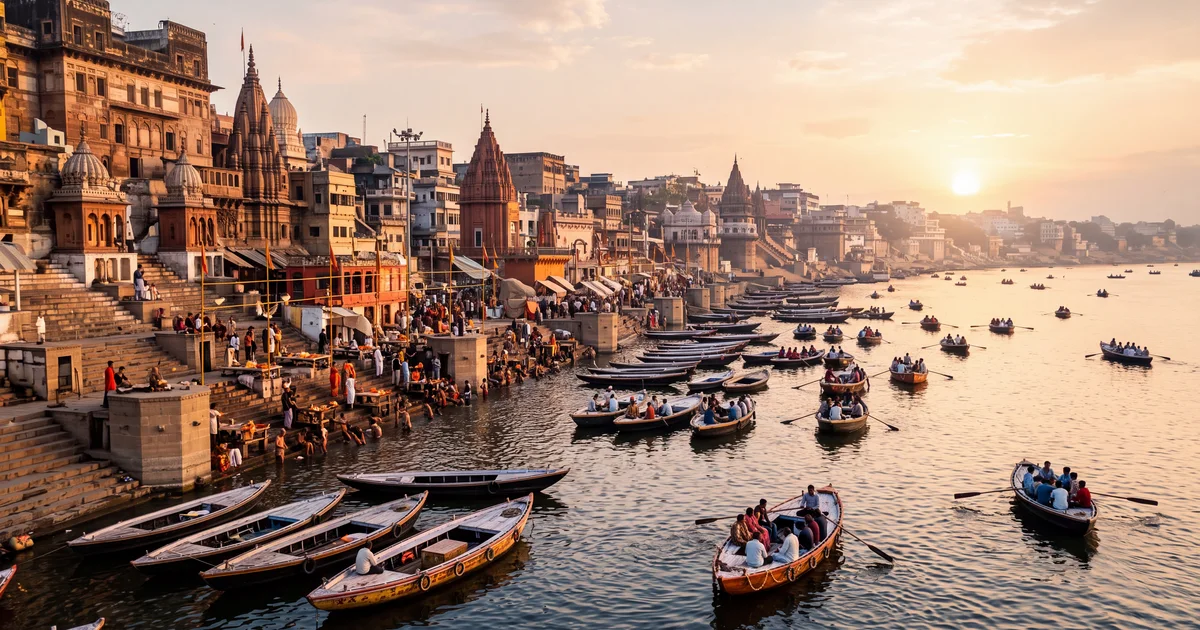
Varanasi is not a comfortable city. The lanes are barely wide enough for two people to pass. The ghats have aggressive touts selling boat rides before you have finished your morning chai. Auto rickshaws quote 300 rupees for a 3 km ride. The summer heat crosses 45°C by May.
People still come back. More than 30 lakh domestic tourists visited in 2025, plus over 3 lakh international visitors. The city holds something that photographs and listicles do not capture: the everyday collision of life, death, and ritual happening simultaneously within a few hundred metres of riverfront.
This guide covers the places worth your time and flags the ones that look better on Instagram than in person. If you have 2 to 3 days, you can see most of what matters without rushing.
TL;DR
- Dashashwamedh Ghat and the evening Ganga Aarti are non negotiable. Arrive by 6 PM for a seat.
- Kashi Vishwanath Temple is now accessible via the Vishwanath Corridor. Lines are shortest before 7 AM.
- Sarnath (10 km away) deserves half a day, especially the Dhamek Stupa and archaeological museum.
- Best months: October to March. November hits the sweet spot of clear skies and mild temperatures.
- Budget 2 full days minimum. Three days lets you explore the old city lanes and Ramnagar Fort.
Why Does Varanasi Attract So Many Visitors?
The question sounds obvious until you try to answer it for someone who has not been. Varanasi is not a hill station with a viewpoint. It is not a beach with sunsets. It is one of the oldest continuously inhabited cities in the world, with a recorded history stretching past 3,000 years, and its entire life faces the Ganges.
The 84 ghats along the western bank are where everything happens. Morning bathers performing rituals stand 200 metres from Manikarnika Ghat where cremation pyres burn 24 hours a day, 365 days a year. Priests chant at Dashashwamedh while college students eat chaat on the steps above. The juxtaposition is constant and unavoidable.
For Hindu pilgrims, Varanasi is one of the seven sacred cities (Sapta Puri) and dying here is believed to grant moksha, liberation from the cycle of rebirth. That belief shapes everything about the city, from the hospices near the burning ghats to the daily rhythms of the morning and evening aarti.
The caveat: Varanasi can overwhelm first time visitors. The sensory density is extreme. Noise, smell, crowds, heat (in summer), narrow lanes where motorbikes, cows, and funeral processions share the same 4 foot path. Come knowing this. It is not a flaw of the city; it is the city.
Which Ghats Should You Visit and in What Order?
There are 84 ghats along the Varanasi riverfront, stretching about 6 km. You do not need to see all of them. Here are the ones that matter.
Dashashwamedh Ghat. The most famous. The evening Ganga Aarti starts at 6:45 PM (7 PM in summer) and runs for about 45 minutes. Seven priests perform a synchronised fire ritual facing the river. It is crowded. Arrive by 6 PM if you want a step seat. Boat viewing costs 100 to 200 per person, and you get a different perspective but the chanting is distant.
Manikarnika Ghat. The primary cremation ghat. Open 24 hours. Photography is strictly not allowed and the local Doms (caretakers of the cremation ground) will confront you if you try. You can observe respectfully from the steps above. It is a place people find either deeply moving or uncomfortable. Both reactions are valid.
Assi Ghat. At the southern end of the ghat stretch, where the Assi river meets the Ganges. Quieter than Dashashwamedh. Morning yoga sessions happen here. The area around Assi is the backpacker hub of Varanasi with cafes, bookshops, and guesthouses. If you want a calmer base, stay near here.
Panchganga Ghat. Smaller, steeper, and less touristed. The view from the top step includes the minarets of the Alamgir Mosque (built by Aurangzeb on the site of a Vishnu temple). It is worth a stop for the architecture and the absence of touts.
Tulsi Ghat. Named after the poet Tulsidas who wrote the Ramcharitmanas here. In October and November, a month long Ram Lila performance runs at this ghat. It is one of the oldest Ram Lila traditions in India, with UNESCO intangible heritage recognition.
The honest recommendation: walk the ghats from Assi to Dashashwamedh in the morning (before 8 AM), about 4 km, when the light is golden and the cremation smoke has not thickened. Take a boat ride in the evening to see the aarti from the river. That covers the core ghat experience in one day.
Is Kashi Vishwanath Temple Worth the Wait?
Yes, but go early.
The Kashi Vishwanath Temple is one of the 12 Jyotirlingas and the most important Shiva temple in Varanasi. After the Vishwanath Corridor project completed in 2021, access is far better than it used to be. The corridor connects the temple directly to Dashashwamedh Ghat with a wide, paved walkway lined with 23 other restored temples.
Weekday mornings before 7 AM, lines take 15 to 30 minutes. Weekend and holiday lines can stretch to 2 hours by mid morning. The darshan itself is brief: you pass through the sanctum in under a minute during busy hours. The atmosphere is intense, with devotees pushing forward and priests chanting.
What you need to know: ID is mandatory for entry (Aadhaar or passport for foreigners). Phones, cameras, bags, belts with metal buckles, and any electronic devices are prohibited inside the temple complex. Locker facilities exist at the entry gates and cost 20 rupees per item.
One thing that surprises first time visitors: the Gyanvapi Mosque stands directly adjacent to the temple, separated by a wall. The site has been contested for centuries. You can see both structures from the Vishwanath Corridor, and the visual contrast of the two buildings sharing a boundary is one of the more striking architectural facts in the old city.
What Is There to See in Sarnath?
Sarnath, 10 km northeast of the Varanasi ghats, is where the Buddha gave his first sermon after enlightenment. For anyone with even passing interest in Buddhist history, it is the most important site within easy reach of the city.
The Dhamek Stupa dominates the site. Built in 500 CE, it stands 43.6 metres tall with geometric carvings on the base that survive 1,500 years later. The surrounding ruins mark the Mulagandha Kuti Vihar monastery where the Buddha spent his first rainy season.
The Archaeological Museum (managed by ASI, open 9 AM to 5 PM, closed Fridays) houses the Lion Capital of Ashoka, the sculpture that became India's national emblem. Seeing the original, with its four lions back to back on a polished sandstone column, is worth the visit on its own.
The Chaukhandi Stupa, about 1 km before the main site, marks where the Buddha met his first five disciples. It is an octagonal Mughal tower sitting on top of a much older Buddhist brick base, a strange layering that tells you about the site's long history in a single building.
Getting there: auto rickshaws from Dashashwamedh cost 150 to 250 one way (negotiate before getting in). Ola and Uber work in Varanasi and are usually cheaper. Budget 2 to 3 hours for the full Sarnath circuit including the museum.
The caveat: the area around Sarnath has modern Buddhist temples built by Japanese, Thai, Burmese, and Chinese communities. They are architecturally interesting but feel theme park adjacent compared to the actual archaeological site. Skip them if time is short.
What Should You Do in the Old City Lanes?
The old city behind the ghats is a separate experience from the riverfront. The lanes (galis) are centuries old, some less than a metre wide, and hold the markets, workshops, and food stalls that keep Varanasi functioning.
Walk from Vishwanath Gali toward Dashashwamedh. This route passes through the Banarasi silk bazaar where weavers sell saris directly. Genuine Banarasi silk saris start at 3,000 rupees for simple designs and go past 50,000 for heavy zari work. If a shop tells you a "pure silk" sari costs 800 rupees, it is not silk.
The food lane near Kachori Gali serves the city's famous kachori sabzi breakfast (crispy fried dough with spiced potato curry) for 20 to 40 rupees a plate. Vendors start at 6 AM. By 9 AM the best ones have sold out.
Ram Bhandar near Thatheri Bazaar has been serving kachori for over 100 years. There is no signboard in English. Look for the crowd. The malaiyo (milk foam dessert, winter only, November to February) stalls near Godowlia crossing are worth finding. A glass costs 30 to 50 rupees and the texture is nothing like any dessert you get elsewhere.
The honest warning about the lanes: navigation is hard. Google Maps barely works in the interior old city. Alleys fork every 10 metres, motorbikes squeeze past you, and cow dung on the ground is a real obstacle. Go with someone who knows the route, or accept that getting lost is part of it. Asking shopkeepers for directions always works better than your phone.
Is Ramnagar Fort Worth Crossing the River For?
Only if you have a third day.
Ramnagar Fort sits on the eastern bank of the Ganges, directly across from the ghats. It is the ancestral home of the Kashi Naresh (the titular king of Varanasi) and dates to the 18th century. The sandstone facade is impressive from the river, especially at sunset.
Inside, the museum holds a collection of vintage cars, palanquins, old weapons, and astronomical clocks. The upkeep is poor (dust, faded labels, no AC) but some objects are rare and hard to find elsewhere: a set of ivory chess pieces, an original Tulsi Ramayana manuscript, and Mughal era miniature paintings.
The boat ride from Dashashwamedh to Ramnagar costs 100 to 200 per person (shared boat) and takes 20 minutes. You can also drive via the Ramnagar Bridge (7 km). Fort entry is 50 rupees for Indians, 300 for foreigners.
My opinion: the fort is worth it for the boat ride and the view back toward the ghats from the other bank. The museum is underwhelming unless you are specifically interested in royal Varanasi history. If you only have 2 days, skip it and spend the time in the old city lanes.
How Should You Plan 2 Days in Varanasi?
Day one, morning: walk the ghats from Assi to Dashashwamedh before 8 AM. Eat kachori at Kachori Gali. Visit Kashi Vishwanath Temple by 7 AM if possible. Afternoon: explore the old city lanes, Banarasi silk market, and Vishwanath Corridor. Evening: Ganga Aarti at Dashashwamedh (reach by 6 PM).
Day two, morning: boat ride at sunrise (5:30 AM boats, 300 to 500 per person for a 1 hour ride). The light on the ghats at dawn is the single best visual experience in Varanasi. Afternoon: auto to Sarnath, visit the Dhamek Stupa, museum, and Chaukhandi Stupa. Budget 3 hours. Evening: free time at Assi Ghat or the old city.
If you have a third day: Ramnagar Fort by boat, BHU campus (the Bharat Kala Bhavan museum has Mughal miniatures), and a slow walk through the weaver colony in Sarai Mohana to see Banarasi saris being made on handlooms.
For group departures that include Varanasi, check options on TripzSearch. Some operators bundle Varanasi with Prayagraj and Ayodhya as a 4 to 5 day circuit, which is the most practical way to cover the spiritual triangle if you are coming from Delhi.
Frequently asked questions
- How many days are enough to visit Varanasi?
- Two full days cover the main ghats, Kashi Vishwanath Temple, Sarnath, and a boat ride. Three days let you explore the lanes of the old city at a slower pace and visit Ramnagar Fort across the river. One day is technically possible but leaves you rushing between sites without absorbing anything.
- What is the best time to visit Varanasi?
- October to March is the comfortable window, with temperatures between 10°C and 28°C. November is ideal because the monsoon crowds have left and winter haze has not set in yet. Avoid April to June when temperatures cross 45°C and the ghats become unbearable by midday.
- Is Varanasi safe for solo travellers and women?
- The main ghat area and tourist zones around Dashashwamedh are busy and well lit. Rickshaw and auto drivers overcharge aggressively, so negotiate or use Ola/Uber. The narrow lanes of the old city can feel claustrophobic, especially during festival crowds, but are generally safe during daylight.
- How do I reach Varanasi from Delhi?
- Flights take about 90 minutes and cost 3,000 to 6,000 rupees one way. The Vande Bharat Express covers Delhi to Varanasi in roughly 8 hours. Overnight trains like the Mahamana Express take about 12 hours but save a hotel night. The railway station is Varanasi Junction (BSB), 3 km from the ghats.
- What should I wear when visiting temples in Varanasi?
- Modest clothing that covers shoulders and knees is expected at Kashi Vishwanath and most other temples. Shoes come off at every temple entrance, so wear sandals or slip ons that are easy to remove. Carry socks if you are visiting in winter because stone floors get cold.
- Is Sarnath worth visiting from Varanasi?
- Yes, especially if you have any interest in Buddhist history. The Dhamek Stupa, Ashoka Pillar, and the archaeological museum with the Lion Capital are all in Sarnath, 10 km from the ghats. Auto rickshaws cost 150 to 250 one way. Budget 2 to 3 hours for the site.