Best Places to Visit in Thekkady (2026): Periyar Wildlife, Spice Walks and Jungle Nights
Top places to visit in Thekkady in 2026 including Periyar Tiger Reserve, boat safari, spice plantations, Gavi and tips for first time visitors.
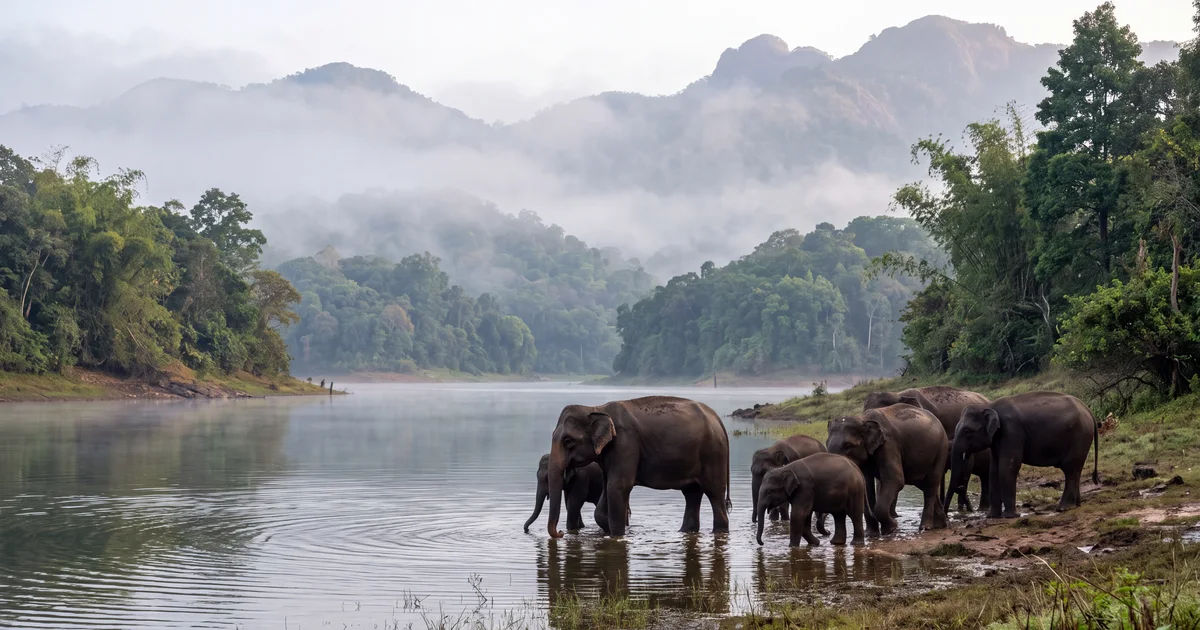
Thekkady is where Kerala stops being about backwaters and beaches and turns into cardamom forest and elephant trails. The Periyar Tiger Reserve, 925 sq km of protected Western Ghats wilderness, wraps around an artificial lake created by the Mullaperiyar Dam in 1895. Elephants come to the waterline most mornings. So do gaur, the massive Indian bison that weigh up to 1,000 kg and move through the forest edge like they own the place. They do.
The town you actually stay in is Kumily, 4 km from the reserve gate. Population about 35,000. Spice plantations, cardamom, pepper, coffee and cocoa, cover the hills on every side. The air smells like black pepper when the wind picks up. That's not a figure of speech.
From Kochi, it's a 5 hour drive through the ghats. From Munnar, 3 to 4 hours south through winding hill roads. From Bangalore, expect 10 to 11 hours by road or a flight to Kochi followed by the drive.
TL;DR
- Periyar Lake boat safari is the one thing everyone should do. Book the 7 AM slot.
- Spice plantation tours in Kumily take 2 hours and cost ₹300 to ₹500 per person.
- Two days is the right minimum. Three if you want Gavi or the overnight Tiger Trail trek.
- October to March is comfortable. February to April is best for wildlife sightings near the lake.
- Budget ₹3,000 to ₹6,000 per person per day including accommodation, meals and activities.
Is the Periyar Lake Boat Safari Worth Doing?
Yes. The KTDC boat ride across Periyar Lake is the simplest way to see wildlife without a long trek. The lake was formed when the Mullaperiyar Dam was built across the Periyar River, and it sits at 930 metres above sea level. Dead trees stand in the water where the forest was flooded over a century ago. The silhouette they create against the morning mist is the iconic Thekkady image.
The boat runs for about 1.5 hours and covers the main stretches of the lake shore. The 7 AM departure consistently produces the best sightings. Elephants, sometimes in herds of 8 to 12, come down to drink and bathe in the early hours. Gaur graze on the slopes. Sambar deer stand at the waterline. Kingfishers, egrets and darters work the shallows.
Upper deck tickets cost ₹400 to ₹600 depending on the season. Lower deck is cheaper but the view is limited. Book online a day in advance during October to January, or you'll queue for 90 minutes at the counter.
One caveat: the boats carry 40 to 60 people and the engines are not quiet. This is not a canoe safari. Animals tolerate the boats from a distance but rarely approach them. If you want a closer experience, the bamboo rafting programme (₹1,500 per person, limited group of 10) takes you into quieter inlets where the boats don't go. It's a full day commitment but the wildlife encounters are significantly better.
The 9:30 and 11 AM slots draw bigger crowds and midday heat pushes animals into deeper forest cover. If you can only go once, go at 7 AM.
What Can You Do Inside Periyar Tiger Reserve?
Beyond the boat ride, Periyar offers several regulated activities run by the Kerala Forest Development Corporation (KFDC). Each is capped at small group sizes. Book through the KFDC office at the Periyar boat jetty or their website.
The Nature Walk (₹300, 3 hours, groups of 5 to 20) starts at 7 AM and follows trails along the lake perimeter. A forest guide leads the group, and you are likely to see elephants, giant squirrels and several bird species. The trail is mostly flat, suitable for anyone with basic fitness.
The Border Hiking Programme (₹2,000 per person) is a full day trek along the reserve's eastern boundary. It covers about 14 km through dense forest and grassland. The terrain is moderate but the distance and heat can be tiring. Carry 2 litres of water minimum. This is the better option if you want to see sambar, gaur and Nilgiri tahr up close without the crowd of a boat.
The overnight Tiger Trail (₹5,000 per person, groups of 5) is the most involved option. You sleep in the forest in a basic camp, with armed guards and guides. Starts in the afternoon, returns the next morning. Tiger sightings remain rare (Periyar has roughly 50 tigers in thick cover), but you will hear more forest at night than most people experience in a lifetime. Elephant encounters on this trek are almost guaranteed.
A reality check: Periyar is not Corbett or Ranthambore. The forest is dense, visibility is low, and the big cats are shy. You come here for the ecosystem, not for a guaranteed tiger selfie. If you accept that, the experience is excellent.
Are the Spice Plantations Worth Visiting?
Thekkady's economy runs on spice. Cardamom, black pepper, coffee, cocoa, cinnamon, nutmeg, and vanilla grow within a 10 km radius of Kumily town. A guided plantation walk costs ₹300 to ₹500 per person and takes about 2 hours.
Most plantations follow a similar format. A local guide walks you through rows of cardamom plants (the green pods grow low, near the ground), pepper vines climbing up shade trees, coffee bushes with red berries during harvest season (November to February), and cocoa pods the size of small papayas hanging directly off the trunk.
The best part is the smell. Fresh cardamom from the bush, crushed between your fingers, hits harder than anything you've opened from a packet. Black pepper fresh off the vine tastes different from the dried version. The guides let you taste and smell at every stop.
Abraham's Spice Garden, about 3 km from Kumily, is one of the older plantations open to visitors. The guides there grow up on the estate and know the plants by name, not just species. Spring Valley Spice Garden is another reliable option.
You can buy spices directly at most plantations. Prices are lower than the Kumily market shops, and the quality is typically better because you are buying from the source. A kg of cardamom (green pods) runs ₹1,500 to ₹2,500 depending on grade. Black pepper is ₹300 to ₹500 per kg. If you are flying home, vacuum sealed packets travel fine in checked luggage.
One note of caution: some plantation tours are commission driven, with the guide taking you to a specific shop at the end. The tour itself is still educational, but compare prices before buying large quantities.
Should You Visit Gavi from Thekkady?
Gavi is 60 km from Kumily and the drive takes about 2.5 hours through forest roads. It sits at 1,000 metres in a valley surrounded by tropical evergreen and semi-evergreen forest. The Kerala Forest Development Corporation regulates access: you need a vehicle permit and a guide, and daily visitor numbers are capped.
The landscape is different from Periyar. Less lake, more forest canopy. Birdwatching is better here, especially for Malabar grey hornbills, great Indian hornbills, and several species of flycatchers. The Gavi eco-tourism centre organizes guided treks and boating on the small reservoir.
The drive itself is half the experience. The road climbs through cardamom estates, crosses streams and enters dense forest where the canopy closes overhead. Mobile signal drops to zero about 20 km in. Pack food and water.
Is it worth the day? If you have three days in the Thekkady area, absolutely. If you only have two, the Periyar boat and a plantation tour should take priority. Gavi rewards people who want quiet. It punishes people who want convenience.
Book the Gavi permit at the KFDC office in Kumily at least 2 days in advance during peak season (December and January). Off-season, same day permits are usually available.
What Should You See in Kumily Town?
Kumily is small enough to walk end to end in 30 minutes. The main road from the bus stand to the Periyar gate is the commercial spine, lined with spice shops, restaurants and tour agencies.
The Kadathanadan Kalari Centre puts on a 1-hour Kalaripayattu (Kerala martial art) performance every evening at 6 PM. Tickets are ₹200 to ₹300. The performers are trained fighters, not actors, and the routines include sword fights, shield combat and the flexible body movements that the art form is known for. It is the most popular evening activity in town. Arrive 15 minutes early for a decent seat.
The Mudra Cultural Centre, also near the main road, hosts Kathakali performances (Kerala classical dance drama) on select evenings. The makeup session starts at 5 PM and the performance at 6:30 PM. Watching the elaborate face painting preparation is half the experience. Tickets are ₹200.
For food, Kumily serves solid Kerala meals. Falling Leaf Restaurant (near the bus stand) does a good fish curry meals plate. The French Restaurant and Bakery has surprising pastries for a small hill town, plus decent coffee. Thekkady's specialty is the Kumily pepper chicken, made with fresh green peppercorns straight from the vine. Several small restaurants along the main road serve it.
How Much Does a Thekkady Trip Cost?
Thekkady is moderately priced by Kerala standards. Budget travellers can manage ₹2,500 to ₹3,500 per day; mid-range is ₹5,000 to ₹8,000.
Accommodation ranges from ₹600 guesthouses near the bus stand to ₹8,000 and above for the KTDC Periyar House or Spice Village (CGH Earth) resort. The KTDC Lake Palace, on an island inside Periyar Lake, is the most unusual stay (₹6,000 to ₹10,000 per night) but books out months in advance. For value, try the homestays in Kumily: clean rooms, home-cooked Kerala food, and owners who can arrange plantation tours and permits.
During December and January, room rates increase 40% to 80% and the popular activities sell out. Book accommodation and KFDC treks at least a week ahead for peak season visits.
For group trips from Kochi covering Thekkady, Munnar and the backwaters, check current departures. Several operators run 4 to 6 day Kerala packages that include Thekkady along with Alleppey and Fort Kochi. These handle permits, guides and internal transport, which removes the logistics work.
Thekkady is not the Kerala you see on postcards. No houseboats, no beach sunsets, no Ayurveda spas. It's the part of Kerala that still smells like forest floor and cardamom after rain. The elephants come to the lake because they always have. The spice grows because the Western Ghats catch the monsoon and hold the moisture. Everything here works because the forest is intact. That's the real reason to visit.
Frequently asked questions
- How many days are enough for Thekkady?
- Two full days cover the essentials: Periyar Lake boat safari on day one, a spice plantation tour and Kalaripayattu show on day two. Add a third day if you want to visit Gavi or do the Periyar Tiger Trail overnight trek. Most travellers combine Thekkady with Munnar (3 to 4 hours north) on a 5 to 7 day Kerala trip.
- What is the best time to visit Thekkady?
- October to March is the comfortable season with temperatures between 15°C and 28°C and lower humidity. Wildlife sightings around Periyar Lake are best from February to April when animals come to the water as forest pools dry up. Avoid July and August when heavy rain disrupts trekking, boat schedules and road conditions on the Kumily to Gavi route.
- Is the Periyar boat ride worth it?
- The KTDC upper deck boat (₹400 to ₹600) is worth one trip. The 1.5 hour ride crosses Periyar Lake and passes shoreline areas where elephants, gaur and sambar deer come to drink. Take the 7 AM departure for the best wildlife odds. The 9:30 and 11 AM slots are more crowded and animals tend to move back into the forest by midday.
- How far is Kumily from Thekkady?
- Kumily is about 4 km from the Periyar Tiger Reserve gate. Most hotels, restaurants and spice markets are in Kumily town. Auto rickshaws between Kumily bus stand and the Periyar boat jetty cost ₹80 to ₹100. The two names are often used interchangeably, but Thekkady refers to the wildlife sanctuary area while Kumily is the commercial town.
- Can I see tigers in Periyar Tiger Reserve?
- Tiger sightings are rare. Periyar has about 50 tigers in 925 sq km of dense forest and the terrain limits visibility. You are far more likely to see elephants, gaur (Indian bison), sambar deer, wild boar and Nilgiri langurs. The overnight Tiger Trail trek (₹5,000 per person, limited to 5 people per group) offers the best odds but still no guarantee.
- How do I reach Thekkady from Kochi?
- Thekkady is 190 km from Kochi, roughly 4.5 to 5 hours by road through the Western Ghats via Thodupuzha and Mundakkayam. KSRTC runs direct buses from Ernakulam (Kochi) bus stand every 2 hours, fare around ₹250. Driving is scenic once you climb into the cardamom hills. The nearest airport is Kochi (COK), and the nearest railhead is Kottayam (114 km).
- Is Gavi worth visiting from Thekkady?
- Gavi is 60 km from Kumily through dense forest and takes about 2.5 hours one way. It is worth the drive if you want a quieter alternative to Periyar with fewer tourists, better birdwatching and a genuine remote forest feel. The Kerala Forest Development Corporation runs regulated trips with vehicle permits. Book at least 2 days in advance during peak season.