Best Places to Visit in Spiti Valley (2026): Monasteries, Villages and High Passes
A guide to the best places to visit in Spiti Valley in 2026, from Key Monastery to Chandratal, with routes, costs and timing.
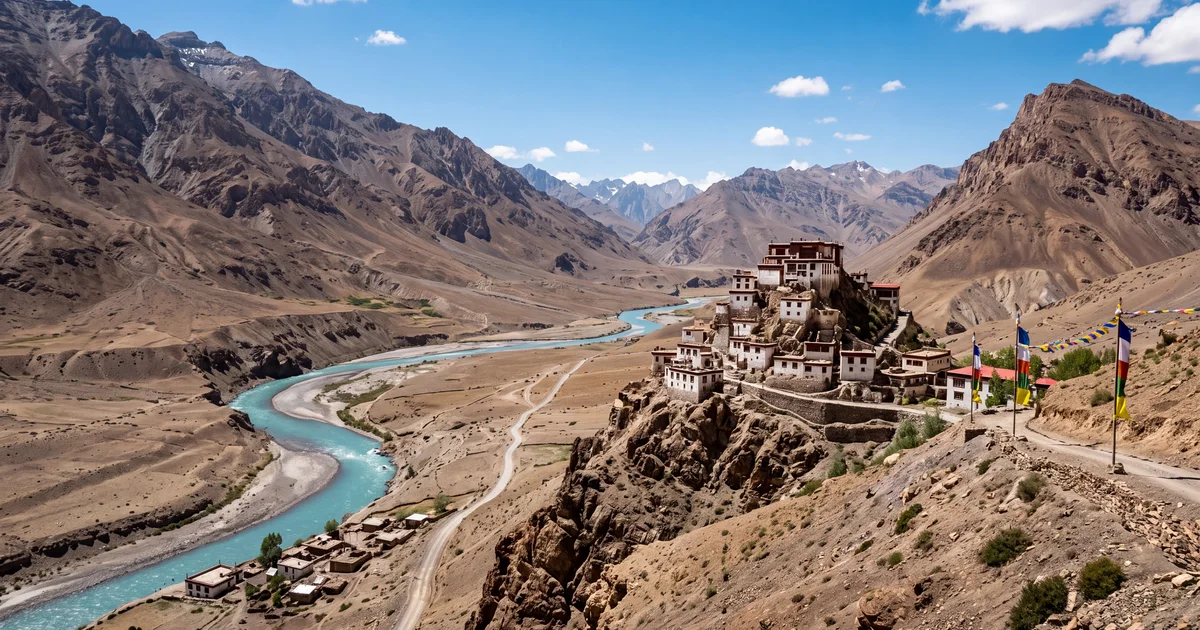
Spiti Valley sits in the rain shadow of the Himalayas. That single geographic fact explains almost everything about it: the barren brown mountains, the 300+ days of sunshine, the bone dry air, and the feeling that you have driven off the map of India and landed on a different planet.
Most people come for the photos. The monastery perched on a cliff. The turquoise lake at 4,300 metres. The road that threads through canyon walls. Fair enough. But the places worth visiting in Spiti are not just visual set pieces. Each one has a story, a function, or a limitation that changes how you experience it. This guide covers the spots that earn the drive, in the order most circuit travellers encounter them.
TL;DR
- Spiti Valley's best places cluster along a 200 km stretch from Kunzum Pass to Tabo, with Kaza as the base.
- June to September is the main season. September offers the clearest skies and least crowds.
- Budget for 7 days: 15,000 to 50,000 rupees per person depending on bus, self drive or operator trip.
- Altitude is real. Kaza sits at 3,650 metres. Spend a day acclimatizing before pushing to Chandratal or Hikkim.
- Compare Spiti group trips on TripzSearch for operator prices and real reviews.
What are the top places to visit in Spiti Valley?
That depends on whether you enter from Manali or Shimla. The list below follows the Manali to Shimla direction, which is how most group trips run the circuit.
Kunzum Pass (4,590 metres)
The gateway to Spiti from the Manali side. Kunzum La sits at 4,590 metres and opens sometime in June, depending on snowfall. There is a small temple at the top where drivers stop to circle it before descending into the valley. The pass itself is not a place you linger. You are at altitude, the wind is cold even in July, and your body is still adjusting.
The road from Manali to Kunzum takes 6 to 7 hours via Rohtang Tunnel (10 km, cuts out the old Rohtang Pass completely) and then the Chandra River valley. The section between Batal and Kunzum is unpaved and rough. In early June it can still have snow patches on the road.
One thing nobody warns you about: the descent from Kunzum into Losar is 30 km of switchbacks with no guardrails and loose gravel. Beautiful. Terrifying. Slow down.
Chandratal Lake (4,300 metres)
A crescent shaped alpine lake 14 km off the main highway, reached by a dirt track from Batal. The water shifts between turquoise and deep blue depending on the light and the time of day. At sunrise, when the surrounding peaks reflect in the surface, it is one of the most photogenic spots in the Indian Himalayas.
Camping is the only accommodation option. Tent camps operate from June to September, charging 1,500 to 3,000 per night with meals. The lake sits at 4,300 metres, so altitude sickness is a real concern. If you drove up from Manali the same day, you will feel it: headache, nausea, shortness of breath.
Spend a night. You can see the Milky Way with the naked eye at Chandratal. No light pollution for 50 km in any direction.
Caveat: The access road is in terrible shape. Some stretches require high clearance vehicles. After rain, sections become impassable. Check with locals at Batal before driving up.
Losar (4,079 metres)
The first village in Spiti when coming from Manali. Population: about 60 families. There is a checkpoint here where your details are recorded, a few homestays, and a dhaba that serves hot maggi and chai.
Losar is not a destination in itself. It is a transition point. But the valley opens up here, and you get your first real view of what Spiti looks like: wide, treeless, brown, with the river cutting through the floor of a canyon. If you have been driving through the green Kullu and Lahaul valleys, the contrast hits hard.
Stop for 20 minutes. Have tea. Let the scale of the place settle in.
Kaza (3,650 metres)
The district headquarters and the only proper town in Spiti. Population around 12,000. This is where you find ATMs (two, both unreliable), a petrol pump, a hospital, restaurants, and the widest selection of hotels and homestays in the valley.
Kaza is your base for everything. Plan to spend at least two nights here: one for acclimatization and one for day trips to surrounding villages. The town itself is not scenic in the traditional sense. It is dusty, compact, and functional. But the old town (Kaza Khas) has narrow lanes and traditional mud brick houses that are worth an hour's walk.
The cafe scene has grown. Sol Cafe and Taste of Spiti serve decent coffee and momos. Not Bangalore quality coffee, but after 3 days of instant Nescafe on the road, it feels like a luxury.
Key Monastery (4,166 metres)
The postcard shot of Spiti. Key Gompa sits on a conical hill above the confluence of the Spiti and Pin rivers. It is the largest monastery in the valley, home to about 300 monks of the Gelugpa sect, and dates to the 11th century though it has been rebuilt several times after earthquakes and raids.
The monastery is 12 km from Kaza. You can drive up in 30 minutes. The prayer hall on the top floor has murals and thangka paintings that are centuries old. Photography inside is usually allowed but ask first. The views from the roof terrace, looking down at the river valley and across to the brown hills, are worth the climb.
Morning visits work best. The light on the monastery's white walls is warmest before 10 AM, and there are fewer tourist groups.
Honest opinion: Key Monastery is the one place in Spiti that can feel crowded in peak season (July and August). Go early or visit in September.
Kibber (4,270 metres)
A cluster of white houses on a plateau above Key, Kibber held the record for highest inhabited village with a motorable road for years (a title now claimed by several other places). The drive from Kaza takes about 45 minutes. The village has homestays, a small gompa, and views across the valley that make the altitude headache worth it.
Kibber is the starting point for the Kibber to Chicham trek and the gateway to Kibber Wildlife Sanctuary, where you might spot the Himalayan ibex and, if you are extremely lucky, a snow leopard. The snow leopard sightings happen mostly in winter (January to March), when the animals descend to lower elevations following prey.
The Chicham bridge, connecting Kibber to Chicham village, is Asia's highest suspension bridge at 4,010 metres. It spans a 300 foot gorge. Walking across it takes about 5 minutes and your legs will not feel entirely steady.
Hikkim (4,400 metres)
Famous for one thing: the world's highest post office. It is a small room in a stone house, staffed by a single postman. You can buy a postcard, write on it, and mail it to anywhere in the world. It actually arrives, though it takes 2 to 4 weeks.
The village is tiny. Maybe 30 houses. The road from Kaza is 16 km and takes about 40 minutes. Most people combine Hikkim with Langza and Komic in a single day trip from Kaza.
There is no restaurant. Bring your own snacks. The homestay options are limited to two or three houses.
Langza (4,400 metres)
The fossil village. Langza is known for marine fossils embedded in the rocks around the village, remnants of the Tethys Sea that covered this area millions of years ago. Locals sell fossils (small ammonites and shell impressions) for 50 to 200 rupees. A large golden Buddha statue sits at the edge of the village, facing the Chau Chau Kang Nilda peak (6,303 metres).
Langza has a few homestays and a monastery. The view from the golden Buddha statue is the kind that makes you forget about your altitude headache: the flat village plateau, the snow peak of Chau Chau Kang Nilda (6,303 metres) behind it, and not a single power line in any direction. Sunrise and sunset here are both worth seeing.
The fossil collecting is a mixed bag. Some of it feels sustainable, some of it feels like mining a finite resource for tourist rupees. Take a photo, buy one small piece if you want, and leave the larger ones where they are.
Komic (4,587 metres)
Claims to be the highest village in the world connected by a motorable road. The road from Hikkim to Komic is rough and narrow. The village has about 35 houses, a Tangyud Monastery (one of the oldest in Spiti, dating to the 14th century), and a population that does not seem fazed by the altitude that has most tourists gasping.
The monastery has a small but interesting collection of murals and scriptures. The head lama is often around and happy to talk. Komic is best as a quick stop on the Hikkim and Langza loop rather than a standalone destination.
Dhankar (3,894 metres)
A ruined fort and an active monastery perched on a crumbling cliff above the confluence of the Spiti and Pin rivers. Dhankar was the capital of Spiti under the Nono dynasty. The old fort is literally falling apart, sections of the wall have collapsed, and it is on the World Monuments Fund's watch list.
The new monastery sits lower down the hill and houses about 150 monks. The lake trek (Dhankar Lake, about 2.5 km uphill from the monastery) takes 30 to 45 minutes and rewards you with a small glacial lake at the top, with the cliff fort and the valley below.
Dhankar is 32 km from Kaza. Most people visit as a day trip. The road is paved but narrow with sharp turns.
Worth knowing: The old fort is structurally unstable. You can walk around parts of it but be careful near the edges. The restoration effort is ongoing but underfunded.
Tabo (3,280 metres)
The cultural heavyweight of Spiti. Tabo Monastery was founded in 996 CE and contains some of the finest Buddhist art in the Himalayas. The mud brick walls of the prayer halls hold murals and stucco sculptures that are over a thousand years old, often compared to Ajanta in terms of artistic significance.
The Dalai Lama has conducted Kalachakra ceremonies here. The monastery complex has nine temples, four decorated stupas, and a network of caves in the hillside behind that were used for meditation.
Tabo is 47 km from Kaza on the road toward Shimla. It sits at a lower elevation (3,280 metres), which means warmer temperatures and actual trees. The apricot orchards around the village are in full bloom in April and harvested in July and August.
Accommodation is basic. There are a few guesthouses and homestays. The monastery has a rest house for pilgrims.
Pin Valley
The side valley that branches south from Dhankar toward the Greater Himalayan range. Pin Valley National Park is one of the few places in India where you can see the Siberian ibex and the Himalayan snowcock. The road runs 30 km from Dhankar to Mudh, the last village.
Mudh (3,850 metres) is the starting point for the Pin Parvati Pass trek, a challenging 6 day crossing to Parvati Valley in Kullu. Even if you are not trekking, the drive to Mudh through the Pin Valley gorge is worth the half day. The canyon walls are close, the river runs wild, and the scale is intimidating.
Homestays in Mudh are simple: a room, blankets, dal chawal, and a composting toilet. That is part of the appeal.
How do Spiti Valley group trips work?
Operators run fixed departure circuits, usually 7 to 9 days, covering the Manali to Shimla route (or reverse). A typical itinerary includes transport in a tempo traveller or SUV, homestay or hotel accommodation, meals, and a guide who handles permits and local logistics.
Prices range from 18,000 to 35,000 per person depending on vehicle type, accommodation standard and group size. The advantage is clear: you do not need to worry about road conditions, vehicle breakdowns, fuel stops, or finding accommodation in villages with three guesthouses.
Browse Spiti Valley trips on TripzSearch with verified operator reviews and transparent pricing. For options across all destinations, the full listing covers Himalayan circuits, weekend treks and more. If you are coming from Delhi, several operators offer Delhi pickup departures.
Practical notes for planning
Altitude: Take it seriously. Kaza is at 3,650 metres. Chandratal and Komic are above 4,300. Spend a day acclimatizing in Kaza before visiting high altitude spots. Drink 3 to 4 litres of water daily. Diamox (125 mg twice daily, started a day before ascent) helps some people. Consult a doctor before the trip.
Cash: Carry enough. The two ATMs in Kaza run out of cash frequently and accept only certain bank cards. No UPI coverage in most of the valley. Budget 2,000 to 3,000 per day in cash for food, homestays and fuel.
Phone signal: BSNL has the most coverage in Spiti. Airtel and Jio work in Kaza and a few spots on the highway. Expect no signal in most villages. Download offline maps before you enter the valley.
Fuel: The only petrol pump in Spiti is in Kaza, and it runs out occasionally. If you are self driving, fill up in Manali or Reckong Peo and carry a 10 litre jerry can.
Road conditions in 2026: The Rohtang Tunnel (Atal Tunnel) has cut the Manali to Kaza drive by 3 to 4 hours. The Gramphu to Kaza road is still partly unpaved and rough between Batal and Kunzum. The Shimla side via Kinnaur is longer but better surfaced, with the exception of landslide zones near Wangtoo.
Frequently asked questions
- What is the best time to visit Spiti Valley?
- June to September is the main window when both the Manali and Shimla routes are open. July and August bring the warmest days (15 to 20°C in Kaza) but also occasional rain and landslides. September and early October offer clear skies and dry brown valleys at their most photogenic, but Kunzum Pass can close by mid October. Winter trips (January to March) are possible only via Shimla and require serious cold weather prep.
- How do I reach Spiti Valley from Delhi?
- Two routes. Via Shimla: 580 km, 2 days minimum, open year round but slow through Kinnaur. Via Manali over Rohtang and Kunzum Pass: 430 km, 12 to 14 hours of driving, open June to October only. HRTC runs a daily bus from Delhi to Kaza via Shimla (about 24 hours). Most group trips use the circuit route: enter via Manali, exit via Shimla or the reverse.
- How many days are enough for a Spiti Valley trip?
- Seven to eight days is the minimum for a proper circuit covering Manali to Kaza to Shimla (or reverse). Five days works if you fly to Kullu and enter via Manali, covering just the main valley. Anything less than five days means you will spend most of the time driving.
- Is Spiti Valley safe for solo travellers?
- Spiti is one of the safest regions in India for solo travellers. Crime is almost nonexistent in the valley. The main risks are altitude sickness (Kaza sits at 3,650 metres), road conditions, and isolation. Carry enough cash as ATMs work intermittently, and bring basic medicines since the nearest hospital is in Reckong Peo, about 200 km from Kaza.
- What is the cost of a Spiti Valley trip for 7 days?
- Budget travellers can manage 15,000 to 20,000 rupees per person (HRTC buses, homestays, local dhabas). A self drive trip in a rented SUV costs 35,000 to 50,000 per person including fuel and stays. Operator run group trips range from 18,000 to 35,000 per person for 7 to 9 days, covering transport, stays, meals and permits.
- Do I need a permit to visit Spiti Valley?
- Indian citizens do not need a special permit for most of Spiti. Foreign nationals need an Inner Line Permit (ILP) for areas beyond Sumdo, which includes Kaza and points north. The permit is issued at the SDM office in Reckong Peo or Kaza. Most group trip operators handle the paperwork for foreign travellers.
- Can I visit Spiti Valley in winter?
- Yes, but only via the Shimla route. The Manali side closes from October to May. Winter in Spiti means temperatures dropping to minus 20°C at night, frozen rivers, and snow covered villages. It is beautiful and quiet but needs proper gear: thermal layers, down jackets, and insulated boots. Homestays in Kaza and Kibber stay open through winter.