Best Places to Visit in South India (2026): 20 Towns Worth Planning Around
A curated list of the best places to visit in South India in 2026, with temples, beaches, hill stations and honest travel tips.
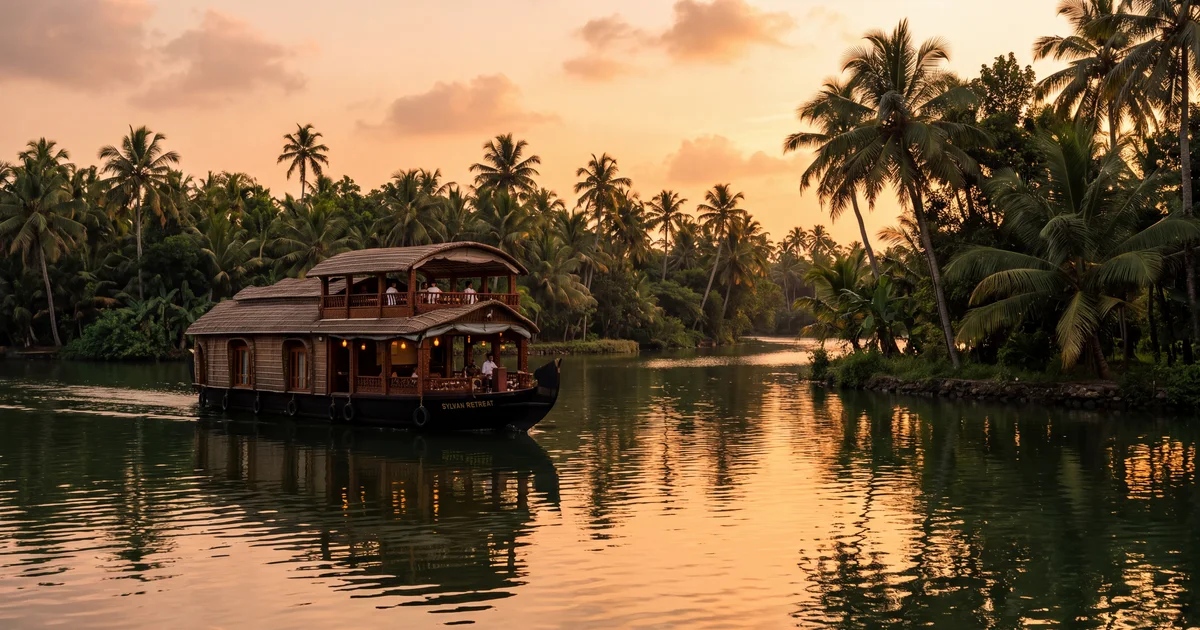
South India gets talked about in the same breath as North India, but the two regions could not be more different. The south trades snow peaks for coconut groves, palace forts for temple towers, and Mughlai spreads for rice plates with sambar. It also moves at a different pace. Buses run roughly on time. Locals are generous with directions. And the food alone is worth the ticket.
Places to visit in South India run from backwater villages in Kerala to granite boulder fields in Hampi to tea estate towns where the temperature drops 15 degrees from the plains below. That range is the appeal and the problem: there is too much, and most lists pad the count without telling you what to skip.
So here is a shorter list. Twenty places, organised by what kind of trip you are actually planning.
TL;DR
- Kerala's backwaters, Munnar and Coorg are the safest bets for a first South India trip.
- Hampi and Madurai are the cultural heavyweights. Plan at least two full days for each.
- For beaches, skip Goa (it is technically West India) and look at Gokarna, Pondicherry and Varkala.
- Hill stations like Ooty and Kodaikanal get extremely crowded in April and May. Go in September or October instead.
- Budget travellers should look at KSRTC Volvo buses and group departures on TripzSearch to cut costs.
Where should I go in South India for the first time?
If this is your first time heading south of Hyderabad, start with Kerala or Karnataka. Both states have good road networks, English is widely understood, and the density of things to see per kilometre is hard to beat anywhere else in the country.
Munnar sits at 1,600 metres in the Western Ghats and stays between 15 and 25 degrees year round. The tea plantations alone keep you occupied for a day, but the real reason to come is the drive up from Kochi: 130 km of switchbacks through cardamom and pepper country. The Eravikulam National Park, 13 km from town, is home to Nilgiri tahr, and the park opens from September to March (it closes during the calving season).
Alleppey (Alappuzha) is where most people do their first houseboat stay. The Vembanad Lake network covers over 2,000 square kilometres, and the overnight boats cruise a fraction of it. One honest caveat: the premium boats are worth the extra spend. The cheapest ones pack guests in, play loud music at night, and dump waste overboard. Ask for the Kerala Tourism classification before you book.
Coorg (Kodagu) is Karnataka's coffee country, about 250 km from Bangalore. Abbey Falls is the postcard image, but the better experience is walking through a working coffee estate with the owner explaining the harvest cycle. The season to visit is October to March, and weekends fill up fast because Bangalore tech workers drive up every Friday evening.
Which South India beach towns are worth the trip?
The south has a long coastline, and much of it is undeveloped compared to Goa. Three towns stand out.
Gokarna has five beaches strung along a rocky headland in north Karnataka. Om Beach is the famous one, but Kudle Beach is quieter and Half Moon Beach requires a 20 minute walk through scrub, which filters out the crowds. The town itself has the Mahabaleshwar Temple, one of the oldest Shiva temples in the region, and the atmosphere is somewhere between a pilgrimage town and a backpacker village. That mix is part of the charm. It also means the nightlife is limited, so come for the coast, not the parties.
Pondicherry splits into two worlds. The French Quarter (White Town) has pastel colonial buildings, bougainvillea draped lanes and French bakeries where a croissant costs less than 100 rupees. The Tamil Quarter on the other side of the canal is louder, busier and more real. Auroville, the experimental township, is 12 km north and worth a half day visit if you are curious. Rock Beach itself is not great for swimming (it is a promenade, not sand), but Serenity Beach 10 km south has actual waves.
Varkala sits on a cliff above the Arabian Sea in Kerala. The cliff top is lined with cafes and shops, and you walk down a steep path to the beach below. The vibe is more relaxed than Kovalam (which has become crowded and commercial). North Cliff is the main stretch, and Black Beach to the south is usually empty. Visit between November and March; the monsoon waves from June to August make swimming dangerous.
What are the best temples and heritage sites in South India?
Hampi is a ruin field the size of Manhattan spread across a boulder strewn landscape in Karnataka. The Virupaksha Temple is still active, but most visitors come for the royal enclosure, the stone chariot, and the sheer strangeness of 15th century granite architecture among banana groves. Two full days is the minimum. Rent a bicycle or moped to cover the distance between sites (some are 5 to 7 km apart). One opinion: the Hemakuta Hill sunset is better than the famous coracle ride, and it is free.
Madurai is Tamil Nadu's temple city, and Meenakshi Amman Temple is the centrepiece. The gopurams (tower gateways) are covered in thousands of painted stucco figures, and the evening ceremony at 9 PM draws crowds every night. The flower market at 5 AM is worth the early alarm. Plan at least two days: one for the temple complex and market, another for Thirumalai Nayak Palace and a day trip to Rameswaram (165 km south).
Mahabalipuram (Mamallapuram) is a 7th century port town 60 km south of Chennai. The Shore Temple faces the Bay of Bengal and looks spectacular at sunrise. Arjuna's Penance, a giant bas relief carved into a granite boulder, is right in town. The whole site is compact enough to cover in half a day, making it an easy add to any Chennai itinerary.
Thanjavur is anchored by the Brihadeeswara Temple, built by the Chola dynasty in 1010 CE. The main vimana (tower) is 66 metres tall and the shadow of the cupola never falls on the ground. The temple is quieter than Meenakshi and the town feels more like a living place than a tourist stop. Combine it with Kumbakonam (40 km east) for a temple circuit.
Which hill stations in South India beat the heat?
South Indian hill stations sit on the Western or Eastern Ghats and drop temperatures by 10 to 20 degrees from the plains. Here are the ones that justify the winding drives.
Ooty (Udhagamandalam) is the oldest established hill station in the south, at about 2,240 metres. The Nilgiri Mountain Railway from Mettupalayam is a UNESCO heritage ride and one of the best train journeys in India (book weeks ahead). Ooty Lake and Botanical Garden are the standard stops, but Doddabetta Peak (8 km away, 2,637 metres) gives you the panoramic view. The town gets uncomfortably packed in April and May. September and October are the sweet spot: monsoon clears, tourists thin out, and the greens are at their deepest.
Kodaikanal sits at 2,133 metres in the Palani Hills. The star shaped lake in the centre of town is the landmark, but Coaker's Walk (a 1 km cliff path) and Pillar Rocks viewpoint are the better experiences. Kodaikanal is cooler and quieter than Ooty, though the 120 km ghat road from Madurai tests your stomach. One caveat: many restaurants close early, and the town centre gets foggy and deserted after 8 PM in winter.
Wayanad is in Kerala's northeast corner, between 700 and 2,100 metres. It is greener and less developed than Ooty or Kodaikanal. Edakkal Caves have petroglyphs estimated at 6,000 years old, and the Banasura Sagar Dam is the largest earth dam in India. Wayanad trips work well as a three day loop from Bangalore (280 km) or Mysore (100 km).
Coonoor is 19 km from Ooty but feels nothing like it. It is smaller, quieter, and the tea estates here (Sim's Park area) have actual views without the crowds. The Nilgiri Mountain Railway stops here, and you can do a half day walk through the Dolphin's Nose viewpoint trail. If Ooty is the commercial hill station, Coonoor is the residential one.
How do I plan a budget South India trip?
Budget travel in the south is more practical than in many parts of India because public transport actually works.
Start with buses. KSRTC (Karnataka), SETC (Tamil Nadu) and Kerala SRTC run Volvo and semi sleeper services on most major routes. A Bangalore to Ooty government Volvo costs about 800 to 1,200 INR. Trains on the Southern Railway network cost even less (a sleeper class ticket from Chennai to Madurai is under 400 INR), but you need to book 30 to 60 days in advance for confirmed berths.
For accommodation, peak season inflates everything. Outside it, decent rooms in Hampi, Gokarna and Pondicherry run 800 to 1,500 INR per night. Kerala homestays in Alleppey or Munnar cost 1,000 to 2,500 INR and usually include breakfast.
If you do not want to plan logistics yourself, group departures on TripzSearch bundle transport, accommodation and guides for weekend getaways starting at 3,000 to 5,000 INR. Compare operators, read real reviews, and book a fixed departure date rather than haggling with a taxi driver at Ooty bus stand.
Underrated South India picks most guides skip
Lepakshi is a tiny village 120 km north of Bangalore with a 16th century Veerabhadra Temple that has some of the finest Vijayanagara murals anywhere. The hanging pillar (one of the 70 pillars does not fully touch the ground) draws visitors, but the ceiling paintings of the Ramayana are the real reason to visit. It takes under three hours from Bangalore and works as a half day trip.
Chettinad is a cluster of villages in Tamil Nadu's Sivaganga district known for the mansions built by the Nattukotai Chettiar trading community. The houses use Burmese teak, Italian marble, and Belgian glass, and many are now empty or crumbling. A few have converted into heritage stays. The food here (Chettinad chicken is world famous) justifies the detour by itself.
Valparai is a hill town in the Anamalai range of Tamil Nadu, surrounded by tea and coffee estates at 1,500 metres. The drive up from Pollachi involves 40 hairpin bends and passes through the Indira Gandhi Wildlife Sanctuary, where you might spot elephants crossing the road. Valparai is quieter than any hill station on the tourist circuit and has almost no commercial tourism infrastructure, which is exactly the point.
Udupi on the Karnataka coast is a temple town and the birthplace of the masala dosa. Sri Krishna Matha is the main draw, but the food culture in the surrounding restaurants is the real experience. Malpe Beach (6 km away) and St. Mary's Island (a boat ride from Malpe) have basalt rock columns formed by volcanic activity 88 million years ago.
Putting a South India itinerary together
A 10 to 14 day trip can cover two states comfortably. Here are two sample routes.
Kerala focus (7 days). Kochi (2 days, Fort Kochi area) to Munnar (2 days, tea estates and Eravikulam) to Alleppey (1 day houseboat) to Varkala (2 days, beach and cliff). All legs are 4 to 5 hour drives or government bus rides.
Karnataka and Tamil Nadu (10 days). Bangalore (1 day) to Hampi (2 days, ruins) to Gokarna (2 days, beach) to Coorg (2 days, coffee estates) to Mysore (1 day, palace and market) to Ooty (2 days, tea and trains via Bandipur forest). The Bangalore to Hampi leg is best done overnight on a KSRTC sleeper bus (7 hours).
Both routes work as group trips too. Check available departures on TripzSearch to compare prices and itineraries across operators.
South India rewards patience. The distances are not small, the buses stop often, and the temples close for afternoon breaks. But the food is better than anything you will eat further north, the people are warmer than their reputation suggests, and every town has a story that goes back a thousand years. That is not marketing. That is just how the south works.
Frequently asked questions
- What is the best time to visit South India?
- October to March is the most comfortable window across most of South India. Coastal Kerala and Tamil Nadu can get heavy rain in October and November during the northeast monsoon, so check dates carefully if your plan is beach heavy. Hill stations like Ooty and Munnar stay pleasant year round but get crowded during April and May school holidays.
- Which places in South India are best for a family trip?
- Munnar, Coorg and Alleppey are the most family friendly picks. Munnar's tea gardens keep kids interested without long hikes. Alleppey houseboats give you a full day on the water with meals included. Coorg works for all ages because the drives are short and the estates have plenty of open space.
- Is South India safe for solo female travellers?
- South India is generally considered safer than many parts of the country for solo women. Kerala, Pondicherry and Karnataka's hill towns rank well in travel safety surveys. Stick to well reviewed operators and accommodations, especially in smaller towns. You can compare verified operators on TripzSearch before booking.
- How many days do you need for a South India trip?
- A focused trip covering two or three states needs 10 to 14 days. If you are picking one region, five to seven days is enough. For example, a Munnar to Alleppey to Kochi loop fits in six days comfortably, while a Karnataka circuit of Bangalore, Coorg and Hampi needs about seven.
- What is the cheapest way to travel around South India?
- Government buses (KSRTC, SETC, APSRTC) are the most affordable way to cover long distances. Trains on the Southern Railway network are reliable and cheap but book 30 to 60 days ahead for reserved berths. Budget group trips on TripzSearch start around 3,000 to 5,000 INR for weekend getaways including transport.