Best Places to Visit in Sikkim (2026): Monasteries, Passes and Permit Tips
An honest guide to the best places to visit in Sikkim in 2026 covering Gangtok, Nathula, Gurudongmar and what most tourists get wrong.
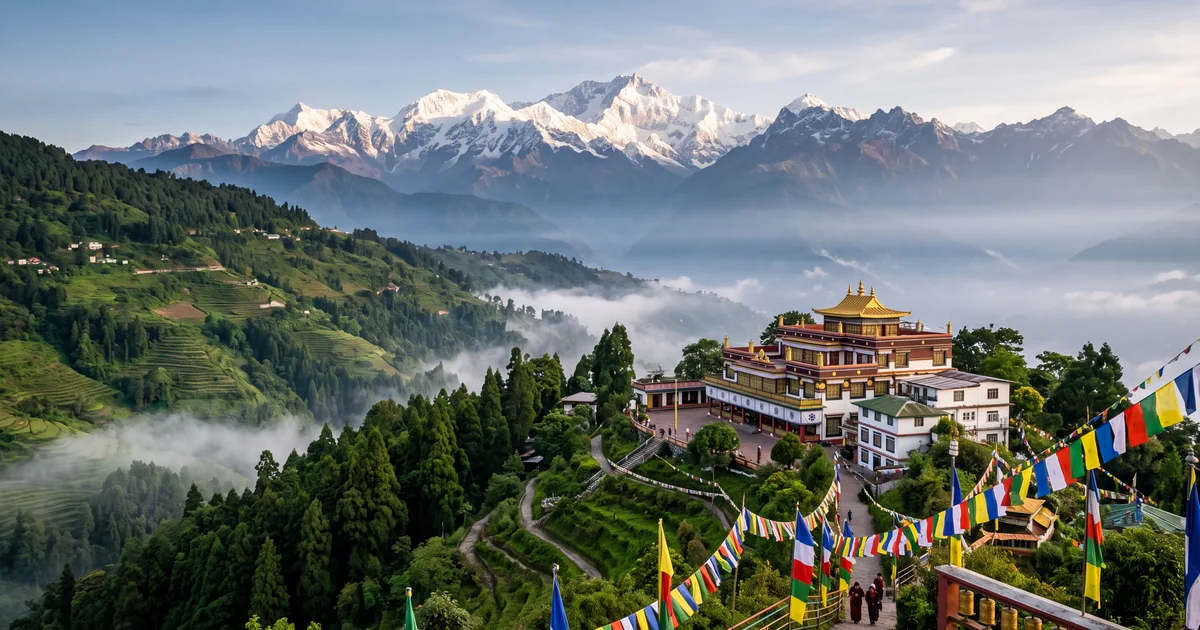
Sikkim is smaller than most people expect. The entire state is 7,096 square kilometres, roughly the size of Bangalore's metropolitan area. Yet it packs in the third highest peak on Earth, over 200 monasteries, one of India's cleanest towns, and a border crossing with China that you can walk up to.
Most visitors fly into Bagdogra, drive 4 to 5 hours to Gangtok, do the MG Marg evening walk, take a day trip to Tsomgo Lake, and fly home thinking they have "done Sikkim." They have seen maybe 15% of what matters.
The state divides into four districts: East (Gangtok and Nathula), North (Gurudongmar and Yumthang), South (Namchi and Ravangla), and West (Pelling and the Kangchenjunga viewpoints). Each has a different character and altitude range. Covering all four takes 9 to 10 days. Covering two well takes a week.
This guide covers what is actually worth your time, what you can skip, and the permit logistics that trip up most first timers.
TL;DR
- Gangtok is the base, not the highlight. Spend 2 days max, then move.
- North Sikkim (Gurudongmar Lake, Yumthang Valley) has the best scenery but needs permits and acclimatisation.
- Pelling in West Sikkim has the best Kangchenjunga views without the altitude sickness risk.
- Get your Inner Line Permit sorted on day one in Gangtok. Without it, half the good stuff is off limits.
- Best time: March to May for flowers, October to November for clear skies. Avoid monsoon months.
What Should You See in Gangtok?
Gangtok sits at 1,650 metres and functions as the gateway to everything else. It is clean by Indian hill station standards, pedestrian friendly around MG Marg, and has enough food options to keep you comfortable for a couple of days.
MG Marg is a pedestrian only stretch in the centre of town. No vehicles, no honking, bins every 20 metres. It fills up in the evenings with families and tourists. The cafes on MG Marg serve decent momos and thukpa at 100 to 200 rupees a plate. Go in the morning if you want photos without crowds.
Rumtek Monastery sits 23 km from Gangtok and is the largest monastery in Sikkim. It is the seat of the Karmapa lineage of Tibetan Buddhism. The main prayer hall has intricate murals covering every wall, and the Golden Stupa behind the main building houses relics. Plan 2 to 3 hours including the drive. Photography inside the prayer halls is restricted.
Hanuman Tok is a small temple at 2,200 metres, about 11 km from MG Marg. The temple itself is modest but the viewpoint offers a clear Kangchenjunga panorama on non cloudy mornings. Get there before 7 AM for the best visibility. By 9 AM, clouds typically roll in from the valley.
Enchey Monastery is a 200 year old monastery on a ridge above Gangtok town. Smaller than Rumtek but less touristy, and you can walk there from MG Marg in about 40 minutes uphill. The annual Chaam dance festival in December and January is worth timing your trip around if you can.
One caveat about Gangtok: the town itself is not the reason to visit Sikkim. It is comfortable and pleasant, but spending more than 2 days here means you are missing what makes the state special. Use it as a base, sort your permits, and move.
Is Nathula Pass Worth the Day Trip?
Nathula sits at 4,310 metres on the old Silk Route trade path between India and China. It is one of three open India China border crossings, and the only one tourists can visit. The drive from Gangtok takes about 3 hours one way along a military road.
The pass itself is a fenced border point where you can see the Chinese side. There is a small cafeteria, a war memorial, and a few jawans standing at the border gate. On a clear day, you can see peaks in every direction and the road switchbacking 800 metres below you. On a cloudy day, you see roughly 10 metres of fog in every direction.
The permit situation: Indian nationals only. Apply through a Gangtok tour operator at least one day in advance. The permit costs around 200 rupees plus the operator's vehicle charges (shared jeep packages run 1,500 to 2,000 per person). Foreign nationals cannot visit Nathula at all. The pass closes on Mondays and Tuesdays.
Here is the honest take: the drive is better than the destination. The road climbs through rhododendron forests, crosses several army checkpoints, and passes Tsomgo Lake on the way. Nathula itself is a 30 minute stop where you stand at a fence, take photos, and leave. If you go, go for the whole experience, not just the border.
Tsomgo Lake (Changu Lake) at 3,753 metres is a stop on the Nathula route. The glacial lake is frozen from December to March and reflects surrounding peaks in the other months. Tourist yak rides circle the lake for 300 rupees. It gets crowded by 11 AM on weekends. The altitude hits some people here for the first time, so carry water and move slowly.
Altitude warning: 4,310 metres is high enough for acute mountain sickness in people who flew into Bagdogra at sea level the day before. Spend at least one full day in Gangtok before attempting Nathula. If you get headaches or nausea at Tsomgo, turn back. The pass is 500 metres higher and colder.
What Makes North Sikkim Worth the Extra Effort?
North Sikkim is the part most people skip because of the extra permits, the rough roads, and the longer travel times. It is also the part that everyone who goes says was the highlight of their trip.
Gurudongmar Lake sits at 5,183 metres, making it one of the highest lakes in the world. The drive from Lachen takes 3 to 4 hours on a jeep track that crosses river beds and passes army camps. The lake itself is an intense blue against a barren high altitude landscape, with snow peaks on three sides. A portion of the lake stays unfrozen through winter, which local belief attributes to Guru Nanak's blessing.
Visiting Gurudongmar requires an Inner Line Permit and a night in Lachen (3,500 metres) for acclimatisation. The lake is accessible from April to mid June and again from October to November. In winter, the road is often blocked by snow. Foreign nationals cannot visit Gurudongmar.
Yumthang Valley is called the "Valley of Flowers of Sikkim," and in April and May that name makes sense. The valley floor at 3,564 metres fills with rhododendrons in over 20 colours. The Teesta River runs through it, and the surrounding hillsides are a carpet of blooms. Outside flower season, Yumthang is pleasant enough but does not justify the 6 hour drive.
The drive from Lachung to Yumthang takes about an hour. Most visitors do this as a day trip from Lachung, which is itself a 6 hour drive from Gangtok through tight mountain roads with waterfalls dropping onto the road surface in monsoon.
Lachung and Lachen are twin villages that serve as bases for North Sikkim. Lachung (2,600 metres) is greener, with apple orchards and a timber cottage feel. Lachen (3,500 metres) is sparser and higher, the staging point for Gurudongmar. Both have basic guesthouses. Do not expect hotel amenities here. Power cuts are common, hot water is available by the bucket, and mobile signal drops to zero past Chungthang.
My opinion: if you are fit enough and have the time, North Sikkim is the single best reason to visit the state. Gurudongmar Lake alone justifies the trip. But be honest with yourself about altitude. People who skip acclimatisation end up in the Lachen medical post with oxygen cylinders, and that ruins the trip for everyone in the shared jeep.
Where Are the Best Kangchenjunga Views in Sikkim?
Kangchenjunga (8,586 metres, third highest in the world) is visible from multiple points in Sikkim, but some viewpoints put you closer than others.
Pelling in West Sikkim at 2,150 metres has the most reliable views. The town sits on a ridge facing the Kangchenjunga range, and on clear mornings the entire massif fills the western horizon. The best spot is the helipad viewpoint above town. Sunrise here between 5:30 and 6:00 AM in October and November is when the light hits the snow face and turns it orange. This happens maybe 3 out of 5 mornings in peak season.
Tashi Viewpoint near Gangtok is the standard tour stop for Kangchenjunga photos. It is a roadside viewpoint at 2,200 metres. The views are good on clear mornings but the mountain is further away than from Pelling. It is also packed with shared cabs stopping for the obligatory photo op, which means 5 to 10 minutes of jostling for a clear angle.
Ravangla in South Sikkim sits at 2,155 metres and offers Kangchenjunga views from the Buddha Park complex, where a 40 metre Tathagata statue faces the range. The park is clean and well kept, far less crowded than the East Sikkim viewpoints. On a clear afternoon, the juxtaposition of the bronze statue and the snow peak behind it is the kind of photo that works even on a phone.
The honest caveat: clouds are the enemy. Kangchenjunga is visible maybe 40% of mornings in October and November, less in other months. If you see it, stop everything and look. It is not the kind of view that waits for you to finish breakfast.
Which Monasteries Should You Actually Visit?
Sikkim has over 200 Buddhist monasteries, and most tour packages try to tick off 6 or 7 of them. That is too many unless you have a specific interest in Tibetan Buddhism. Three stand out.
Rumtek Monastery is the most important monastery in Sikkim by lineage (Kagyu school). The complex includes the main monastery, a Dharma Chakra Centre, and the Golden Stupa. The monks are often happy to explain the murals and rituals if you visit during a quiet hour. Avoid weekends when domestic tour groups arrive in buses.
Pemayangtse Monastery near Pelling was founded in 1705 and is one of the oldest in Sikkim. The top floor houses a painted wooden model of Guru Rinpoche's celestial palace called Zangdokpalri, built by a single monk over 5 years. One monk spent 5 years building it, and the detail shows. The monastery sits at 2,085 metres with views of the Kangchenjunga range on clear days.
Tashiding Monastery sits on a hilltop between the Rathong and Rangit rivers in West Sikkim. It is considered the holiest monastery in the state. The annual Bumchu festival (usually February or March) draws devotees from across the region to witness the opening of a sacred vessel of water. The walk up to the monastery passes through prayer flag lined paths and offers one of the most photogenic approaches in Sikkim.
Skip the tourist trap monasteries along the Gangtok taxi circuit that offer a 10 minute walkthrough and a souvenir shop. They add nothing to your understanding of the region.
How Do Permits Work in Sikkim?
The permit system confuses most first time visitors, so here is how it actually works.
Inner Line Permit (ILP): Required for Indian nationals visiting Nathula Pass, Tsomgo Lake, North Sikkim (Lachung, Lachen, Gurudongmar, Yumthang), and some areas of West Sikkim. Apply online through the Sikkim tourism portal or through a registered tour operator in Gangtok. Processing takes a few hours to one working day. Cost is minimal (200 to 300 rupees) but most operators bundle it with transport packages.
Restricted Area Permit (RAP): Required for foreign nationals. Covers Tsomgo Lake and Yumthang Valley only. Foreign tourists cannot visit Nathula Pass or Gurudongmar Lake. Apply through a registered tour agency in Gangtok or through the Ministry of Home Affairs. Requires at least 2 people travelling together (solo foreign travellers need to find a companion or a willing agency).
Practical advice: Get your ILP sorted on day one in Gangtok. Walk into any licensed tour operator on MG Marg with your ID proof and 2 passport photos. Most can have the permit ready by evening. If you are doing North Sikkim, the operator handles the permit as part of the package. Do not leave permits for the last day; if processing hits a delay, your entire North Sikkim or Nathula plan collapses.
The ILP has specific validity dates. A Nathula permit is day specific (you pick the date). North Sikkim permits cover the duration of your itinerary. You carry the physical permit with you and show it at army checkpoints along the routes.
What About South Sikkim?
South Sikkim gets fewer tourists than East or West, and that is part of its appeal.
Namchi at 1,675 metres is the district capital. The Char Dham complex replicates the four dhams (Badrinath, Dwarka, Puri, Jagannath) in a single hilltop campus. The 26 metre Shiva statue at Solophok on the opposite hill is visible from across the valley. Neither is architecturally ancient, but the scale and the mountain backdrop make both worth a stop.
Ravangla has the Tathagata Tsal (Buddha Park) with its 40 metre seated Buddha statue inaugurated by the Dalai Lama in 2013. The park grounds are quiet, well kept, and far less crowded than anything in Gangtok. Tea gardens surround Ravangla, and the Temi Tea Garden (one of the few in Sikkim) offers walks through the rows with Kangchenjunga in the background.
Borong is a tiny village near Ravangla with hot springs and homestay options. It sees almost zero tourist traffic. If you want a day of doing nothing in a Sikkimese village with mountain views, Borong delivers that without the resort price tag.
The caveat for South Sikkim: it lacks the high altitude landscapes of North Sikkim and the adventure tourism of East Sikkim. It appeals to people who prefer quiet over spectacle.
How to Plan Your Sikkim Trip: Routes and Logistics
The standard routing depends on how many days you have.
7 days (most common): Fly to Bagdogra, drive to Gangtok (day 1). Gangtok sightseeing and permit application (day 2). Nathula and Tsomgo Lake day trip (day 3). Drive to Lachung (day 4). Yumthang Valley day trip and return to Gangtok (day 5). Drive to Pelling (day 6). Pelling sightseeing and drive back to Bagdogra (day 7).
10 days (comprehensive): Add North Sikkim properly: Gangtok (2 days), Lachen and Gurudongmar (2 days), Lachung and Yumthang (2 days), Pelling (2 days), Namchi and Ravangla (1 day), buffer day for weather delays.
Transport: Shared jeeps run between all major towns. Gangtok to Pelling costs about 350 rupees in a shared Sumo. Gangtok to Lachung packages (including vehicle, accommodation, and meals) run 4,000 to 6,000 per person for 2 nights. Private vehicles cost roughly double. There are no trains in Sikkim and only one domestic airport (Pakyong, 35 km from Gangtok), which has limited flights and cancellations in bad weather.
Accommodation: Gangtok has everything from 500 rupee guesthouses to 5 star properties. Pelling has good mid range hotels (1,500 to 3,000 per night). North Sikkim has basic guesthouses with limited amenities. Book North Sikkim stays through your tour operator because walk ins are unreliable.
Food: Momos, thukpa, and Sikkimese set meals (rice, dal, churpi curry, gundruk) are available everywhere. MG Marg in Gangtok has the widest variety. North Sikkim guesthouses serve fixed meals included in the package. Vegetarian food is easy to find. Pork and beef dishes appear on most Sikkimese menus.
Browse group trips to Sikkim on TripzSearch if you prefer fixed departure packages that handle permits, vehicles, and stays. For Delhi departures, most operators offer 7 to 10 day Sikkim itineraries with Bagdogra flights included. Check Sikkim destination pages for upcoming departures and operator reviews.
Frequently asked questions
- How many days are enough for Sikkim?
- Seven to eight days covers Gangtok, Nathula, Tsomgo Lake, Lachung, Yumthang Valley, and Pelling comfortably. If you add North Sikkim's Gurudongmar Lake, plan 9 to 10 days. Anything under 5 days means you see only Gangtok and one excursion, which undersells the state badly.
- What is the best time to visit Sikkim?
- March to June and October to December are the two best windows. March to May brings rhododendron blooms and clear Kangchenjunga views. October to November has post monsoon clarity and fewer tourists. Avoid July to September unless you are comfortable with landslides and road closures on the North Sikkim highway.
- Do I need a permit to visit Sikkim?
- Indian nationals need an Inner Line Permit (ILP) for Nathula Pass, Gurudongmar Lake, and most of North Sikkim. You can get it online through the Sikkim tourism portal or at the Rangpo checkpoint. Foreign nationals need a Restricted Area Permit (RAP) from the Ministry of Home Affairs and cannot visit Nathula at all. Allow one working day for processing.
- Is Sikkim safe for solo travellers?
- Sikkim consistently ranks among the safest states in India. Gangtok's crime rate is very low, locals are welcoming, and the tourist infrastructure in East and South Sikkim is well established. Solo women travellers report feeling comfortable. The only safety concern is road conditions in North Sikkim during monsoon and winter.
- Can I visit Nathula Pass without a permit?
- No. Nathula Pass sits on the India China border at 4,310 metres and requires an Inner Line Permit issued by the Gangtok District Collector's office. Permits are issued only to Indian nationals, not foreign tourists. Apply at least one day in advance through a registered tour operator in Gangtok. The pass is open Wednesday to Sunday and closed on Monday and Tuesday.
- What is the cost of a Sikkim trip from Delhi?
- A 7 day Sikkim trip from Delhi costs roughly 15,000 to 25,000 per person for budget travel (shared jeeps, guesthouses, local food) and 35,000 to 50,000 for mid range (private vehicle, 3 star hotels). Flights to Bagdogra run 4,000 to 8,000 one way depending on season. The biggest variable is whether you hire a private vehicle or use shared transport.