Best Places to Visit in Shimla (2026): Beyond Mall Road and Ridge
12 best places to visit in Shimla in 2026 with honest tips on what to skip, when to go, and how to avoid the Mall Road crush.
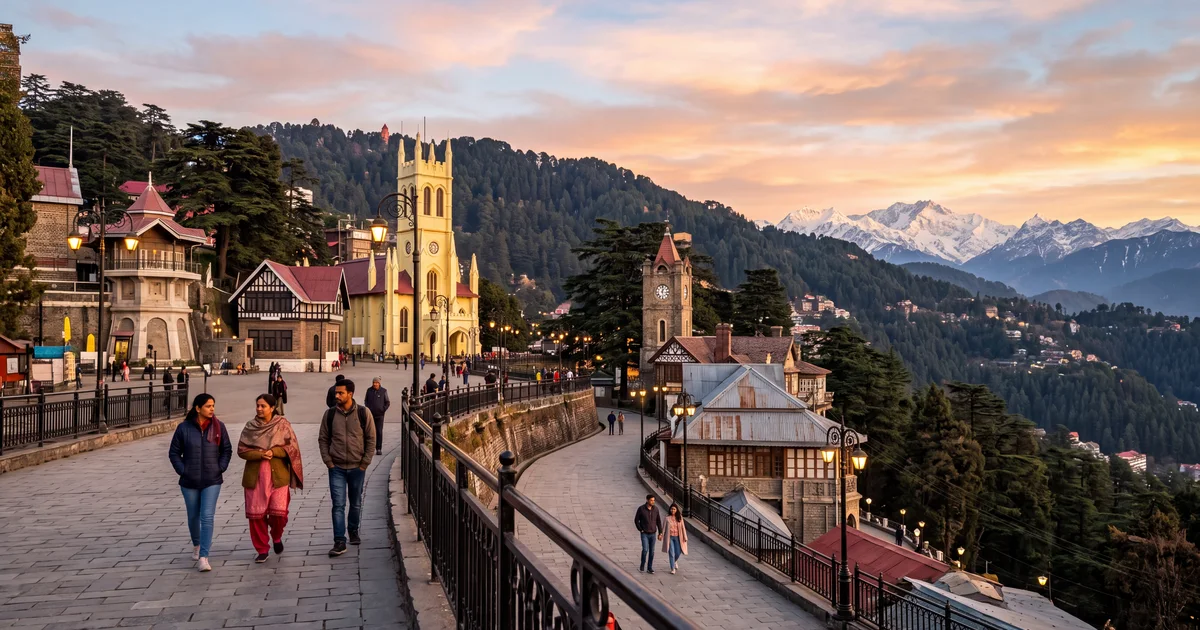
Shimla gets 30 million tourists a year. That number sounds absurd until you visit Mall Road on a June Saturday and realize half of north India is there with you, shuffling in a slow queue past the same overpriced shawl shops. The town is worth it. You just need to know where to go that is not Mall Road, and when to show up so the crowds are thin.
I am writing this having visited Shimla three times: once in peak summer (a mistake), once in February during snowfall (brilliant), and once in late October (the best overall). The experiences were so different they could be three separate destinations.
TL;DR
- Visit in October or February. Skip May, June, and Christmas week unless you like queues.
- The Ridge is best at 6:30 AM when it is empty. By 10 AM you cannot find a bench.
- Kufri is 16 km away and only worth visiting in winter for snow. In summer it is a horse ride scam.
- The Kalka Shimla toy train is the real highlight. Book the Vistadome coach (₹800) at least 10 days ahead.
- Two days minimum. Three days ideal. Four if you add Mashobra or Naldehra.
What Makes the Ridge and Mall Road Worth Your Time (at the Right Hour)?
The Ridge is a wide open plateau in the centre of Shimla at 2,200 metres. On a clear morning, you can see the snow line of the Pir Panjal range 80 km north. The neo Gothic Christ Church (built 1857) anchors the eastern end, and the Tudor style library sits at the west.
Here is the truth: by 10 AM on any weekend, the Ridge holds 2,000 to 3,000 people. Street photographers, horse owners, balloon sellers, and families eating corn. The mountain views disappear behind heads.
Walk there at 6:30 AM instead. October mornings around 8°C, the peaks turn pink, and you might share the space with 20 people and a few stray dogs. This is when the place delivers what the photos promise.
Mall Road runs below the Ridge. It is a vehicle free pedestrian stretch with cafes, bookshops, and the Gaiety Theatre (1887, still hosting plays). The shops are mostly tourist traps, but Lakkar Bazaar at the far end sells decent carved wood items if you haggle.
One opinion: do not spend more than 90 minutes on Mall Road. Everything worth seeing connects to the Ridge walk or branches off it within 5 minutes.
Christ Church: Colonial Architecture Without the Entry Fee
Christ Church on the Ridge is the second oldest church in North India (1857). The stained glass windows inside represent faith, hope, charity, fortitude, patience, and humility, and they were shipped from England in 1860.
Entry is free. The church is open from 8 AM to 6 PM. Most tourists photograph the exterior (yellow stone, clock tower, the fresco above the entrance) and leave. Walk inside. The pipe organ from 1899 is still functional, and the wooden pews have brass plaques naming British officials from the 1860s.
The interior takes 15 minutes. The real value is the quiet: thick stone walls block the Mall Road noise entirely. If you are exploring Shimla on a group trip, this is a good 20 minute stop between the Ridge walk and breakfast.
The caveat: restoration work has been ongoing since 2024. Some scaffolding may cover parts of the facade. The interior remains accessible.
Is Jakhoo Temple Worth the Steep Climb?
Jakhoo Hill is the highest point in Shimla at 2,455 metres, topped by a Hanuman temple and a 33 metre tall Hanuman statue visible from across town. The hike from the Ridge takes 30 to 40 minutes up a steep forested trail.
The view from the top covers 360 degrees: Shimla town below, the Shivalik foothills to the south, and the Greater Himalayan range to the north on clear days. In October and November, visibility often exceeds 100 km.
Two warnings. First, the monkeys. Jakhoo has aggressive langurs and rhesus macaques that will grab food, bags, and phones. Carry nothing in your hands. Do not eat on the trail. A walking stick helps (rental stalls at the base charge ₹20). Second, the last 200 metres are steep concrete steps. If you have knee issues, hire a pony (₹500 return) or take the ropeway (₹350 one way) from the lower station.
My honest take: the temple itself is unremarkable. The Hanuman statue is large but garish. You go for the climb through deodar forest and the top view. Go before 7 AM for the best light and fewest monkeys.
Kufri: When to Go and When to Skip It
Kufri sits 16 km east of Shimla at 2,622 metres. In winter (January to February), it gets genuine snowfall and the hillside turns white. That version of Kufri is worth the drive.
Summer Kufri is a different experience. The "adventure park" charges ₹500 for a horse ride up a muddy trail to a viewpoint you could walk to in 20 minutes. "Yak rides" cost ₹300 for a photo. The snow has melted by March, and what remains is an overcrowded parking lot with expensive food stalls.
If you are visiting between late December and mid February: check for fresh snowfall (the Shimla DC website posts weather alerts), drive up early morning when the roads are less frozen, and budget 2 to 3 hours. The Himalayan Nature Park in Kufri is a small zoo with a snow leopard enclosure. Entry ₹20.
If you are visiting any other time: skip Kufri. Use those 3 hours to visit Mashobra (15 km north), which has apple orchards, quiet pine forests, and the presidential retreat at Chharabra without the tourist circus.
The Kalka Shimla Toy Train: Shimla's Best Experience
The Kalka Shimla Railway is a UNESCO World Heritage narrow gauge line built between 1898 and 1903. It covers 96 km from Kalka (656 m) to Shimla (2,076 m), passing through 102 tunnels, over 87 bridges, and around curves so tight the front of the train disappears from view.
The Vistadome coach (₹800, introduced 2019) has a glass roof for tunnel views and large windows. Book on IRCTC. Regular chair car costs ₹230. The ride takes 5 to 5.5 hours.
The prettiest section is between Barog (tunnel 33, the longest at 1.14 km) and Solan, where the track runs along a cliff edge with the Shivalik valley 400 metres below. Sit on the right side (facing direction of travel from Kalka) for the valley views.
A practical option: instead of riding the full route, board at Barog (reachable by road in 2 hours from Chandigarh) and ride the best 30 km stretch to Shimla. This cuts the journey to 2.5 hours while covering the most scenic tunnels and bridges.
One real opinion: this is better than the Darjeeling toy train. The scenery is more varied, the tunnels are dramatic, and the Vistadome glass ceiling makes a genuine difference. If you are visiting Shimla from Delhi on a group trip, the toy train should be non negotiable.
Scandal Point, Lakkar Bazaar, and the Lower Markets
Scandal Point is where Mall Road meets the Ridge. It has a statue of Lala Lajpat Rai and a plaque explaining how the Viceroy's daughter allegedly eloped with a Maharaja here in 1892. The story is likely apocryphal and the "point" is just a junction.
Skip Scandal Point as a destination. You will pass it anyway walking between the Ridge and Mall Road.
Lakkar Bazaar, 200 metres north of the Ridge, specializes in wood carvings and walking sticks made from deodar and walnut. Prices range from ₹150 for a small figurine to ₹3,000 for an ornate box. Quality varies wildly. Check the grain and weight: real deodar is light and fragrant, fakes are painted pine.
The Lower Bazaar (below Mall Road, accessible via lift or steps) is where locals shop. Vegetables, spices, tailors, and hardware stores. No tourist items. The momos here cost ₹30 for a plate versus ₹80 on Mall Road. It is chaotic and steep and more interesting than anything the main tourist strip offers.
Chadwick Falls: A 45 Minute Walk Most Tourists Miss
Chadwick Falls sits 4 km from Shimla's centre (walking from the Ridge takes about 45 minutes through a quiet deodar forest road). The waterfall drops 67 metres into a forested ravine. In monsoon (July to September), the flow is heavy and visible from the viewpoint above.
Here is the caveat: between November and May, the falls reduce to a thin stream or dry up entirely. Do not make a special trip in winter. Time it for late September when the monsoon is ending and the roads are clear.
No entry fee. The path from Shimla goes past Summer Hill (another quiet residential area with colonial bungalows). The walk itself through the forest is half the appeal: deodar trees, pine cones underfoot, occasional langur sightings. Carry water because there are no shops on the route.
If you have only two days and it is not monsoon season, skip this and use the time for the toy train instead.
Mashobra and Naldehra: What Shimla Was Before the Crowds
Mashobra is 12 km north of Shimla. Naldehra is 22 km north. Both are where Shimla locals go when they want to escape Shimla tourists.
Mashobra has apple orchards (September harvest, you can pick for ₹100 a bag at several farms), quiet pine walks, and the Wildflower Hall heritage hotel at 2,500 metres with valley views. Even if you do not stay there (rooms start at ₹15,000), the driveway gives public access to a viewpoint.
Naldehra has India's oldest golf course (1905, built by Lord Curzon) set in a deodar forest at 2,044 metres. Non golfers can walk the course edges for free. The nine holes wind through the trees, and in October the surrounding forest turns orange.
Practical note: both need a taxi or rental car. Shared autos from Shimla's ISBT go to Mashobra (₹30, 25 minutes) but Naldehra needs a private vehicle (₹800 to ₹1,000 round trip). Budget half a day for both together.
One opinion: if you are visiting Shimla for a third time, skip the main town entirely and base yourself in Mashobra. Quieter, cheaper, and the views of the snow line are actually better because you are higher and further from the urban haze.
The Viceregal Lodge (Indian Institute of Advanced Study)
Built in 1888 in Jacobean style for the British Viceroy, the Viceregal Lodge sits on Observatory Hill surrounded by 100 acres of gardens. This is where the Shimla Conference of 1945 happened, where partition discussions took place, and where the Viceroy hosted events for 500 guests in a ballroom with teak floors.
The building now houses the Indian Institute of Advanced Study. Guided tours run every 30 minutes from 10 AM to 5 PM (₹80 for Indians). The interior has original furniture, portraits, fireplaces, and a central heating system from 1888 that still works.
The gardens are free to walk through. They include a boathouse (converted to a cafe), a tennis court, and paths through pine and deodar that feel 50 years removed from Mall Road's chaos.
This is one place where the guided tour adds real value. The guide explains which room hosted what negotiation, and points out the tunnel connecting the lodge to the telegraph office (still visible but closed to visitors).
What Is Shimla Like in Winter and Is Snowfall Guaranteed?
Shimla gets snow between late December and mid February. Typically 3 to 5 snowfall events per winter, each lasting 1 to 3 days. January is the most likely month. Temperatures drop to minus 2°C at night and 4 to 8°C during the day.
Snow is not guaranteed. Some winters get heavy accumulation (15 to 20 cm) and the Ridge looks like a postcard. Other winters, especially during weak Western Disturbance years, see almost nothing. 2024 was a poor snow year in Shimla.
If snowfall is your primary reason to visit: watch the IMD weather forecast from January 5 onwards. When a Western Disturbance is predicted, book accommodation 3 days ahead and travel on the second day (the first day's roads may be blocked). The Ridge, Kufri, and Jakhoo Temple look best with fresh snow.
Practical issues during snow: roads to Kufri close for 6 to 12 hours after heavy falls. Mall Road becomes slippery. Heating in budget hotels (below ₹2,000 per night) is often just a room heater that raises temperature by maybe 5°C. Carry thermals, a waterproof jacket, and shoes with grip.
Planning a Shimla Trip: Getting There and Staying
From Delhi (350 km): NH 44 to Chandigarh (4 hours), then NH 5 via Kalka and Solan (3.5 hours). Total 7 to 8 hours by car. The Chandigarh to Shimla section has 50+ hairpin turns. HRTC Volvo buses run every 30 minutes from Delhi ISBT (₹800 to ₹1,200, 9 hours). Or take the Shatabdi to Kalka and the toy train up.
Budget: ₹2,500 to ₹4,500 per day per person (mid range hotel, food, local transport). Budget hotels on Cart Road start at ₹1,000 per night in off season. Mall Road hotels cost 2x to 3x more for the same room quality.
Where to stay: Cart Road is cheaper and closer to the ISBT. The Ridge area is walkable to everything but expensive. Mashobra or Kufri road hotels suit people with cars who want quiet. Avoid anything marketed as "Mall Road facing" unless you enjoy people watching at 11 PM.
Group trips: Fixed departure group tours covering Shimla typically combine it with Manali (3 days Shimla + 3 days Manali). The Volvo bus between them takes 7 hours via Mandi. Check departure dates on TripzSearch for operators running from Delhi.
What to pack: Layers in every season. Summer afternoons hit 25°C but evenings drop to 12°C. Winter needs thermals, a down jacket, and waterproof shoes. An umbrella works year round because Shimla gets afternoon showers even in October.
Shimla is not a place that surprises you. It is a place that rewards you for showing up at the right time, walking past the crowd, and finding the quiet spots 10 minutes from the noise. Two days is enough. Come back in a different season and it feels new.
Frequently asked questions
- What are the top 5 must visit places in Shimla?
- The Ridge for Himalayan views, Christ Church for architecture, Jakhoo Temple for the sunrise climb, Kufri for snow in winter, and the Kalka Shimla toy train for the journey itself. These five cover Shimla's best without needing more than three days.
- How many days are enough for Shimla?
- Two full days cover the main Shimla town sights. Three days let you add Kufri and the toy train ride. Four days work if you want to include Mashobra, Naldehra, or a day trip to Chail. Most group trips combine Shimla with Manali for a 5 to 7 day itinerary.
- Is Shimla worth visiting in 2026?
- Yes, but manage expectations. The town is crowded from May to June and during Christmas week. Visit in October, February, or March for fewer tourists, clear views, and comfortable weather. The toy train, colonial architecture, and surrounding hill trails still deliver.
- What is the best time to visit Shimla for snowfall?
- Late December to mid February is your best window for snow. January typically gets 3 to 5 snowfall days. The Ridge and Kufri get a white layer, but roads close temporarily. Check weather forecasts a week ahead because snowfall is unpredictable and sometimes skips entire winters.
- How do I reach Shimla from Delhi?
- Drive via NH 44 and NH 5 (7 to 8 hours for 350 km). The Kalka Shimla toy train takes 5.5 hours from Kalka, which is a 4 hour drive or 4 hour Shatabdi train from Delhi. Flights land at Jubbarhatti airport (23 km from town) but are unreliable due to weather cancellations.
- Is the Kalka Shimla toy train worth it?
- Absolutely. The UNESCO listed narrow gauge railway passes through 102 tunnels and 87 bridges over 96 km. The Vistadome coach (₹800) has glass ceilings for tunnel views. Book at least 10 days ahead on IRCTC. The scenery between Barog and Solan alone justifies the trip.
- What should I skip in Shimla?
- Skip the Shimla wax museum (poor quality), the ice skating rink outside winter months, and the Scandal Point viewpoint (just a junction with a plaque). Johnnie's Wax Museum charges ₹500 for what feels like a school project. Your time is better spent walking to Chadwick Falls or exploring the old Gaiety Theatre.