Best Places to Visit in Shillong (2026): Waterfalls, Lakes and the Scotland of the East
Top places to visit in Shillong in 2026 with waterfalls, lakes, markets, and practical tips for planning a trip to Meghalaya.
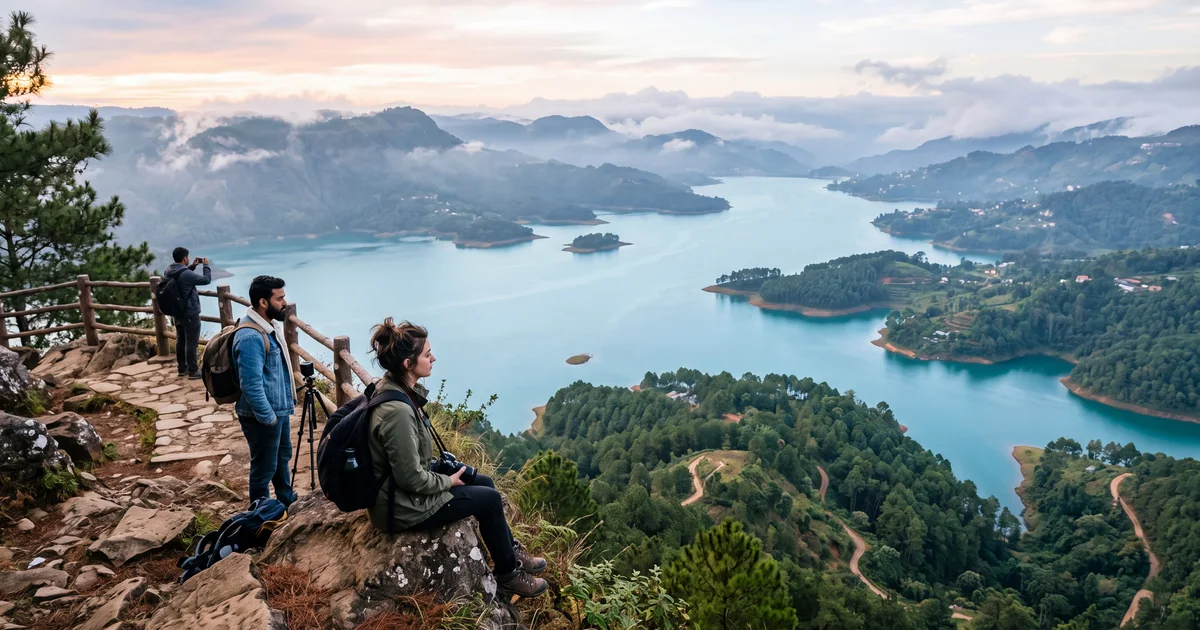
Shillong sits at 1,496 metres on the Shillong Plateau, the capital of Meghalaya and the only hill station in northeast India that the British built from scratch. They called it the "Scotland of the East" because the rolling hills, pine forests, and persistent drizzle reminded them of the Highlands. The comparison is generous, but the landscape earns it on a clear October morning when you can see the Khasi Hills stretching in every direction with no high rise in sight.
The places to visit in Shillong fall into two categories: the town itself (lakes, markets, museums, a surprisingly good live music scene) and the day trips within 60 to 80 km that include some of the most photographed spots in India. Dawki's crystal clear Umngot River, Cherrapunji's waterfalls, Mawlynnong's living root bridges. These draw most visitors to Meghalaya, and Shillong works as the base camp for all of them.
Getting here is not difficult but not direct either. There is no airport or railway station in Shillong. You fly into Guwahati and drive 100 km uphill. The road is decent, the views improve past Nongpoh, and the whole ride takes about 3 hours.
TL;DR
- Shillong is the base for exploring Meghalaya: Cherrapunji, Dawki, Mawlynnong, and the living root bridges are all day trips from here.
- The town itself has Ward's Lake, Don Bosco Museum, Police Bazaar, and a live music scene that peaks on weekends.
- Best months: October to May. Monsoon (June to September) brings relentless rain and risky road conditions.
- Fly to Guwahati, then a 3 hour drive to Shillong. No trains reach here.
- Three days covers the essentials. Four if you want to trek to the double decker root bridge at Nongriat.
What Are the Best Places to Visit in Shillong Town?
Ward's Lake
A small artificial lake in the centre of Shillong, built during British times, surrounded by gardens and a wooden bridge. It takes 20 minutes to walk around the entire perimeter. Entry is ₹30. You can rent paddle boats for ₹100.
The lake is not a destination by itself. It is a good first stop because it sits next to the State Museum and Lady Hydari Park, so you can combine all three in a single morning. The gardens are well maintained, and the bridge over the lake makes for a decent photograph.
Skip it if you are pressed for time. The day trips out of Shillong are significantly more impressive.
Don Bosco Museum (Centre for Indigenous Cultures)
Seven floors dedicated to the indigenous cultures of northeast India. This is one of the best museums in the region, and most visitors do not expect it. The collection covers everything from traditional Khasi and Garo clothing to Naga headhunter artefacts, with sections on music, agriculture, and spiritual practices across 16 states and over 200 tribes.
The top floor has a panoramic viewing gallery with a 360 degree view of Shillong. On a clear day, you can see Shillong Peak in one direction and the city cascading down the hillside in the other.
Allow 2 hours minimum. Entry is ₹100 for Indians, ₹200 for foreigners. The museum is open Monday to Saturday, 9 AM to 5 PM. It closes on Sundays.
Police Bazaar and Lewduh Market
Police Bazaar is the commercial centre of Shillong: a loud, crowded, unplanned cluster of shops selling everything from electronics to woolens. It is not beautiful, but it is where the town actually lives. Street food stalls here sell momos, chow mein, and grilled pork for ₹50 to ₹100.
For a more authentic market experience, walk 15 minutes to Lewduh (Bara Bazaar), which is the oldest and largest market in Shillong. Khasi women run most of the stalls. You will find dried fish, betel nuts, wild honey, fermented soybean cakes, local fruits you have never seen before, and handwoven shawls. It is chaotic in the best way.
Go to Lewduh on a weekday morning for manageable crowds. Saturday is the biggest market day but also the most overwhelming.
Shillong Peak
At 1,965 metres, this is the highest point in Shillong. The Indian Air Force maintains a station here, so you need to show photo ID at the gate. The viewpoint offers a wide angle view of the entire Shillong plateau, with rolling green hills and the city below.
The drive up takes 30 minutes from Police Bazaar (10 km). A taxi costs ₹600 to ₹800 for a round trip. Best visited early morning or late afternoon when visibility is good and the light cooperates.
One honest note: the viewpoint itself is a concrete platform. Do not expect a well developed tourist spot. The view does all the work.
Which Day Trips From Shillong Are Worth It?
Dawki and the Umngot River
Dawki sits 81 km south of Shillong on the India Bangladesh border. The drive takes 2.5 to 3 hours through the Jaintia Hills. The draw is the Umngot River, where the water is so transparent that boats appear to float in mid air. Every Meghalaya tourism photo you have seen probably came from here.
The water clarity peaks between November and April. During monsoon, the river rises and turns slightly green, but it still flows clearer than most Indian rivers. Boat rides cost ₹500 to ₹800 for 30 to 45 minutes.
Be aware: Dawki gets very crowded, especially on weekends and holidays. The boat queue can stretch to 90 minutes by 11 AM. Arrive by 8 AM to avoid the worst of it. The border checkpoint at Tamabil is nearby if you want to see the India Bangladesh land crossing, but there is not much to do there as a tourist.
Cherrapunji (Sohra) and Nohkalikai Falls
Cherrapunji, officially Sohra, is 54 km from Shillong (2 hours by car). Once officially the wettest place on earth, it still receives over 11,000 mm of rainfall annually. The waterfalls here are the main attraction.
Nohkalikai Falls drops 340 metres into a turquoise pool and is India's tallest plunge waterfall. The viewpoint is accessible by car, 5 minutes from the road. The falls run year round but are most dramatic during and right after monsoon (July to October).
Seven Sisters Falls is a series of seven segmented cascades visible from a viewpoint on the road. Mawsmai Cave is a short limestone cave (150 metres, lit with electric lights) that you can walk through in 15 minutes. It gets tight in some passages. If you are claustrophobic, skip it.
A full Cherrapunji day trip from Shillong covers Nohkalikai Falls, Seven Sisters viewpoint, Mawsmai Cave, and the Eco Park viewpoint. Start by 7 AM to finish comfortably by 5 PM.
Mawlynnong Village and Living Root Bridges
Mawlynnong, 90 km from Shillong (3 hours), was once called Asia's cleanest village. The title comes from a 2003 Discover India magazine feature, and the village has held onto it fiercely. Bamboo dustbins line every path. Plastic is banned. The lanes are swept daily.
The village takes 1 hour to walk through. The sky walk (a bamboo viewing platform at the edge of the village) gives you a view into the Bangladesh plains below. The single decker living root bridge is a 15 minute walk from the village centre.
For the famous double decker living root bridge, you need to go to Nongriat, which is a separate trek: 3,500 steps down (and back up) from Tyrna village, about 30 km from Cherrapunji. This is a full day commitment, and most people stay overnight in Nongriat to avoid climbing 3,500 steps in one go. The root bridges were grown over centuries by the Khasi people by training the roots of Ficus elastica trees across rivers.
Combine Mawlynnong with Dawki in one day trip (they are 30 km apart). Start with Dawki at 8 AM, then Mawlynnong by noon.
What Should You Eat in Shillong?
Khasi food is unlike anything else in India. The base is rice and pork, with fermented ingredients adding depth that catches you off guard.
Jadoh is rice cooked with pork blood, turmeric, and local spices. It looks unassuming, a reddish pile of rice, but the flavour is earthy and rich. You will find it at any Khasi restaurant for ₹80 to ₹150.
Tungrymbai is a fermented soybean chutney, smoky and pungent. Locals eat it with every meal. If you like fermented foods (kimchi, natto), you will appreciate this.
Doh khlieh is minced pork salad with onions, ginger, and chillies. Served cold, eaten as a side dish. The texture is unusual, somewhere between a tartare and a salad.
For non pork options, try kwai (betel nut, offered everywhere as a social gesture), pumaloi (rice flour cakes steamed in leaves), or the many momos and noodle shops around Police Bazaar.
Shillong's cafe scene is surprisingly developed. Cafes like Dylan's and Cloud 9 serve decent coffee, sandwiches, and live music on weekends. The music scene here leans rock and blues, and local bands play originals in English and Khasi.
How Do You Get Around Shillong?
Shillong does not have autorickshaws or ride hailing apps. Local transport is shared taxis and private cabs.
For day trips (Dawki, Cherrapunji, Mawlynnong), hire a private taxi for the day (₹2,500 to ₹3,500 depending on distance). The Meghalaya Tourism Development Corporation runs buses to Cherrapunji but they are infrequent and slow.
Within the town, shared taxis ply fixed routes from Police Bazaar to areas like Laitumkhrah, Bara Bazaar, and Shillong Peak (₹20 to ₹50 per person). Negotiate fares for private trips.
Renting a scooter is possible from a few shops near Police Bazaar (₹500 to ₹800 per day), but Shillong's roads are hilly, narrow, and often wet. Only do this if you are experienced with two wheelers on mountain roads.
Practical Tips for a Shillong Trip
Weather: Pack layers. Shillong ranges from 5°C in January to 22°C in July. Rain is possible any month, but the heaviest falls between June and September. A good rain jacket is more useful than an umbrella because the wind kills umbrellas here.
Cash: Carry ₹5,000 to ₹8,000 in cash. UPI acceptance is growing but unreliable outside Police Bazaar. ATMs in Shillong work, but those in Dawki, Mawlynnong, and Cherrapunji are scarce.
Language: Khasi is the primary language. English is widely spoken, more so than Hindi. Signs are in English. You will not face a language barrier in Shillong or the main tourist spots.
Connectivity: Airtel and Jio work in Shillong town. Signal drops once you leave for Dawki or Cherrapunji. BSNL is more reliable in rural Meghalaya, but coverage gaps still exist. Download offline maps before your day trips.
Accommodation: Budget guesthouses in Laitumkhrah start at ₹800. Mid range hotels near Police Bazaar run ₹1,500 to ₹3,500. For something quieter, stay in Laitumkhrah or Rilbong, which are 10 minutes from the centre but removed from the noise.
Looking to plan a group trip to Shillong or northeast India? Browse fixed departure dates on TripzSearch and compare what operators include. You can also explore other destinations across India or check Delhi departures for trips that connect to Meghalaya via Guwahati.
Frequently asked questions
- How many days are enough for Shillong?
- Three days cover Shillong's main attractions. Day one for the town (Ward's Lake, Don Bosco Museum, Police Bazaar), day two for Mawlynnong and Dawki, day three for Cherrapunji. Add a fourth day if you want to trek to the double decker living root bridge at Nongriat. Most travellers combine Shillong with Cherrapunji in a 4 to 5 day Meghalaya circuit.
- What is the best time to visit Shillong?
- October to May is ideal. October and November have clear post monsoon skies and waterfalls still running strong. March to May brings pleasant 15°C to 22°C weather with blooming orchids and rhododendrons. Monsoon (June to September) dumps 2,000+ mm of rain, especially near Cherrapunji, making roads slippery and treks risky.
- How do I reach Shillong from Delhi or Kolkata?
- Fly to Guwahati (Lokpriya Gopinath Bordoloi Airport), which has daily flights from Delhi (₹4,000 to ₹9,000) and Kolkata (₹3,000 to ₹6,000). From Guwahati, Shillong is a 3 hour taxi ride (100 km, ₹2,000 to ₹2,500) via NH6. Shared Sumos from Guwahati Paltan Bazaar cost ₹400 per person. There is no railway station in Shillong.
- Is Shillong safe for solo travellers?
- Shillong is one of the safer cities in northeast India. The Khasi community is welcoming, crime rates are low, and the town has a relaxed atmosphere. Police Bazaar and Laitumkhrah areas are busy until 9 PM. Women travelling solo report feeling comfortable here. Avoid remote waterfalls alone, and inform your hotel if you are trekking to Nongriat or Mawryngkhew.
- What food is Shillong known for?
- Khasi cuisine centers on rice, pork, and fermented foods. Try jadoh (rice cooked with pork blood and spices), tungrymbai (fermented soybean chutney), and doh khlieh (minced pork salad with onions). The town also has strong cafe culture, with places serving momos, noodles, and western food. Budget ₹150 to ₹400 per meal.
- Do I need a permit to visit Shillong?
- Indian citizens do not need a permit for Shillong or most of Meghalaya. Foreign nationals need an Inner Line Permit for certain restricted areas, but Shillong, Cherrapunji, and Dawki are all open. Carry valid photo ID (Aadhaar or passport) as checkpoints exist on the Guwahati to Shillong highway.