Best Places to Visit in Rishikesh (2026): Ghats, Cafes and Beyond Rafting
19 best places to visit in Rishikesh in 2026 with honest tips on ghats, cafes, temples and spots most guides skip.
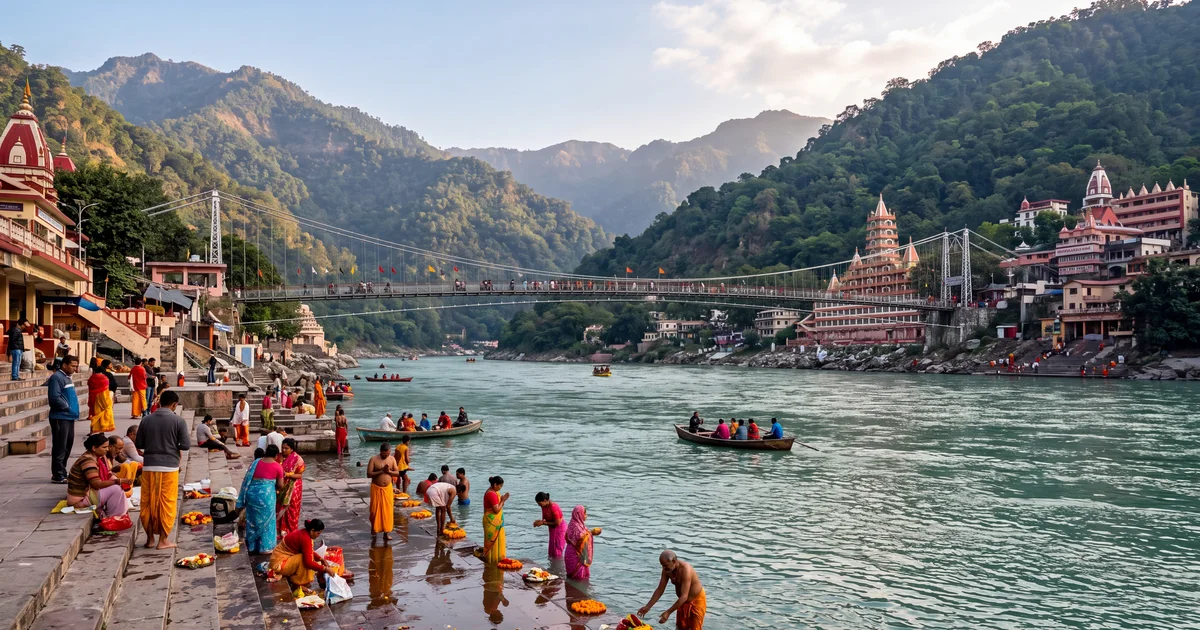
Rishikesh pulls in around 3 million visitors a year. Most of them see the same five things: Laxman Jhula, a rafting stretch, one cafe, one aarti, and the drive back to Delhi. That covers maybe 20% of what the town has to offer.
The places to visit in Rishikesh that stay with you are the ones that take a little more walking, or a slightly earlier alarm. A ghat where the only sound at 6 AM is water hitting stone. A trail to a waterfall that does not appear in the top 10 listicles. An ashram that still runs the schedule it had in 1968.
This is the list that includes those spots, along with the popular ones that earn their crowds. No fluff, no filler. If a place is skippable, it says so.
TL;DR
- Triveni Ghat and Parmarth Niketan for the evening aarti. Triveni is more local, Parmarth is more choreographed.
- Beatles Ashram (Chaurasi Kutia) is worth the 150 rupee entry. Go before 9 AM for empty corridors and better photos.
- Tapovan is where the cafes, yoga studios, and backpacker energy cluster. Budget a full afternoon here.
- Neer Garh waterfall is a 2 km walk from Laxman Jhula. Easy, short, and cold enough to wake you up in May.
- Skip the overcrowded Laxman Jhula crossing during weekends. Walk the new suspension bridge at Janaki Setu instead.
What Are the Must Visit Ghats in Rishikesh?
The ghats are the backbone of Rishikesh. Everything else arranges itself around them.
Triveni Ghat sits at the confluence of three channels of the Ganges. The evening Ganga Aarti starts at 6 PM in winter and 7 PM in summer. Arrive 20 minutes early to get a spot on the steps. This aarti is less theatrical than the one at Parmarth Niketan. Fewer cameras. More locals sitting cross legged with oil lamps. The water is cold even in May (the Ganges at Rishikesh stays between 12°C and 18°C year round), but plenty of people take a dip at the ghat before the ceremony begins.
Parmarth Niketan Ghat is the larger, more organised version. The ashram behind it is one of the biggest in Rishikesh, with over 1,000 rooms. Their aarti involves chanting, synchronised lamps, and a procession that makes for a good photograph. Tourists tend to prefer Parmarth. Locals tend to prefer Triveni. Neither is wrong.
Ram Jhula Ghat is less of a destination and more of a transit point, but the view from here at sunrise is worth setting an alarm. The water catches the light between the two bridges, and the entire hillside of Swarg Ashram reflects orange for about 15 minutes. Most people only see it on their way to something else.
One caveat worth knowing: the ghats get packed during Kanwar Yatra in July and August. The town's population effectively doubles for weeks. If you are planning around that window, either time your visit before Yatra begins or accept that the atmosphere will be festival mode, not meditative mode.
Is the Beatles Ashram Still Worth Visiting in 2026?
Yes, but the reason has changed.
Chaurasi Kutia (officially Maharishi Mahesh Yogi's ashram) was where the Beatles spent weeks in 1968, meditating and writing much of the White Album. The ashram was abandoned for decades, and local graffiti artists covered every wall with murals. In 2015, it reopened as a paid attraction. Entry is 150 rupees for Indians, 600 for foreigners.
The meditation cells are small stone rooms, maybe 3 metres across, with domed ceilings. Each one is painted inside with murals ranging from stunning to average. The best graffiti work is in the cells closest to the amphitheatre, about 200 metres past the entrance gate. The amphitheatre itself (a circular concrete structure overlooking the forest canopy) is the most photographed spot.
Go before 9 AM. By 10, the courtyard fills with tour groups and the narrow corridors feel cramped. Early morning light also makes the graffiti colours pop in ways afternoon light cannot. The forest around the ashram is Sal woodland (the real kind, not manicured), and you will hear langurs crashing through branches overhead.
My take: the ashram is more interesting as an art installation and a walk through quiet forest than as a Beatles pilgrimage. If you are expecting preserved 1960s artefacts, you will be disappointed. If you want a peaceful hour in a strange, beautiful ruin, it delivers.
Where Should You Eat and Hang Out in Tapovan?
Tapovan is the neighbourhood above Laxman Jhula, on the east bank of the Ganges. It is where most backpackers, yoga students, and digital nomads end up. The entire stretch from the bridge up to the main road is lined with cafes, juice bars, yoga studios, and small guesthouses.
Cafe culture. The cafes here run on banana pancakes, Israeli food, and filter coffee. Little Buddha Cafe has been around for years and still gets the basics right: good hummus, a river view from the terrace, and reliable wifi. Freedom Cafe, a 3 minute walk further uphill, is newer and quieter, with a better menu for breakfast (shakshuka, fresh juices, sourdough toast). Expect to spend 250 to 500 rupees per meal.
Tapovan is also where the serious yoga scene lives. Rishikesh has over 300 registered yoga schools, and the concentration is highest here. Drop in classes typically cost 500 to 800 rupees. Multi week teacher training courses run from 20,000 to over 1,50,000 rupees depending on the school and certification.
One thing to know: Tapovan's roads are narrow, steep, and shared with scooters. If you are carrying a large backpack, take an auto to the top of the road and walk down rather than trying to climb up from the bridge.
The nightlife question comes up often. Rishikesh is officially a dry town. No bars, no alcohol sold in shops. Some cafes quietly serve beer under the table, but the town's character after dark is more chai and conversation than anything else. If you want a drink with dinner, buy it in Haridwar (20 km) or Dehradun (45 km) before arriving.
What Is There to Do Beyond Rafting and Yoga?
Rafting dominates the Rishikesh itinerary, but the town has more going on.
Neer Garh Waterfall. A 2 km walk from the Laxman Jhula area, mostly uphill on a paved path. The waterfall has three tiers, and the pool at the base is deep enough for a swim in warmer months (March to June). Entry costs 35 rupees. Get there before 10 AM to avoid the selfie congestion. The trail is easy enough for anyone who can walk uphill for 20 minutes, but slippery in monsoon.
Rajaji National Park. The park boundary starts just 8 km from Rishikesh town. Morning safaris from Chilla range (the closest gate) offer sightings of Asian elephants, deer, and occasionally leopards. A jeep safari for up to 6 people costs around 750 to 1,500 rupees for a 3 hour run. Book through the forest department office in Rishikesh at least a day in advance. The best months for wildlife are February to April when vegetation thins and animals cluster near water sources.
Neelkanth Mahadev Temple. Perched 1,330 metres above sea level, about 30 km by road from Rishikesh. The drive is on a narrow hill road through dense forest. The temple itself is a Shiva shrine with a natural spring flowing from the idol. The drive takes about an hour each way. Most visitors combine it with a half day trip. Skip it on weekends in peak season because the road becomes a single lane queue of cars and autos that can double your travel time.
Jumpin Heights bungee. India's highest commercial bungee jump, at 83 metres, operates on the outskirts near Mohan Chatti. A single jump costs around 3,550 rupees. They also run a giant swing and a flying fox. The facility runs regular safety audits and the equipment is ASTM certified. Advance booking is required, especially on weekends.
If you are spending 3 or more days, a short trek to Kunjapuri Temple (a sunrise point at 1,645 metres) is worth the early start. The drive to the trailhead takes about 45 minutes from Rishikesh, and the walk up is 20 minutes on stone steps. On a clear morning, you can see Chaukhamba, Bandarpunch, and the Gangotri group from the top.
How Do You Get Around Rishikesh Without Wasting Time?
Rishikesh is not one place. It is three loosely connected zones, and getting between them is less straightforward than the map suggests.
Rishikesh town (the bus stand, railway link, and market area) is the functional hub. This is where state buses drop you and where most budget hotels sit. It has no real tourist sights of its own.
Ram Jhula and Swarg Ashram sit 3 km north of town. The two bridges (Ram Jhula and the adjacent Janaki Setu) connect the east and west banks. Swarg Ashram on the east bank has temples, small shops, and a quieter ghat experience than Tapovan.
Laxman Jhula and Tapovan are another 2 km further north. This is the backpacker zone: cafes, yoga, Beatles Ashram. The old Laxman Jhula bridge was closed to pedestrians for structural reasons and a new bridge replaced it in 2022. The approach roads remain narrow and crowded.
Getting between zones: shared autos (called vikrams) run continuously from the bus stand to both bridge areas for 10 to 20 rupees. Private autos charge 100 to 200 depending on the distance and your negotiation skills. Scooter rentals are available at 300 to 500 per day, but the roads between Laxman Jhula and Tapovan are steep and traffic is chaotic. Walking between Ram Jhula and Laxman Jhula along the east bank takes about 25 minutes and is the most pleasant way to move.
One practical tip: if you arrive by bus at the main ISBT, do not try to walk to Laxman Jhula. It is 5 km with no proper sidewalk for much of it. Take a shared auto and save your energy for walking the ghats.
Which Places in Rishikesh Can You Skip?
Not everything in the guidebooks deserves your time.
The Tera Manzil Temple (13 storey temple near Laxman Jhula) looks striking from outside. Inside, each floor is a small shrine that takes 2 minutes to see. The staircase is narrow, the floors echo with loudspeaker bhajans, and the view from the top is partially blocked. You get a better view of the Ganges from the bridge itself. Walk past it, photograph the exterior, and move on.
Vashishta Cave. Listed in every Rishikesh guide as a "hidden gem." It is a tiny cave on the riverbank, roughly 25 km upstream. The drive takes 40 minutes on a poor road. The cave itself is a 2 metre opening that you enter, sit in for a minute, and leave. Unless you are specifically interested in the meditation history (Vashishta is one of the seven rishis in Hindu tradition), the travel time does not justify the visit.
Rishikund. A sacred pool near Raghunath Temple in the main town area. It has historical significance, but in practice it is a small tank with algae covered walls that takes 5 minutes to see. Fine if you are already nearby. Not worth a dedicated trip.
What is worth your time instead: spend the hours you saved at Parmarth Niketan's morning yoga session (free, 5:30 AM), or walk along the east bank path between Ram Jhula and Laxman Jhula, which passes through forest with monkeys and occasional river access points.
What Should You Know Before Planning a Rishikesh Trip?
A few things that guidebooks rarely mention.
The Ganges current is strong. Even at the ghats, the undertow can surprise you. Do not swim beyond waist depth unless you are a confident swimmer. Every year, incidents happen because visitors underestimate the current, especially post monsoon when the water looks calm but moves fast.
Monkeys are everywhere and they are bold. Langurs (grey, long tailed) are generally calm. Rhesus macaques (brown, smaller) will grab food, glasses, phones, and anything shiny out of your hands. Do not eat openly near Laxman Jhula. Keep bags zipped. This is not a joke warning; macaque bites require a hospital visit and rabies shots.
Altitude and weather. Rishikesh sits at just 372 metres above sea level. It gets genuinely hot from April to June (40°C+ on some days). Winter mornings (December to February) drop to 4 to 7°C near the river. Pack accordingly. The post monsoon window (September to November) has the best combination of moderate heat, clear skies, and active rafting.
Connectivity. 4G coverage is solid in the town and Tapovan areas. It drops to spotty 3G near Neelkanth and Rajaji National Park. Most cafes in Tapovan have wifi, but speeds are inconsistent. If you are working remotely, test the connection before committing to a longer stay.
For group trips that cover rafting, camping, and the main sightseeing in one package, compare options and prices on TripzSearch. Fixed departure trips from Delhi are the most common format, and you can filter by dates, group size, and what is included.
Where to Stay: Zones and What They Suit
Choosing the right zone matters more than choosing the right hotel.
Tapovan. Best for backpackers, yoga students, and solo travellers. The highest density of cafes, yoga studios, and budget guesthouses (800 to 2,000 per night). The walk down to the river is steep. Noise levels are low at night because of the alcohol ban.
Swarg Ashram and Ram Jhula area. Quieter than Tapovan. More ashram accommodation and mid range hotels (1,500 to 4,000 per night). Closer to Triveni Ghat and the evening aarti. Better for couples and families who want a less backpacker vibe.
Shivpuri Road (upstream, 15 km from town). This is where the riverside camps are. If you are coming primarily for rafting and camping, many operators set up here. You will be away from the cafe and temple scene, but right on the river.
Rishikesh town proper. The cheapest zone, but it has no tourist atmosphere. Useful if you are arriving late at night and need a bed near the bus stand, or if you want to save money and auto in to the bridge areas each morning.
For a 2 day trip, Tapovan or Swarg Ashram puts you closest to the most things. For a rafting focused trip, Shivpuri Road is the practical choice. Browse curated destinations and itineraries for Rishikesh on TripzSearch to see what different operators include in their packages.
Frequently asked questions
- How many days are enough for Rishikesh?
- Two full days cover the main ghats, one rafting session, and enough time to walk Tapovan. Three days let you add a day trip to Neelkanth Mahadev or a short trek to Neer Garh waterfall without feeling rushed. Most weekend visitors from Delhi arrive Friday night and leave Sunday evening.
- What is the best time to visit Rishikesh?
- September to November and February to May are the best windows. Monsoon from mid June to September shuts rafting and makes trails slippery. December and January are clear but cold, with morning temperatures near 5°C along the river.
- Is Rishikesh safe for solo female travellers?
- Tapovan and Laxman Jhula areas are well lit and busy with backpackers year round. Stick to established cafes and ashrams after dark. Group trips add a safety layer since logistics, guides, and accommodation are pre vetted.
- What is the entry fee for Rishikesh attractions?
- Most ghats, temples, and the Ram Jhula area are free to visit. Beatles Ashram (Chaurasi Kutia) charges 150 rupees for Indian nationals and 600 for foreign visitors. Rajaji National Park safari permits start at around 750 rupees per jeep.
- Can I visit Rishikesh without doing rafting?
- Absolutely. Many visitors come for yoga, temple walks, and the cafe culture in Tapovan. The ghats, the Beatles Ashram, and the evening Ganga Aarti at Triveni Ghat are worth the trip on their own. Rafting is an add on, not a requirement.
- How do I reach Rishikesh from Delhi?
- Rishikesh is about 240 km from Delhi, roughly 5 to 6 hours by road via Haridwar. Buses run from Kashmere Gate ISBT. The nearest railway station is Haridwar (20 km), and Jolly Grant airport in Dehradun is 35 km away.