Best Places to Visit in Rameshwaram (2026): Temples, Beaches and the Pamban Bridge
Places to visit in Rameshwaram, from the Ramanathaswamy corridor to Dhanushkodi ghost town, with honest notes on timing, days needed and getting there.
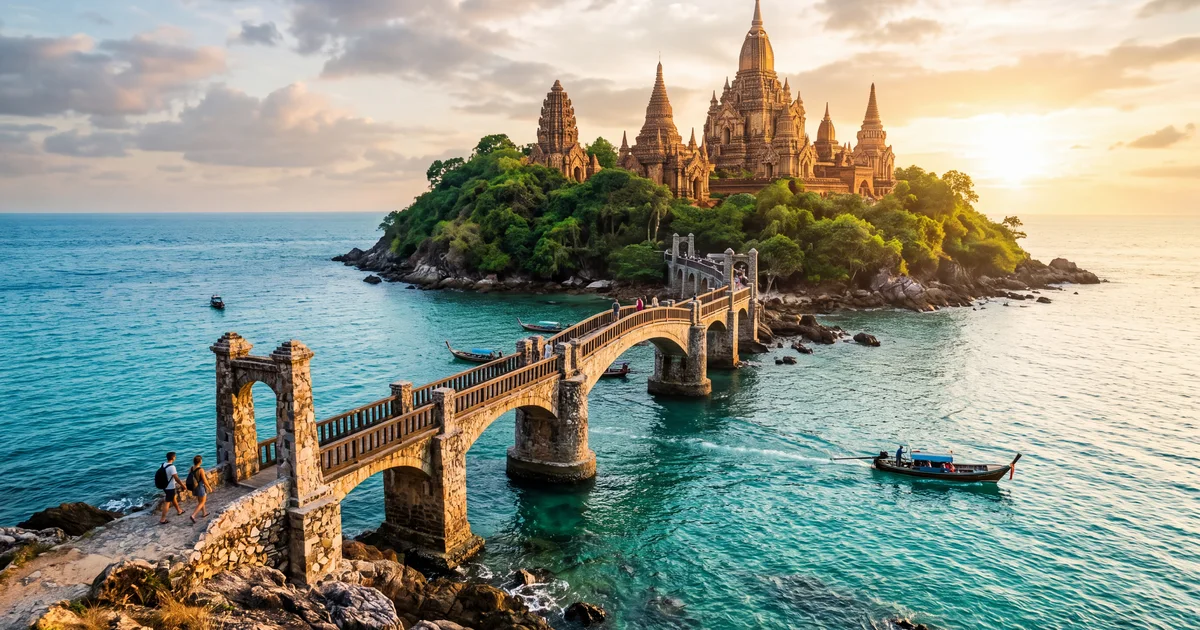
Rameshwaram sits on Pamban Island in the Gulf of Mannar, connected to mainland Tamil Nadu by a railway bridge that is over 100 years old. The town runs on two things: the Ramanathaswamy Temple and the sea around it. Most places to visit in Rameshwaram cluster within 15 km of the temple, and Dhanushkodi, the ghost town at the island's eastern tip, is another 18 km past that.
It is one of those rare Indian towns where the attractions fit into two days without rushing. Three if you want to slow down.
TL;DR
- The Ramanathaswamy Temple corridor is the main draw. Go before 6am to avoid the 2 hour queues.
- Dhanushkodi is worth the drive but only if you have a full morning for it. The road is sandy and gets impassable after heavy rain.
- The Pamban Bridge crossing by train is free and unforgettable. Check train timings at the station the day before.
- October to March is the best season. April and May are brutal.
- For group trips and current pricing, browse trips on TripzSearch or filter by Chennai departures.
Ramanathaswamy Temple
The temple is why Rameshwaram exists. Built across centuries, the current structure has the longest corridor of any Hindu temple in India: over 1,200 pillared columns running 197 metres on the inner corridor alone. Walking through it at 5am, before the tourist buses arrive, is one of the most atmospheric experiences in South India. Quiet. Cool stone underfoot. Columns that repeat until they vanish.
The 22 theerthams (sacred wells) inside the temple complex are a specific draw for pilgrims. The ritual bath involves moving from well to well, each with water that ranges from sweet to slightly brackish. Even if you skip the ritual, watching the procession is worth 30 minutes. The queue for darshan can stretch past 2 hours by 9am on weekends and festival days. The temple opens at 5am. Go then.
One caveat worth knowing: photography is not allowed inside the inner sanctum, and phone enforcement is strict. The corridor itself is fair game.
Dhanushkodi: the ghost town at the tip
Dhanushkodi was a functioning town until 1964, when Cyclone Pamban destroyed it entirely. What remains are ruins of a railway station, a church, and a few buildings half buried in sand, sitting at the exact point where the Bay of Bengal meets the Indian Ocean. The water colour changes visibly. It is eerie, beautiful, and completely exposed to the sun.
The drive from Rameshwaram town is 18 km on a road that alternates between paved stretches and loose sand. Most visitors take a shared jeep or auto from near the temple (around 150 to 300 rupees per person depending on bargaining and the vehicle). Your own car works until the last 3 km, where 4WD helps.
Arrive before 8am. There is no shade at Dhanushkodi, no reliable food stalls, and no drinking water once you pass the last checkpoint. By 11am the sand reflects enough heat to make standing still uncomfortable. Carry at least 2 litres of water per person.
The ruins are not maintained or fenced. You can walk through the old station, stand where the railway track ended, and look across the strait toward Sri Lanka, roughly 30 km away. On clear mornings, you can see the water shimmer differently on both sides of the sand spit.
How many days do you actually need in Rameshwaram?
Two days and two nights is the honest minimum.
Day one: arrive, settle in, visit the Ramanathaswamy Temple at 5am or in the evening, walk Agni Theertham beach at sunset. Day two: Dhanushkodi in the morning (leave by 6am), APJ Abdul Kalam Memorial after lunch, Pamban Bridge viewpoint or a train crossing in the late afternoon.
One day works if you arrive the night before, start at 5am, and skip Dhanushkodi entirely. You will cover the temple, the beach, and the memorial. That is enough for a pilgrim visit but not for someone who wants to understand the island.
Three days lets you add a boat ride to the coral reefs, a morning at Gandhamadhana Parvatham, and enough slack to sit on Agni Theertham beach without checking the time.
The Pamban Bridge
The Pamban Bridge connects Rameshwaram island to mainland India across the Palk Strait. The railway bridge, opened in 1914, was India's first sea bridge and still operates: trains cross it slowly, the bascule section opens for ships, and the views from the carriage window are open ocean on both sides.
The best way to experience it is to take the train across. Sit on the right side heading toward the mainland. The crossing itself takes about 10 minutes. If you are driving, the road bridge runs parallel and the view from there is good but not the same.
Sunset at the Pamban Bridge viewpoint, a small platform on the island side, is the most photographed scene in Rameshwaram. Get there 30 minutes before sunset. It fills up.
One practical note: the bridge section occasionally closes for maintenance without much advance notice. If you are planning your trip around a train crossing, confirm timings at the Rameshwaram station the day you arrive.
Agni Theertham
Agni Theertham is the beach directly in front of the Ramanathaswamy Temple, on the eastern side. It is both a bathing ghat and a stretch of sand, and the water is surprisingly calm for a sea facing the Bay of Bengal. Pilgrims bathe here before entering the temple, so mornings are busy.
For a non-ritual visit, go at 5:30pm. The light turns golden, the crowd thins, and you can walk the shoreline south without bumping into anyone. The beach itself is narrow, roughly 200 metres of clean sand before it turns rocky.
Swimming here is not recommended. The current pulls toward the open sea and there are no lifeguards. Wade in waist deep at most.
What is the best time to visit Rameshwaram?
October to March. That is it.
Rameshwaram is coastal Tamil Nadu, which means it is warm year round but the difference between seasons is real. October to February brings temperatures between 24 and 30 degrees, lower humidity, and calm seas. January is the coolest month. You can walk Dhanushkodi at 9am and still feel comfortable.
April and May are punishing. Temperatures cross 38 degrees regularly, the sand at Dhanushkodi becomes untouchable by 10am, and the temple's stone corridors store heat all day. If you must visit in summer, restrict outdoor time to before 7am and after 5pm.
The northeast monsoon hits from mid November to December. It brings short, heavy downpours that can flood the Dhanushkodi road for hours. The temple stays open. The town functions. But outdoor plans become unreliable.
My honest opinion: January is the single best month. Cool enough for Dhanushkodi, clear enough for the bridge sunset, and the temple queues are shorter than the Pongal rush that comes in mid January.
APJ Abdul Kalam Memorial and House
Dr. Kalam was born in Rameshwaram in 1931, in a small house on Mosque Street. The house is now a museum displaying his personal belongings, photographs, and the fishing boat his father used. It takes about 20 minutes. The memorial, a larger building near the centre of town, documents his career from ISRO to the presidency. Allow 45 minutes.
Neither is architecturally remarkable. What makes them worth a stop is the scale. A president of India grew up here, in a town this small, with a fishing boat in the courtyard. The exhibits are modest. The contrast is not.
Gandhamadhana Parvatham
This is a small hillock, the highest point on Pamban Island, about 3 km northwest of the temple. It holds a shrine with a set of footprints attributed to Rama. The view from the top is the point: you can see the sea on both sides, the temple towers rising above the town, and on clear days, the Pamban Bridge in the distance.
The climb is short, under 10 minutes. Wear shoes; the steps are uneven and can be slippery after rain. The hillock does not justify a special trip, but if you are passing by on the way to or from the bus stand, stop for 15 minutes.
Getting to Rameshwaram from Chennai and Bangalore
From Chennai, the overnight train is the most practical option. The Rameshwaram Express runs daily, takes about 12 hours, and drops you within walking distance of the temple. Buses via Madurai take 10 to 12 hours with a change at Madurai Mattuthavani.
From Bangalore, the journey is longer. Trains take 14 to 16 hours with most routes going through Madurai. Buses run 12 to 14 hours overnight. Driving is roughly 570 km via NH44 and NH49, manageable in a day if you leave before 5am and do not mind arriving at night.
The nearest airport is Madurai (170 km). A taxi from Madurai to Rameshwaram takes about 3 to 4 hours and costs between 2,500 and 3,500 rupees for a sedan.
There is no airport on the island and no Vande Bharat service yet. The Pamban Bridge is the only land connection.
Group departures from Chennai and Bangalore run year round and typically cover Rameshwaram and Madurai in a 3 to 4 day loop. Check current departures on TripzSearch for options and pricing.
Beyond the main list
Villoondi Theertham is a freshwater spring that emerges from the sea about 7 km from the temple. At low tide, you can see fresh water bubbling up through the sand while saltwater surrounds it. At high tide, it disappears. Check tide timings or ask at your hotel; going at the wrong time means seeing nothing.
Water Bird Sanctuary at the southern edge of the island attracts flamingos, herons, and painted storks between November and February. It is not a formal park with entry gates. You drive to a backwater stretch, park, and watch. Bring binoculars.
Annai Indira Gandhi Road Bridge is the newer road bridge parallel to the old Pamban Bridge, opened in 1988. It is functional, not scenic, but if you want a photograph of the old railway bridge from the side, the midpoint of this bridge is the spot.
For a broader look at destinations along this coast, see the destinations page on TripzSearch. If you are combining Rameshwaram with a larger South India loop, Chennai departures often include Madurai, Kanyakumari, and Rameshwaram in one circuit.
Frequently asked questions
- How many days are enough for Rameshwaram?
- Two full days cover the main places comfortably. Day one for the Ramanathaswamy Temple corridor, the Agni Theertham beach and a sunset at Pamban Bridge. Day two for Dhanushkodi, the APJ Abdul Kalam Memorial, and any leftover temples. One day is tight but works if you start before 5am and skip Dhanushkodi.
- What is the best time to visit Rameshwaram?
- October to March is the most comfortable window. Temperatures stay between 24 and 30 degrees Celsius, the sea is calmer, and the temple is less humid. April and May are scorching, regularly crossing 38 degrees. The monsoon months of November and December bring heavy rain that can strand vehicles on the Dhanushkodi road.
- Is Rameshwaram safe for solo female travellers?
- Yes. Rameshwaram is a small temple town with low crime rates and a constant flow of pilgrims year round. The main temple area and Agni Theertham stay busy until late evening. Solo women should be cautious on the Dhanushkodi stretch after dark since it is isolated with no permanent settlements or lighting.
- How do I reach Rameshwaram from Bangalore?
- The fastest route is the overnight train from Bangalore to Rameshwaram, roughly 14 to 16 hours via Madurai. Buses take about 12 to 14 hours via NH44 and NH49. Driving is roughly 570 km. The nearest airport is Madurai (170 km), with connecting buses and taxis to Rameshwaram taking another 3 to 4 hours.
- Can I visit Rameshwaram and Kanyakumari together?
- Yes, but plan at least 4 days total. Kanyakumari is about 310 km south of Rameshwaram, roughly 5 to 6 hours by road. Most travellers do 2 days in Rameshwaram, drive to Kanyakumari, and spend 1 to 2 days there. Trying both in a single weekend feels like a bus tour, not a trip.