Best Places to Visit in Ooty (2026): Nilgiris Beyond the Botanical Garden
Practical guide to the best places to visit in Ooty in 2026, covering viewpoints, tea estates, treks and what most tourists waste time on.
Ooty has been a hill station since the British made it their summer headquarters in the 1820s. Two hundred years later, it still draws the same crowd for the same reason: it is cooler than the plains below. The Nilgiri Hills sit between 2,000 and 2,600 metres, which means temperatures stay between 10°C and 25°C year round while Bangalore, Coimbatore, and Chennai bake through 35°C+ summers.
The places to visit in Ooty divide into two categories. There is the town itself, with its botanical garden, lake, and commercial bazaar, which gets 3.5 million visitors a year and feels like it on any weekend between April and June. Then there is everything around the town, including the tea estates, shola grasslands, Nilgiri Mountain Railway, and villages like Coonoor and Kotagiri, which most day trippers never reach because they spend all their time stuck in traffic on the main road.
This guide covers both, with clear priorities on what is worth your time and what is not.
TL;DR
- Doddabetta Peak, the Nilgiri Mountain Railway, and the tea estates between Coonoor and Ooty are the highlights.
- Ooty Botanical Garden is fine but not the reason to visit. The town centre is crowded and commercial.
- Best time: October to November for green hills and thin crowds. April to June for clear weather but peak prices.
- Budget: 1,500 to 3,500 per person per day depending on stay and transport.
- Getting there from Bangalore: 6 to 7 hours by road via Mysore and Bandipur.
What Are the Must See Places in Ooty Town?
Start with what is close, then expand outward.
Doddabetta Peak is the highest point in the Nilgiris at 2,637 metres and sits 10 km from Ooty town. On a clear morning (arrive before 8 AM), you can see the plains stretching toward Coimbatore in one direction and the layered hills toward Coonoor in the other. The telescope house at the top charges 10 rupees and gives magnified views, though it is often fogged over by 10 AM. The drive up takes 20 minutes from the town centre. Go early or do not bother.
Ooty Botanical Garden covers 22 hectares and was laid out in 1848. The terraced lawns, the 20 million year old fossilized tree trunk, and the fern house are the highlights. April and May bring the annual flower show, which is when the garden justifies its reputation. Outside that window, it is pleasant for a 60 to 90 minute walk but not a destination in itself. Entry is 30 rupees for adults.
Ooty Lake is artificial, built in 1824 by John Sullivan, the first Collector of the Nilgiris. The boating operation here is the most popular activity in town, which means 45 minute queues on weekends and holidays. The lake itself is not particularly scenic; the surrounding hills make it look better in photos than it feels up close. The water has a greenish tint from algae. If you want to boat in the Nilgiris, Pykara Lake (30 km away) is a better option with cleaner water and far fewer people.
One honest caveat: Ooty town on a Saturday in May is not a pleasant experience. The main road gridlocks from 10 AM onward, the lake area is packed shoulder to shoulder, and every restaurant has a 30 minute wait. If your trip falls on a weekend during peak season, plan to spend most of your time outside the town.
Is the Nilgiri Mountain Railway Worth the Ticket?
It is, but only if you understand what you are getting.
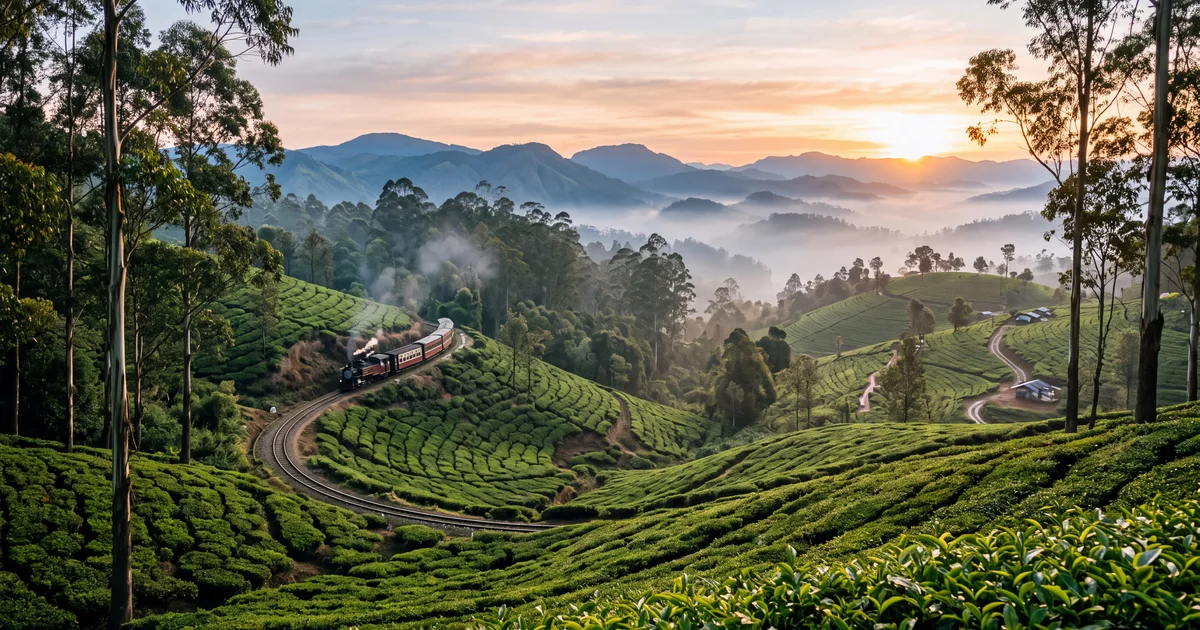
The Nilgiri Mountain Railway is a UNESCO World Heritage Site and one of the steepest rack railways in the world. The full route runs from Mettupalayam (at the base of the hills) to Ooty via Coonoor, climbing from 326 metres to 2,203 metres over 46 km. The journey takes about 5 hours. The train chugs through 16 tunnels and 250 bridges, with the steepest gradient at 1 in 12.28.
The section between Mettupalayam and Coonoor is the scenic half. You pass through dense forests, over viaducts with valley views, and through tea plantations. The Coonoor to Ooty section is quieter but less dramatic. Most people take the full route upward and return by road, which is faster.
Booking matters. First class tickets sell out 30 to 60 days in advance during peak season. Second class is unreserved and gets crowded. Book through IRCTC the moment the window opens. The train runs one daily service in each direction (departs Mettupalayam at 7:10 AM, departs Ooty at 2 PM).
My take: the toy train is one of those experiences that is better than it sounds on paper. The pace forces you to slow down, the views from the open windows are earned, not available from any road (no vehicle access to many of the vantage points), and the steam locomotive adds a texture to the experience that a bus on the same route cannot match.
Which Tea Estates and Viewpoints Are Worth Visiting?
The tea estates between Coonoor and Ooty are, for many visitors, the best part of the trip. The Nilgiris produce some of India's finest tea and the landscape reflects it: rolling green carpets cut by narrow red dirt paths, with eucalyptus and silver oak trees breaking the horizon.
Tea Factory Visit (Coonoor): Several estates around Coonoor offer factory tours where you can see the withering, rolling, fermenting, and drying stages. The Highfield Tea Factory on the road to Kotagiri is one of the better run ones. Tours take 30 to 40 minutes and cost 20 to 50 rupees. The tea sold at the factory shop is fresher and cheaper than what you will find in Ooty's bazaar.
Lamb's Rock is a viewpoint 8 km from Coonoor, perched at the edge of a cliff with views of the Coimbatore plains and the Catherine Falls gorge. It is not heavily developed, which is part of its appeal. A small tea stall at the top serves adequate tea. Go before noon for clear views. The afternoon cloud cover rolls in fast at this altitude.
Dolphin's Nose is another Coonoor viewpoint, 12 km from town, shaped like a dolphin's snout jutting out over a valley. The views of Catherine Falls (the highest waterfall in the Nilgiris at 76 metres) from here are the best you will get without a trek. The road to Dolphin's Nose is narrow and winding; allow 40 minutes from Coonoor.
Sim's Park (Coonoor) is a 12 hectare botanical garden that most visitors prefer to Ooty's version because it is smaller, less crowded, and better maintained. The Japanese garden section and the collection of over 1,000 plant species make it a genuine 60 minute stop rather than a checkbox.
Skip the "viewpoints" along the Ooty to Coonoor highway that appear on every Google Maps list. Most are just roadside pulloffs with a railing and a chai stall. The views are decent but not worth building your day around.
What About Pykara, Avalanche Lake and the Surrounding Areas?
The areas beyond Ooty town hold the quieter, less packaged version of the Nilgiris.
Pykara Lake and Falls sit 20 km from Ooty on the road toward Mudumalai. The lake is a reservoir with boating operated by the Tamil Nadu Tourism Development Corporation. Unlike Ooty Lake, the water here is clean and the surroundings are forested. The falls are a short walk from the boating point and flow best between August and December. This makes a good half day trip.
Avalanche Lake is 28 km from Ooty and requires a permit from the forest department (available at the Ooty forest office or sometimes at the gate). The lake sits in a valley surrounded by shola grasslands and pine forests. Trout fishing is permitted here with a licence. The drive to Avalanche passes through some of the most photogenic landscape in the Nilgiris: rolling hills, cloud shadows, and almost no other vehicles on weekdays. The catch is that the road is rough for the last 10 km, and the permit process can be unpredictable. Call the forest office before going.
Pine Forests (Thalakunda) are 5 km from Ooty on the way to the Shooting Point area. Tall columns of pine trees planted during the colonial era create a cathedral like canopy. The light filtering through the trees in the early morning is the visual payoff. This is a 30 minute stop unless you want to walk the trails deeper into the forest.
Mudumalai National Park borders Ooty to the northwest and is part of the Nilgiri Biosphere Reserve. It connects with Bandipur (Karnataka side) and Wayanad (Kerala side) to form one of the largest wildlife corridors in southern India. Elephant sightings are common on the park road, especially during early morning and late afternoon drives. A safari from the Theppakadu reception centre costs 150 to 350 rupees per person. The park is closed during parts of the monsoon (June to September varies yearly).
How to Plan an Ooty Trip from Bangalore
The Bangalore to Ooty route is 270 km and most people drive or take a bus. Here is what works.
By road: The most scenic route is Bangalore to Mysore (140 km, NH275, about 3 hours) and then Mysore to Ooty via Bandipur and Gudalur (130 km, about 3 to 4 hours). The Bandipur stretch closes to commercial traffic between 9 PM and 6 AM, so time your journey to clear it during daylight. You might spot elephants and deer along this section.
By bus: KSRTC runs direct Volvo sleeper and semi sleeper buses from Bangalore to Ooty. Overnight departures (around 10 PM to 11 PM) arrive by 5 AM to 6 AM. One way tickets cost 800 to 1,500 depending on the bus type. Book on the KSRTC website or through redBus.
By train and toy train combo: Take an overnight train from Bangalore to Mettupalayam (several options, 7 to 8 hours). From Mettupalayam, catch the Nilgiri Mountain Railway at 7:10 AM to reach Ooty by noon. This is the most scenic route but requires careful timetable alignment. A missed connection means a 3 hour taxi ride up the ghat road.
For a trip from Bangalore with the logistics sorted, check group departures on TripzSearch. Many operators bundle the Bangalore pickup, Bandipur safari, and 2 nights in Ooty into a single package. If you are coming from Chennai, the route goes through Coimbatore (350 km, about 7 to 8 hours by road).
A 3 day itinerary that works:
Day 1: Arrive Ooty. Doddabetta Peak in the afternoon. Botanical Garden if interested. Evening walk around the bazaar for chocolates and tea.
Day 2: Day trip to Coonoor. Tea factory visit, Lamb's Rock, Dolphin's Nose, Sim's Park. Return to Ooty for dinner.
Day 3: Morning at Pykara Lake or drive to Avalanche Lake (with permit). Afternoon departure or toy train to Mettupalayam if heading south.
What to Eat and Buy in Ooty
The Nilgiris have a food identity that goes beyond what most tourist restaurants serve.
Local chocolate is the signature buy. Ooty's homemade chocolate industry dates back decades and the King Star and Moddy's brands are local staples. A kilogram of fruit and nut chocolate costs 400 to 600 rupees in the bazaar shops. Quality varies, so taste before buying in bulk.
Nilgiri tea is the other essential purchase. Buy from a factory outlet in Coonoor rather than the tourist shops in Ooty town. The price difference for the same grade can be 30% to 40% lower at the source.
For food, the bakeries along Commercial Road sell fresh bread, plum cakes, and cream horns that reflect Ooty's Anglo Indian and Badaga heritage. Adyar Ananda Bhavan and local vegetarian restaurants serve reliable South Indian meals for 100 to 200 rupees. For something different, the Savoy (IHCL) and Fernhills Palace have colonial era dining rooms with set menus in the 1,000 to 2,000 range.
Street food near the bus stand includes hot bajjis (fritters), corn on the cob, and masala chai for 10 to 20 rupees. The varkey (a flaky, mildly sweet biscuit from local bakeries) is a Nilgiris specialty that rarely makes it onto travel blogs.
Frequently asked questions
- How many days are enough for Ooty?
- Two to three days covers the main attractions comfortably. One day for Ooty town (Botanical Garden, Doddabetta, lake), one day for surrounding areas (tea estates, Pykara, Avalanche), and a half day buffer for the toy train or Coonoor. Less than 2 days feels rushed. More than 4 is unnecessary unless you are combining with Coonoor and Kotagiri.
- What is the best time to visit Ooty?
- October to June is the broad window. April to June is peak season with clear skies but heavy crowds and inflated hotel rates. September to November offers post monsoon greenery with thinner crowds. December to February brings fog and temperatures between 5°C and 15°C, which is part of the appeal if you want cold mornings and bonfire evenings.
- Is Ooty worth visiting in 2026 or is it too commercialized?
- The town centre is congested and commercial, that is true. But Ooty is more than the town centre. The surrounding Nilgiri hills, tea estates between Coonoor and Kotagiri, Avalanche Lake, and the shola forests remain beautiful and relatively uncrowded on weekdays. Visit Tuesday to Thursday if possible and stay outside the main bazaar area.
- How do you reach Ooty from Bangalore?
- The most common route is by road, roughly 270 km via Mysore and Bandipur, taking 6 to 7 hours by car or bus. KSRTC and private Volvo buses run overnight services. The nearest airport is Coimbatore (88 km, about 2.5 hours by taxi). The Nilgiri Mountain Railway from Mettupalayam to Ooty takes about 5 hours but only runs one service daily and tickets sell out weeks ahead.
- What should you skip in Ooty?
- Thread Garden is a small room of artificial flowers. Wax World and Thunder World are overpriced tourist traps with low production value. The Ooty Rose Garden is underwhelming outside April and May. The commercial boating on Ooty Lake is crowded and the water is not clean enough to enjoy. These are filler items that most itineraries include because they have nothing better.
- Is Ooty safe for solo travellers?
- Ooty is one of the safer hill stations in South India. The town is small, well connected, and has a steady police presence. Solo travellers, including women, generally report feeling comfortable. Avoid hiking alone in remote shola forests and stick to known trails if you are trekking without a guide.