Best Places to Visit in Mount Abu (2026): Temples, Lakes and Rajasthan's Only Hill Station
14 places to visit in Mount Abu in 2026 with tips on Dilwara temples, Nakki Lake and why this Rajasthan hill station works better in winter.
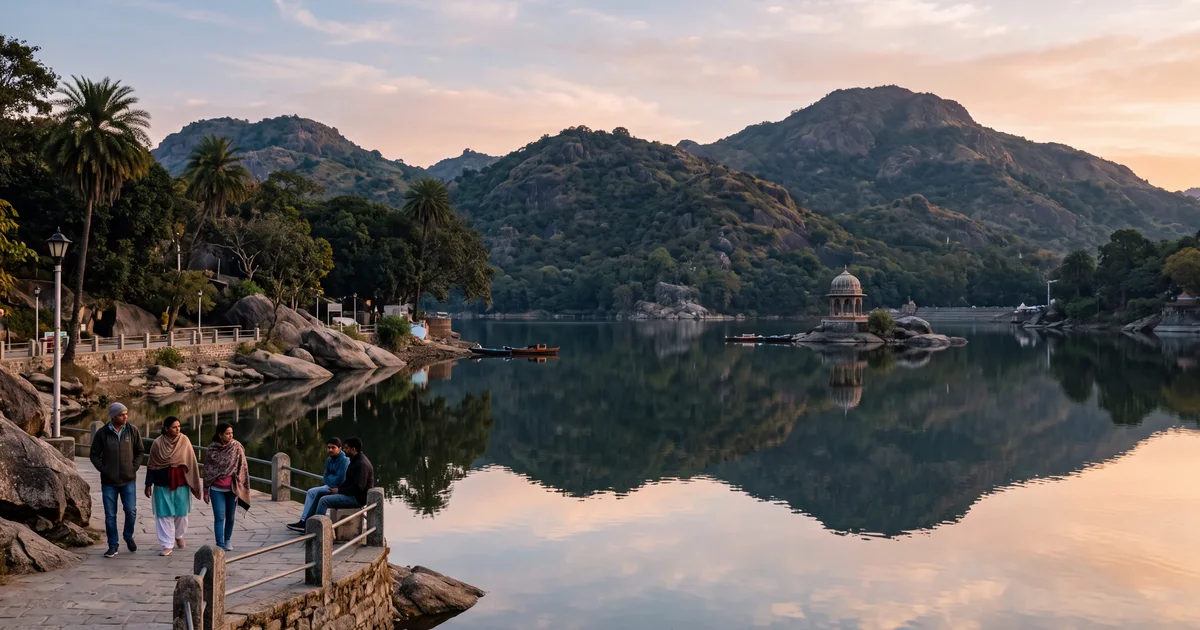
Mount Abu is Rajasthan's only hill station, sitting at about 1,220 metres in the Aravalli Range. While the rest of the state bakes at 40°C in April, Mount Abu manages 33°C. That might not sound like relief, but by Rajasthan standards, it is practically alpine.
The town lives on two reputations. First: the Dilwara Jain temples, which contain marble carving so precise that it makes you question whether human hands actually did the work (they did; it took 1,500 artisans and 14 years for just one of the five temples). Second: Nakki Lake, which every Ahmedabad and Jodhpur family has visited at least once and photographed from the same angle.
If places to visit in Mount Abu brought you here, this guide covers 14 spots with specific notes on timing, costs and what you can safely skip. The town is small enough to cover in two days, but three days lets you stop rushing and start seeing.
TL;DR
- Mount Abu is 28 km uphill from Abu Road railway station, in the Aravalli Range of southern Rajasthan.
- Best months: November to February for cool weather (12°C to 22°C) and clear mornings.
- Budget: 1,500 to 2,500 rupees per day for a decent hotel, three meals and local transport.
- Two days covers the essentials. Add a third if you want Trevor's Tank and a proper Dilwara visit without time pressure.
- Check group trips that include Mount Abu and Rajasthan circuits, or browse available destinations on TripzSearch.
Where is Mount Abu and how do you get there?
Mount Abu sits in the Sirohi district of southern Rajasthan, near the Gujarat border. It is the only settlement of any size in the Aravalli hills here, which is why it became a British era sanatorium and later a Rajput summer retreat.
Abu Road is the nearest railway station, 28 km below the town on the plains. Direct trains run from Delhi (Aravali Express, about 12 hours), Ahmedabad (5 hours), Jaipur (8 to 10 hours) and Jodhpur (5 hours). From Abu Road, shared taxis cost 50 to 100 rupees per seat and take 45 minutes on a winding ghat road. Private taxis run about 500 rupees.
If you are driving from Delhi, the NH48 route via Ajmer and Pali covers about 760 km (11 to 12 hours). From Udaipur, it is 165 km and 3.5 hours. The ghat road has 36 curves and is well maintained but narrow. Do not attempt it in fog without experience.
An entry fee of 100 rupees per person and 125 rupees per vehicle is collected at the ghat toll. Keep the receipt because some hotels ask for it.
Why are the Dilwara Temples Mount Abu's main attraction?
The Dilwara temples are a complex of five Jain temples built between the 11th and 13th centuries. They are widely considered the finest examples of Jain architecture in India. That is not tourist board exaggeration. The marble work inside Luna Vasahi and Vimal Vasahi defies logic.
Vimal Vasahi, the oldest, was commissioned in 1031 CE by Vimal Shah, a Solanki minister. The marble was quarried in Ambaji, 65 km away, and carried up the hill by elephant. The ceiling of the main hall has a lotus pendant carved from a single block of marble with layers so thin they appear translucent. No adhesive was used. Every joint is a precision fit.
Luna Vasahi, built in 1230 CE, ups the absurdity. Its marble lattice screens (jaalis) have holes less than 3 mm wide, carved by hand. The corridor surrounding the inner sanctum has 72 subsidiary shrines, each with its own carved figure and canopy. Jain temple artisans spent 14 years on this single building.
The temples are open noon to 6 PM for non Jain visitors. Jain devotees get the morning slot. Entry is free. No photography inside. Guides are available at the entrance for 200 to 300 rupees, and they are worth it because the details are easy to miss without context. Plan 90 minutes minimum.
One caveat: the noon opening means the complex fills up fast on weekends and holidays. Arrive at 12:15 PM, not 2 PM. Weekday visits are calmer.
Is Nakki Lake worth the hype?
Nakki Lake is a small artificial lake in the centre of Mount Abu town. Legend says it was dug by gods using their nails (nakh), which is a more interesting origin story than most lakes get. The actual history involves a natural depression that was dammed in the 14th century.
The lake is about 400 metres across and ringed by a paved path, boat rental counters and food stalls. Pedal boats cost 200 rupees for 30 minutes. Row boats cost 100 rupees. The Toad Rock formation on the south bank looks exactly like a toad if you squint, and nothing like one if you do not.
Is it worth visiting? Yes, once. The evening light between 4:30 PM and 6 PM turns the Aravalli backdrop gold and the water catches it well. The morning is quieter and better for walking the 1.2 km loop around the lake without dodging ice cream vendors.
The honest take: Nakki Lake is pleasant but small. If you have been to Dal Lake or Nainital, it will feel underwhelming by comparison. What makes it work is the context. This is a lake in the middle of Rajasthan's driest region. That alone makes it unusual.
What can you see at Guru Shikhar?
Guru Shikhar is the highest point in the Aravalli Range at 1,722 metres. It is also the highest point in Rajasthan, which matters more for the sign than the experience. The summit is 15 km from Mount Abu town and reachable by car. The last 300 metres require walking up steps to a small temple dedicated to Dattatreya.
The view from the top covers the plains on one side and the forested Aravallis on the other. On clear December mornings, you can see the brown Rajasthan flatlands extending 60 to 70 km in every direction. By noon, haze cuts visibility to half that.
The temple at the top is small and functional. The priest accepts donations but does not pressure you. Below the summit, the Mount Abu Observatory (Physical Research Laboratory) is occasionally open for visitors on Saturdays, though this schedule changes yearly. Check locally.
Drive up in the morning. The afternoon sun makes the steps unpleasant and the haze ruins the view. The whole visit takes 45 minutes to an hour including the drive.
Where is the best sunset view in Mount Abu?
Sunset Point is the default answer, and it is popular for a reason. The viewpoint sits on the western edge of town and looks across the Aravalli plains as the sun drops. During peak season (October to December), 300 to 500 people gather here every evening. Street vendors sell chai and popcorn. The atmosphere is more mela than meditation.
The sunset itself is good. The Aravallis catch the light in layers and the dry Rajasthan air produces the kind of warm orange that humid coastal sunsets cannot match. Get there by 4:30 PM in winter (the sun sets around 5:45 PM) to grab a spot on the upper rocks. The lower platform gets the crowds.
If you want solitude, Honeymoon Point (also called Anadra Point) is 2 km from Sunset Point and equally good for the same sunset with a fraction of the people. The view includes a valley that Sunset Point misses. The trade off: no chai vendors, no steps, and the path is rougher.
Is the Mount Abu Wildlife Sanctuary open to visitors?
The Mount Abu Wildlife Sanctuary covers 288 sq km of the Aravalli hills surrounding the town. It is home to leopards, sloth bears, sambhar deer and about 250 species of birds. The sanctuary was declared in 1960.
Day visitors can access Bailey's Walk (1.5 km, flat, easy) and the road to Trevor's Tank without special permission. Trevor's Tank is a small crocodile breeding spot about 5 km from town. You probably will not see crocodiles (they are shy and the tank is small), but the walk through dry deciduous forest is the best trail near Mount Abu. Langurs and Indian grey hornbills are common along the path.
Deeper entry into the sanctuary requires a forest department guide and prior permission from the DFO office in Mount Abu. This is primarily for birdwatchers and researchers. The leopard population is healthy but sightings are rare because the terrain is rocky and the cats are nocturnal.
The best wildlife route for casual visitors: drive to Trevor's Tank in the morning (leave by 7 AM) and walk the forest road. Return by the same route. Three hours, no permit needed, and your odds of seeing sambhar deer are better than 50 percent.
What is the Peace Park and who should visit?
The Brahma Kumaris Peace Park (also called the Om Shanti Bhawan campus) is 8 km from Mount Abu town. The Brahma Kumaris spiritual movement has its headquarters here, and the campus is massive. It spans 25 acres and includes meditation halls, gardens and a light and sound show.
The campus is free to enter. Guided tours run every hour and last about 45 minutes. The garden is well maintained and quiet compared to the town. Whether you find value in the spiritual talks depends on your disposition, but the campus itself is architecturally interesting and the hilltop location offers views the town centre lacks.
The light and sound show runs at 7 PM (timings may shift seasonally). It covers the movement's history through projected visuals on the building facade. The production quality is decent for a free show. If you have an evening without plans, it is a solid option.
Expect proselytizing. The guides are sincere and polite, but the organization is actively seeking members. A firm "no, thank you" is respected without awkwardness.
What should you eat in Mount Abu?
Mount Abu's food scene reflects its visitors: mostly Gujarati and Rajasthani families, plus Jain pilgrims. This means generous thalis, excellent dal bati churma and very little non vegetarian food.
Chacha Museum Restaurant on the main road serves a Rajasthani thali that runs to 15 items for about 250 rupees. The portion sizes assume you have not eaten since yesterday. Jodhpur Bhojanalaya near the bus stand is cheaper (150 rupees) and more local. Both use ghee without restraint.
For street food, the Nakki Lake road evening market is the place. Kulfi at Chandu Kulfi (operating since the 1990s) costs 40 rupees and uses real malai, not powder. Mirchi vada (fried chilli with potato filling) runs 20 rupees and is a Rajasthani specialty worth trying at least once.
Gujarati farsan (savoury snacks) appear in every other shop: dhokla, khandvi, fafda. The quality varies. The shops near the post office are better than the ones at the lake.
Coffee drinkers will struggle. This is chai territory. The best chai is from the stalls at Sunset Point, brewed with ginger and served in small glasses for 10 to 15 rupees.
How do you plan 2 days in Mount Abu?
Day 1
Arrive from Abu Road by 10 AM. Check in. Walk to Nakki Lake for a lap (1 hour including stops). Lunch at a thali restaurant in the main market. Afternoon: Dilwara Temples (arrive at 12:15 PM, spend 90 minutes). Drive to Sunset Point by 4:30 PM. Evening: Nakki Lake road street food for dinner.
Day 2
Morning: drive to Guru Shikhar (leave by 7:30 AM, 45 minutes at the top, return by 9:30 AM). Then drive to Trevor's Tank for a forest walk (2 hours including the drive). Lunch in town. Afternoon: Peace Park and Brahma Kumaris campus if interested, or a second Nakki Lake visit in softer light. Begin descent to Abu Road for a late afternoon train.
If you add a third day, use the morning for Honeymoon Point at sunrise, visit the Achalgarh Fort (12th century, 11 km from town, has a functioning Shiva temple and views), and keep the afternoon for shopping in the main market. Mount Abu has decent Rajasthani textiles and block printed fabrics at prices below Jaipur's tourist markup.
What can you skip in Mount Abu?
Some attractions in every Mount Abu guide are more filler than substance. Here is what you can safely drop:
The Sunset Point horse ride (300 rupees for 10 minutes on a tired horse along a dusty trail) adds nothing to the sunset experience. Save the money for kulfi.
The Adhar Devi Temple requires climbing 365 steps through a cave entrance. The temple is small and the experience is more about the climb than the destination. Worth it if you enjoy stair climbing. Skip it if your knees say no.
The various "points" (Crick Point, Bailey Point, etc.) are colonial era viewpoints that differ from each other only in the direction they face. Sunset Point and Honeymoon Point cover the views. You do not need five variations.
Mount Abu's wax museum opened a few years ago and is exactly what you expect: wax figures of mixed quality in air conditioned rooms. If you have seen Madame Tussauds anywhere, this will feel like a regional franchise. Not worth the 300 rupee entry.
For planning group trips that include Mount Abu with Udaipur or Jodhpur, check available departures on TripzSearch or browse Rajasthan destinations for packaged itineraries.
Frequently asked questions
- What is the best time to visit Mount Abu?
- October to March is ideal, with daytime temperatures between 12°C and 28°C. November and February are the best months for clear views and comfortable walking. Summers (April to June) reach 36°C and the hill station loses its cool advantage. Monsoon brings lush green scenery but also heavy fog and occasional road closures on the ghat.
- How do I reach Mount Abu from Delhi?
- The nearest railway station is Abu Road, 28 km downhill from Mount Abu. Trains from Delhi to Abu Road take 10 to 14 hours depending on the service (the Aravali Express is the direct option). From Abu Road, shared taxis and state buses run every 30 minutes up the ghat for 50 to 150 rupees. Udaipur is 165 km away and Ahmedabad is 220 km away if you prefer to fly to either city and hire a taxi.
- How many days are enough for Mount Abu?
- Two days covers Dilwara temples, Nakki Lake, Guru Shikhar and Sunset Point. Three days lets you add Trevor's Tank for wildlife, the Peace Park and a relaxed second morning at the lake. Most weekend visitors from Ahmedabad do one night, which means they rush the temples and miss the quieter spots.
- Is Mount Abu worth visiting compared to Udaipur?
- They serve different purposes. Udaipur is lake palaces, history and city energy. Mount Abu is cooler air, temple architecture and walking trails. If you have 5 days in Rajasthan, doing both makes sense because they are only 165 km apart. If you have 2 days and must choose, Udaipur has more to do. But the Dilwara temples alone justify a Mount Abu day trip.
- What is the entry fee for Dilwara Temples?
- Entry is free. Photography is not allowed inside the temple complex. The temples are open from noon to 6 PM for non Jain visitors (Jain devotees have morning access from 6 AM to noon). The complex has five temples, and Luna Vasahi and Vimal Vasahi are the two with the finest marble carving. Plan at least 90 minutes.
- Are there any trekking options in Mount Abu?
- Guru Shikhar (1,722 metres) is a paved walk, not a trek. For actual trekking, the trail from Mount Abu to Trevor's Tank (5 km one way) through dry forest is the best option. Bailey's Walk is a flat 1.5 km path through woods near the town. The Mount Abu Wildlife Sanctuary has longer trails but requires forest department permission, which is issued only for guided groups.
- What food is available in Mount Abu?
- The main market area has Rajasthani thali restaurants (dal bati churma for 150 to 250 rupees), South Indian options, Gujarati farsan stalls and a few pizza outlets. Jain restaurants are common because of the temple connection. Street food peaks along Nakki Lake road in the evening with kulfi, corn and chaat. Expect to spend 200 to 400 rupees per meal.