15 Best Places to Visit in Mangalore (2026): Beaches, Temples and Coastal Food
15 places to visit in Mangalore with honest tips on beaches, temples, food and what to skip in 2026.
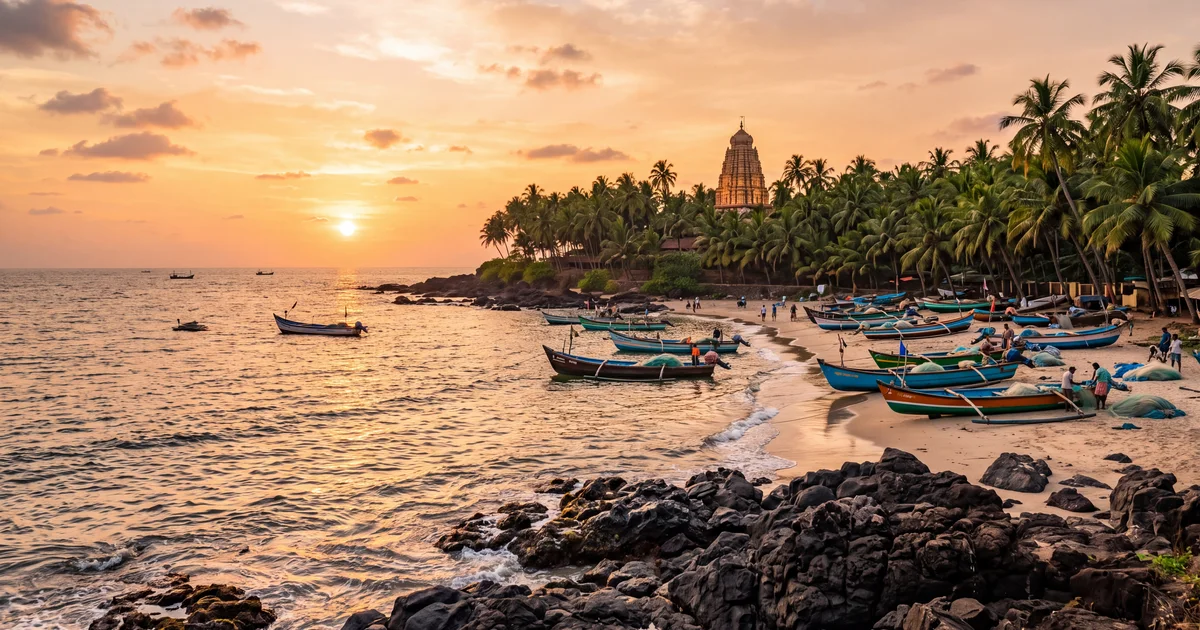
Places to visit in Mangalore tend to show up in the same copy paste lists across every travel blog: Panambur Beach, Kadri Manjunath Temple, repeat. The city deserves better than that. Mangalore sits where the Netravathi and Gurupura rivers meet the Arabian Sea on Karnataka's coast, 350 km west of Bangalore. It has some of the best coastal food in India, temple architecture that predates most North Indian tourist sites by centuries, and beaches that are not trying to be Goa.
The population is around 7 lakh. The city is compact enough that you can see two or three spots in a morning and still be back for a long lunch. Most Bangalore visitors treat Mangalore as a pit stop on the way to Udupi or Gokarna. That is a mistake if you have even two spare days.
This guide covers 15 places to visit in Mangalore, sorted by what is actually worth your time.
TL;DR
- Mangalore needs 2 full days for the essentials, 3 to 4 if you add Udupi and St. Mary's Island.
- Best months: October to February (dry weather, clean beaches, bearable humidity).
- Bangalore to Mangalore: 1 hour flight, or 6 to 7 hours by road on NH75 through Sakleshpur.
- Budget for a couple: 1,500 to 3,500 per night for mid range stays, 300 to 600 for a full seafood meal.
- Compare group trips to Karnataka on TripzSearch for weekend departures from Bangalore.
Panambur Beach: the one that earns its popularity
Panambur is Mangalore's most visited beach, and for once the popularity is justified. The beach runs about 2 km, with clean sand maintained by a local trust. There is a lifeguard presence, something most Karnataka beaches lack. Kite festivals happen here in December and January, when the wind conditions are ideal.
The beach has a designated swimming zone. Camel rides cost 100 to 200 rupees. The food stalls near the entrance sell grilled corn and chai but skip the seafood here; the restaurants in town do it far better.
Go before 7 AM for a genuinely empty beach. By 10 AM on weekends, the parking lot fills up and the sand gets crowded around the entry point. Walk 800 metres south and you will have space.
The catch: The beach access road gets jammed on Sunday evenings. Plan your exit before 4 PM or after 7 PM to avoid sitting in traffic for 45 minutes.
Kadri Manjunath Temple: 1,000 years old, still active
Kadri Manjunath sits on a hill in central Mangalore and is one of the oldest temples in coastal Karnataka. The bronze Lokeshwara idol inside dates to the 10th or 11th century and is considered one of the finest bronze castings in South India. The temple complex has multiple shrines, a natural spring, and a set of steep steps that give you a mild workout.
The climb is about 200 steps. Not difficult, but the stone steps get slippery in monsoon. Mornings before 9 AM are best for photos without crowds. The temple priests are approachable and will explain the history if you ask.
Free entry. Open 6 AM to 8 PM.
The catch: The temple is a functioning worship site, not a museum. Dress modestly. Shoes off at the base of the steps. The monkeys here are bold and will grab food from your hands.
What is special about Mangalore's food scene?
This deserves its own section because the food alone is worth the trip from Bangalore. Mangalore sits at the intersection of Tulu, Konkani, Beary and GSB Brahmin cuisines. Each community has distinct dishes that you will not find replicated accurately anywhere else in India.
The fish curry rice combination is the daily staple. Mackerel (bangude) and pomfret are the most common fish. The curry base uses kokum, coconut and red chillies. Every household has its own ratio and every household will tell you theirs is the correct one.
Kori Rotti uses chicken curry poured over thin, crispy rice wafers that soften as they absorb the gravy. It is Bunt community food and the texture contrast is unlike any other Indian dish. Hotel Narayana near Hampankatta and Machali near Kadri serve reliable versions at 200 to 350 rupees for a full plate.
Neer dosa (water dosa) is paper thin, translucent, and served at breakfast with coconut chutney. Goli Baje are deep fried savoury dough balls, crispy outside, soft inside, sold at street carts from late afternoon. Four pieces cost 20 to 40 rupees.
One honest caveat: Mangalore's restaurant culture is not Instagram friendly. The best food comes from small, plain looking places with fluorescent lighting and steel plates. If you are choosing restaurants by decor, you will miss the point.
Kudroli Gokarnanatheshwara Temple
Built in 1912, Kudroli temple was constructed to give lower caste communities a place of worship after they were denied entry to other temples. The social history matters as much as the architecture. The temple was renovated in the 1990s with support from the Dharmasthala temple trust, and the current structure is one of the most ornate in Mangalore.
The Navaratri celebrations here (September or October) draw over 100,000 visitors across nine days. The illuminated gopuram during the festival is genuinely impressive. Outside festival season, it is a calm 30 minute visit.
Located in the Kudroli neighbourhood, 2 km from Hampankatta. Free entry.
The catch: During Navaratri, the streets around Kudroli become impassable by vehicle. Walk or take an auto to the nearest junction and proceed on foot.
How far is Mangalore from Bangalore by road?
The driving distance on NH75 is 350 km. The route passes through Hassan, Sakleshpur and the Shiradi Ghat section. Expect 6 to 7 hours with a meal stop. The ghat road after Sakleshpur has sharp curves and heavy lorry traffic; avoid night driving through this section.
KSRTC runs Airavat Club Class buses overnight from Kempegowda Bus Station. The ride takes about 7 to 8 hours and tickets cost 800 to 1,400 rupees. Book on the KSRTC website at least three days ahead for weekend departures.
Flights from Bangalore take 1 hour. IndiGo and Air India Express operate daily. Book 2 to 3 weeks early for fares under 3,000 rupees one way.
The Yeshvantpur to Mangalore Junction train (Train 16575, Mangaluru Express) takes 8 to 10 hours. The route through Sakleshpur is scenic with tunnels and bridges, worth it if you do not mind the time.
Sulthan Bathery (Sultan Battery) watchtower
Tipu Sultan built this watchtower in the 18th century to guard the Mangalore port. It sits on the Gurupura river bank near Boloor. The structure itself is modest: a stone tower with a few openings overlooking the water. The historical context is more interesting than the ruin.
During Tipu's wars with the British, Mangalore was a contested port city. The battery was part of a chain of coastal defences. There is a small park around the tower now, good for 20 minutes.
The catch: The area around the tower is not well maintained. Go in the morning, spend 15 to 20 minutes, and combine it with a visit to nearby Tannirbhavi beach.
Tannirbhavi Beach: the quieter alternative
Tannirbhavi is across the Gurupura river from the main city. You can reach it by a short ferry ride from Sulthan Bathery (10 rupees, 5 minutes) or by road (12 km from Hampankatta). The beach is wider and less crowded than Panambur.
The sand here is darker, the waves are stronger, and there is almost no commercial activity. Bring your own water and snacks. The ferry ride across the river adds a memorable element that Panambur does not have.
Go on a weekday and you might have a 500 metre stretch to yourself. That does not happen at Panambur.
The catch: The ferry stops running by 6 PM. If you go by road, the last stretch is narrow. Swimming is risky here because there are no lifeguards.
Mangaladevi Temple
The city gets its name from this temple. Mangaladevi is dedicated to an avatar of Durga and sits in the Bolar neighbourhood near the old port area. The original structure is believed to be over 1,000 years old, though renovations have altered much of the exterior.
The temple is modest in size compared to Kudroli or Kadri. Its significance is historical and cultural rather than architectural. The annual Mangaladevi Dasara during Navaratri is one of the oldest festivals in coastal Karnataka.
Visit time: 20 to 30 minutes. Combine with the nearby Bolar neighbourhood, which has old Mangalorean Catholic houses with tiled roofs and laterite stone walls.
Pilikula Nisargadhama: the day out with kids
Pilikula is a 370 acre park complex about 12 km from the city centre. It has a zoo (decent collection of Indian species including sloth bears and leopards), a science centre, a lake with boating, a golf course, and a heritage village showing traditional Tulunadu architecture.
This is not one place but several spread across a large campus. Budget 3 to 4 hours if you want to see the zoo and heritage village. Entry tickets are 100 to 200 per person depending on the sections you visit.
The heritage village is the standout. It recreates traditional Tulu Nadu houses, Beary homes, and fishing huts with real artefacts. The boating lake is pleasant in the evening.
The catch: Pilikula is large and spread out. Walking between sections in afternoon heat (32 to 35 degrees Celsius from March to May) is tiring. Bring water and use the internal shuttle if available.
Someshwar Beach and temple
Someshwar sits 6 km south of the city centre. The beach has large rock formations that create natural pools during low tide. The Someshwara Temple is right on the beach, which is unusual for coastal Karnataka.
The rock formations here make it one of the more photogenic spots on this list. Visit during low tide (check tide timings online for the date) to walk among the pools. Sunset views are strong, with the temple silhouette against the sky.
Local fish restaurants near Someshwar serve lunch. The food is simpler than city restaurants but the fish is fresh off the boats.
The catch: High tide covers most of the interesting rock formations. Time your visit with the tide chart or you will see a plain beach with waves crashing on rocks.
St. Aloysius Chapel: the ceiling you did not expect
Built in 1885, this Jesuit chapel in the Lighthouse Hill area has wall and ceiling paintings that cover nearly every surface of the interior. The paintings were done by Italian Jesuit brother Antonio Moscheni and depict scenes from the life of St. Aloysius Gonzaga.
The chapel is small. The entire visit takes 15 to 20 minutes. The paintings are the reason to go. They are detailed, well preserved, and completely unexpected in a mid sized Indian coastal city. The style has been compared (loosely) to the Sistine Chapel, though the scale is obviously much smaller.
Located on Lighthouse Hill, 1 km from Hampankatta. Free entry. Open 8:30 AM to 5 PM on weekdays. Closed during services on Sunday mornings.
Hampankatta and the old city market
Hampankatta is Mangalore's commercial centre. The market area around Hampankatta Junction is the oldest trading hub in the city, with shops selling everything from gold jewellery to fish. The Central Market (Mangalore City Corporation Market) is a covered market with fresh produce, spices, and dried fish.
Walking through the fish section of the market at 7 AM is an experience. The variety of coastal catch is impressive: mackerel, sardines, pomfret, prawns, crabs, squid. Prices are lower than retail and the vendors will clean the fish on the spot.
The streets around Hampankatta have old commercial buildings from the colonial period, some well maintained, others slowly deteriorating. The area has an energy that the newer parts of Mangalore lack.
Go in the morning. The market winds down by early afternoon.
Ullal Beach and Syed Madani Dargah
Ullal is 12 km south of Mangalore, technically in Ullal town rather than the city proper. The beach is long, wide and uncrowded on weekdays. The main landmark is the Syed Madani Dargah, a mosque on the beach with whitewashed walls and a green dome.
The dargah is a rare example of Hindu Muslim shared worship in coastal Karnataka. Devotees from both communities visit. The structure sits almost on the sand, and during high tide waves come close to the boundary wall.
The beach has stronger currents than Panambur. Swimming is not advisable unless you are a confident swimmer and the sea is calm.
The catch: Ullal beach does not have the infrastructure (lifeguards, stalls, parking) of Panambur. It is a quieter, more authentic stretch. That is either a plus or a minus depending on what you want.
Bejai Museum (Shreemanthi Bai Government Museum)
A small government museum in the Bejai neighbourhood with collections of archaeological artefacts, old coins, woodcarvings, and Neolithic tools found in the Dakshina Kannada region. The museum occupies a traditional style building and takes about 45 minutes to walk through.
The woodcarving collection is worth attention. Coastal Karnataka has a tradition of intricate wood panel carving on temple chariots and household doors. The museum preserves several panels that would otherwise be lost.
Entry: 20 rupees. Open 9 AM to 5 PM, closed on Mondays and public holidays.
This is not a must visit. It is a good option on a rainy monsoon day when beaches are off limits.
Sasihithlu Beach: for the quiet morning
Sasihithlu is 20 km north of Mangalore, near the Gurupura river mouth. The beach is clean, remote by Mangalore standards, and backed by casuarina trees. A few local families visit on weekends but it is rarely busy.
The setting is more natural than any other beach near the city. No stalls, no rides, no loudspeakers. Just sand, sea and trees. The river mouth creates interesting patterns in the sand at low tide.
Get there by road from the city. No public transport reaches the beach directly; you will need your own vehicle or an auto (negotiate 400 to 600 rupees round trip from the centre).
Kateel Durgaparameshwari Temple (28 km from Mangalore)
Kateel temple sits on a small island in the middle of the Nandini river. The temple is one of the most visited in Dakshina Kannada, dedicated to Durgaparameshwari. The setting is genuinely striking: a temple surrounded on all sides by flowing water, with forested hills behind.
The drive from Mangalore takes about 45 minutes. The temple complex is well maintained with clean surroundings, a prasadam hall (free meals for devotees), and a small bridge connecting the island to the riverbank.
Festival days (especially Navaratri) are extremely crowded: expect 2 to 3 hour queues. Visit on a regular weekday morning for a calm experience.
The catch: Photography is restricted inside the sanctum. The dress code is enforced (no shorts, no sleeveless tops). Weekday mornings between 8 and 10 AM are the sweet spot for short queues and a peaceful visit.
Planning your Mangalore trip
Two days cover the city highlights: day one for Kadri, Kudroli, Hampankatta market and St. Aloysius Chapel in the morning, Panambur or Someshwar Beach in the evening. Day two for Tannirbhavi (morning ferry from Sulthan Bathery), Ullal Beach and Pilikula in the afternoon.
If you have a third day, drive to Kateel temple in the morning and Sasihithlu beach in the afternoon. A fourth day lets you do a day trip to Udupi (60 km north) and St. Mary's Island.
Mid range hotels in Mangalore cluster around Hampankatta and Falnir. Expect 1,500 to 3,500 per night. The Gateway Hotel (Taj property) and Hotel Moti Mahal are reliable options in the 3,000 to 5,000 range.
For transport within the city, auto rickshaws run on meters. Rides within the city cost 50 to 150 rupees. Ola and Uber work in Mangalore but availability drops outside the city centre.
Browse group trips from Bangalore on TripzSearch to find weekend departures that include Mangalore, Udupi and the coastal Karnataka circuit. Check available trips for dates and reviews.
Frequently asked questions
- How many days are enough for Mangalore?
- Two full days cover the main beaches, temples and the city centre comfortably. If you want to add Udupi, St. Mary's Island and the Netravathi river temple circuit, plan for three to four days. Most Bangalore travellers do a long weekend trip (Friday evening to Sunday night) and cover the essentials without rushing.
- What is the best time to visit Mangalore?
- October to February is ideal. The monsoon retreats by late September, beaches are clean, and humidity drops to bearable levels. December and January are the driest months with temperatures around 22 to 32 degrees Celsius. Avoid June to August unless you specifically want to see the monsoon sea (beaches will be off limits for swimming due to rough waves).
- How do I reach Mangalore from Bangalore?
- The fastest option is a 1 hour flight from Kempegowda International Airport to Mangalore International Airport. By road, the NH75 route through Sakleshpur takes 6 to 7 hours (350 km). KSRTC Airavat Club Class buses run overnight and cost 800 to 1,400 rupees. Train options include the Yeshvantpur to Mangalore Junction train (around 8 to 10 hours).
- Is Mangalore safe for solo travellers?
- Mangalore is generally safe. The city centre, Hampankatta and beach areas are well connected and busy even after dark. Auto rickshaws are the standard local transport and run on meters. Solo women travellers report feeling comfortable in the city during daytime. Avoid isolated stretches of beach after sunset, which is practical advice for any coastal city.
- What food should I try in Mangalore?
- Start with Mangalorean fish curry (with mackerel or pomfret, served over red rice). Kori Rotti (chicken curry with crispy rice wafers) is the signature Bunt dish. Neer dosa (thin rice crepes) are a breakfast staple. Goli Baje (deep fried dough balls) are the go to street snack. Try Mangalore buns (slightly sweet banana based puri) at any local eatery near Hampankatta.
- Can I find group trips to Mangalore from Bangalore?
- Several operators run weekend group trips covering Mangalore, Udupi and nearby beaches. Group packages handle transport, stays and itinerary planning. Compare dates and reviews on TripzSearch to find departures that match your schedule.
- Is Mangalore worth visiting or should I just go to Goa?
- They are different experiences. Mangalore offers better food (especially seafood and Tulu cuisine), less crowded beaches, and a more local feel. Goa has nightlife, beach shacks and a wider range of budget hostels. If you want a quieter coastal trip with temple visits and authentic Karnataka food, Mangalore is the better pick. If you want parties and international tourist infrastructure, go to Goa.