Best Places to Visit in Mahabaleshwar (2026): Viewpoints, Strawberries and Weekend Plans
12 places to visit in Mahabaleshwar in 2026 with real viewpoint rankings, strawberry season timings and honest notes on what to skip.
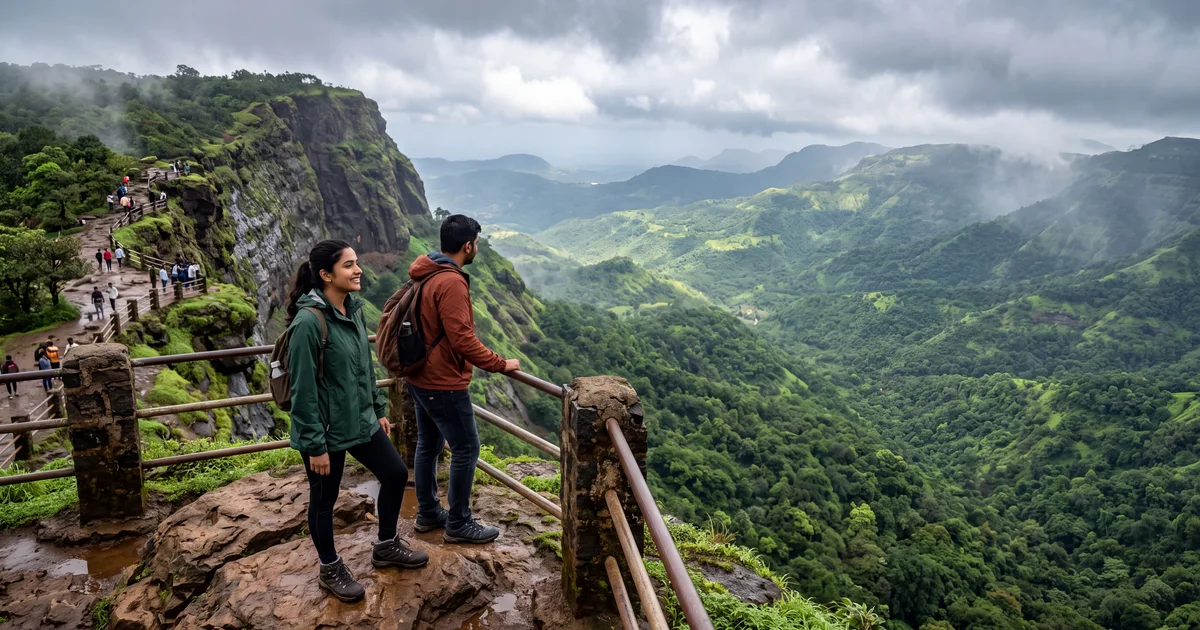
Mahabaleshwar is a hill station in Maharashtra's Sahyadri range that receives roughly 2 million visitors a year. Most of them come from Pune (120 km) or Mumbai (260 km), most of them come between October and February, and most of them see the same four viewpoints, buy strawberries at Mapro Garden, take a horse ride at Venna Lake, and drive home thinking they have seen it all.
They have not. The hill station has over 30 marked viewpoints across a laterite plateau at 1,353 metres, a 17th century Maratha fort within day trip distance, temple complexes that predate the British hill station by several centuries, and walking trails through the densest shola forests in western Maharashtra. The standard tourist circuit covers maybe 40% of it.
This guide lists 12 places to visit in Mahabaleshwar in 2026. Not the usual padded list of 30 spots where half are parking lots with views. Twelve that are genuinely worth your time, ranked by how much they actually deliver, with honest notes on what to skip if you only have a weekend.
TL;DR
- Mahabaleshwar sits at 1,353 metres in the Western Ghats, 120 km from Pune (3 hours) and 260 km from Mumbai (5.5 hours).
- Best season: October to February for viewpoints and strawberry season; June to September for waterfalls (but expect fog at viewpoints).
- Budget for two: 3,000 to 5,000 rupees per day including hotel, food and transport within the hill station.
- Two days covers the essentials. Three days gives you Pratapgad Fort and walking trails.
- Compare weekend trips from Pune and group trips that include Mahabaleshwar on TripzSearch.
Arthur Seat: why this is the viewpoint that matters
Every Mahabaleshwar list starts with Arthur Seat and for once the popularity is justified. The viewpoint sits on a cliff edge with the Savitri river valley 600 metres straight down. On a clear morning, you can see the Konkan plain stretching toward the coast, 70 km away.
The plateau here is laterite, which means the rock is red, porous and flat enough to walk right up to edges that have no railing. That is both the appeal and the risk. People have fallen. Watch your step, especially with children.
Two things make Arthur Seat different from the other viewpoints. The Tiger Spring path nearby gives you a 20 minute forest walk that most tourists skip because it is signposted poorly. And the echo point (a separate spot 200 metres before the main viewpoint) actually works: shout into the valley and wait. The gorge geometry bounces sound back cleanly.
Arrive before 8 AM on weekends. By 10 AM the parking lot is full and hawkers outnumber visitors. Weekday mornings in November are near perfect: 18°C, clear sky, empty trails.
Wilson Point: is the sunrise worth the early alarm?
Wilson Point (officially Sunrise Point) is the highest point in Mahabaleshwar at 1,439 metres. From here you see the sun come up over the Sahyadri ridgeline with a 360 degree panorama that includes the entire plateau.
The honest answer: yes, but conditionally. October and November mornings are clear roughly 5 days out of 7. The sunrise hits around 6:15 AM and lights up the valley fog in orange and pink layers that justify the 5:30 AM start. In December and January, the probability drops because of winter haze.
Monsoon? Do not bother. You will drive up in darkness, stand in fog for 40 minutes, see nothing, and drive back wet.
The drive from the market area takes 10 minutes. Shared jeeps charge 50 rupees per person. Carry chai in a thermos because nothing opens at that hour.
Old Mahabaleshwar: the temple town nobody mentions
About 6 km from the main market, Old Mahabaleshwar is the original settlement that predates the British hill station by several hundred years. Three temples sit here: the Mahabaleshwar temple (dedicated to Shiva, one of the oldest in the region), the Panchganga temple (where five rivers are said to originate from a single cow's head spout), and the Krishna temple.
The Panchganga temple is the interesting one. The stone spout is genuine, fed by a perennial spring. The water is cold, clear, and flows year round. The temple complex dates to the Yadava period (13th century) and the carvings on the outer walls are worth examining closely.
Most tour buses skip Old Mahabaleshwar entirely because the road narrows and there is nowhere to park a 45 seater. That means you get it mostly to yourself if you come by car or auto. Budget an hour for the three temples combined.
One caveat: the road from the main market to Old Mahabaleshwar passes through dense forest and is genuinely dark after 5 PM. There are no streetlights. Come during daylight.
What makes Pratapgad Fort worth the detour?
Pratapgad is a hill fort 24 km from Mahabaleshwar, built by Shivaji Maharaj in 1656. The fort is historically significant as the site of the battle between Shivaji and Afzal Khan in 1659. A 13 foot bronze statue of Shivaji stands at the upper fort, installed in 1957.
The fort has two levels: the lower fort (with the Afzal Khan tomb and the Bhavani temple) and the upper fort (with the watchtower and the Shivaji statue). The climb from the parking area to the upper fort takes 30 to 40 minutes on stone steps. It is not difficult, but it is not flat either.
Pratapgad is one of the better preserved Maratha forts in the Sahyadris. The bastions are intact, the gates show original ironwork, and the panoramic view from the upper fort covers Javali valley in every direction.
Drive time from Mahabaleshwar market: 45 minutes via a scenic but narrow ghat road. No entry fee. Parking is 50 rupees. A local guide costs 200 to 300 rupees and is worth it for the historical context that plaques do not provide. Start early and combine with the Jawhar Point visit on the way back.
Venna Lake: tourist trap or actually pleasant?
Both. The lake itself is artificial, built by Appasaheb Maharaj of Satara in 1842. It sits in the centre of Mahabaleshwar and is the default activity for every bus tour. Horse rides, peddal boats, corn on the cob stalls, toy vendors: the full Indian hill station tourist package operates here.
The boating is fine. 30 minutes on a pedal boat costs about 250 rupees for two. The lake is small (roughly 500 metres across) and the water is reasonably clean by October.
The better way to experience Venna Lake is to walk the 2.5 km path around it in the early morning. Between 6 and 7 AM the lake is glassy, the horse operators have not started, and the surrounding trees (mostly silver oaks and evergreens) catch the first light. You will share the path with joggers and nobody else.
Skip the horse rides unless you are with children who insist. The horses look tired by afternoon. The boat ride is fine once but not something you need to repeat.
Lingmala Waterfall: the one that actually delivers
Mahabaleshwar claims several waterfalls, but Lingmala is the one that deserves your time. It drops about 500 feet in two stages and the pool at the base is accessible via a 1.2 km forest trail from the road.
The trail is stone paved for the first 600 metres, then turns to packed earth and gets slippery in monsoon. Decent shoes matter. The viewpoint for the main fall is fenced and safe. A second, lower viewing point requires descending steep steps and is worth the effort when the falls are running full.
Peak flow is July to September. By November the falls thin to a trickle and the pool shrinks. October catches the tail end of monsoon flow and is the best compromise between water volume and clear weather.
Entry costs 30 rupees per person. The parking lot is 1 km above the trailhead. Local boys offer to guide you down for 100 rupees. You do not need them; the path is obvious.
Elephant Head Point: the viewpoint with a walk
Known locally as Needle Hole Point's neighbour, Elephant Head Point gets its name from a rock formation that resembles an elephant's trunk extending over the valley. The formation is visible from a specific angle on the walking trail, not from the parking area.
The walk from the road is about 800 metres over rocky terrain. It is the most interesting approach of any Mahabaleshwar viewpoint because the path passes through low scrub and laterite rock shelves with valley drops on both sides. This is not a viewpoint where you park, look, and leave. You earn it.
Combine with Kate Point and Needle Hole Point, all three sit within a 2 km stretch of the same ridge. Budget 90 minutes for the trio. Carry water. There is nowhere to buy anything once you leave the parking lot.
Mapro Garden: worth a stop or just marketing?
Mapro Garden is a branded strawberry and fruit products experience on the Panchgani road, about 10 km from Mahabaleshwar market. Free entry. The garden has a restaurant, a massive retail section selling jams, syrups, chocolate and fresh strawberries, plus a pizza counter that draws weekend crowds.
Is it worth stopping? If you are passing the Panchgani road anyway, yes. The strawberry with cream counter is a Mahabaleshwar institution (60 rupees for a generous serving in season). The retail prices are comparable to what you find in the market, so you are not overpaying.
If you are looking for an actual strawberry farm experience (picking berries, seeing how they grow), skip Mapro and drive to Bhilar village, 5 km toward Panchgani. Three or four farms there let you walk the rows and pick your own. The strawberries taste better when they are 30 seconds off the plant. Season runs November to February, peaking in December and January.
Panchgani and Table Land: the half day add on
Panchgani is 18 km from Mahabaleshwar and the two are usually spoken of together, though they are distinct towns with different characters. Where Mahabaleshwar is built around viewpoints and forest, Panchgani is built around schools, the Krishna Valley, and one geological attraction.
Table Land is a flat laterite plateau that stretches for 95 acres at 1,334 metres. It is the second longest mountain plateau in Asia, a claim that sounds impressive until you stand on it and realize it is essentially a very large flat field. What makes it worth visiting is the 360 degree valley view from the edges. On a clear day, the views rival Arthur Seat without the crowds.
Walking across Table Land takes about 40 minutes. Horse rides are available but unnecessary. The far edge (away from the entrance) is the quietest and has the best western views toward the Krishna Valley.
Combine Panchgani and Table Land with the drive to or from Mahabaleshwar. Stop at the Sydney Point viewpoint on the Panchgani road for a view of the Krishna river that is better than most designated points in Mahabaleshwar itself.
What should you know before planning a Mahabaleshwar trip?
Getting there from Pune: The most common route is Pune to Surur to Wai to Mahabaleshwar via NH48 and the Wai Ghat road (120 km, 3 to 3.5 hours). The ghat section has 16 hairpin bends and is well paved but narrow. MSRTC buses run every 2 hours from Swargate bus stand.
From Mumbai: Drive via the Expressway to Pune, then take the Bangalore Highway exit toward Surur (260 km, 5 to 5.5 hours without Expressway traffic). A faster route via Poladpur exists (240 km) but the last 60 km are ghat roads with heavy truck traffic.
Accommodation: The market area has hotels from 1,200 rupees (basic room) to 8,000 rupees (resort with valley view). October and November weekends book out 2 weeks in advance. Weekday rates drop by 30 to 40%. The Elphinstone Road area is quieter than the bazaar but still walkable.
Local transport: Shared taxis to viewpoints operate from the bus stand. A full day circuit covering 6 to 8 viewpoints costs 1,200 to 1,800 rupees for a private car. Alternatively, rent a two wheeler (500 to 700 rupees per day) and go at your own pace. The roads within Mahabaleshwar are good.
Food: The market has a mix of Maharashtrian food stalls, South Indian restaurants and tourist cafes. Fresh corn and strawberry cream are the street food signatures. For a proper meal, try the misal pav at any stall near the bus stand (80 to 120 rupees). Hotel restaurants on the main road charge 30 to 40% more for the same dishes.
Weather: Carry a light jacket even in October. Evenings drop to 15°C and the wind at viewpoints is constant. In December, mornings dip to 8 to 10°C and the plateau gets frost on some nights.
Check weekend group trips from Pune or browse trips from Mumbai that include Mahabaleshwar and Panchgani. For more weekend destinations in the Western Ghats, see what other travellers are booking on TripzSearch.
Frequently asked questions
- What is the best time to visit Mahabaleshwar?
- October to February for clear views and pleasant 15 to 25°C weather. Strawberry season peaks from December to February. Monsoon (June to September) is dramatic with waterfalls and green valleys, but many viewpoints get dangerously foggy and some roads close. Avoid April and May when temperatures hit 35°C and the hill station loses its coolness advantage.
- How far is Mahabaleshwar from Pune and how do I get there?
- Mahabaleshwar is about 120 km from Pune via the Bangalore Highway and Wai Ghat, taking roughly 3 to 3.5 hours by car. MSRTC runs direct buses from Swargate every 2 hours (about 4 hours, 300 to 400 rupees). The Wai Ghat road has 16 hairpin bends and is not for nervous drivers in monsoon.
- How many days are enough for Mahabaleshwar?
- Two days covers the major viewpoints, Old Mahabaleshwar temple, a strawberry farm visit and a Mapro Garden stop. Three days lets you add Pratapgad Fort, the Lingmala waterfall trail and a leisurely evening at Venna Lake. A single day trip from Pune is possible but exhausting, with barely 4 hours of actual sightseeing after the drive.
- Is Mahabaleshwar worth visiting in monsoon?
- Absolutely, with caveats. The valleys turn electric green and waterfalls appear everywhere. But visibility at viewpoints drops to near zero on heavy rain days, roads get slippery, and Lodwick Point and Wilson Point access can be restricted. Visit mid week to dodge crowds and carry rain gear. The Venna Lake area stays accessible regardless of rain.
- What is the entry fee for Pratapgad Fort?
- There is no entry fee for Pratapgad Fort. The fort is open from 8 AM to 6 PM. Parking costs 50 rupees for a car. A local guide at the base charges 200 to 300 rupees for a tour that covers the main bastions and the Afzal Khan tomb. Budget 2 to 3 hours for the fort visit including the climb.
- Are strawberry farms in Mahabaleshwar open to visitors?
- Yes, several farms along the Panchgani road allow visitors from November to February. You can pick strawberries and buy them fresh (200 to 400 rupees per kg depending on variety and season). Mapro Garden is the most commercial and offers free entry with a strawberry themed shop and cafe. Smaller farms near Bhilar village offer a quieter, less touristy experience.
- What are the best viewpoints in Mahabaleshwar?
- Arthur Seat is the most dramatic, sitting on a cliff edge with Savitri Valley 600 metres below. Wilson Point (Sunrise Point) is the highest point at 1,439 metres and the only viewpoint worth waking up at 5:30 AM for. Elephant Head Point has the most interesting rock formation but the walk is steep. Kate Point and Needle Hole Point are adjacent and work as a pair. Skip Bombay Point if time is short.