14 Best Places to Visit in Madurai (2026): Meenakshi Temple, Markets and the Old City
14 places to visit in Madurai with temple tips, food picks and what to skip in 2026.
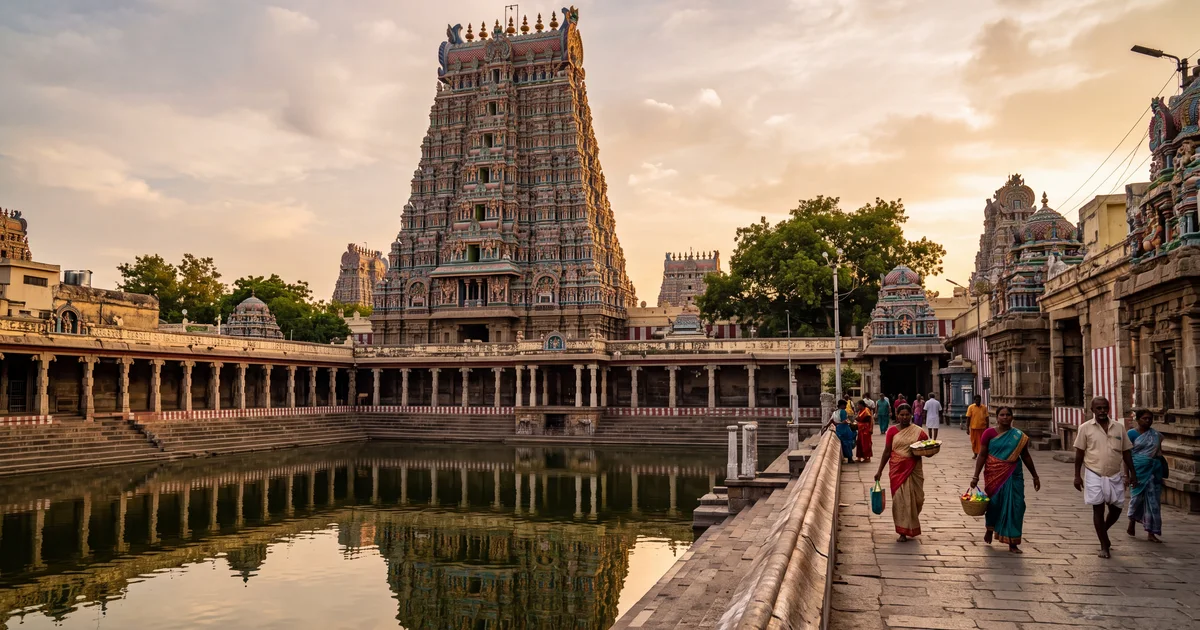
Places to visit in Madurai start and end with Meenakshi Amman Temple for most visitors. The temple deserves its position at the top of every list. But Madurai is a 2,500 year old city with layers that a two hour temple visit does not reveal. It is one of the oldest continuously inhabited cities in India, mentioned in Sangam literature from the 3rd century BCE, and the food and street culture here are distinct from Chennai or Coimbatore in ways that matter.
Madurai sits on the banks of the Vaigai River in southern Tamil Nadu, about 440 km from Bangalore. The population is around 15 lakh. The city is compact around the temple, which makes walking between most sights practical. The old city streets radiate outward from the temple in concentric rectangles, a layout planned centuries ago and still intact.
This guide covers 14 places to visit in Madurai, organized around what is genuinely worth your time.
TL;DR
- Madurai needs 2 full days for the essentials, 4 to 5 if you add Rameswaram or Kodaikanal.
- Best months: October to March (manageable heat, dry weather).
- Bangalore to Madurai: 1 hour 15 minute flight, or 8 to 9 hours by road on NH44.
- Budget for a couple: 1,200 to 3,000 per night for mid range stays, 200 to 500 for meals.
- Browse group trips to Tamil Nadu on TripzSearch for departure dates.
Meenakshi Amman Temple: the reason everyone comes
Meenakshi Temple is a Dravidian temple complex covering 14 acres in the centre of Madurai. The four gateway towers (gopurams) rise to 50 metres, covered with thousands of painted stucco figures of gods, demons and animals. The South Gopuram alone has an estimated 1,511 figures. The temple is dedicated to Meenakshi (a form of Parvati) and Sundareswarar (Shiva).
The temple is not just a religious site. It has been the social and commercial centre of Madurai for centuries. The surrounding streets were built to serve the temple, and the evening ceremony (around 9 PM) when the idol of Sundareswarar is carried to Meenakshi's chamber draws hundreds of devotees every single night.
Arrive before 6 AM to avoid queues. The morning light inside the main corridors is the best you will get all day. The Hall of Thousand Pillars (actually 985 pillars) is an architectural highlight: tap a pillar near the musical group and it produces a distinct note. Each pillar is carved from a single granite block.
The Potramarai Kulam (Golden Lotus Tank) inside the complex is where devotees take ritual baths. The water is green and the surrounding colonnades are photogenic, especially before 8 AM.
The catch: Queues for darshan on Friday evenings and festival days can stretch to 2 to 3 hours. Camera fees apply for dedicated cameras (50 rupees) but phones are free. Dress modestly. Shoes must be left at the shoe counters near each entrance (5 rupees per pair).
What is the Chithirai Festival and when does it happen?
The Chithirai Festival runs for 12 days in April or May (dates follow the Tamil calendar). It celebrates the wedding of Meenakshi and Sundareswarar, with the Alagar (Vishnu) procession joining on the final days. Over a million people attend across the festival period. The temple car procession through the streets of Madurai is one of the largest temple festivals in India.
If you visit during Chithirai, book accommodation at least a month ahead. Rooms within walking distance of the temple triple in price. The processions happen in the evenings and the entire old city shuts down to vehicle traffic.
Outside Chithirai, the temple conducts a float festival (Theppotsavam) in January or February at the Vandiyur Mariamman Teppakulam tank, 3 km from the temple. The deities are taken on decorated floats across the illuminated tank. It is a more intimate festival than Chithirai and easier to attend without the extreme crowds.
Thirumalai Nayak Palace (1.5 km from Meenakshi Temple)
Built in 1636 by King Thirumalai Nayak, this Indo Saracenic palace sits between the temple and the Vaigai River. The Swargavilasa (Celestial Pavilion) is the main hall: a large courtyard surrounded by 18 metre tall pillars topped with arches. The scale is impressive even in its partially restored state. Only about a quarter of the original palace survives.
The palace runs a sound and light show in the evenings (6:45 PM in English, 8 PM in Tamil). The show is informative though the production quality is basic. Entry is 50 rupees for Indians. The courtyard is best in late afternoon when the light angles across the columns.
The palace is a 15 minute walk from the temple's East Tower. Combine both in a morning visit.
The catch: About 75% of the original structure was demolished by Thirumalai Nayak's grandson to build a new palace in Trichy. What remains is the grandest quarter, but the palace feels incomplete once you know its history.
Madurai Meenakshi Temple Museum
Housed within the temple complex (inside the Hall of Thousand Pillars), this museum displays sculptures, bronzes, paintings and temple artefacts spanning several centuries. The bronze collection includes Chola period pieces that rival what you would see in the Chennai Government Museum.
The musical pillars in this hall produce different tones when tapped. A guide will demonstrate this for a tip (50 to 100 rupees). The detail on the ceiling paintings, restored in the early 2000s, is worth looking up for.
Entry: 50 rupees. Open 6 AM to 12:30 PM and 4 PM to 9:30 PM. Photography is restricted inside.
Budget 30 to 45 minutes. This is worth the stop if you are already inside the temple compound.
Gandhi Memorial Museum: the bloodstained cloth
Located in the Tamukkam Palace (3 km from the temple), this museum houses the dhoti worn by Gandhi when he was assassinated on January 30, 1948. The cloth is preserved in a glass case. Seeing it is a sobering 30 seconds that anchors an otherwise standard museum experience.
The rest of the museum traces Gandhi's life and the Indian independence movement with photographs, letters and personal items. The section on the Salt March and the Quit India Movement is well documented. The building itself (a former Nayak palace) has high ceilings and a lake view.
Free entry. Open 10 AM to 1 PM and 2 PM to 5:30 PM. Closed on Wednesdays.
The museum is not a casual 20 minute stop. Budget at least an hour if you read the displays.
Vaigai River and the South Bank
The Vaigai River divides Madurai into the old city (south) and newer areas (north). The river is not scenic in the conventional sense. For most of the year it carries a modest flow, and during summer months (April to June) sections dry out entirely. But the river banks have recently been developed with walking paths, lighting and small parks.
The evening walk along the south bank, from the Meenakshi Temple area towards the Albert Victor Bridge, is pleasant after 6 PM when temperatures drop. Local families use the pathway. The bridge itself is a colonial era structure with views of the temple gopurams in the distance.
On full moon nights (Pournami), the river bank near the Vandiyur tank gets busy with families and street food vendors.
One honest opinion: The Vaigai does not compete with the Ganga or the Kaveri for river ambience. Its value is as a local space, not a tourist attraction. Walk it if you have time; do not prioritize it over the temple or palace.
Vandiyur Mariamman Teppakulam
A massive temple tank (about 1,000 feet on each side) located 3 km east of the Meenakshi Temple. The tank has an island mandapam in the centre, connected by a bridge. It was built in the 17th century by Thirumalai Nayak and fills with water during the monsoon and the Theppotsavam (float festival).
The tank is at its best during the float festival in January or February, when illuminated floats carry the temple deities across the water at night. Outside the festival, the tank may be partially dry depending on the season. Even dry, the scale of the tank and the island temple make it worth a visit.
Free access. Visit in the evening for better light and fewer people.
The catch: The tank area is not well maintained outside the festival season. Expect some litter around the edges. The walk from the temple takes about 40 minutes, or a short auto ride (60 to 80 rupees).
Is Madurai famous for food?
Madurai's food reputation is earned. The city has a distinct culinary identity that goes beyond generic South Indian fare. Three things set it apart.
First, Jigarthanda. This cold dessert drink combines milk, almond gum (badam pisin), sarsaparilla syrup, and a scoop of ice cream. The original Famous Jigarthanda stall on West Masi Street has been operating since the 1970s. A glass costs 60 to 100 rupees. The texture is dense and sweet, best consumed after a hot temple visit. Imitations exist across Madurai but the original stall has the longest queue for a reason.
Second, kari dosa. This is a dosa filled with spiced mutton keema, folded and served with a side of mutton curry. Kumar Mess near the Periyar Bus Stand is the landmark spot (open since 1985, a plate costs 120 to 180 rupees). The dosas here are cooked on iron griddles blackened over decades. Peak hours are 7 to 9 AM.
Third, the non vegetarian tradition. Madurai eats more meat than most Tamil cities. Mutton biryani, mutton chukka (dry roasted with spices), and brain fry appear on local menus that you will not find in Chennai restaurants. Amma Mess on KK Nagar Main Road serves no frills plates at 150 to 250 rupees.
Street food clusters around the East Gate of Meenakshi Temple. Murukku, mixture, banana chips and hot bajji sell from pushcarts from 4 PM onwards. Portions are small and cheap (10 to 30 rupees each).
Kazimar Big Mosque and the Muslim Quarter
Kazimar Street runs parallel to the temple's south side and is the centre of Madurai's Muslim community. The Kazimar Big Mosque (built in the 13th century by Hazrat Kazi Syed Tajuddin) is one of the oldest mosques in Tamil Nadu. The architecture blends Tamil and Islamic elements in a way that is specific to this region.
The street itself is worth walking. Shops sell attars (perfume oils), dried dates, and textiles. The food here includes haleem, parotta with salna (gravy), and nattu kozhi (country chicken) biryani. Eateries are small, family run, and do not bother with signboards.
Visit during the late afternoon when the shops are open and the mosque area is active. Friday afternoon prayers draw the largest gatherings.
One honest caveat: Kazimar Street is narrow, crowded and not tourist oriented. There are no guides, no entry tickets, no curated experience. That is precisely what makes it interesting.
Alagar Koil (21 km from Madurai)
Alagar Koil (also called Azhagar Kovil) is a Vishnu temple set in the Alagar Hills, part of the Kallazhagar range. The temple dates to the Pandya period and the setting, at the base of forested hills with a natural stream, is a contrast to the urban density of Madurai's temple zone.
The Noopura Gangai stream flows through the temple grounds. Pilgrims bathe in the water before entering the temple. The carved mantapams along the stream are ornate Pandya and Nayak period work.
The drive from Madurai takes 35 to 40 minutes. Combine with an early morning visit and return by lunch. Auto rickshaws charge 600 to 900 rupees for a round trip.
The catch: The hill behind the temple has a few cave temples reachable by a 2 km trek. The path is rough and unmarked. Worth it for archaeology enthusiasts; skip it if you are short on time.
Samanar Hills (Keelakuyilkudi, 15 km from Madurai)
A Jain archaeological site with rock cut caves, natural caverns and Tamil Brahmi inscriptions dating to the 2nd century BCE. The inscriptions are among the oldest written Tamil records found anywhere. The site is managed by the Archaeological Survey of India.
The climb to the caves takes about 30 minutes. The path is rocky and steep in sections. Carry water. The Jain rock beds (carved into stone surfaces where monks would sleep) are visible inside the caves. The inscriptions require a guide or signboard to interpret, but the setting is atmospheric.
Visit in the morning before 10 AM to avoid the heat on the exposed rock face. Free entry. No facilities on site.
This is not for casual tourists. It is for people who find 2,200 year old inscriptions on cave walls genuinely interesting.
St. Mary's Cathedral (1.5 km from the temple)
Built in 1840 in Gothic Revival style, this is one of the largest churches in Madurai. The interior has stained glass windows, high arched ceilings and a calm atmosphere that contrasts with the intensity of the temple area. The church sits on a small hill near the Vaigai, and the grounds are well maintained.
The building is open to visitors outside service hours. Sunday morning Mass (8 AM and 10 AM) draws large congregations.
Budget 15 to 20 minutes. It is a worthwhile stop for architecture, especially after hours of temple visits.
Thirupparankundram Murugan Temple (8 km from Madurai)
One of the six abodes of Lord Murugan (Arupadai Veedu), this rock cut temple is carved into a hillside south of Madurai. The temple is mentioned in Sangam literature and the Nayak era additions are visible in the mandapam and gopuram.
The temple complex includes Hindu, Jain and natural rock cave elements. The main sanctum is inside the rock. The queue for darshan moves faster than Meenakshi Temple (30 to 60 minutes on weekdays, longer on Tuesdays and festival days).
The hill behind the temple has a dargah on top, shared by both Hindu and Muslim devotees, similar to the syncretic tradition at other South Indian shrines.
The catch: Parking near the temple is chaotic on weekends. Take an auto from Madurai (250 to 350 rupees round trip) to avoid the driving.
Pudhu Mandapam: the textile bazaar inside a temple hall
Pudhu Mandapam sits directly opposite the East Tower of Meenakshi Temple. Built by Thirumalai Nayak in the 17th century as a ceremonial hall, it is now a textile market. The pillars are carved with life sized figures of the Nayak kings and queens. You buy silk sarees and cotton textiles under sculptures of 400 year old royalty.
The juxtaposition of heritage and commerce is unique. Vendors spread fabrics across the stone pillars. Prices start at 500 rupees for cotton sarees and go to 5,000 or more for silk. Bargaining is expected.
Go in the morning when the hall is less crowded and the light through the pillars is good for photography. The carved figures are best seen on the central pillars facing the entrance.
Planning your Madurai trip
Day one: Meenakshi Temple at 6 AM (before crowds), Pudhu Mandapam and East Gate street food, Thirumalai Nayak Palace in the afternoon, evening ceremony at the temple (9 PM). Day two: Gandhi Memorial Museum in the morning, Kazimar Street walk and lunch, Vandiyur Teppakulam, and Thirupparankundram Temple in the late afternoon.
If you have a third day, do Alagar Koil in the morning and Samanar Hills after lunch. A fourth day opens up a day trip to Rameswaram (170 km, 3.5 hours each way) or a drive to Kodaikanal (120 km, 3 hours).
Mid range hotels cluster around West Masi Street and the railway station area. Heritage Madurai (ITC property) and GRT Regency are in the 3,000 to 6,000 range. Budget lodges near the temple start at 800 to 1,500 per night.
Auto rickshaws are everywhere. Insist on the meter or agree on a fare before getting in. City rides cost 40 to 120 rupees. Ola works in Madurai but availability outside the centre is patchy.
Compare group trips from Bangalore on TripzSearch for packages covering the Madurai, Rameswaram and Kodaikanal circuit.
Frequently asked questions
- How many days are enough for Madurai?
- Two full days cover the main temples, the old city and the key museums. If you want to add Rameswaram or Kodaikanal as day trips, plan for four to five days. Most travellers from Bangalore or Chennai do a long weekend and cover the essentials. One day is possible if you only want Meenakshi Temple and a quick market walk.
- What is the best time to visit Madurai?
- October to March is ideal. Temperatures are around 24 to 32 degrees Celsius, which is manageable for walking. April to June brings extreme heat (38 to 42 degrees Celsius) and temple visits become exhausting. The Chithirai Festival in April is spectacular but you will deal with both crowds and heat. Monsoon (September to November) brings occasional rain but rarely disrupts plans.
- How do I reach Madurai from Bangalore?
- Flights take 1 hour 15 minutes from Kempegowda International Airport to Madurai Airport. By train, the Tuticorin Express or Nagercoil Express takes 10 to 12 hours from Bangalore City Junction. By road, the NH44 route through Salem takes about 8 to 9 hours (440 km). KSRTC and SETC run overnight buses from Bangalore, costing 700 to 1,500 rupees.
- Is Madurai safe for solo travellers?
- Madurai is generally safe. The temple area and commercial streets around East Masi Street are busy and well lit even after dark. Auto rickshaws are the standard local transport. Solo women travellers report feeling comfortable in the main tourist areas during daytime. Use common sense near the railway station area late at night.
- What food should I try in Madurai?
- Madurai is famous for Jigarthanda (a cold milk dessert with almond gum and ice cream). Kari dosa (mutton keema dosa) is a local specialty. Idiyappam (string hoppers) with coconut milk is a breakfast staple. Mutton biryani in Madurai uses a spice profile different from Hyderabad or Lucknow. Try the street food at the Meenakshi Temple east gate stalls, especially murukku and mixture.
- Can I visit Meenakshi Temple for free?
- Entry to the main temple is free. There is a charge of 50 rupees for the temple museum and 50 rupees for camera use (phones are free). The Potramarai Kulam (Golden Lotus Tank) area is free to visit. Special darshan tickets (for faster queue access) cost 100 to 200 rupees depending on the time and day.
- Can I find group trips to Madurai from Bangalore?
- Several operators run group packages covering Madurai, Rameswaram and Kodaikanal in a 4 to 5 day circuit. Group trips handle transport, temple guides and stays. Compare dates and reviews on TripzSearch to find departures that fit your schedule.