Best Places to Visit in Lucknow (2026): Nawabi Heritage, Bara Imambara and Kebab Trail
15 best places to visit in Lucknow with honest tips on timing, what to skip, and where the kebab trail actually leads in 2026.
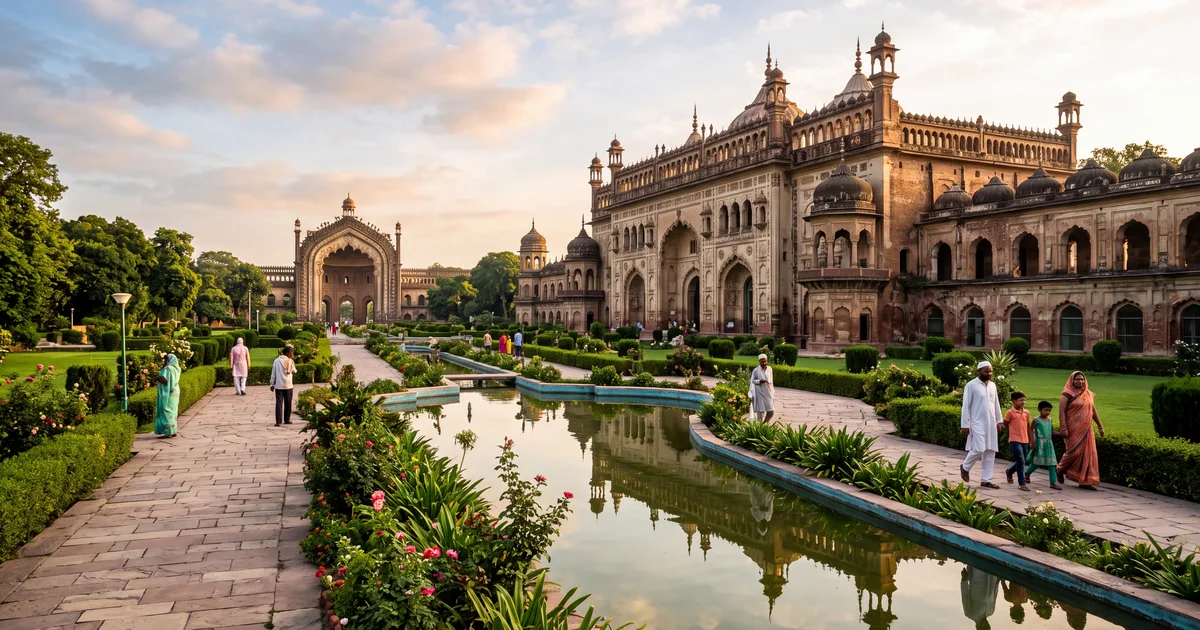
Lucknow has this strange ability to feel slow and grand at the same time. The auto rickshaw drivers will argue about the fare for ten minutes, then refuse to take the extra five rupees because hospitality matters more. The monuments are enormous, the food is absurdly good, and nobody seems to be in a rush except the tourists trying to see everything in one day.
I have a problem with most Lucknow guides: they list 30 spots as if someone is going to visit a park, three museums, two tombs, and a zoo before lunch. You are not. The city works best at a pace where you stop for chai between monuments and take the long route through the old lanes. Here is what actually deserves your time.
TL;DR
- Bara Imambara and its Bhool Bhulaiya labyrinth are the single best thing in the city. Go at 9 AM.
- The kebab trail starts at Tunday Kababi in Chowk and ends wherever your stomach gives up.
- October to March is visiting season. Summers cross 45°C and the marble floors will burn your feet.
- Two days is enough for the core. Three days if you want to properly explore Chowk bazaar and the newer side of town.
- Most monuments cluster within 4 km in the old city. Hire an auto for the full day (₹500 to ₹700).
Is Bara Imambara the Best Monument in Lucknow?
Yes. There is no close second.
Built in 1784 by Nawab Asaf ud Daula during a famine (the construction was a relief project employing 22,000 workers), Bara Imambara contains the largest hall in Asia with no external support beams. The central hall stretches 50 metres long and 15 metres wide. No pillars, no iron, no concrete. Just interlocking brick and lime mortar holding up a ceiling that should not work but has lasted 240 years.
The labyrinth is upstairs. The Bhool Bhulaiya is a maze of 489 identical doorways spread across the upper floors. Every corridor looks the same. Some passages are dead ends. Some open onto rooftop views of the entire old city. You will need 30 to 40 minutes to navigate it, and a guide (₹200) is worth hiring unless you genuinely enjoy being lost.
One caveat: the labyrinth has no lighting in several sections. Bring your phone flashlight. The steps are steep and uneven, not suitable for anyone with knee problems or young children under 5.
Entry is ₹50 for Indian nationals, ₹500 for foreign tourists. The composite ticket (₹60) also covers the Chhota Imambara nearby. Visit at 9 AM when it opens to avoid school groups that arrive by 11.
Rumi Darwaza and the Old City Walk
The Rumi Darwaza stands 18 metres tall at the entrance to old Lucknow, modelled after the Sublime Porte in Istanbul. Nawab Asaf ud Daula built it the same year as Bara Imambara. At sunset, the warm sandstone catches orange light and the proportions look even more impossible than they are.
You cannot go inside the gate itself, but the 10 minutes you spend photographing it from the road is enough. What surrounds it matters more.
Walk south from Rumi Darwaza into the Chowk area. This is the oldest commercial district in the city, active since the 1700s. The lanes are narrow. Chikan embroidery shops occupy every second storefront. The scent of slow cooked meat hits you before you see the food stalls.
Skip the guided "heritage walks" that cost ₹1,500 per person. The Chowk area is a 1 km loop and works perfectly well on foot with a phone map. The main landmarks (Akbari Gate, the clock tower, Tunday Kababi) sit along one stretch.
If you are into textiles, the chikan work here is real, unlike the machine printed versions in Hazratganj. A hand embroidered kurta takes 3 to 6 months to make and starts at ₹1,200 for basic cotton. The shop owners will show you the stitch patterns if you ask. That is Lucknow's tehzeeb at work.
What Should You Actually Eat in Lucknow?
Every guide will tell you "try the kebabs." That is like telling someone in Paris to "try the bread." It is true but unhelpfully vague.
The kebab trail has a specific geography. Start in Chowk at Tunday Kababi (Naaz Cinema branch, not the Aminabad one). The galawati kebab here uses 160 spices ground to a paste, pressed flat, and cooked on a tawa. One plate costs ₹80 and contains 4 pieces. They melt. That is not a metaphor. The mince is so finely ground that structure disappears the moment it touches your tongue.
From Tunday, walk 200 metres east to Raheem's for nihari (slow braised beef shank, served at 6 AM, sold out by 10 AM on Sundays). Then Idris Ki Biryani near Akbari Gate for the Lucknawi biryani, which is lighter than the Hyderabadi version because the rice is parboiled separately.
For dessert, Prakash Ki Kulfi in Aminabad has been freezing kulfi in earthen pots since the 1940s. The matka kulfi (₹40) is dense enough to eat with a spoon that stands upright in the cup. End at any Sheermal bakery for the saffron flatbread that locals eat with korma.
My suggestion: skip any restaurant in Hazratganj that advertises "authentic Awadhi cuisine" in English on the signboard. The real food is in Chowk and Aminabad. The English signboard places serve a hotel version of the same dishes at three times the price.
How Does the British Residency Tell Lucknow's Colonial Story?
The British Residency is the most emotionally complicated building in the city. It was the site of the 1857 siege during India's First War of Independence, where British families and Indian sepoys fought for 87 days. The complex still has cannonball marks on every wall. Parts of the building are roofless, left as they were after the bombardment.
The grounds cover 33 acres. Ruined walls, memorial plaques, and a small museum with letters, weapons, and photographs from 1857 fill the space. The cemetery in the back holds graves of officers and families who died during the siege.
Walk the perimeter slowly. It takes 90 minutes. The banyan trees have grown through the collapsed rooms. It is beautiful and uncomfortable at the same time.
If colonial history does not interest you, skip it. This is not a place for casual sightseeing. There is no "fun" angle. The value is entirely in the history, and you either find that compelling or you don't.
Entry is ₹25 for Indian nationals, ₹300 for foreign tourists. Open sunrise to sunset. The light is best before 10 AM when the ruins cast long shadows across the lawn.
Ambedkar Memorial Park: Is It Worth the Auto Ride?
Yes, but adjust your expectations. This is not a historical monument. It is a modern political memorial built in 2008 at a cost of ₹7 billion, spread across 42 hectares of pink sandstone and red granite.
The park honours Dr. B.R. Ambedkar and other social reformers. The architecture is deliberate: massive elephants carved in stone, wide open plazas, and a central dome meant to echo Buddhist stupas. The scale is startling. You could fit four football fields inside the main plaza.
Opinions on this park divide sharply. Some visitors love the geometry and the empty space. Others find it cold and politically motivated. I lean toward the former, but I can see both sides.
The park sits 8 km from the old city, across the Gomti River in the newer Lucknow. Auto fare from Bara Imambara is ₹150 to ₹200. Plan 45 minutes for the visit. Go in the evening when the monuments are lit.
There is no shade. Summer visits are miserable. Water and sunscreen are non negotiable from March onward.
What Else Deserves a Visit?
Chhota Imambara sits 1 km from its larger neighbour. Built in 1838 by Nawab Muhammad Ali Shah, it goes harder on the ornamentation. Belgian chandeliers hang from the ceiling. A silver throne used for religious processions sits at the centre. The interior is gaudy in a way that somehow works. Allow 30 minutes. The composite ticket from Bara Imambara covers entry.
Hazratganj is where Lucknow switches from Nawabi to colonial. The main shopping street was designed by a British architect in 1810 and still has some of those facades standing. Today it is a wide boulevard with chain stores, bookshops, and a few cafes that are actually good. The Mayfair cinema (1940s, now a multiplex) and the old Sahara Ganj mall bookend the 1.5 km stretch. Walk it after 5 PM when the street food vendors set up.
The Gomti Riverfront promenade runs 3 km along the river between Gomti Barrage and Ambedkar Park. Morning joggers use it. The sunset over the water with the old city skyline behind is the most underrated view in Lucknow. Free, uncrowded, open 24 hours.
Lucknow Zoo (Nawab Wajid Ali Shah Zoological Garden) has been open since 1921, making it the oldest in Uttar Pradesh. If you have children or a third day to fill, the white tiger and sloth bear enclosures are well kept. Entry is ₹50. Skip it if you are short on time because the old city should come first.
How to Plan Two Days in Lucknow
Day 1: Start at Bara Imambara (9 AM, 2 hours with the labyrinth). Walk to Chhota Imambara (30 minutes). Continue to Rumi Darwaza (10 minutes). Enter Chowk bazaar and eat at Tunday Kababi for lunch. Spend the afternoon exploring chikan shops and the Akbari Gate area. Evening chai at a Chowk rooftop stall.
Day 2: Morning at the British Residency (9 AM, 90 minutes). Auto to Hazratganj for brunch at a cafe. Walk Hazratganj and shop for an hour. Auto to Ambedkar Memorial Park (45 minutes visit). End at the Gomti Riverfront for sunset.
The full day auto rate should be ₹500 to ₹700 for a shared auto in 2026. Ola and Uber work in Lucknow but surge pricing during peak hours makes autos cheaper for short hops.
One final note: Lucknow is a city where talking to people is part of the experience. The auto driver will tell you which biryani place is better than Idris. The chikan shop owner will explain the difference between shadow work and tepchi stitch. The monument guard will share stories that no guidebook includes. Slow down, listen, and the city opens up in ways that a checklist of 20 places never captures.
For group trips and curated departures from Lucknow, check current options on TripzSearch. If you are planning a longer Uttar Pradesh itinerary, Lucknow pairs well with Varanasi (a 5 hour train ride east) and Agra (4 hours west), though each city deserves its own two days. Browse more destinations for trip ideas that include Lucknow as a stop.
Frequently asked questions
- What are the must visit places in Lucknow?
- Bara Imambara for the labyrinth, Rumi Darwaza for the photo, Hazratganj for shopping and street food, and Ambedkar Memorial Park for scale. Add the British Residency if colonial history interests you. Five spots, two days, and you will cover the core.
- How many days are enough for Lucknow?
- Two full days cover the old city monuments and the food trail comfortably. Three days let you add Ambedkar Memorial Park, the zoo, and a half day in the Chowk bazaar area. Most travellers find two days ideal because the main attractions sit within a 6 km radius.
- What is Lucknow famous for?
- Lucknow is known for Nawabi era architecture, Awadhi cuisine (especially tunday kebabs and biryani), chikan embroidery, and its tehzeeb (etiquette). The city was the capital of the Awadh region under the Nawabs from 1722 to 1856, and much of that built heritage still stands.
- What is the best time to visit Lucknow?
- October to March is the best window. November and February are ideal with daytime temperatures around 20 to 25°C. Summers (April to June) hit 45°C and the monuments become unbearable by noon. Monsoon (July to September) brings humidity but fewer crowds.
- Is Lucknow safe for solo travellers?
- Lucknow is one of the safer north Indian cities for solo travellers, including women. Hazratganj and Gomti Nagar areas are well lit and busy until late. The old city (Chowk) gets quieter after 9 PM, so keep auto rickshaw numbers handy. Standard urban precautions apply.
- How do I reach Lucknow from Delhi?
- The fastest option is a 1 hour flight (multiple daily airlines, fares from ₹2,500). The Lucknow Shatabdi takes about 6.5 hours by train. Driving on the Agra Lucknow Expressway covers 550 km in 6 to 7 hours. Trains and flights both land you centrally.
- Where to eat the best kebabs in Lucknow?
- Tunday Kababi in Chowk (the original shop, open since 1905) is the starting point. Idris Ki Biryani near Akbari Gate for biryani, Prakash Ki Kulfi in Aminabad for dessert, and Raheem's near Akbari Gate for nihari. Go before 1 PM on weekends or expect a 30 minute wait.