Best Places to Visit in Lonavala (2026): Viewpoints, Forts and Monsoon Tips
15 best places to visit in Lonavala in 2026 with viewpoints, forts, waterfalls and practical monsoon tips for a weekend from Pune or Mumbai.
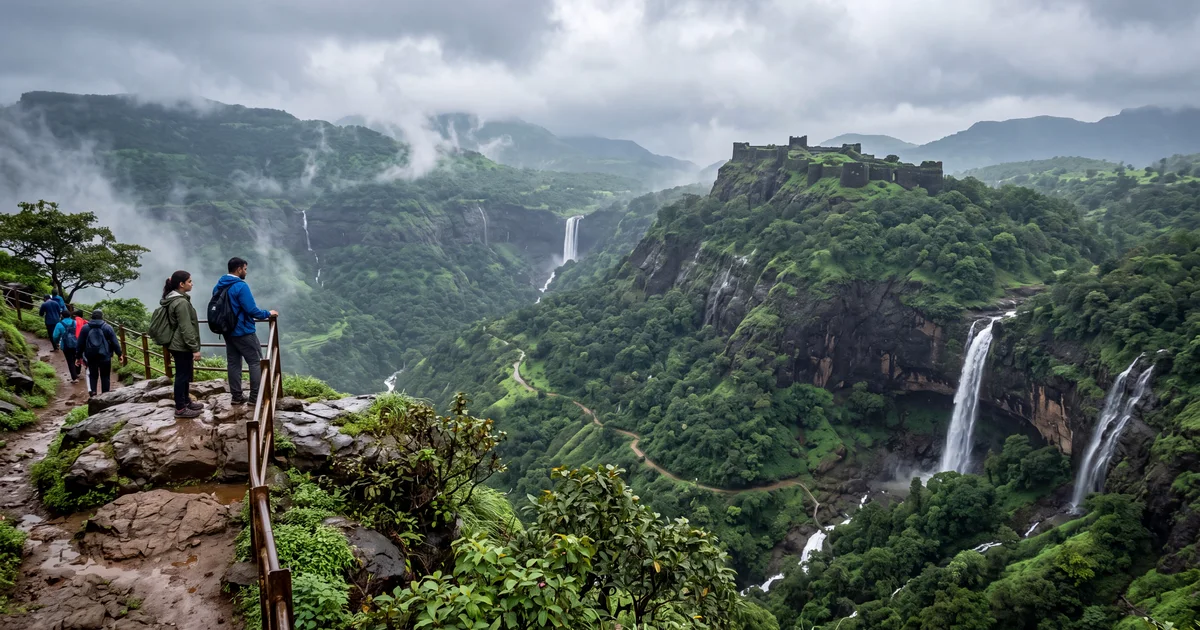
Lonavala is the weekend pressure valve for Pune and Mumbai. On any given Saturday between June and September, roughly half the cars on the Mumbai Pune Expressway seem to be heading there. That popularity is both the point and the problem.
The places to visit in Lonavala are easy to list. Bhushi Dam, Tiger's Leap, some forts, some waterfalls. But the experience varies wildly depending on when you go, which month you pick, and whether you show up at 7 AM or noon. The same viewpoint that gives you a clear 50 km panorama in October turns into a wall of white cloud in August. Both are worth seeing. They are just different trips.
This guide covers both versions of Lonavala, the monsoon spectacle and the dry season trek, along with practical details that make a real difference to your day.
TL;DR
- Monsoon (June to September) is the scenic peak: waterfalls at full force, green ghats, cloud cover at the viewpoints. Also the muddiest and most crowded.
- Fort treks (Lohagad, Rajmachi, Visapur) are better in October to February when trails are dry and visibility is clear.
- Tiger's Leap and Lion's Point are the two viewpoints worth your time. Shooting Point and Lonavala Lake are skippable.
- Bhushi Dam is fun in monsoon but turns into a concrete slab by November. Go only if the rain is active.
- Lonavala station is on the Mumbai Pune local train line. You do not need a car for a basic trip.
Which Viewpoints in Lonavala Are Actually Worth the Stop?
Lonavala has about a dozen named viewpoints. Half of them are the same ghat edge with a different signboard. These are the ones that justify the walk or the drive.
Tiger's Leap (Tiger Point). The cliff edge drops about 650 metres into a forested valley. On a clear day (common in October to February), you can see the plains of the Konkan stretching toward the coast. In monsoon, the valley fills with clouds that rise from below, occasionally breaking to reveal the green slope beneath. The walkway to the main viewpoint is paved and takes 5 minutes from the parking lot. There is a small entry fee (10 to 20 rupees). A chai stall operates at the top.
The caveat: on monsoon weekends, the parking area fills by 9 AM. Get there early or walk from the main road (about 1.5 km).
Lion's Point. Similar valley view as Tiger's Leap, but from a slightly different angle. The road to Lion's Point is narrower, and the viewpoint itself has fewer vendors and less crowd. If you are choosing between the two and want quiet, pick this one. The sunset from here is better than at Tiger's Leap because the cliff faces west.
Duke's Nose (Khandala). A rocky promontory shaped (loosely) like the Duke of Wellington's nose. The viewpoint is technically in Khandala, about 5 km from Lonavala town. The trek to the nose tip takes 30 to 45 minutes from the trailhead near the INS Shivaji compound. The trail is rocky and exposed, so skip it during active rain. On clear days, the view of the railway line threading through the ghat below is the highlight.
My opinion: Tiger's Leap in monsoon and Lion's Point at sunset in winter are the two combinations worth building a trip around. The rest of the viewpoints are similar enough that you can skip them unless you are specifically filling time.
What About Bhushi Dam and Lonavala's Waterfalls?
Bhushi Dam is the most visited spot in Lonavala. It is also the most divisive. Here is what you are walking into.
The dam is a small overflow weir on the Indrayani River, about 3 km from Lonavala station. In monsoon, water cascades over the stepped dam wall, and hundreds of visitors sit on the steps as the overflow washes over their feet. It is loud, wet, and chaotic. Street food vendors line the approach road (corn, bhajiya, cutting chai). The atmosphere is pure Pune on a Saturday.
Outside monsoon, Bhushi Dam is a dry concrete structure with a trickle of water and some algae. Not worth the trip.
Safety note: the rocks around Bhushi Dam are extremely slippery when wet. Every monsoon, the local news reports injuries from falls. Wear shoes with grip (not sandals, not chappals) and watch your footing on the stepped sections. The flow can be strong enough to push you off balance during heavy rain spells.
Kune Waterfalls. The tallest waterfall in the area at about 200 metres, visible from the Mumbai Pune Expressway during monsoon. The falls are 3 km from Khandala. You can see them from the road, but the base trail is steep and poorly maintained. Worth a photo stop from the viewing area. Not worth the scramble to the base unless you are okay with leeches and mud.
Bushi Dam overflow vs. Kune: if you only have time for one water experience, Bhushi Dam is more fun for groups (you get wet, there is food, the energy is festive). Kune is better as a scenic stop on the drive between Mumbai and Pune.
Reverse Waterfall (near Lohagad). During peak monsoon, the wind updraft along the ghat edge pushes water upward, creating a mist that rises instead of falling. It is visible from the plateau road near Lohagad Fort. Strange to witness the first time. Timing is unpredictable (it needs strong westerly wind and heavy rain), so treat it as a bonus if you are already heading to Lohagad, not as a planned destination.
Are the Fort Treks Near Lonavala Worth Doing?
Three forts sit within an hour of Lonavala, and they are the reason repeat visitors keep coming back.
Lohagad Fort. 18 km from Lonavala. The drive to the base village (Lohagadwadi) takes about 30 minutes. The trek from there is roughly 350 steps, mostly paved, and takes 20 to 30 minutes. The fort sits at 1,033 metres and offers views of Pawna Lake on one side and the Sahyadri plateau on the other. Lohagad is the easiest of the three forts and suitable for families. The Vinchukata (scorpion tail) bastion at the northern tip is the most photographed spot.
Best visited October to February. In monsoon, the steps are slippery and the views are usually clouded. But if you get a window between showers, the green on the surrounding hills is extraordinary.
Visapur Fort. Directly adjacent to Lohagad (you can see it from the Vinchukata bastion). The trail branches off from the Lohagad route and is steeper, less maintained, and takes about 45 minutes more. Visapur is larger and wilder than Lohagad, with remnants of old water cisterns and walls. Fewer tourists come here, which is the appeal. Carry water and snacks because there are no vendors at the top.
Rajmachi Fort. The most demanding of the three. Rajmachi has two approaches: the easy dirt road from Lonavala (15 km, 4 to 5 hours walking or accessible by 4x4 in dry season) or the steep Kondivade trail from Karjat (about 3 hours, proper trek). The fort complex has two bastions (Shrivardhan and Manaranjan) and a village in between where you can get basic food and water. Camping at Rajmachi in monsoon is a popular overnight trip from Pune and Mumbai.
The Kondivade route in monsoon is leech territory. Gaiters or tucked in socks are necessary, not optional. If leeches bother you, go between November and February.
What Can You See at the Karla and Bhaja Caves?
Most Lonavala guides mention Karla and Bhaja as a side note. They deserve more attention than that.
Karla Caves (11 km from Lonavala) are Buddhist rock cut caves dating to the 2nd century BCE. The main chaitya hall (prayer hall) is the largest in India from that period: 14 metres wide, 45 metres long, with a vaulted ceiling carved from a single rock face. The entrance has a carved elephant screen and a standing Buddha figure. A Hindu temple (Ekvira Devi) sits at the top of the cave hill, built into the cave complex, and sees regular worship.
The climb from the parking lot is about 250 steps. Vendors sell lime soda and fruit at the base. Entry is 25 rupees for Indians. The caves face east, so morning light illuminates the interior; by afternoon, the main hall is dim.
Bhaja Caves (3 km from Karla, closer to Malavli station) are older and quieter. The chaitya here is smaller but has original wooden beams in the ceiling that have survived over 2,000 years. The complex has 22 caves, though most are plain viharas (monk cells). A small waterfall flows beside the cave complex in monsoon.
If you have time for only one, go to Karla. It is more impressive in scale. If you are interested in Buddhist architecture or want fewer crowds, Bhaja is more rewarding per hour spent.
How Do You Plan a Weekend in Lonavala Without Wasting Time?
Lonavala is small. The town itself is a single main road with shops, restaurants, and chikki (hard candy) stalls. Everything worth seeing is within a 20 km radius.
One day from Pune (65 km, 1.5 hours). Leave by 6:30 AM. Hit Tiger's Leap first (before crowds), then Bhushi Dam (if monsoon), then lunch. Afternoon: Lohagad Fort or Karla Caves. Back in Pune by 7 PM. This works well as a Saturday trip.
One day from Mumbai (83 km, 2 hours). Same itinerary, but add 30 to 60 minutes of travel each way. The Expressway toll is about 305 rupees for a car (one way). If driving back on a Sunday evening, leave Lonavala by 4 PM to avoid the return traffic bottleneck at the Khopoli ghat section.
Two days. Day 1: viewpoints and Bhushi Dam. Day 2: Lohagad (or Rajmachi if you are up for a longer trek) plus Karla Caves. This pace lets you enjoy things instead of rushing between parking lots.
By train. Lonavala station is on the Mumbai Pune local train line. From Pune (Shivajinagar or Pune Junction), the local train takes about 2 hours and costs under 50 rupees. From Mumbai CST, trains to Lonavala run every hour and take about 2.5 hours. Once in Lonavala, shared autos and local taxis cover all the nearby spots. A full day auto (hired from the station) costs 800 to 1,200 rupees.
Compare group trip options and fixed departures to Lonavala on TripzSearch. Trips from Pune and trips from Mumbai both list weekend getaway packages that include transport and guided fort treks.
What Should You Know Before Going to Lonavala in Monsoon?
Monsoon Lonavala is a different animal. The green is electric, the waterfalls are active, the clouds sit at road level. It is also wet, crowded, and occasionally dangerous.
Roads. The ghat sections of the Mumbai Pune Expressway are well maintained, but visibility drops below 20 metres during heavy rain. The old Mumbai Pune Highway via Khandala is scenic but narrow and landslide prone in July and August. Stick to the Expressway if conditions look bad.
Leeches. Any forest trail between July and September has leeches. Salt or tobacco paste removes them. The Rajmachi trek (Kondivade route), the Duke's Nose trail, and the paths around Kune Falls are the worst for them. Tuck trousers into socks and check your shoes every 15 minutes.
Crowds. Saturday mornings between July and September see the highest traffic. If you can shift your trip to a weekday, the experience improves dramatically. A Wednesday in August at Tiger's Leap has maybe 30 people. A Saturday has 300.
Food. Lonavala's main road has dozens of chikki shops, vada pav stalls, and small restaurants. The local staple is Maggi and corn at viewpoint parking lots. For a sit down meal, Rama Krishna near the station serves reliable Maharashtrian thali. Avoid the restaurants right at Tiger's Leap or Bhushi Dam; they charge tourist markups on the same food you get for half the price on the main road.
Accommodation. Budget rooms near the station go for 1,000 to 2,500 per night. Mid range resorts with pools (INR 4,000 to 8,000) cluster along the old highway between Lonavala and Khandala. Book 2 weeks ahead for monsoon weekends. Walk in availability during peak weeks (late July, August) is unreliable.
One thing nobody warns you about: the return traffic. On Sunday evenings from June to September, the Mumbai Pune Expressway near the Lonavala exit backs up for 5 to 10 km. If heading back to Pune, leave by 3 PM. If heading to Mumbai, leave by 2 PM or wait until after 8 PM when the traffic clears. This alone can save you 2 hours of sitting in a jam.
Frequently asked questions
- What is the best time to visit Lonavala?
- June to September (monsoon) is when Lonavala looks its best, with waterfalls at full force, green ghats, and low clouds. October to February is drier and cooler, better for fort treks and clear views. March to May gets hot (above 35°C) and the waterfalls dry up.
- How far is Lonavala from Pune and Mumbai?
- Lonavala is 65 km from Pune (about 1.5 hours by road via the Expressway) and 83 km from Mumbai (roughly 2 hours via the Mumbai Pune Expressway). Local trains from both cities also stop at Lonavala station.
- Is Lonavala worth visiting outside monsoon?
- Yes, but the experience changes. Fort treks like Lohagad and Rajmachi are better in October to February because trails are dry and views are clear. Waterfalls like Kune and Bhushi Dam are only worth seeing during the monsoon. Plan based on what you want to do.
- Can I do a one day trip to Lonavala from Pune?
- A day trip covers 3 to 4 spots comfortably. Start early (before 7 AM), hit Tiger's Leap and Bhushi Dam in the morning, grab lunch at a local dhaba, and visit Lohagad Fort or Lion's Point before heading back. Two days lets you add Rajmachi and the Karla caves.
- What should I carry for a Lonavala monsoon trip?
- Waterproof shoes with grip (trails get slippery), a rain jacket (umbrellas are useless in ghat wind), a dry bag for your phone, and a change of clothes. Leeches are common on forest trails between July and September, so tuck trousers into socks.
- Is Lonavala and Khandala the same place?
- They are separate hill stations about 5 km apart on the same ghat road. Khandala is smaller and quieter, with fewer commercial spots. Duke's Nose and Amrutanjan Point are in Khandala. Most people visit both in a single trip since they sit along the same stretch.