12 Best Places to Visit in Lansdowne (2026): The Quiet Hill Town That Delhi Forgot
The best places to visit in Lansdowne in 2026, from Tip n Top viewpoint to Bhulla Tal lake. A real guide to Garhwal's quietest cantonment town with travel tips.
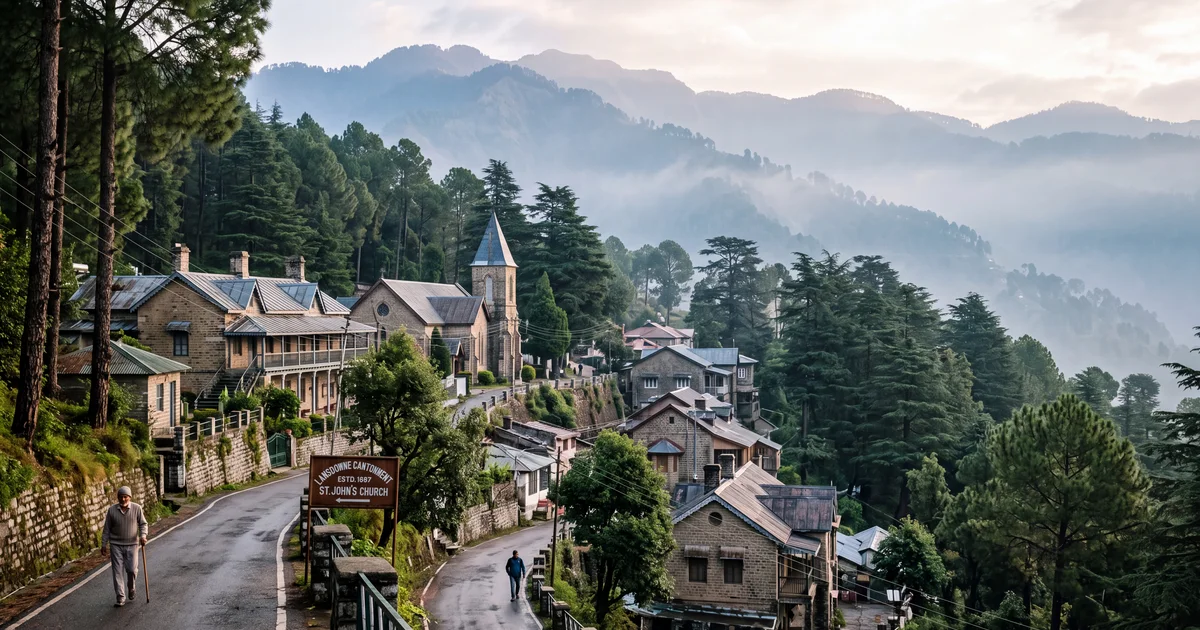
Lansdowne is the hill station that never learned how to market itself. No adventure sports outfits line the main road. No bungee jumping. No paragliding operators shouting rates at you. The town has a lake, some viewpoints, a colonial church, and 38,000 deodar trees. That's it.
This is exactly why people who have been to Lansdowne tend to come back.
The town sits at 1,706 metres in the Pauri Garhwal district of Uttarakhand, about 260 km from Delhi. The Indian Army's Garhwal Rifles regiment has its regimental centre here, which explains why the roads are clean, the trees are intact, and the construction boom that hit Mussoorie and Nainital skipped this place entirely. Lansdowne in 2026 looks roughly the same as Lansdowne in 1996. For a hill station in North India, that is remarkable.
TL;DR
- Best viewpoint: Tip n Top (360 degree panorama, free entry, 10 minute walk from town centre)
- Best quiet spot: Bhulla Tal (small lake surrounded by deodar, boating available for 100 rupees)
- Best time to visit: October to February for Himalayan views, below 10 degrees Celsius at night
- Getting there: 6 to 7 hours from Delhi via Kotdwar; nearest rail station Kotdwar (40 km)
- Who it suits: Couples, solo travellers, families who want quiet over activity
What kind of place is Lansdowne?
Lansdowne is not Shimla. It is not Mussoorie. It does not have a Mall Road packed with tourists, and there is no cable car or ropeway.
The town covers roughly 7 square kilometres on a ridge in the Garhwal hills. The population is around 20,000. The main market, called "The Mall" by locals, is a single street with a handful of shops selling tea, snacks, and woollen caps. Everything closes by 8:30pm.
What Lansdowne has is trees. The forest cover here is dense, mostly deodar and blue pine, with stretches of oak. Walking through it on a November morning, with mist threading between the trunks and the ground soft with pine needles, feels nothing like a tourist hill station. It feels like a forest that happens to have a small town in it.
The cantonment presence shapes everything. Roads are maintained. Garbage collection works. Construction is restricted. The Army runs a well kept war memorial and a museum. None of this is tourist infrastructure. It is military infrastructure that tourists get to use.
Places to visit in Lansdowne
Tip n Top viewpoint
Tip n Top sits at the highest point in Lansdowne town, about a 10 minute walk uphill from the market. On a clear day between October and February, you can see snow covered Himalayan peaks to the north, including a partial view of the Chaukhamba massif on exceptionally clear mornings.
The viewpoint is a simple concrete platform with a railing. No entry fee. No gift shops. The view is the whole point, and it delivers when the weather cooperates.
The honest caveat: "clear day" is doing a lot of work in that sentence. Lansdowne sits in a moisture zone where fog rolls in without warning. If you have two days, keep this viewpoint for whichever morning is clearer. Rushing here on arrival day is a gamble.
Bhulla Tal
Bhulla Tal is a small artificial lake about 1.5 km from the town centre, built and maintained by the Indian Army. The lake itself is modest. Maybe 200 metres across. But the setting makes it: deodar trees on three sides, a walking path around the perimeter, and almost no crowd on weekday mornings.
Boating costs about 100 rupees for 30 minutes. The boats are basic paddle boats, not exactly scenic cruises, but the lake is calm and the forest backdrop is pleasant.
The walk from town to Bhulla Tal passes through dense forest and is arguably more enjoyable than the lake itself. Take the forest path, not the road. It adds 15 minutes but removes the traffic.
St. Mary's Church
St. Mary's Church was built in 1895 by the British and sits near the cantonment area. The building is a simple stone and wood structure with stained glass windows, now largely unused for regular services. The churchyard has several old gravestones from the colonial period, some dating to the early 1900s.
It is worth a 15 minute stop. The architecture tells a story about who Lansdowne was built for and when. The church sits on a slight rise with a view of the valley, and on quiet mornings the only sound is wind through the adjacent deodar grove.
Garhwal Rifles Regimental War Memorial and Museum
The Garhwal Rifles regiment has been based in Lansdowne since 1887. The war memorial is a well maintained garden with a central monument honouring soldiers killed in conflicts from World War I to Kargil. The adjacent museum displays weapons, uniforms, medals, and photographs spanning over a century.
This is not a typical tourist museum. The displays are sober, factual, and well labelled. The section on the 1999 Kargil conflict includes personal letters and equipment. It is one of the better regimental museums in the country.
Entry requires an ID proof for civilians. Photography may be restricted in some sections. Open from 10am to 5pm, closed on Mondays.
Tarkeshwar Mahadev Temple
Tarkeshwar Mahadev is a Shiva temple located about 35 km from Lansdowne, deep inside a deodar forest at roughly 2,100 metres elevation. The drive from town takes about 90 minutes on a narrow mountain road.
The temple itself is modest. The real draw is the forest. The deodar trees in this stretch are old growth, with trunks over a metre in diameter. The final 2 km to the temple is a walk through this forest, and on a winter morning the silence is almost total.
The caveat: the road to Tarkeshwar is narrow and in variable condition. After heavy rain, sections can be impassable for regular cars. Check conditions locally before driving up, especially during or just after monsoon.
Durga Devi Temple
Durga Devi Temple sits on the edge of town, overlooking the valley. The temple is small and not architecturally significant, but the terrace offers one of the better sunset views in Lansdowne. On clear evenings, the Shivalik range turns orange and then blue over about 20 minutes.
Most locals treat it as an evening walk destination rather than a religious visit. The path from town is about 1 km and mostly flat.
Bhim Pakora
Bhim Pakora is a pair of balanced rocks on the outskirts of town, supposedly placed there by Bhima of the Mahabharata. The rocks are large, maybe 3 metres tall, and sit on a narrow ridge. Despite appearing unstable, they do not move.
Geologically, they are glacial erratics, boulders deposited by retreating ice thousands of years ago. As a "tourist attraction" they take about five minutes to see. As a walk through the surrounding forest, the trip is worth 30 minutes.
Hawaghar (House of Winds)
Hawaghar is a ridge viewpoint about 2 km from the town centre. The name comes from the wind that blows through this gap in the hills, which on some days is strong enough to make standing comfortably difficult.
The view from Hawaghar faces south over the Shivalik foothills. It is different from the Tip n Top perspective, which looks north toward the higher Himalaya. Combine both on the same day for a complete picture of the geography around Lansdowne.
Is Lansdowne worth visiting or is it overhyped?
This depends entirely on what you expect from a hill station.
If you want activities, shopping, nightlife, or Instagram worthy adventure sports, Lansdowne will bore you by noon on the first day. The town does not have these things and is not trying to develop them.
If you want to walk through forests, read on a balcony with a mountain view, eat simple meals at a local dhaba, and sleep in a town that goes quiet by 9pm, Lansdowne is one of the best options within a day's drive of Delhi. The absence of commercial tourism is the feature, not the bug.
The comparison that works: Lansdowne is to Mussoorie what Panchgani is to Lonavala. Smaller, quieter, less developed, and better for it.
One real limitation: there is not enough in Lansdowne to fill three full days. Two nights is the sweet spot. Arrive by afternoon, spend one full day visiting viewpoints and the museum, and leave the next morning. Stretching beyond that means repeating walks, which is fine if you like walking but frustrating if you came expecting a packed itinerary.
How to reach Lansdowne from Delhi
The most common route is driving. Delhi to Lansdowne is about 260 km, typically taking 6 to 7 hours. Take NH9 toward Haridwar, turn off toward Kotdwar before reaching Haridwar, and climb from Kotdwar to Lansdowne on a winding mountain road. The last 40 km from Kotdwar takes about 90 minutes.
By train, the nearest station is Kotdwar, connected by daily trains from Delhi (Old Delhi and Haridwar Junction). The journey takes about 5 to 6 hours. From Kotdwar, shared jeeps to Lansdowne run through the day and cost roughly 150 to 200 rupees per person.
There is no airport nearby. The closest airport is Jolly Grant in Dehradun, about 150 km from Lansdowne, but the road connection from Dehradun is longer and more winding than from Kotdwar.
For group trips from Delhi, check group trip options from Delhi on TripzSearch. Organised weekend departures typically include transport, accommodation, and a basic sightseeing schedule.
Where to stay in Lansdowne
Accommodation in Lansdowne falls into three categories.
Army rest houses and guest houses, which are the best maintained properties in town. Some are open to civilians, especially during off peak months. Check availability through the cantonment board or Army welfare booking counters.
Government rest houses run by GMVN (Garhwal Mandal Vikas Nigam) are functional and cheap. The GMVN tourist rest house near Tip n Top is the most popular, offering rooms between 1,200 and 2,500 rupees per night. Book ahead for weekends.
Private hotels and homestays have multiplied in recent years but remain small. Do not expect star hotel amenities. Hot water can be inconsistent in budget places during winter. The better private stays are on the ridge road with valley views.
When is the best time to visit Lansdowne?
October to February is the clearest and most comfortable window. Daytime temperatures range from 10 to 20 degrees Celsius, nights drop to 2 to 8 degrees, and visibility is good enough for Himalayan views on most mornings. December and January bring occasional frost, sometimes snowfall.
March to June is warmer, between 15 and 30 degrees, and comfortable compared to the 45 degree heat of the Delhi plains. The forest is lush but Himalayan views are hazy.
July to September is monsoon season. Lansdowne gets heavy rainfall, and the approach road from Kotdwar is prone to landslides. Unless you specifically enjoy hill station monsoons (some people do), avoid this window.
Lansdowne for group and solo travellers
Lansdowne works well for small groups (4 to 8 people) who want a quiet weekend. The town is compact enough to explore on foot, and the absence of nightlife means group activities centre around meals, walks, and sitting outdoors with tea.
Solo travellers find Lansdowne particularly peaceful. The cantonment security means the town feels safe at all hours. Cafes and dhabas in the market area are used to solo visitors. The walks around town are pleasant alone because the trails are short and well marked.
For finding group travel options or browsing destinations across India, TripzSearch lists current departures and pricing so you can compare before booking.
Quick itinerary: Lansdowne in 2 days
Day 1 (arrival afternoon): Walk to Bhulla Tal via the forest path. Evening at Durga Devi temple for sunset. Dinner at a market dhaba.
Day 2 (full day): Morning at Tip n Top viewpoint (go early for best visibility). Walk to St. Mary's Church and the Garhwal Rifles Museum. Afternoon free for forest walks or a second visit to Bhulla Tal. If you have a car, drive to Tarkeshwar Mahadev temple (half day trip).
Day 3 (departure morning): One last walk on the ridge, then head to Kotdwar and onward.
This covers everything worth seeing without rushing. Lansdowne is not a place you sprint through. The town rewards slow mornings and unhurried afternoons.
Frequently asked questions
- What are the top tourist places to visit in Lansdowne?
- Tip n Top viewpoint, Bhulla Tal lake, St. Mary's Church, and Tarkeshwar Mahadev temple are the main sights. Tip n Top gives you a 360 degree view of the Shivalik hills, while Bhulla Tal is a small artificial lake surrounded by deodar and oak forest. Most visitors cover all four in a single day.
- How to reach Lansdowne from Delhi?
- Lansdowne is about 260 km from Delhi, roughly a 6 to 7 hour drive via NH9 through Haridwar and Kotdwar. The nearest railway station is Kotdwar, 40 km downhill, connected by train from Delhi. From Kotdwar, shared jeeps and local buses run to Lansdowne in about 90 minutes.
- What is the best time to visit Lansdowne?
- October to February for clear Himalayan views and pleasant temperatures between 5 and 20 degrees Celsius. March to June is warmer but still comfortable compared to the plains. Avoid July to September unless you enjoy fog and landslide risk on the approach road.
- Is Lansdowne worth visiting for a weekend trip?
- Yes, if you want quiet. Lansdowne has no malls, no adventure parks, and no commercial tourism strip. It is a cantonment town with walks through oak and pine forests, colonial buildings, and views of snow covered peaks on clear days. If you need nightlife or activities every hour, this is not the place.
- Are there any treks near Lansdowne?
- The Tarkeshwar Mahadev temple trek is a 35 km forest trail through dense deodar and pine. The Tip n Top to Bhulla Tal walk covers about 3 km through town with gentle elevation change. For serious trekking, the Chaukhamba viewpoint hike outside town offers Himalayan panoramas but requires local navigation.
- Is Lansdowne safe for solo travellers and women?
- Lansdowne is an active Indian Army cantonment, which means the town is well maintained and orderly. It is one of the safer hill stations in Uttarakhand for solo travellers. The town shuts down by 9pm, so late night options do not exist, but that also means the streets are quiet and well patrolled.