Best Places to Visit in Kasol (2026): Treks, Cafes and the Parvati Valley
12 best places to visit in Kasol in 2026 with treks, cafes, day trips and honest tips for the Parvati Valley from Delhi.
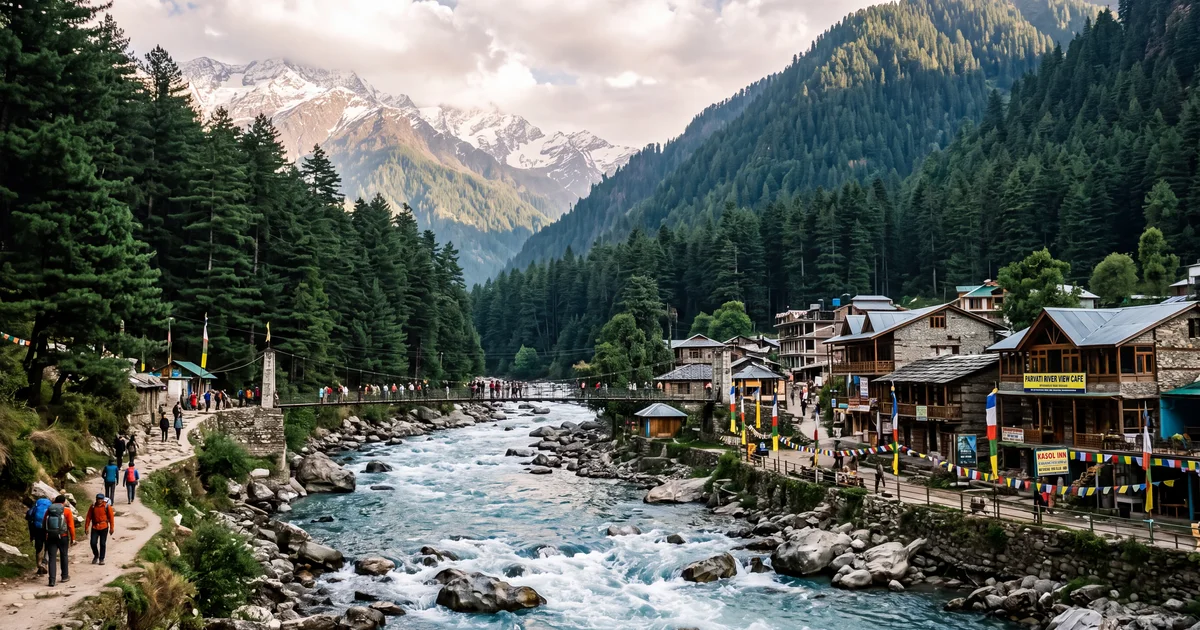
Kasol sits at 1,640 metres in the Parvati Valley, Himachal Pradesh, roughly 520 km from Delhi. The village itself is a 15 minute walk from end to end. That compactness is what makes it work: you get pine forests, a roaring river, mountain cafes, and trailheads to serious Himalayan treks all within a few kilometres of your guesthouse.
But Kasol is not a hidden gem anymore. On a May long weekend, the main road from Bhuntar gets jammed solid for 4 hours. The village population swells from a few hundred to several thousand. If you time it wrong, you will see more Instagram reels being shot than actual mountains.
This guide covers the places to visit in Kasol that hold up whether you get lucky with a quiet weekday or land in peak season chaos.
TL;DR
- Kasol is a compact base camp in the Parvati Valley, best between March and June or September to November.
- The Chalal bridge walk, Rasol village trek, and a cafe day cover 3 full days without rushing.
- Kheerganga (12 km one way) is the marquee trek but needs an extra day and a night at the hot springs.
- Carry cash (the one ATM runs dry) and skip July to August entirely unless you want landslide roulette.
- Budget ₹1,500 to ₹3,000/day for mid range stays, meals, and local transport.
What Are the Best Places to Visit Near Kasol Village?
Chalal
Cross the wooden bridge over the Parvati and walk 30 minutes through pine forest. That is all it takes. Chalal is the closest hamlet to Kasol and the default evening walk for almost everyone staying in the village. The trail is flat, clearly marked, and safe until dusk. A few cafes on the Chalal side stay open until 10 PM in season. What you get: river sounds, no vehicle noise, and a different perspective on the valley without committing to a full trek.
The catch? It is popular enough that you will not be alone on the trail in April or May. Go before 8 AM or after sunset starts if you want relative quiet.
Tosh Village
Tosh perches at 2,400 metres, about 20 km from Kasol by road (or a 4 km uphill walk from Barshaini). The village has views that make Kasol look ordinary: snow peaks, apple orchards, and wooden Himachali houses stacked on a steep hillside. A shared taxi from Kasol to Barshaini costs ₹100 to ₹150, and from Barshaini you walk or take a local jeep the last stretch.
Stay overnight if you can. Tosh at sunrise, when fog fills the valley below and the peaks turn orange, is worth more than any cafe in Kasol. Budget guesthouses run ₹800 to ₹1,500 per night.
Manikaran Sahib
Just 4 km from Kasol (a 15 minute bus ride or a pleasant river walk), Manikaran is a pilgrimage town built around natural hot springs. The Gurudwara and adjacent temple complex sit directly above geothermal vents. Water emerges at 95°C here. The langar at the Gurudwara serves free meals cooked partially with the spring water.
It is crowded, loud, and architecturally chaotic. Worth seeing once, especially the underground hot water caves. Skip it if you have already visited or if crowds drain you.
Which Treks Can You Do From Kasol?
Kheerganga Trek
The most popular trek from Kasol. 12 km one way from Barshaini (the trailhead), gaining about 1,700 metres before levelling out at a high alpine meadow with natural hot spring pools. Most people do it in 5 to 6 hours up, camp overnight, and return the next morning.
The trail is well worn but steep in sections, particularly the final 3 km switchback. Carry at least 2 litres of water and start early (before 7 AM in summer) to avoid midday heat on the exposed sections. Camping costs ₹500 to ₹1,000 for a tent and basic meal. The hot springs at the top are the reward, open pools at 40°C with views of the Parvati gorge below.
One honest caveat: the trail gets dangerously slippery during monsoon, and forest authorities occasionally restrict access between July and September. Check locally before committing to the trek.
Rasol Village Trek
A 3 km, 2 hour uphill walk from Kasol, Rasol sits at 2,900 metres with views down the entire Parvati Valley. The trail starts near the Kasol bridge and climbs steeply through oak and rhododendron forest. It is short but not easy. The gradient is relentless and the final stretch is loose rock.
Rasol itself is a tiny village (under 50 houses) with a few guesthouses and a temple. Most trekkers do it as a day trip, but spending a night here puts you above the cloud line at sunrise.
Grahan Village Trek
Another option that starts from the Kasol bridge, but heads into a different valley. Grahan is 5 km and about 3 hours of steady climbing. The village has a sacred temple that prohibits leather and non vegetarian food within its boundaries. The trail passes through dense forest with almost no other trekkers outside of weekends.
Less popular than Rasol, which is exactly why it feels more rewarding. You will not run into 50 other groups on the way up.
Where Should You Eat in Kasol?
Kasol runs on its cafe culture. The main strip between the bus stand and the bridge has enough options to eat somewhere different for a week. Most cafes serve Israeli, Italian, and Indian food at prices between ₹200 and ₹500 per meal. Here is what to know:
The cafes on the riverside (south bank, past the bridge toward Chalal) tend to be quieter, with better views and slightly higher prices. The ones on the main road are louder, more backpacker oriented, and serve faster.
Most kitchens slow down drastically after October, and some shut by November. If you are visiting in late autumn, confirm that your chosen cafe is actually open before walking 20 minutes to get there.
One opinion worth stating: the food quality in Kasol cafes peaked around 2019. Many newer spots copy the aesthetic (fairy lights, Bob Marley murals) without the kitchen skills. Ask locals or your guesthouse where they eat. The answer is usually more reliable than any travel blog list.
How Do You Plan a Kasol Trip From Delhi?
The standard route: overnight bus from Delhi (Kashmere Gate or Majnu Ka Tilla) to Bhuntar, then a local bus or taxi the remaining 31 km to Kasol. Total travel time is 11 to 14 hours depending on road conditions and the inevitable Aut tunnel queue.
If you drive, the route via Chandigarh (NH44 to NH21) takes 10 to 12 hours with stops. The last 31 km from Bhuntar to Kasol is a single lane road with hairpin bends and frequent landslide debris between June and September. Do not attempt this stretch after dark if you are not familiar with Himachal mountain roads.
Flying option: Bhuntar has a small airport (Kullu Manali Airport, code KUU) with seasonal flights from Delhi. Fares range from ₹4,000 to ₹8,000 one way. From Bhuntar airport, Kasol is a 45 minute taxi ride. Flights get cancelled frequently due to weather, so this works only as a time saving gamble, not a guaranteed plan.
For group trip options departing from Delhi, fixed departure packages handle the transport and stay logistics, which matters when you do not want to negotiate with taxi drivers at 5 AM in Bhuntar.
What Is There to Do in Kasol Besides Trekking?
The river. The Parvati runs right through the village, and on any warm afternoon between March and June, you will find people sitting on the rocks, swimming in calmer sections, or just watching the water. The section near the main bridge is the most accessible. Do not swim after rain, the current strengthens unpredictably and the water temperature drops below 8°C.
Kasol also functions as a supply stop for longer Parvati Valley explorations. You can arrange guides to Sar Pass (closed since 2022 due to environmental concerns, check current status), Pin Parvati, or multi day crossings toward Spiti from here. Several outfitters on the main road sell and rent gear: crampons, sleeping bags, trekking poles. Quality varies. Inspect before paying.
For something lower effort, the walk from Kasol to Manikaran along the river takes about an hour on a paved path and offers consistent valley views without any elevation gain.
Browse available treks and trips if you want a structured itinerary with a group rather than planning each piece separately.
Is Kasol Worth Visiting in 2026?
Kasol works if you use it correctly: as a base, not a destination. The village itself is one main road with cafes and shops. The value is everything around it. Tosh, Kheerganga, Rasol, Grahan, the Parvati Valley extending toward Pulga and beyond.
If you have only 2 days, you are better off picking one trek (Rasol for a day trip, or Tosh for an overnight) and spending minimal time in Kasol village itself. If you have 4 to 5 days, the layered exploration (village, short trek, cafe day, long trek to Kheerganga) works beautifully.
The Kasol destination page has current group departures and operator options for the valley. And for broader Himalayan trek planning, the curated trip listings cover fixed departure options that include transport from Delhi.
Kasol is neither the untouched paradise some 2015 blog posts describe nor the overcrowded nightmare that social media suggests. It is a functional mountain village with excellent access to serious terrain. Time it right (weekdays in May, or September after the monsoon) and it still delivers.
Frequently asked questions
- Is Kasol safe for solo travellers in 2026?
- Kasol is generally safe for solo travellers, including women. The village is small and walkable, most guesthouses are run by local families, and the trekking trails between Kasol and Chalal see foot traffic throughout the day. That said, avoid isolated trails after dark, keep your valuables secure in shared dorms, and carry cash since ATMs in Kasol run dry on weekends.
- How many days are enough for a Kasol trip?
- Three days cover the village, one short trek (Chalal or Rasol), and a cafe crawl without feeling rushed. If you want to add Kheerganga or Tosh, plan for 4 to 5 days total. Anything under 2 days means you will spend most of your time on the bus.
- What is the best time to visit Kasol?
- March to June offers clear skies and comfortable temperatures between 10°C and 28°C, ideal for treks and river activities. September to November is quieter with fewer tourists and post monsoon greenery. Avoid July and August when landslides frequently block the road between Bhuntar and Kasol.
- How do I reach Kasol from Delhi by bus?
- Overnight HRTC Volvo buses run from Kashmere Gate ISBT to Bhuntar (10 to 12 hours, around ₹1,200 to ₹1,500 for a semi sleeper). From Bhuntar, a local bus or shared taxi covers the remaining 31 km to Kasol in about 90 minutes. Direct private buses to Kasol also operate from Majnu Ka Tilla in season.
- Is there an ATM in Kasol?
- There is one SBI ATM in Kasol village near the main market. It frequently runs out of cash on weekends and holidays. The nearest reliable ATM options are in Bhuntar, 31 km away. Carry enough cash for 2 to 3 days and keep a UPI app ready since most cafes and guesthouses now accept digital payments.
- Can I visit Kasol during monsoon?
- Technically yes, but the road from Bhuntar to Kasol is highly landslide prone between mid July and late August. The Parvati river swells dangerously, treks like Kheerganga get shut down by authorities, and several guesthouses close. If you insist on monsoon, September first week onward is safer.