18 Best Places to Visit in Indore (2026): Street Food Capital, Palaces and Mandu
18 best places to visit in Indore in 2026 with timings, food stops, and day trips to Mandu and Ujjain.
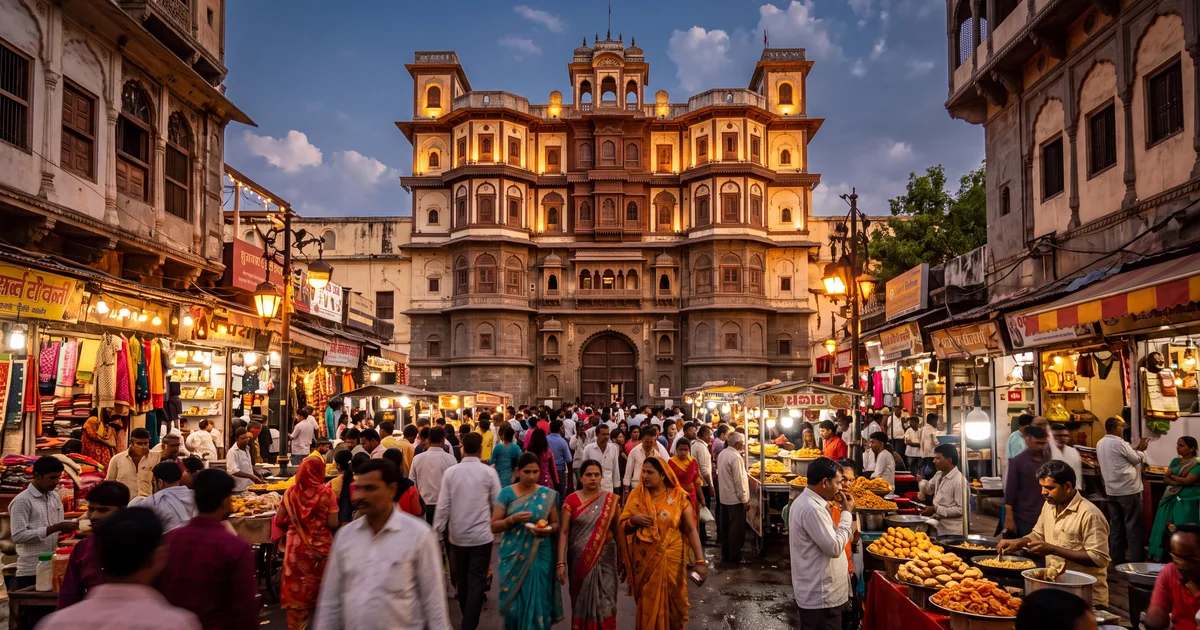
Indore is the largest city in Madhya Pradesh, with about 3.5 million people, a Devi Ahilya Bai Holkar airport that connects to 30 Indian cities, and a street food reputation that has turned it into a weekend destination in its own right. The city sits on the Malwa Plateau at 550 metres elevation, which keeps temperatures 3°C to 5°C below the plains of central India even in summer. Places to visit in Indore split between the Holkar era palaces in the old city, the food markets that run from 6 AM breakfast stalls to 1 AM midnight bazaars, and the waterfalls and Sultanate ruins within 100 km.
The Holkar dynasty ruled from Indore for nearly 200 years, starting in 1733. They left behind Rajwada Palace (seven storeys of mixed Maratha and French architecture), Lal Bagh Palace (with gates from the same Parisian foundry that cast the Eiffel Tower), and a city layout that still follows their original grid. Indore also happens to be India's cleanest city, a title it has held for seven consecutive years in the national Swachh Survekshan rankings. The streets around Rajwada show it.
TL;DR
- Sarafa Bazaar after 9 PM is Indore's signature experience. A jewellery market by day, a street food arena by night.
- Two days cover the city. Add a third for a Mandu day trip (95 km, 2 hours each way).
- October to March is ideal. Summers cross 42°C and the old city is miserable by noon.
- Budget ₹1,000 to ₹2,000 per person per day for stays, food, and transport.
- Eat poha jalebi for breakfast at least once. Indore treats this combination as a religion.
What Makes Rajwada Palace Worth Visiting?
Rajwada sits in the centre of the old city, fronting a busy chowk that fills with vendors by afternoon. The Holkar dynasty built it over 200 years ago as their main residence. The palace is seven storeys tall, a mix of Maratha stone and wood architecture with French balconies and a Gothic style facade that the later Holkar rulers added after visiting Europe.
The front facade is what survives best. A fire in 1984 gutted much of the interior, and the reconstruction is still ongoing. The ground floor museum has Holkar era artefacts: weapons, paintings, coins, and photographs of the dynasty. The upper floors give you views across the old city chowk, which is at its busiest around 5 PM. On select evenings, there is a light and sound show that runs the history of the Holkar dynasty against the palace facade.
Entry is ₹10 for Indians. The palace is open 10 AM to 5 PM. An hour is enough. Go in the late afternoon when the light on the facade is warm and the chowk is alive with the pre Sarafa energy.
The honest caveat: Rajwada looks more impressive from outside than inside. The fire damage is evident and the interiors are sparse compared to palaces in Jaipur or Mysore. But the seven storey facade towering over the old city market remains a striking sight, and the location puts you right where Indore's food scene begins.
How Does Sarafa Bazaar Work as a Night Food Market?
Sarafa Bazaar is a gold and jewellery market during the day. Around 9 PM, after the jewellery shops pull down their shutters, food carts roll in and the entire lane transforms into Indore's most famous eating street. The market runs until 1 AM or later, with some carts staying past 2 AM on weekends.
The lane is about 500 metres long and narrow enough that two people walking abreast brush the carts on both sides. Over 100 vendors set up nightly. Each specializes in one or two items. The variety covers sabudana khichdi, bhutte ka kees (grated corn cooked with cream and spices), malpua, rabdi, jaleba (not jalebi, the Indori version is thicker and crispier), garadu (fried yam available only from November to February), and six or seven types of chaat.
The pricing is absurdly cheap. Most items cost ₹20 to ₹60 per plate. A person can eat their way through eight different stalls and spend under ₹400. The market gets crowded after 10 PM, especially on weekends and holidays. If you want to actually taste things without standing in queues, go at 9 PM sharp.
One thing to know: Sarafa is not the only food market. Chappan Dukan (56 shops) on New Palasia Road does the daytime version. It opens around 7 AM for breakfast poha and runs until 10 PM. The smartest approach is Chappan Dukan for breakfast and lunch, then Sarafa for the midnight round.
Is Lal Bagh Palace Really Connected to the Eiffel Tower?
Lal Bagh Palace sits 3 km south of Rajwada on the bank of the Khan River. Tukoji Rao Holkar III built it over a 35 year period ending in 1926. The palace is a European style mansion that the Holkars modelled after their visits to Buckingham Palace and Versailles. The connection to the Eiffel Tower is real: the main entrance gates were cast at the same foundry in Paris that supplied Gustave Eiffel, and they are replicas of Buckingham Palace gates.
Inside, the rooms are decorated with Italian marble floors, French chandeliers, Persian carpets, and stuffed animal heads on the walls (a colonial era habit the Holkars adopted). The ballroom has a painted ceiling. The drawing room has Chippendale furniture. The overall effect is of a provincial European mansion transplanted into central India, which is exactly what the Holkars wanted.
The palace is now a museum. Entry is ₹10. Photography is allowed in most sections. The grounds include 28 acres of gardens, though the upkeep varies. Plan 1 to 1.5 hours.
My take: Lal Bagh is more interesting for what it says about the Holkar rulers than for the building itself. A Maratha dynasty trying to build Versailles in Malwa tells you everything about the colonial era's cultural pull. The gates are impressive up close. The interiors are a mix of grand ambition and slightly worn maintenance.
What Is Chappan Dukan and Why Does Everyone Recommend It?
Chappan Dukan translates to "56 shops" and that is exactly what it is. A cluster of 56 food stalls and small restaurants along New Palasia Road, about 2 km from Rajwada. The market has been running for over 40 years. Each shop does one or two things, and most of them do it well enough that there is a queue.
The morning routine starts with poha jalebi. Indore's poha is different from what you get elsewhere. It is flattened rice cooked with peanuts, sev, coriander, and a squeeze of lime, served with a thick jalebi on the side. The combination is served at breakfast carts across the city starting at 7 AM, but the Chappan Dukan versions have the longest queues. A plate costs ₹30 to ₹50.
Other stalls specialize in samosa (the Indori version often uses a different potato masala from North Indian samosas), kachori, egg benjo (an Indori street burger with egg and chutney on a local bun), and shikanji (a spiced lime drink). The sabudana khichdi stalls are particularly good during Navratri when half the city is fasting and the vrat food carts take over.
Visit between 8 AM and 11 AM for the breakfast rush, or between 5 PM and 8 PM for the evening snack crowd. Afternoons are quieter but several stalls close between 2 PM and 4 PM.
What Can You See at Khajrana Ganesh Temple?
Khajrana Ganesh Temple is 6 km east of the city centre in the Khajrana neighbourhood. The temple was built during the Holkar period and houses a Ganesh idol that local belief says was installed by Holkar queen Ahilya Bai herself. It is one of the most visited temples in Madhya Pradesh, drawing thousands of visitors daily and significantly more during Ganesh Chaturthi.
The temple complex has been renovated and expanded several times. The current structure includes the main sanctum, a large courtyard, prasad shops, and a market lane outside. Aarti timings are posted at the entrance. The early morning aarti (5:30 AM to 6:00 AM) has the smallest crowd. Weekend and holiday visits can involve queues of 30 minutes or more.
The Khajrana market around the temple sells clothes, bangles, and street food. It is one of Indore's busiest commercial areas. For the temple visit alone, 30 minutes to 1 hour suffices.
Is Patalpani Waterfall Worth the 35 km Drive?
Patalpani is a waterfall about 35 km southwest of Indore, near the Mhow cantonment area. The waterfall drops roughly 90 metres into a gorge. The name means "water of the underworld" because the pool at the base is deep and the water seems to vanish into the rock.
The best time is July to September, when monsoon rains give the fall its full volume. In October and November, it still runs but with less force. By January, the fall reduces to a trickle and is not worth the drive. The approach involves a short walk of about 15 minutes from the parking area down a trail that gets slippery in monsoon.
A small Shiva temple sits near the base of the falls. The viewpoint at the top gives you the full panorama of the gorge and the rail bridge that passes nearby (trains crossing the bridge above the waterfall make for a good photograph).
The caveat: do not swim in the pool. The depth is unknown and multiple drowning incidents have occurred here over the years. Stick to the viewpoints.
Combine Patalpani with a stop at Tincha Falls (25 km from Indore, on a separate road) for a full half day waterfalls circuit if you are visiting during monsoon.
What Is Left to See at Mandu (Mandav)?
Mandu is a ruined Sultanate city 95 km south of Indore. The drive takes about 2 hours through the Vindhya range. The city was the capital of the Malwa Sultanate from the early 1400s, and the monuments that survive are some of the finest Islamic architecture in central India.
The most photographed structure is Jahaz Mahal. The palace is 120 metres long and built between two artificial lakes: Munj Talao and Kapur Talao. When both lakes are full (monsoon and early post monsoon), the palace appears to float on water, which is how it got the name "ship palace." The building has no ground floor rooms facing away from the water. Everything opens onto the lakes. Sultan Ghiyas ud din Khilji built it in the late 1400s.
Other structures worth entering: Hindola Mahal (the "swinging palace," named for its sloping walls), Hoshang Shah's Tomb (considered one of the earliest marble structures in India; Shah Jahan's architects reportedly studied it before building the Taj Mahal), and Rani Roopmati Pavilion on the southern edge. The pavilion sits on a cliff 400 metres above the Narmada plains and the view on a clear day stretches to the river.
The monuments are spread over 8 km. You need a car or auto to cover them all. Entry is ₹40 for Indians per monument group, and there are two ticketed zones. A full visit takes 4 to 5 hours. Carry water and snacks; food options inside Mandu are limited to a few basic dhabas.
My take: Mandu is the best day trip from Indore and one of the most underrated historical sites in India. Most people have heard of Hampi, Fatehpur Sikri, and Golconda. Mandu is in the same league architecturally but gets a fraction of the visitors. Go during or just after monsoon when the lakes are full and Jahaz Mahal earns its name.
Is a Ujjain Day Trip From Indore Worth It?
Ujjain is 55 km from Indore, about 1.5 hours by road. The city is one of Hinduism's seven sacred cities and the site of the Kumbh Mela every 12 years (the next one is in 2028). The primary attraction is the Mahakaleshwar Jyotirlinga Temple, one of the 12 jyotirlingas in India.
The Bhasma Aarti at Mahakaleshwar starts at 4 AM. It involves smearing the Shiva lingam with ash from a cremation ground. The ritual is unique to this temple and draws devotees from across the country. Online registration through the temple website opens 2 to 3 days before each date and fills up within hours. Without a booking, the general darshan queue during peak season can take 2 to 3 hours.
Beyond the temple, Ujjain has the Ram Ghat on the Shipra River (site of the Kumbh bathing), the Kal Bhairav Temple (where liquor is offered as prasad, a tradition that has continued for centuries), and the Vedha Shala (an 18th century astronomical observatory built by Jai Singh II, the same ruler who built the Jantar Mantar observatories in Jaipur and Delhi).
Start early from Indore (leave by 5 AM if you want the Bhasma Aarti). Without the aarti, leave by 8 AM and you will have a comfortable day. The return drive takes the same 1.5 hours.
What Else Is Worth Seeing in Indore City?
The remaining sights in Indore are spread across the city and work well as fill ins between the food markets and the major palaces.
The Central Museum (Indore Museum) on AB Road has Paramara dynasty sculptures from the Malwa region, Mughal era miniature paintings, and a natural history section. The highlight is the stone sculpture collection from Hinglajgarh, a fort that was submerged when a dam was built nearby. Those carvings would have been lost underwater without the rescue. Entry is ₹10. Open 10 AM to 5 PM, closed Mondays. Plan 45 minutes.
Annapurna Temple near Sudama Nagar is a replica of the Tirumala Balaji temple mixed with South Indian Dravidian architecture. It is not ancient (built in the mid 1990s), but the scale is large and the detailing is ornate enough to draw visitors who appreciate temple architecture. A smaller North Indian style shrine sits within the same complex.
Kanch Mandir in Itwari Bazaar is a Jain temple made almost entirely of glass. Walls, ceiling, floor, and pillars are covered in mirror and glass work. Step inside and the reflections on every surface multiply the lamps and idols into a kaleidoscope. Remove footwear at the entrance and watch your step on the glass floor if it is wet. Entry is free.
Bada Ganapati near Rajwada houses what is claimed to be the largest Ganesh idol in the world at 25 feet. The temple itself is small. A 10 minute visit is enough unless you are there during Ganesh Chaturthi, when the area fills with thousands of devotees.
Ralamandal Wildlife Sanctuary is 12 km from the city centre. At 2 square km, it is the smallest wildlife sanctuary in Madhya Pradesh, but it works as a short morning outing. A trek to the hilltop viewpoint takes about 40 minutes. You might spot deer and langurs. Do not expect tigers or leopards.
How Should You Plan 2 Days in Indore?
Day 1: Start at Rajwada at 10 AM (1 hour). Walk to the Bada Ganapati temple nearby (15 minutes). Head to Chappan Dukan for a late breakfast or early lunch (try poha jalebi and samosa). After lunch, visit Lal Bagh Palace (1.5 hours). In the evening, drive to Khajrana Ganesh Temple (30 minutes). End the night at Sarafa Bazaar after 9 PM.
Day 2 (Mandu option): Leave by 7 AM for Mandu. Spend 4 to 5 hours at the monuments (Jahaz Mahal, Hindola Mahal, Hoshang Shah's Tomb, Rani Roopmati Pavilion). Return to Indore by 3 PM. Visit Kanch Mandir and the Central Museum in the afternoon. Final Sarafa round if you have energy.
Day 2 (Ujjain option): Leave by 5 AM for Bhasma Aarti at Mahakaleshwar (or 8 AM for general darshan). Visit Ram Ghat, Kal Bhairav Temple, and Vedha Shala. Return by 2 PM. Use the afternoon for Annapurna Temple and the Kanch Mandir.
Day 2 (City option): Morning at Patalpani Waterfall (35 km, 45 minutes each way). Afternoon at Annapurna Temple and Kanch Mandir. Evening at Ralamandal Sanctuary for a sunset walk. Night at Sarafa.
Budget ₹1,000 to ₹2,000 per person per day including food, local transport, and entry fees. Stays in Indore range from ₹800 for budget hotels near Rajwada to ₹3,500 for mid range options on Vijay Nagar Road.
How Do You Get to Indore?
Indore's Devi Ahilya Bai Holkar Airport handles direct flights from Mumbai (1 hour 15 minutes), Delhi (1 hour 30 minutes), Bangalore (2 hours), Hyderabad (1 hour 30 minutes), and about 25 other cities. The airport is 8 km from the city centre.
By train, the Indore Junction station connects to Mumbai (12 hours on Avantika Express), Delhi (14 hours on Malwa Express), and Jaipur (13 hours). The station is in the city centre, walking distance from Rajwada.
By road, Indore connects to Bhopal (3.5 hours, 190 km on NH46), Ujjain (1.5 hours, 55 km), and Mandu (2 hours, 95 km). The road surfaces on these routes are decent. MPSTDC and private buses run the Bhopal route hourly.
Within the city, Ola and Uber cover most areas. The BRTS (iBus) runs on dedicated lanes along AB Road and MG Road. Auto rickshaws are the default for short hops. A shared auto from the railway station to Rajwada costs ₹10.
For group trips and curated Indore travel packages, compare departures on TripzSearch. If you are combining Indore with a broader Madhya Pradesh circuit covering Mandu, Ujjain, and Bhopal, browse group trip options that bundle transport and stays.
Frequently asked questions
- What are the top 5 places to visit in Indore?
- Rajwada Palace for its Maratha era architecture and the evening light show, Sarafa Bazaar for the midnight street food market that opens after 9 PM, Lal Bagh Palace for the European style interiors and the gates cast by the same foundry that made the Eiffel Tower, Patalpani Waterfall for a half day trip 35 km from the city, and the Khajrana Ganesh Temple for one of Indore's most visited religious sites. These five cover Indore's history, food, and the surrounding nature in a tight two day trip.
- How many days are enough for Indore?
- Two days cover the major city sights and give you time for both Sarafa Bazaar and Chappan Dukan. Add a third day for a Mandu day trip (95 km, 2 hours each way) or a Ujjain day trip (55 km, 1.5 hours). Most visitors from Mumbai or Delhi come for a long weekend and pair Indore with one of those day trips.
- What is the best time to visit Indore?
- October to March offers 12°C to 30°C weather and clear skies. Indore sits at 550 metres elevation, so winters are cooler than most of Madhya Pradesh. April to June crosses 42°C regularly and walking around Rajwada or Lal Bagh gets uncomfortable by 11 AM. Monsoon (July to September) brings 1,000 mm of rain and makes the waterfalls near Indore worth visiting, but expect flooded streets in the old city areas.
- What street food should I try in Indore?
- Poha and jalebi for breakfast (Indore consumes more poha per capita than any city in India), bhutte ka kees (grated corn cooked with spices, found at carts near Sarafa), garadu (deep fried yam slices, winter only from November to February), dal bafla (the Malwa region version of dal baati), and the egg benjo (a local street burger). For the full experience, do Chappan Dukan for daytime snacks and Sarafa Bazaar after 9 PM for the late night round.
- Is Mandu worth a day trip from Indore?
- Mandu is 95 km south of Indore and takes about 2 hours by road. The ruined Sultanate city has the Jahaz Mahal (a 120 metre long palace between two lakes that looks like a ship), the Hindola Mahal, and the Rani Roopmati Pavilion with views of the Narmada plains below. The complex is spread over 8 km, so a car or auto helps. Entry is ₹40 for Indians. Start early, spend 4 to 5 hours, and you will be back in Indore by evening. If you can only do one day trip, pick Mandu over Ujjain.
- How do I get to Indore from Mumbai or Delhi?
- From Mumbai, direct flights take 1 hour 15 minutes and trains take 12 to 14 hours overnight. From Delhi, flights take 1 hour 30 minutes and the Malwa Express takes 14 hours. Indore's Devi Ahilya Bai Holkar Airport is 8 km from the city centre. Ola and Uber work across the city. The BRTS (bus rapid transit) covers the central corridors cheaply.
- Is Indore really the cleanest city in India?
- Indore has topped the Swachh Survekshan rankings seven consecutive times from 2017 to 2023. The visible impact is real: public spaces are cleaner than most Indian cities, garbage collection is door to door with wet and dry segregation, and the streets around Rajwada and Chappan Dukan are swept multiple times a day. It is noticeably different from other cities its size.