Best Places to Visit in Hubli (2026): Temples, Lakes and Day Trips in North Karnataka
A practical guide to the best places to visit in Hubli in 2026 including Unkal Lake, Nrupatunga Hill and day trips to Dandeli and Badami.
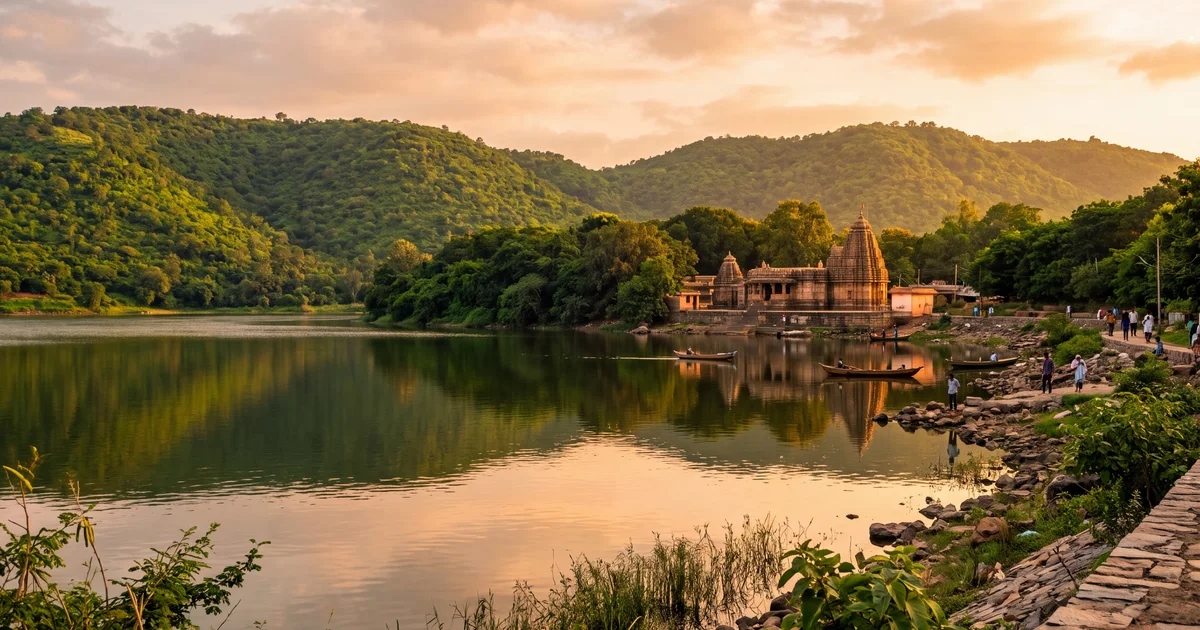
Hubli rarely appears on anyone's "must visit" list for Karnataka. It sits 410 km northwest of Bangalore, overshadowed by Goa to its west and Hampi to its east. Most people pass through it, refuel, and drive on. That is a mistake if you have even 24 hours to spare.
The twin cities of Hubli and Dharwad together hold about 1.2 million people. Hubli is the commercial half: busy, noisy, with the kind of energy that comes from being the largest railway junction in North Karnataka. Dharwad, 20 km away, is the quieter university town. Between them, you get Vijayanagara era temples, a lake that turns golden at sunset, a hilltop with views in every direction, and some of the best street food in the state.
The real draw is what sits within a 2 hour drive. Dandeli for white water rafting. Badami for 6th century cave temples. Goa's beaches 170 km west. Hubli works better as a base than a bypass.
TL;DR
- One day covers Hubli city (Unkal Lake, Nrupatunga Hill, temples); two days if you add Dandeli or Badami
- October to February is the best season (18°C to 30°C)
- 6 to 7 hours from Bangalore by road; daily flights from Bangalore, Mumbai, Delhi
- Dharwad peda and Girmit are the two foods you cannot leave without trying
- Combine with Dandeli for a weekend that mixes city, river and forest
What is there to see at Unkal Lake?
Unkal Lake is the first place locals will point you to, and for once the local recommendation is correct. The lake is on the northern edge of Hubli, about 3 km from the railway station. It is man made (built during the British era for water supply) but you would not guess it from the way the surrounding hills frame the water.
The best time to visit is between 5:30 PM and 6:30 PM. The lake faces west, so the sunset lights up the water surface and the Unkal Hill behind it. There is a small park along the eastern shore with a walking track, a children's play area, and a few food stalls. Entry is free.
A small island in the lake holds a Shiva temple accessible by a short pedestrian bridge. The temple itself is modest, built in the 1960s, but the walk across the bridge with water on both sides is the appealing part.
One caveat: the lake shrinks noticeably between March and May. If you visit in summer, manage your expectations. It looks entirely different after the monsoon fills it up in July.
Boating is available (₹30 to ₹80 per person depending on the boat type), run by the Hubli Dharwad Municipal Corporation. Weekends get crowded after 4 PM. Go on a weekday if you can.
Why should you climb Nrupatunga Hill?
Nrupatunga Hill (also spelled Nrupatunga Betta) is a low hill on the southeastern side of Hubli, about 2 km from the bus stand. The climb takes 15 minutes. The view from the top covers the entire spread of both cities, the railway yard, and on clear days, the Western Ghats on the horizon.
There is a temple dedicated to Nrupatunga (a form of Vishnu) at the summit, along with a small garden maintained by the forest department. The temple dates back several centuries, though the current structure has been renovated multiple times. The carvings on the entrance pillars are older than the building around them.
The hill is best visited early morning (before 8 AM) or late afternoon. Midday heat makes the exposed stone path uncomfortable. Carry water. There is a single chai stall at the base but nothing at the top.
One honest note: this is not a trek. It is a short uphill walk on a paved path. But the 360 degree view at the top justifies the 15 minutes. You can see the KSRTC bus depot, the Hubli railway junction, and the satellite dish cluster near Dharwad from up there.
Chandramouleshwara Temple and why it matters
Chandramouleshwara Temple is the oldest structure in Hubli, dating to the 11th century Chalukya period. It sits in the old town area, about 1 km south of the railway station. Finding it requires asking around because the signage is poor and Google Maps pins it in the wrong spot (look for Chandramouleshwara Road, near the vegetable market).
The temple is built in the Chalukyan style: a squat shikhara (tower), carved doorframes, and wall panels with figures that include both Shaiva and Vaishnava deities. The stone is local sandstone, which has weathered to a rich brown that photographs well in the morning light.
What makes this temple unusual is its lathe turned pillars. The columns in the inner mandapa look machine finished, with perfectly circular cross sections and ornamental rings. They were carved by hand around 950 years ago. Run your fingers along them if the priest allows it. The precision is difficult to believe.
The temple is still actively worshipped. Morning puja happens at 7:30 AM. The interior is dim and cool, which makes it a relief after walking through Hubli's traffic to get there.
One limitation: the area around the temple is congested. You will not find the peaceful temple compound experience that you get at Badami or Pattadakal. This is a living neighbourhood temple, not a museum piece.
Siddheshwar Temple at Haveri Road
About 12 km south of Hubli, on the Haveri Highway, Siddheshwar Temple is a 12th century structure that gets almost no visitors despite being in good condition. The temple was built during the Kalyani Chalukya period and features a well preserved star shaped plan that fans of Belur and Halebidu will recognize.
The outer walls carry bands of carvings: elephants at the base, then horses, then scroll work, then deity panels. Several of the carved figures still have intact facial features, which is rare for temples this old in the region.
Visit on a weekday morning and you will likely have the temple to yourself. The caretaker lives next door and will open the inner sanctum if you ask.
Skip this if you are short on time and heading to Badami anyway (Badami has better preserved examples of the same architectural tradition). But if you have a spare hour and a car, it is worth the short detour.
What is the Glass House at Indira Gandhi Park?
The Glass House is Hubli's version of the Lalbagh Glass House in Bangalore, though about a quarter of the size. It sits inside Indira Gandhi Park (locally called Nrupatunga Park or just "the Glass House garden") in the centre of town.
The park is 65 acres and functions as Hubli's main green space. Morning walkers fill it before 7 AM. The Glass House itself hosts occasional flower shows, particularly during Republic Day and Independence Day weeks. Outside of shows, the interior is a botanical display with labelled plants.
The park also has a toy train (₹20 per ride, weekends only), a small zoo section with deer and birds, and a lake with paddle boats. It is a family spot, not a tourist attraction per se, but it tells you more about daily life in Hubli than any monument.
Spend 30 to 45 minutes here unless the flower show is on, in which case an hour is reasonable.
Is a day trip to Dandeli from Hubli worth it?
Absolutely. Dandeli is 75 km from Hubli (about 1.5 to 2 hours by road) and it is the closest white water rafting spot in Karnataka. The Kali river runs through the Dandeli Wildlife Sanctuary, which covers 834 sq km of deciduous forest.
The rafting stretch is about 9 km long with Class II and Class III rapids. No prior experience required. Operators provide life jackets, helmets, and a guide on each raft. Sessions run from October to February (river levels are too high in monsoon, too low in summer). Expect to pay ₹500 to ₹1,500 per person depending on the operator and season.
Beyond rafting, Dandeli has a crocodile observation point at Syntheri Rocks (a massive monolithic rock formation with a river gorge). The drive there from Dandeli town takes 30 minutes through dense forest where you might spot Malabar giant squirrels.
One word of caution: the road from Hubli to Dandeli is two lane and heavily used by trucks, especially the stretch between Alnavar and Dandeli. Budget extra time and avoid driving after dark.
If you are combining Hubli with Dandeli, the best plan is: Day 1 in Hubli (lake, hill, temples), overnight in Hubli, Day 2 early start to Dandeli, raft in the morning, visit Syntheri Rocks, return to Hubli by evening.
Badami, Aihole and Pattadakal: the 110 km triangle
Badami is 110 km from Hubli, about 2.5 hours by road. It contains four rock cut cave temples from the 6th century (Chalukya dynasty) carved into the red sandstone cliff face above Agastya Lake. Cave 3 is the largest and has Vishnu reliefs that are among the best surviving examples of early Chalukya sculpture.
Aihole (35 km from Badami) has over 120 stone temples spread across the village, many of them experimental in style because this was where the Chalukyan architects tested new designs before building at Pattadakal.
Pattadakal (22 km from Badami) is a UNESCO World Heritage Site with 10 major temples blending Dravidian and Nagara styles. The Virupaksha Temple here (740 CE) directly influenced the later temples at Belur and Halebidu.
You can cover all three in a long day trip from Hubli. Start early (leave by 6 AM), do Badami caves first (2 hours), drive to Pattadakal (45 minutes), then Aihole (20 minutes), and return to Hubli by evening. A hired car costs ₹2,500 to ₹3,500 for the day.
This is honestly the strongest reason to use Hubli as a base. Most people approach Badami from Bangalore (a grueling 8+ hour drive) or from Goa (5 hours). From Hubli, it is a comfortable morning drive.
Street food in Hubli that you should not miss
Hubli's food culture is North Karnataka through and through, and it differs from what you get in Bangalore or Mysore in almost every way.
Start with Dharwad Peda. It is a caramelized milk sweet with a slightly grainy texture, the flavour coming from slow cooking milk for hours in heavy bottomed pans. Babusingh Thakur Pedha Wala has been making it since 1879. Mishra Pedha near the bus stand is the other name locals trust. A 500g box costs ₹300 to ₹400. Buy it on your last day because it lasts only 3 to 5 days without refrigeration.
Girmit is the street snack that defines Hubli. Puffed rice tossed with finely chopped onion, tomato, coriander, a spicy groundnut chutney, sev, and a squeeze of lime. Every neighbourhood has its own version. The stalls near Durgad Bail (the city's main commercial intersection) sell it for ₹20 to ₹40 a plate. It looks simple. The taste is anything but.
For a proper meal, order Jolada Rotti (sorghum flatbread) with ennegayi (stuffed brinjal curry). The rotti is thick, hand patted, and cooked on a flat tawa. It comes with badanekayi ennegayi, hesaru bele saaru, and a side of curd, served on banana leaves at Kamat Hotel near the bus stand. Kamat has been doing this since the 1950s and the quality has not dropped.
Skip the pizza chains. This is not the city for them.
How to get to Hubli from Bangalore and other cities
By road: NH48 connects Bangalore to Hubli (410 km, 6 to 7 hours). The highway is four lane up to Davangere and two lane after that. KSRTC Airavat Club Class buses run overnight departures from Bangalore Majestic (₹800 to ₹1,100). Private operators like VRL and SRS also run the route.
By train: Hubli Junction (UBL) is one of the busiest junctions in South Western Railway. The Rani Chennamma Express from Bangalore takes about 8 hours (overnight). The Jan Shatabdi is faster at 6.5 hours but runs during the day. Trains also connect Hubli to Mumbai (12 hours), Goa (5 hours), and Pune (10 hours).
By air: Hubli Airport (HBX) has direct flights from Bangalore (1 hour), Mumbai (1.5 hours), and Delhi (2.5 hours) operated by IndiGo and Air India. Fares start at ₹2,500 one way from Bangalore if booked early.
Within Hubli, auto rickshaws are the standard transport. Ola and Uber work but availability is patchy outside the city centre. For day trips to Dandeli or Badami, hire a car from one of the agencies near the railway station (₹2,500 to ₹3,500 per day with driver).
Where to stay in Hubli
Hubli is not a resort town. Accommodation is functional and affordable.
For budget stays (₹800 to ₹1,500 per night), the area around the railway station and Lamington Road has the highest density of options. Hotel Ajanta and Hotel Naveen are clean, centrally located, and walking distance from the bus and railway stations.
Mid range hotels (₹2,000 to ₹4,000) include Denissons Hotel and Hotel Metropolis, both on Lamington Road. They offer air conditioned rooms, restaurant, and parking.
If you are spending more, the Marriott Fairfield Inn opened recently on the airport road and runs ₹5,000 to ₹7,000 per night. It is the most modern option in the city.
Book in advance during October (Dasara/Navaratri) when the twin cities host large festivals and hotel prices double.
When to visit and how many days you need
October to February is the clear winner. The weather is cool (18°C to 30°C), the lake is full from recent monsoon rains, and the countryside between Hubli and Dandeli is green.
March to May is hot. Temperatures cross 38°C regularly and the exposed hilltop at Nrupatunga becomes unpleasant by 10 AM.
June to September is monsoon. The Western Ghats around Dandeli turn spectacularly green, but rafting shuts down and some forest roads close.
For the city alone, one day is enough. Add a second day for either Dandeli or the Badami triangle. Three days gives you both. Most visitors from Bangalore combine Hubli with Dandeli for a Friday to Sunday trip, taking the overnight KSRTC bus on Thursday night.
Browse more weekend trip ideas and destination guides to plan your next getaway.
Frequently asked questions
- How many days are enough for Hubli?
- Two days covers Hubli city sights and one day trip (Dandeli or Badami). If you are only doing the city, one full day is enough for Unkal Lake, Nrupatunga Hill, Chandramouleshwara Temple and the Glass House. Most Bangalore visitors make it a long weekend with Dandeli rafting added.
- What is the best time to visit Hubli?
- October to February is ideal. Temperatures stay between 18°C and 30°C. Summers (March to May) push above 38°C and the lakes dry up. The monsoon from June to September turns the surrounding Western Ghats green, but heavy rain can cancel Dandeli river trips.
- How far is Hubli from Bangalore?
- Hubli is about 410 km from Bangalore, roughly 6 to 7 hours by road via NH48. KSRTC Airavat Club Class buses run overnight and cost around ₹800 to ₹1,100. Hubli Airport (HBX) has daily flights from Bangalore, Mumbai and Delhi with fares starting at ₹2,500 one way.
- Is Hubli worth visiting or just a transit stop to Goa?
- Hubli is worth a stop in its own right if you like temple architecture and smaller cities without tourist crowds. Nrupatunga Hill gives you a full panorama of the twin cities. Combined with a day trip to Dandeli (75 km) for white water rafting or to Badami (110 km) for cave temples, it fills a solid 3 day trip.
- What food should I try in Hubli?
- Hubli is famous for its Dharwad peda, a milk sweet that dates back over a century. Try the Girmit (a spicy puffed rice snack unique to North Karnataka) from street stalls near Durgad Bail. Jolada rotti with ennegayi (brinjal curry) is the staple meal. Kamat Hotel near the bus stand has been serving these since the 1950s.