Best Places to Visit in Himachal Pradesh (2026): Hills, Valleys and Trek Bases
15 best places to visit in Himachal Pradesh in 2026 with honest tips on when to go, how to reach and what most guides leave out.
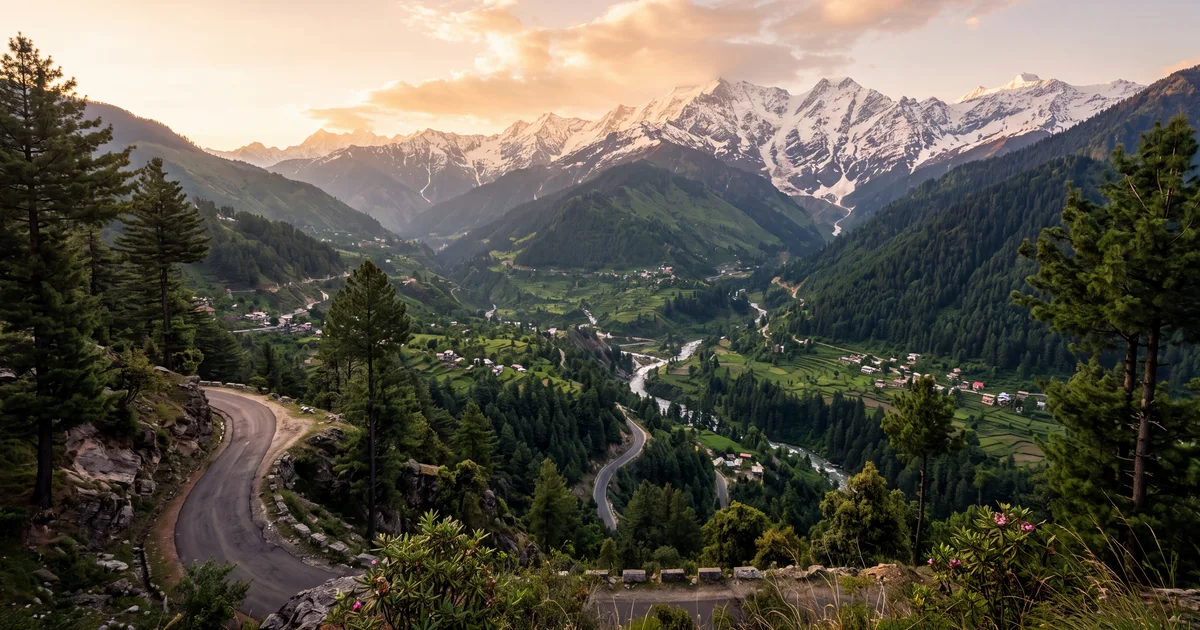
Himachal Pradesh packs more variety into 55,673 square kilometres than any state in northern India has a right to. You can drink coffee in a Dharamshala cafe at 1,400 metres, cross a 4,550 metre pass by afternoon, and camp in a high desert valley that looks more like Tibet than India by nightfall. All within the same state, sometimes on the same road.
The problem with most "places to visit in Himachal" lists is that they treat the state as one destination. It is not. Shimla and Spiti are both Himachal, but they have nothing in common except the state boundary. The weather, terrain, accessibility, and the type of traveller they attract are completely different.
This guide covers 15 places across Himachal Pradesh, grouped by region. Each section tells you what is actually worth doing there, when to go, and what most guides skip.
TL;DR
- Himachal Pradesh has four distinct zones: Shimla ridge, Kullu and Manali valley, Kangra and Dharamshala, and the high desert (Spiti and Kinnaur).
- Best months: March to June for most destinations, June to September for Spiti, December to February for snow.
- Manali is the most visited. Spiti is the most rewarding if you have time.
- Budget a minimum of 5 days to cover one zone properly. Rushing through 4 destinations in a week wastes most of your time on roads.
- Browse group trips to Himachal destinations for fixed departure dates.
Shimla and the Southern Ridge
1. Shimla
The state capital sits at 2,276 metres on a ridge overlooking the Shivalik foothills. The Mall Road, Ridge, and Christ Church are the postcard images, but Shimla has more to offer once you step off the main tourist circuit.
Walk to Jakhoo Temple (2,455 metres, the highest point in Shimla) early morning before the monkeys get aggressive. The Hanuman statue at the top is 33 metres tall and visible from most of the city. The Glen and Chadwick Falls are pleasant walks in forest, rarely crowded.
The Kalka to Shimla toy train is worth doing once. The narrow gauge line built in 1903 covers 96 km through 102 tunnels and over 800 bridges. It takes 5 hours. Book the rail motor car for better views.
Shimla's weakness is its roads. The main highway from Chandigarh (4 hours in theory) can take 7 hours on a holiday weekend. If you are coming from Delhi, travel midweek.
2. Kufri
Fifteen minutes from Shimla by road, Kufri (2,622 metres) is where most tourists go for their snow photos. In January and February, the meadow above the village turns white and horse rides on snow become the main attraction.
The reality: Kufri is a small settlement built around pony rides and overpriced hot chocolate. If snow is what you want, it delivers between December and February. The Himalayan Nature Park nearby has a small zoo with Himalayan wildlife. Spend 2 to 3 hours here, not a full day.
One honest warning: the road from Shimla to Kufri gets dangerously icy in January. Taxis with chains are the only safe option. Do not drive yourself unless you have winter driving experience.
3. Chail
Chail sits at 2,250 metres, 45 km from Shimla, and feels like the Shimla of 30 years ago. Fewer tourists, better air, and a cricket ground that claims to be the world's highest (2,444 metres). The Chail Palace, built by the Maharaja of Patiala in 1891, is now a heritage hotel.
Come here for the quiet. The forest walks around Chail are uncluttered and the deodar trees are massive. It works as a day trip from Shimla or a peaceful overnight stop if the Shimla crowds feel suffocating.
Kullu Valley and Manali
4. Manali
Manali gets 6 million tourists a year. That number explains both why the infrastructure is excellent and why Old Manali Road gets gridlocked by May.
The town sits at 2,050 metres at the head of the Kullu Valley, with the Beas River running through it. Old Manali, across the river, is where the backpackers, cafes, and hostels cluster. The main town is commercial, noisy, and functional. Hadimba Temple (a 1553 wooden pagoda in a deodar forest) is the one attraction worth seeing in the town itself.
The real value of Manali is as a base. Solang Valley (14 km, skiing in winter, paragliding in summer), Rohtang Pass (51 km, open June to October, requires a permit), the trek to Jogini Waterfalls (3 km walk from Vashisht), and the Hampta Pass trek all start from here. Manali is a gateway. Treat it as one.
The caveat that matters: avoid Manali on long weekends in May and June. The traffic jam from Kullu to Manali can stretch 6 hours for a 40 km distance. If you must go in peak season, arrive by Wednesday.
5. Naggar
Naggar castle sits 1,800 metres above the Kullu Valley, 20 km before Manali, and most tourists drive right past it. Their loss.
The castle was the capital of the Kullu kingdom for 1,500 years before Kullu town took over. It is now a heritage hotel run by HPTDC. Even if you do not stay, visit for the views of the valley from the stone ramparts. The Roerich Art Gallery next door houses paintings by the Russian artist Nicholas Roerich, who lived here from 1928 until his death in 1947.
Naggar is the place to stay if you want the Kullu Valley without Manali's noise. The apple orchards around the village are at their best in September and October.
6. Kasol
Kasol sits at 1,580 metres in the Parvati Valley, 30 km from Bhuntar. It has become India's backpacker village, with Israeli cafes, budget hostels, and a reputation that precedes it.
The village itself is small. You can walk end to end in 20 minutes. The appeal is the Parvati River, the surrounding pine forests, and the trail access. The Kheerganga trek (12 km one way) starts from Barshaini, 16 km up the valley. Tosh and Malana are side valleys with their own character.
Go between March and May or September and November. Monsoon (July to August) brings landslides on the Kasol road with depressing regularity. The Aut to Bhuntar to Kasol stretch is one of the most landslide prone roads in Himachal.
Kasol is not for everyone. If you prefer structured tourism with clean hotels and guided tours, Manali is a better fit. If you want cheap stays, good food, and mountain trails with minimal planning, Kasol works.
Kangra Valley and Dharamshala
7. Dharamshala and McLeodganj
Dharamshala is the administrative town at 1,457 metres. McLeodganj is the upper town at 1,770 metres, home to the Dalai Lama and the Tibetan government in exile since 1960. Most tourists mean McLeodganj when they say Dharamshala.
The Tsuglagkhang Complex (the Dalai Lama's temple) is the centre of McLeodganj. The Tibetan Museum inside documents the history of the Tibetan exile. Bhagsu Waterfall is a 2 km walk from McLeodganj. The Triund trek (9 km, 4 to 5 hours) is the most accessible Himalayan trek in India and starts right from McLeodganj.
The food in McLeodganj is genuinely good. Tibetan momos, thukpa, and the cafes on Jogiwara Road are better than anything you will find in most Himachal hill stations. The Namgyal Monastery evening prayers (5 PM to 6 PM) are open to visitors and worth attending regardless of your beliefs.
The honest take: McLeodganj has become crowded enough that the "peaceful mountain town" image needs updating. It is lively, sometimes noisy, and packed on weekends. Visit midweek. The magic is still there, but you have to time it right.
8. Bir Billing
Bir Billing is the paragliding capital of India. The takeoff site at Billing (2,400 metres) and landing site at Bir (1,525 metres) give a vertical drop that makes for 15 to 25 minute tandem flights. The 2015 Paragliding World Cup was held here, which put the site on the global map.
A tandem paragliding flight costs ₹2,500 to ₹3,500. No experience required. The season runs March to May and September to November. Avoid monsoon (flights are grounded) and peak winter (limited operators).
Beyond paragliding, Bir is a quiet Tibetan colony with monasteries, a tea garden, and a growing cafe culture. It makes a good 2 day stop between Dharamshala and Manali.
9. Palampur
The tea capital of Himachal Pradesh, 35 km from Dharamshala. The Kangra tea gardens here cover hillsides between 900 and 1,300 metres, and the combination of green tea rows with the Dhauladhar snow peaks behind is visually striking.
Visit the Neugal Khad gorge (a deep ravine with a pedestrian bridge) and the Saurabh Van Vihar park for forest walks. Palampur works as a base for visiting Baijnath temple (an 804 AD Shiva temple, one of the oldest stone temples in Himachal) and the Andretta pottery village.
This town suits people who want Kangra Valley access without McLeodganj's tourist density. Hotels are cheaper, the pace is slower, and the tea estate walks are free.
The High Desert: Spiti and Kinnaur
10. Spiti Valley
Spiti is where Himachal Pradesh stops feeling like Himachal Pradesh and starts feeling like a different planet. The valley sits at 3,800 to 4,500 metres, dry, cold, and barren, with Buddhist monasteries perched on cliff edges and villages that get cut off from the rest of India for 6 months every winter.
The circuit from Manali to Spiti (via Rohtang Pass and Kunzum La) or from Shimla to Spiti (via Kinnaur) takes a minimum of 7 days if you want to see the key places. Key monastery at 4,166 metres, Dhankar monastery on a crumbling cliff, Tabo monastery (1,000 years old with murals comparable to Ajanta), and Pin Valley National Park for snow leopard habitat.
The road to Spiti is the experience as much as the destination. Kunzum Pass (4,590 metres) opens only from June to September. The Shimla route via Reckong Peo is longer but more reliable.
What most guides do not mention: altitude sickness is a real risk. You gain 2,000+ metres in a single day driving from Manali over Rohtang. Spend a night at Keylong or Jispa to acclimatize. Do not drive straight to Kaza.
11. Kaza
The administrative headquarters of Spiti at 3,650 metres. Kaza has the best infrastructure in the valley: fuel station, ATMs (unreliable), a hospital, and several guest houses. Use it as your base for Spiti exploration.
The sunrise from Kaza with the Spiti river valley below and snow peaks on both sides is worth the early alarm. Komic village (4,587 metres, one of the highest inhabited villages in the world) is a 14 km drive. Hikkim, which has the world's highest post office, is next door. Yes, you can mail a postcard.
Local food in Kaza is basic but filling. Thukpa, momos, and Tibetan butter tea from the small cafes near the market square. Do not expect restaurant variety. Spiti is remote, and supplies come in by truck on roads that close regularly.
12. Chitkul
The last inhabited village on the old Hindustan Tibet road, at 3,450 metres in Kinnaur district. The Baspa River runs through the village and the Tibetan border is 2 km away (no civilian access beyond).
Chitkul has maybe 50 houses, a Mathi temple dedicated to a local deity, and apple orchards that turn golden in October. There is one homestay strip and a couple of basic dhabas. The attraction is isolation: you have genuinely reached the end of the road.
The drive from Sangla to Chitkul (25 km) follows the Baspa valley through some of the most dramatic river gorge scenery in Himachal. Best months are May to June and September to October.
13. Kalpa
Kalpa sits at 2,960 metres in Kinnaur and faces the Kinnaur Kailash peak (6,050 metres) directly. On a clear morning the granite face fills the entire eastern horizon. It is one of the most accessible close up views of a 6,000 metre peak anywhere in Himachal.
The village has old wooden Kinnauri architecture, apple orchards (harvest in September and October), and the Hu Bu Lan Kar monastery. Reckong Peo, the district headquarters, is 7 km below and handles logistics (ATMs, supplies, bus station).
Kalpa works as an overnight stop on the Shimla to Spiti route. Give it 2 nights if you want to soak in the views and walk the trails around the village.
Off the Main Circuit
14. Tirthan Valley
Tirthan Valley runs through the buffer zone of the Great Himalayan National Park (a UNESCO World Heritage Site) and offers something rare in Himachal: quiet. The valley is centred on the town of Banjar, about 60 km from Kullu, and the main activities are trout fishing, riverside walks, and multi day treks into the national park.
The GHNP treks (3 to 5 days) require a guide and permit from the forest office. They take you into some of the most pristine temperate forests in the western Himalayas. Wildlife includes the western tragopan, Himalayan brown bear, and snow leopard (rare sightings in higher reaches).
Tirthan is the place for people who have already done Manali and Kasol and want something with less noise. Riverside camps and guesthouses here are genuinely peaceful, not the "peaceful retreat" marketing that every Manali hotel uses.
15. Jibhi
Five kilometres from Banjar in the Tirthan Valley, Jibhi has gone from unknown to Instagram popular in about three years. Wooden cottages, a small waterfall, and the Tirthan River flowing through a forested valley at 1,500 metres.
The appeal is the setting: it is small enough to feel like a discovery even though it is not one anymore. The Serolsar Lake trek (5 km one way from Jalori Pass) is the main trail from here. Jalori Pass at 3,120 metres is one of the lowest passes in the Great Himalayan range and accessible by car.
Go before Jibhi completes its transformation into the next Kasol. The construction is already underway. In 2 to 3 years the valley floor will have significantly more concrete.
How to Plan a Himachal Pradesh Trip in 2026
The single biggest mistake is trying to cover too much. Shimla, Manali, Dharamshala, and Spiti in 7 days means spending 4 of those days on buses. The roads in Himachal are slow. Shimla to Manali is 250 km but takes 8 hours. Manali to Kaza is 200 km and takes 10 to 12 hours on a good day.
Pick one zone and do it properly.
For 5 to 7 days from Delhi: Shimla and Manali with a Rohtang or Solang day trip. Or Dharamshala, McLeodganj, and Bir Billing with the Triund trek.
For 8 to 10 days: Add Kasol and the Parvati Valley to the Manali circuit. Or do the full Kinnaur loop (Shimla, Sarahan, Sangla, Chitkul, Kalpa).
For 12 to 15 days: The Manali to Spiti circuit through Kunzum Pass, returning via Kinnaur and Shimla. This is the definitive Himachal road trip, but only between June and September when all passes are open.
Check group departures to Himachal Pradesh for organized trips that handle transport and stays. For the Spiti circuit especially, going with a group removes the logistical stress of uncertain road conditions and fuel availability.
Getting Around Himachal Pradesh
HRTC (Himachal Road Transport Corporation) runs buses to every major town. The Volvo semi sleeper services from Delhi to Manali and Delhi to Shimla are comfortable overnight options (₹800 to ₹1,500). Book on the HRTC website or through RedBus.
Within Himachal, local buses connect most towns but schedules are irregular beyond the main highways. For Spiti and Kinnaur, renting a car (₹2,500 to ₹4,000 per day with driver) or riding a motorcycle gives you flexibility that buses cannot.
The toy train from Kalka to Shimla costs ₹240 in chair car and ₹550 in first class. It runs daily. Book through IRCTC. The rail motor car (₹400, faster) is the better option but limited to one or two departures.
Kullu airport (Bhuntar) has flights from Delhi. Kangra airport has flights from Delhi and Chandigarh. Both are small airports with frequent cancellations in bad weather. Have a bus backup plan for any flight itinerary.
Frequently asked questions
- What is the best time to visit Himachal Pradesh?
- March to June for pleasant weather and open roads. September to November for clear Himalayan views and fewer crowds. December to February for snow, but several high altitude roads (Rohtang, Kunzum) close. The best month depends on the destination: Manali works year round, Spiti is accessible only from June to October.
- How do I reach Himachal Pradesh from Delhi?
- By air, fly to Kullu (Bhuntar airport) for Manali or Kangra airport for Dharamshala and McLeodganj. By train, Kalka to Shimla on the narrow gauge toy train takes 5 hours. By road, Volvo buses from ISBT Kashmere Gate reach Manali in 12 to 14 hours and Shimla in 8 to 9 hours. HRTC and private operators run overnight services.
- Is Himachal Pradesh safe for solo female travellers?
- Himachal is generally considered one of the safer states for solo female travel in India. Tourist towns like Manali, Shimla, McLeodganj, and Kasol have well established backpacker infrastructure. Take standard precautions: avoid isolated trails after dark and inform your stay of your itinerary. The Parvati Valley beyond Kasol requires extra awareness at night.
- What is the budget for a 7 day Himachal Pradesh trip?
- Budget travellers can manage ₹1,500 to ₹2,500 per day covering hostel stays, local food, and bus transport. Mid range (hotels, some taxis) runs ₹4,000 to ₹6,000 per day. A 7 day trip covering Shimla, Manali, and one trek costs roughly ₹15,000 to ₹30,000 excluding flights from your city.
- Which places in Himachal Pradesh have snowfall?
- Shimla, Kufri, and Manali see snow from December to February. Solang Valley and Rohtang Pass get heavy snow by November. Spiti Valley is snowbound from October to May. For guaranteed snow, visit Kufri or Solang in January. Dharamshala and McLeodganj occasionally get light snow in January but it is not reliable.
- Can I visit Spiti Valley in winter?
- Technically yes via the Shimla route through Kinnaur, but the road is unpredictable and closures are common. The Manali to Spiti route (via Rohtang and Kunzum Pass) shuts down from October to May. Winter Spiti means limited supplies, no heating in most homestays, and temperatures below minus 20°C. Go between June and September for the full experience.