Best Places to Visit in Gangtok (2026): Monasteries, Viewpoints and Permit Tips
14 places to visit in Gangtok with honest ratings, permit info and what to skip in 2026.
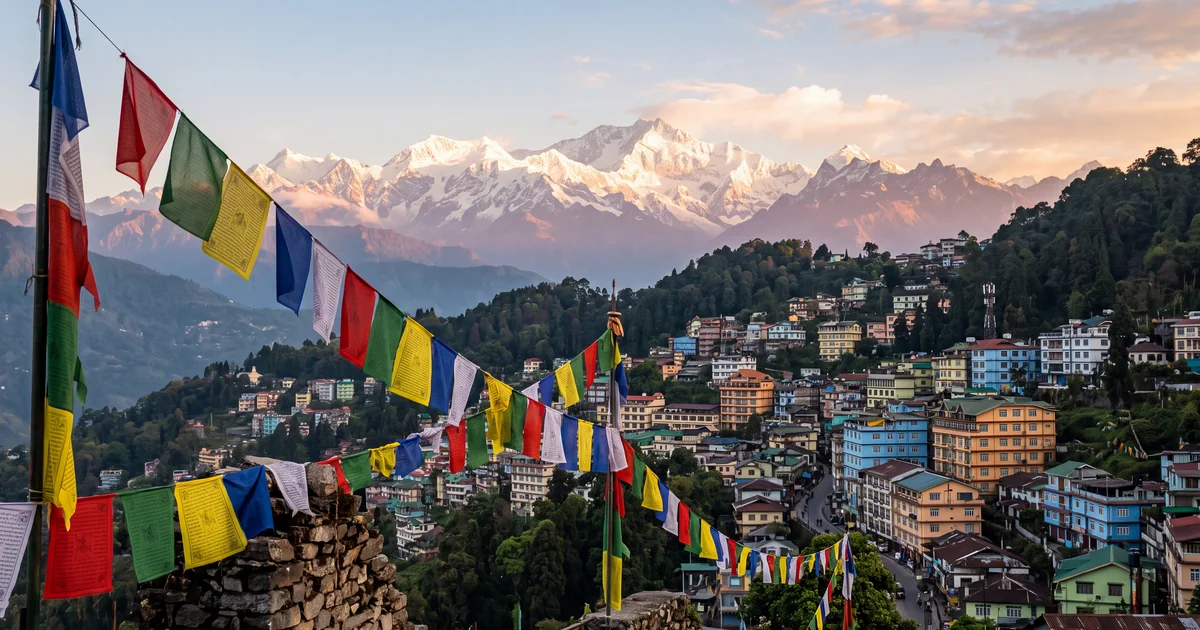
Gangtok sits at 1,650 metres in the eastern Himalayas, with Kangchenjunga filling the western skyline on clear mornings. The capital of Sikkim does not look like a typical Indian hill town. The streets are cleaner than you expect. Plastic bags have been banned since 1998 (Sikkim was ahead of the rest of India by about two decades on this). Traffic moves slowly because the roads are narrow and hilly, not because of chaos.
Most visitors come for the Tsomgo Lake and Nathula Pass excursion, take a photo on MG Marg, and leave. That is a fine trip but it barely scratches what Gangtok offers. The monasteries are among the most significant Tibetan Buddhist sites outside Tibet. The food has a distinctness that the rest of India does not replicate. The viewpoints, on a clear day, show you the third highest mountain on Earth from 50 km away.
This guide lists 14 places to visit in Gangtok, sorted by what is actually worth your time versus what is a tourist trap with a parking fee.
TL;DR
- Gangtok needs 3 full days for the essentials, 5 if you add Tsomgo Lake, Nathula Pass and a day trip.
- Indian nationals need an Inner Line Permit for Tsomgo and Nathula (arranged through tour operators, takes one day).
- Best months: March to May (rhododendrons, clear views) and October to November (cleanest skies).
- Budget for a couple: 2,500 to 5,000 per night for mid range stays, plus 3,000 to 5,000 per vehicle for Nathula day trips.
- Compare group trips to Sikkim on TripzSearch for fixed departure packages.
MG Marg: the centre of everything
MG Marg is Gangtok's pedestrian main street and the social hub of the city. It runs about 500 metres, lined with restaurants, shops, and benches. No vehicles allowed. The street gets lively after 5 PM when locals come out for evening walks and the surrounding mountains go orange with sunset light.
The restaurants here are reliable for momos, thukpa, and Sikkimese set meals. Prices are tourist adjusted but not outrageous: 150 to 400 rupees for a full meal. The shops sell Sikkimese tea, local organic honey, and the usual Himalayan souvenirs.
MG Marg is not a "sight" in the traditional sense. It is the place where you start and end each day. Spend your first evening here getting oriented.
The catch: MG Marg on a peak season Saturday evening (October long weekends, Christmas week) gets crowded enough that the pedestrian charm disappears. Visit on weekday evenings if possible.
Rumtek Monastery (24 km from Gangtok centre)
The seat of the Karmapa lineage, the head of the Kagyu school of Tibetan Buddhism. Rumtek is the most important monastery near Gangtok and one of the most significant in India. It was built in the 1960s after the 16th Karmapa fled Tibet.
The main prayer hall has elaborate murals that took Tibetan artists years to complete. The Golden Stupa in the adjacent shrine holds the relics of the 16th Karmapa. Photography inside the main prayer hall is restricted but the courtyard and surrounding grounds are open.
The drive from Gangtok takes 45 minutes through winding roads. Shared taxis run from Deorali Bazaar. The monastery sits on a ridge with views of the surrounding valley that would justify the trip even without the religious significance.
Best time to visit: Morning. The monks do their morning prayers between 6 and 7 AM, and the light on the valley is best before 10 AM.
The catch: Rumtek has been at the centre of a legal dispute between two claimants to the Karmapa title since the 1990s. Security presence is visible. The Nalanda Institute of Buddhist Studies next door is also worth 30 minutes.
Tsomgo Lake (40 km from Gangtok, permit required)
A glacial lake at 3,753 metres, frozen from December through March and turquoise blue the rest of the year. Tsomgo (also spelled Changu) is one of the most visited spots in Sikkim and the first point where altitude becomes a real factor.
The lake is scenic. The yak rides around the shore are touristy but children enjoy them (200 to 300 rupees). The small tea stalls sell Maggi and chai at altitude premium prices. The surrounding mountains have snow into April most years.
You cannot drive yourself to Tsomgo. The army controls the road, and all visitors must go through a registered Gangtok tour operator who arranges the ILP and a vehicle. The standard package combines Tsomgo with Baba Harbhajan Singh Temple and optionally Nathula Pass. Expect to pay 3,000 to 5,000 per vehicle (shared among passengers) for the day trip.
The catch: Altitude sickness is real at 3,753 metres, especially if you arrived in Gangtok only the day before. Headaches and breathlessness are common. Carry water, avoid running, and skip this if you have respiratory issues. The road gets washed out during heavy monsoon rain, cancelling trips without refund.
Nathula Pass (56 km from Gangtok, permit required)
The India-China border crossing at 4,310 metres. Nathula was part of the historic Silk Route and reopened for limited border trade in 2006. Indian tourists can visit Wednesday through Sunday (closed Monday and Tuesday). Foreign nationals are not permitted.
There is a small Indian Army memorial and a view into the Chumbi Valley on the Chinese side. On clear days, you can see Chinese border posts and the road continuing into Tibet. The experience is more about standing at 4,310 metres at an international border than about scenic beauty, though the high altitude landscape is stark and memorable.
The permit for Nathula requires your original photo ID, two passport photos, and 24 hours processing time through a registered tour operator. It is usually combined with the Tsomgo Lake trip as a full day excursion.
Best months: April to May and October to November. Closed December through March due to heavy snowfall. Monsoon months (July to September) see frequent road closures.
The catch: 4,310 metres is serious altitude. People pass out here. Do not visit Nathula if you arrived in Gangtok the same day or previous evening. Spend at least two nights at Gangtok's elevation before attempting this. Carry warm clothes regardless of season; temperatures at the pass are 10 to 15 degrees below Gangtok.
Enchey Monastery (3 km from MG Marg)
A 200 year old Nyingma sect monastery sitting on a ridge above Gangtok town. Enchey is smaller and quieter than Rumtek but far more accessible. You can walk from MG Marg in about 30 minutes uphill.
The monastery has a small but beautiful prayer hall. The annual Cham dance festival (usually in January) draws monks in elaborate masks and costumes. On clear mornings, the monastery grounds give you Kangchenjunga views without leaving Gangtok.
Best time: Early morning for views and fewer visitors. The monks are usually present and welcoming to respectful tourists.
The catch: The uphill walk from MG Marg is steep. Autos and taxis go up for 100 to 150 rupees if your knees object.
Tashi Viewpoint (8 km from Gangtok)
The most popular Kangchenjunga viewpoint near Gangtok. On a clear morning, you see the full Kangchenjunga range, including the main peak at 8,586 metres, Kabru, Pandim, and several others. The viewing platform has labelled markers identifying each peak.
The drive takes 20 minutes from MG Marg. Most tourists come for sunrise, which means arriving by 5:30 AM in summer. The clear window on most days lasts until about 9 AM before clouds build.
Best months: October to November has the highest probability of clear views. March to May is good too. Monsoon months are largely a washout.
The catch: "Clear morning" is the operative phrase. Gangtok averages about 15 genuinely clear days per month even in peak season. Come prepared for the possibility that clouds obscure everything. It is still worth the early alarm because when the view opens, it is extraordinary.
Namgyal Institute of Tibetology (2 km from MG Marg)
One of the most important centres for Tibetan Buddhist research in the world. The institute has a museum with a collection of thankas (Tibetan scroll paintings), manuscripts, statues, and ritual objects. The library holds over 30,000 Tibetan language texts.
The museum takes about 45 minutes. Photography is not allowed inside. The building sits in a garden of Himalayan plants, and the walk there from MG Marg passes through the Deorali orchid garden area.
Entry is 10 rupees, which makes it the best value sight in Gangtok. The do Drul Chorten (a large white stupa) is adjacent and worth a 10 minute stop.
The catch: Closed on Sundays and government holidays. Check before making the walk.
Hanuman Tok (11 km from Gangtok)
An army maintained Hindu temple at 2,286 metres. The Indian Army manages Hanuman Tok, and it shows: spotless grounds, maintained trails, and genuinely helpful soldiers who sometimes offer tea to visitors.
The temple itself is modest. The real draw is the viewpoint, which many locals consider better than Tashi Viewpoint because it is higher and less crowded. Kangchenjunga views from here are unobstructed on clear mornings.
The road up is steep and narrow. Taxis charge 500 to 800 rupees for the round trip including waiting time. The temple closes at 4 PM.
The catch: The road to Hanuman Tok is shared with army vehicles. During military exercises or VIP visits, civilian access is temporarily restricted. No prior warning is given.
Ganesh Tok (7 km from Gangtok)
A tiny Ganesh temple on a ridge above Gangtok. The temple is barely large enough for two people to stand inside. You visit for the view, not the temple.
The rooftop viewing platform (a small structure above the temple) gives a 360 degree panorama of Gangtok town below, the valleys dropping away, and Kangchenjunga to the west. On clear mornings, this is one of the better spots for photography because the town sits in the frame below the mountains.
Most people combine Ganesh Tok with Hanuman Tok in a single morning trip. Taxis do the circuit for 800 to 1,200 rupees.
The catch: The sky walk (a small glass platform cantilevered from the ridge) was added as a tourist attraction. It costs 100 rupees and is mildly interesting but not the adrenaline experience the brochures suggest. Skip it unless you have children who will enjoy it.
Deorali orchid garden and flower show
Sikkim has over 500 species of orchids, and this garden displays a rotating selection of about 200 species depending on the season. The greenhouse keeps tropical orchids alive year round.
The garden is a 15 minute walk from MG Marg. Entry is 30 rupees. The best time is March to May when the maximum number of orchids are in bloom. The annual flower show in May draws serious horticulturists from across India.
The catch: If you visit in winter (November to February), most outdoor orchids are dormant and the garden looks sparse. The greenhouse is still worth the 30 rupees.
What to skip in Gangtok
Banjhakri Falls and Energy Park: An artificial park with statues of folk deities and a small waterfall. It is designed for domestic tour groups who need another stop on the sightseeing circuit. The 50 rupee entry fee is fine but the experience is forgettable.
Ropeway (cable car): Gangtok's ropeway runs between Deorali and Tashiling. The views are decent but the ride is over in 10 minutes, and the 200 rupee ticket feels steep for what you get. The same views are available free from multiple spots along the Ridge Road walk.
Arranged local sightseeing tours (half day): These taxi circuits pack 6 stops into 4 hours, spending 15 minutes at each. You see everything and experience nothing. Pick 2 or 3 places per day and spend real time at each instead.
How to plan a Gangtok trip
Getting there: Fly to Bagdogra (IXB), then 4.5 hours by road. Shared Sumo taxis from Bagdogra or NJP station to Gangtok cost 300 to 500 per seat. Book a full vehicle for 3,500 to 5,000 if you want comfort.
Permits: Apply through your hotel or a registered tour operator the day you arrive. The ILP for Tsomgo and Nathula needs one working day to process. Carry two passport size photos and your original photo ID.
Best itinerary for 3 days: Day 1: MG Marg, Enchey Monastery, Namgyal Institute. Day 2: Tsomgo Lake and Nathula Pass (full day). Day 3: Rumtek Monastery morning, Tashi Viewpoint at sunrise if weather permits.
Budget: A couple spending 3 nights in a mid range hotel with the Tsomgo/Nathula excursion, meals, and local transport should budget 20,000 to 30,000 rupees total.
Group trips: If you want the permits, transport, and stays handled without coordination stress, compare fixed departure Sikkim packages on TripzSearch. Multiple operators run trips from Delhi covering Gangtok plus Pelling or North Sikkim.
What to pack: Layers. Gangtok at 1,650 metres stays between 8°C and 22°C through most of the year. Nathula at 4,310 metres can be below 0°C even in May. Carry a warm jacket, sunscreen (UV is strong at altitude), and a rain jacket regardless of season.
Frequently asked questions
- How many days are enough for Gangtok?
- Three full days cover the main sights including MG Marg, Rumtek Monastery, Tsomgo Lake and a Nathula excursion. Two days work if you skip Nathula. Adding Pelling or North Sikkim needs at least two more days. Most group packages from Delhi or Kolkata run 5 to 7 nights covering Gangtok plus one extension.
- Do I need a permit to visit Gangtok?
- Indian nationals do not need a permit for Gangtok town itself. You need an Inner Line Permit (ILP) for Tsomgo Lake, Nathula Pass, and North Sikkim. Foreign nationals need a Restricted Area Permit (RAP) for most of Sikkim beyond Gangtok. Permits are processed through registered tour operators or the Sikkim Tourism office in Gangtok, usually within a day.
- What is the best time to visit Gangtok?
- March to June and October to December are the best windows. March to May brings blooming rhododendrons and clear Kangchenjunga views. October to November has the cleanest skies of the year. Monsoon (July to September) means heavy rain, landslides and road closures. December to February is cold but uncrowded.
- How do I reach Gangtok from Delhi?
- The fastest route is a flight to Bagdogra airport (2.5 hours from Delhi) followed by a 4.5 hour drive or shared taxi to Gangtok. There is no direct train to Gangtok. The nearest major station is New Jalpaiguri (NJP), connected to Delhi by Rajdhani Express (21 hours). From NJP, shared Sumos take about 4.5 hours to reach Gangtok.
- Is Gangtok expensive compared to other hill stations?
- Gangtok sits in the mid range. Budget hotels start at 1,200 to 1,800 per night. Mid range options run 2,500 to 5,000. Food is affordable at local restaurants (150 to 300 for a meal). The main extra cost is permit fees and mandatory vehicle hire for Tsomgo and Nathula, which adds 3,000 to 5,000 per vehicle per day.
- What food should I try in Gangtok?
- Momos (steamed or fried) are everywhere and consistently good. Thukpa (Tibetan noodle soup) is the comfort food of choice in winter. Try churpi (dried yak cheese) as a snack. The local chang (fermented millet beer) is served in bamboo mugs at some restaurants on MG Marg. For Sikkimese home cooking, ask for sel roti (rice flour doughnut) at breakfast places.
- Can I find group trips to Gangtok?
- Multiple operators run fixed departure packages covering Gangtok, Pelling, and sometimes North Sikkim. Group trips handle permits, transport, and stays. Compare dates, itineraries and real traveller reviews on TripzSearch before booking.