Best Places to Visit in Dehradun (2026): Cafes, Waterfalls and Gateway to the Hills
A local's shortlist of the best places to visit in Dehradun in 2026, from waterfalls and cafes to forest trails and day trips worth the detour.
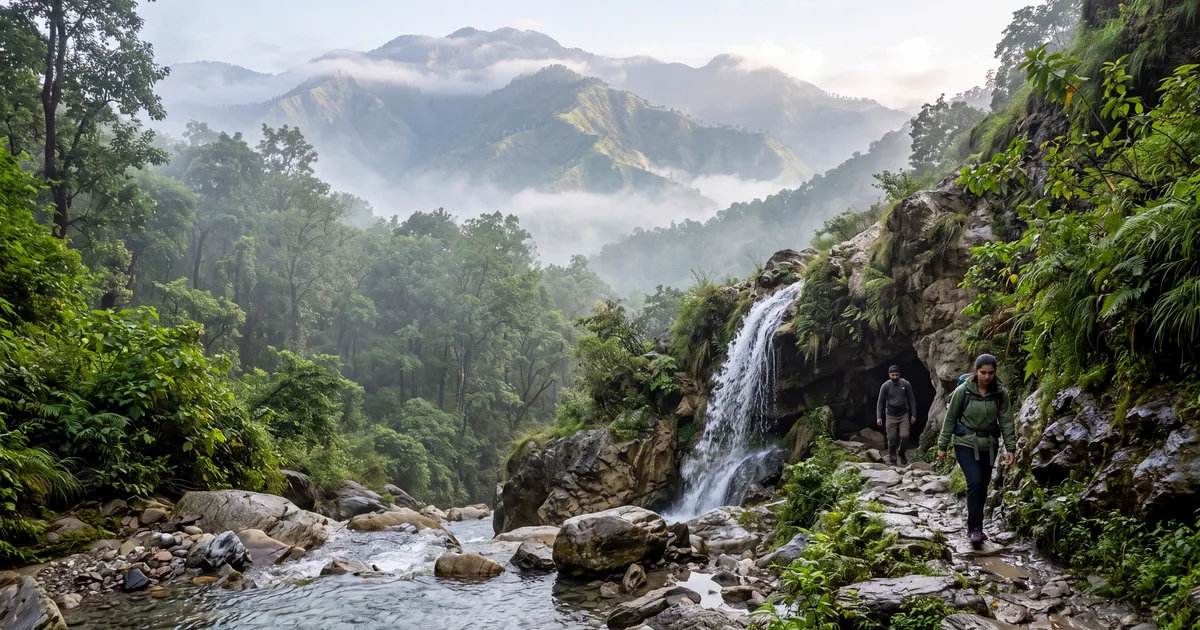
Dehradun is the city people drive through on their way to Mussoorie and Rishikesh. That is the first mistake. The Doon Valley sits at about 640 metres, low enough to stay warm in October, high enough to dodge the plains heat in May. It has Sal forests that run right up to the city limits, Tibetan monasteries built with a patience that the rest of India rarely shows, and a cafe scene that keeps growing because half the city seems to be either a student or a retired army officer who reads.
Most "places to visit in Dehradun" lists run to 30 entries and pad them with things like the railway station and the bus stand. This is a shorter list. Everything here is worth the stop, and nothing is on the list just because it exists.
TL;DR
- Robbers Cave, Sahastradhara, and the Forest Research Institute are the three spots that justify a Dehradun trip on their own.
- The Mindrolling Monastery is the largest Tibetan Buddhist centre in India and takes longer to see properly than most people budget for.
- Rajpur Road is where you eat, drink coffee, and decide what to do next. Plan around it.
- Two full days cover the city well. Add a third for Mussoorie or Chakrata.
- Best months: March to June and September to October.
What makes Dehradun different from the hill stations above it?
Hill stations sell views. Dehradun sells something harder to define: a liveable pace in a valley ringed by the Shivalik Hills and the lower Himalayas. The city is the capital of Uttarakhand, home to the Indian Military Academy, the Forest Research Institute, and a string of boarding schools that have educated half the country's civil servants. That institutional weight gives Dehradun something Mussoorie and Rishikesh lack, which is a life that runs year round and does not empty out after tourist season.
The elevation matters. At 640 metres, Dehradun avoids the biting cold that shuts down Mussoorie cafes by December. January nights drop to about 3°C, but the afternoons stay workable. Summers peak near 36°C, hot by hill standards, comfortable compared to Delhi's 45°C.
One caveat: Dehradun's traffic has gotten worse. The stretch from ISBT to Rajpur Road chokes during school hours. Budget an extra 20 minutes for any crosstown drive between 8 AM and 10 AM.
Robbers Cave (Guchhupani): the river that disappears underground
Robbers Cave is a narrow limestone gorge about 8 km from the city centre where a stream vanishes into the rock and reappears 20 metres later. The walk through the gorge is short, maybe 600 metres, ankle deep in cold water for most of it. Locals say the name comes from the British era, when the cave was a hiding spot. Whether that is true or not, the geology is real and worth seeing.
Go before 10 AM. By noon the gorge fills with school groups and the charm drops. The entry fee is ₹35, and you will get your feet wet, so wear sandals or shoes you do not mind soaking. The surrounding area has food stalls, but nothing memorable. Eat before or after.
The honest limitation: the gorge is not long, and if you have seen slot canyons elsewhere, this will feel modest. But for a city attraction reachable by auto rickshaw, it delivers.
Sahastradhara: sulphur springs and a cable car with a view
Sahastradhara means "thousand fold spring," and the name undersells the place only slightly. It is a series of limestone pools fed by sulphur springs, about 14 km from the city. The water drips over stalactites and collects in shallow pools where people soak their feet. The sulphur content is supposed to be good for skin. Whether or not you believe that, the pools are cold and the setting is green.
The cable car (ropeway) here is the draw for anyone who does not care about sulphur. It runs 750 metres up the hillside and the views of the Doon Valley from the top are the best you will get without driving to Mussoorie. ₹100 for a return ticket. The ride takes about 5 minutes each way.
Skip weekends and public holidays. The parking lot overflows by 11 AM. A Tuesday or Wednesday morning gives you the pools and the ropeway with almost no queue.
Forest Research Institute: the building that stops you mid sentence
The FRI campus covers 4.5 square kilometres, which makes it one of the largest botanical gardens in the country. But the main building is the reason most people visit. It is a colonial era structure in Greco Roman style, with 2.5 km of corridors, six museums, and grounds that would look at home on the campus of an old English university. Completed in 1929, the architecture is striking, the kind of building where you walk in expecting a museum and spend the first 10 minutes staring at the ceilings.
The six museums inside cover timber, soil, pathology, silviculture, and related subjects. They are earnest rather than flashy, and the signage has not been updated in decades. That is part of the appeal. Plan about 90 minutes for the building and grounds.
Entry is free for Indian nationals. Photography is allowed in the gardens but restricted inside some museum halls. The campus is on the western side of the city, and combining it with Robbers Cave makes a clean half day loop.
Mindrolling Monastery: larger and quieter than you expect
The Mindrolling Monastery, in Clement Town about 10 km south of the centre, is one of the six major Nyingma monasteries of the Tibetan Buddhist tradition and the largest such centre in India. The main shrine, the Great Stupa, stands 60 metres tall and contains murals that run the full interior height. It is enormous and quiet in a way that a written description cannot capture.
The Japanese Garden within the complex is well maintained and worth walking through slowly. Most visitors spend 30 to 45 minutes here. That is too fast. The murals alone, if you read the panels and look at the detail, take an hour. Budget two hours for the full monastery visit if you care about what you are looking at.
There is no entry fee. Shoes come off inside the shrine. The complex runs its own school and residential area, so you will see monks going about their day. This is a living institution, not a museum piece.
Rajpur Road: the eat street that doubles as a gathering point
Rajpur Road is the long commercial spine that runs north from the city centre towards Mussoorie. It is where Dehradun's cafe culture lives. Over the last five years, it has picked up espresso bars, bakeries, and restaurants that would not look out of place in Indiranagar or Koramangala.
A few worth knowing: Ellora's (for momos and north Indian, crowded for a reason), Orchard (for continental), and the growing number of speciality coffee spots that rotate every year. Do not plan a specific place too far ahead. Walk the stretch, see what is open, and pick based on the crowd.
Rajpur Road is also where you catch shared taxis and Vikrams (shared autos) to Mussoorie. If you are combining the two, this is your transition point. The drive up starts here.
Tapkeshwar Temple: a cave shrine with a natural spring
Tapkeshwar is a Shiva temple inside a natural cave on the banks of a seasonal stream, about 5.5 km from the city. Water drips constantly from the cave roof onto the Shivling below, which is where the name (tapak, meaning drip) comes from. The cave is small and cool, and the setting along the riverbank is peaceful if you go on a non festival day.
It is free to visit and takes about 30 minutes. Combine it with Robbers Cave since they are in the same part of the city. On Shivratri and Mondays the place fills up. Go on an off day if you want the quiet cave experience.
How far is Mussoorie from Dehradun, and should you combine them?
Mussoorie sits 35 km north and roughly 1,400 metres higher. The drive takes about 90 minutes with normal traffic, longer on weekends when the single lane road up from Rajpur backs up. The two work well as a combined trip: two nights in Dehradun, one or two in Mussoorie, or vice versa.
The practical question is where you base yourself. Dehradun has better food, easier logistics, and more variety. Mussoorie has the views and the cooler air. If you are coming from Delhi for a long weekend, start in Dehradun on Friday evening, do the city on Saturday, drive up to Mussoorie on Sunday morning, and come back Monday. That gives each place its due.
If you only have one day and must choose, Dehradun gives you more to do. Mussoorie's main draw is the walk along Mall Road and the views, which fill half a day before you start repeating yourself.
What about Chakrata, Dhanaulti, and other day trips?
Dehradun works well as a base for short drives into the hills.
Chakrata is 92 km northwest, a quiet cantonment town at 2,118 metres with deodar forests and almost no tourist infrastructure. Tiger Falls, about 5 km from town, is a 50 metre waterfall that you can swim under in the warmer months. The road from Dehradun takes about 3 hours and is scenic enough to justify the drive even if you turn around at Chakrata itself.
Dhanaulti is 60 km from Dehradun via Mussoorie, at about 2,250 metres. It has eco parks with marked nature trails and views of the snow covered Himalayan range on clear days. It is the option for people who want height and quiet without Mussoorie's crowds.
Maldevta is closer, about 25 km, and it is a river picnic spot rather than a hill station. Clean water, shallow pools, and very few people on weekdays. Locals go here. Tourists rarely do.
All three work as half day or full day trips from Dehradun. If you are spending three or more days in the valley, pick one.
How to reach Dehradun
From Delhi: The fastest option is the Shatabdi Express (Train 12017), which takes about 5.5 hours from New Delhi Railway Station to Dehradun. Buses from Kashmere Gate ISBT take 5 to 7 hours depending on traffic and the operator. Driving takes about 5 hours via NH 72 and NH 7, and the road is four laned most of the way now.
By air: Jolly Grant Airport is 25 km east of the city centre. Flights from Delhi take about an hour, from Bangalore about 3 hours with a stop. Airport taxis to the city cost ₹600 to ₹800.
From Bangalore: No direct train. Fly to Jolly Grant or take a connecting train via Delhi. The flight plus taxi option takes about 5 to 6 hours total and is the practical choice. Browse group trips to Uttarakhand that include Dehradun on the itinerary if you want the logistics handled.
When to visit Dehradun
March to June is the window most travellers prefer. Temperatures sit between 20°C and 35°C, the Sal forests are green, and the city works normally. April and May are the warmest months, but still comfortable compared to the plains.
September and October are the post monsoon sweet spot. The air is clear, the hills are green, and the monsoon crowds have left. This is my pick if you are flexible.
November to February is cold. Nights drop below 5°C, and fog can delay trains and flights. The upside is that Dehradun empties out, prices drop, and you get Sahastradhara and the FRI almost to yourself.
July and August is monsoon. Heavy rain, landslide risk on hill roads, and most outdoor attractions are either closed or miserable to reach. Skip these months unless you have a specific reason.
Planning your Dehradun trip
Two days in the city cover the essentials: day one for Robbers Cave, Sahastradhara, and Tapkeshwar; day two for the FRI, Mindrolling Monastery, and Rajpur Road. A third day opens up Mussoorie or Chakrata.
If you are coming from Delhi, the weekend trip format works: leave Friday evening, return Sunday night. For a longer trip that includes Mussoorie, Rishikesh, or both, check what group trips are running through Dehradun. Fixed departure packages handle the logistics and often include all three on the same itinerary, which saves you from the drive juggling that eats into a DIY trip.
Dehradun is one of those places that rewards the people who stop instead of driving through. Give it a day. You will want to give it two.
Frequently asked questions
- How many days are enough for a Dehradun trip?
- Two full days cover the city's main spots, including Robbers Cave, Sahastradhara, and a cafe or two on Rajpur Road. Add a third day if you want to drive up to Mussoorie or do the Mindrolling Monastery properly. Most weekend travellers from Delhi manage a satisfying trip in two nights.
- What is the best time to visit Dehradun?
- March to June is pleasant, with temperatures between 20°C and 35°C. September and October are clear and green after the monsoon. Winters from November to February bring fog and temperatures near 3°C at night, which is good for those who like the cold but tough for sightseeing before 9 AM.
- Is Dehradun worth visiting or should I go straight to Mussoorie?
- Dehradun is worth at least a day on its own. The Doon Valley has a slower pace, better food options, and attractions like Robbers Cave that Mussoorie cannot match. Skipping it means missing the Tibetan monasteries, the forest trails, and the city's cafe culture. Do both if you have three days.
- Can I visit Dehradun and Mussoorie in one day from Delhi?
- Technically yes, but it makes for a 14 hour day with at least 10 hours of driving. A better plan is to leave Delhi early, spend the afternoon in Dehradun, stay overnight, and drive up to Mussoorie the next morning. The 35 km climb to Mussoorie takes about 90 minutes with traffic.
- What are some offbeat places to visit near Dehradun?
- Maldevta is a quiet river spot 25 km out that most tourists miss. Khalanga War Memorial sits on a hill with views of the valley and almost no crowd. George Everest's house above Park Estate in Mussoorie is another one: a short hike to a ruined bungalow with a 270 degree Himalayan panorama.
- Is Dehradun safe for solo female travellers?
- Dehradun is generally considered safe. The city has a large student population, busy markets till late, and well connected public transport. Stick to registered cabs for late night travel and keep your phone charged. The main tourist areas like Rajpur Road and Clock Tower stay active until 10 PM.