Best Places to Visit in Darjeeling (2026): Tea, Trains and Kangchenjunga Views
Discover 12 best places to visit in Darjeeling in 2026. Tea gardens, toy train, Tiger Hill sunrise and group trip tips from someone who has been twice.
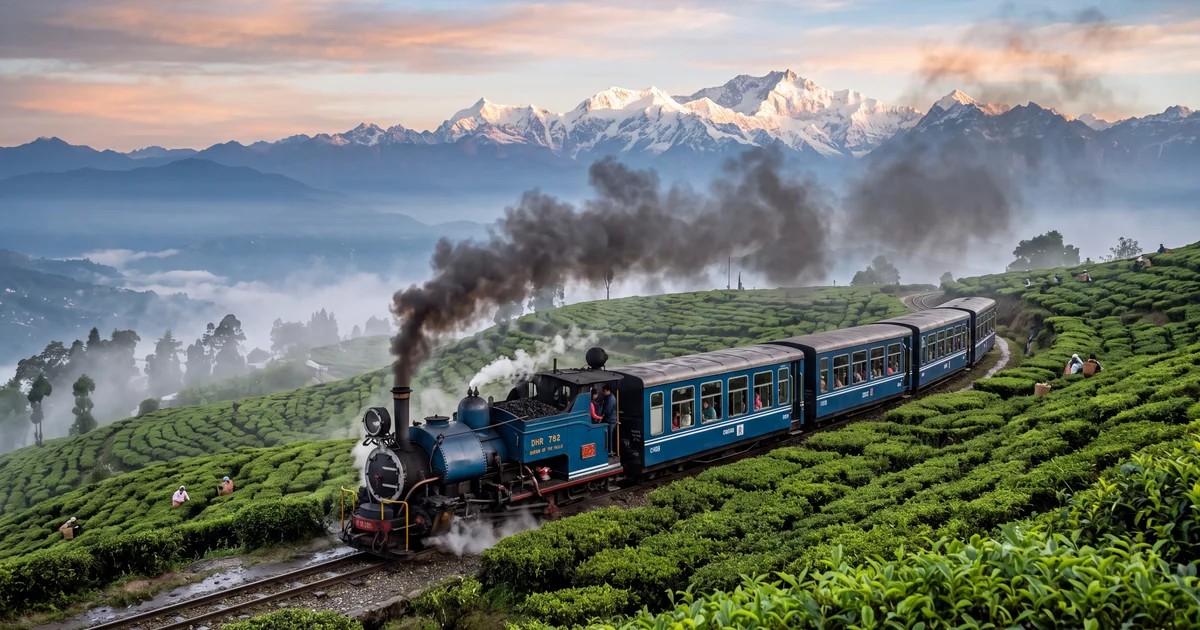
Darjeeling sits at 2,042 metres in the Mahabharat Range of West Bengal, and the first thing that hits you is the cold. Not Ladakh cold, but enough that your phone battery drops 15% overnight if you leave it on the nightstand. The town wraps around a ridge, tea gardens spill down every slope, and on clear mornings you can see four of the five highest peaks on earth from a single viewpoint.
This is not a list scraped from ten other lists. I have been to Darjeeling twice (once in November 2023, once in April 2025) and the difference between seasons is dramatic enough that I will mention which months each spot actually works.
TL;DR
- Tiger Hill at 4:30 AM in October or November gives you the Kangchenjunga sunrise. Skip it in monsoon.
- The toy train loop at Batasia is worth the ₹1,600 first class ticket. Second class is louder but cheaper at ₹300.
- Happy Valley Tea Estate is free to walk through, and you will learn more about tea in 40 minutes than most people know in a lifetime.
- Three full days is the sweet spot. Two feels rushed, four lets you add a Sandakphu base day trip.
- Fly to Bagdogra, jeep to Darjeeling in 3 hours. Do not trust "2.5 hour" estimates online.
What Makes Tiger Hill Worth a 4 AM Alarm?
Tiger Hill sits 11 km from Darjeeling town at 2,590 metres. The draw is simple: on a clear day, you watch the sun light up Kangchenjunga (8,586 m), Everest (visible as a tiny triangle 170 km away), Lhotse, and Makalu in a span of about eight minutes. The sky goes from black to orange to white.
Here is the honest part. Clear days happen roughly 60% of the time between October and December. In April, maybe 40%. In July, almost never. I went in November and got a perfect view. A friend went in March and saw nothing but cloud.
The Darjeeling Gorkha Hill Council charges ₹50 entry. Shared jeeps from Chowrasta leave at 4 AM and cost ₹250 per person. If you hate crowds, walk 15 minutes to Senchal Ridge instead of the main platform. Fewer selfie sticks, same mountain.
One opinion: the crowded viewing tower at Tiger Hill kills the mood. Get there early enough to grab a spot on the eastern edge, away from the PA system announcements.
The Darjeeling Himalayan Railway: More Than a Photo Op
The toy train has run since 1881. It climbs from New Jalpaiguri at 100 metres to Darjeeling at 2,042 metres using a narrow gauge track that zigzags through tea estates, loops at Batasia, and reverses at six points. UNESCO gave it World Heritage status in 1999.
You have two options. The full journey (NJP to Darjeeling, 7 hours, ₹1,450 first class) is an experience but exhausting. The joy ride (Darjeeling to Ghum and back, 2 hours, ₹1,600 first class or ₹300 second class) covers the best stretch: the Batasia Loop, the Ghum monastery viewpoint, and the world's highest narrow gauge station at 2,258 metres.
Book on IRCTC at least 7 days ahead. Seats disappear in October.
The caveat: second class carriages have no glass on the windows. In November, that means temperatures around 8°C blowing into your face at 15 km/h. Bring a jacket you do not mind getting coal dust on.
Happy Valley Tea Estate: Free, Quiet, and Better Than the Factory Tours
Happy Valley sits a 20 minute walk below Mall Road and has been producing tea since 1854. Unlike the factory tours that charge ₹200 and rush you through in 15 minutes, the estate itself is free to walk through. The rows of Camellia sinensis bushes drop down the hillside toward the Lebong valley, and on weekday mornings before 9 AM you will have them almost to yourself.
The plucking season runs from March to November. Visit in April during the first flush or June for second flush if you want to watch workers in the fields. By November the bushes go dormant and the gardens are quieter.
If you're travelling from Bangalore or Delhi on a group trip to Darjeeling, most itineraries include a tea estate visit. Happy Valley is the best one within walking distance of town.
Peace Pagoda (Japanese Shanti Stupa)
Built by the Nipponzan Myohoji Buddhist order in 1992, the Peace Pagoda sits on Jalapahar Hill about 3 km from the town centre. The pagoda itself is white, unadorned, and smaller than the ones in Leh or Rajgir. What makes this spot work is the 270 degree view: Kangchenjunga to the north, the Teesta valley to the east, and Darjeeling town spread across the ridge to the west.
No entry fee. Open sunrise to sunset. The walk uphill from Chowrasta takes 35 minutes and the last 200 metres are steep. An auto from town costs ₹150 one way.
My honest take: the pagoda itself takes five minutes to see. The reason to come is the bench on the southern side where you can sit for an hour with no one around. Most tourists photograph the front and leave.
Is Observatory Hill Worth the Climb?
Observatory Hill is a forested ridge right above Chowrasta, Darjeeling's central square. It takes maybe 12 minutes to climb the stone steps. At the top, a small temple shared by both Hindu and Buddhist devotees sits among prayer flags and rhododendrons.
The view from here is not as expansive as Tiger Hill, but you can see Kangchenjunga without waking up at 4 AM. On clear afternoons in October, the peak turns gold for about ten minutes around 4:45 PM.
This is not a "place" that needs half a day. It is a 30 minute detour that most tourists skip because it does not appear on package itineraries. If you are exploring destinations in Darjeeling, add it between lunch and the toy train.
Batasia Loop and War Memorial
Batasia Loop is where the toy train makes a full 360 degree turn around a sunken garden and war memorial dedicated to Gorkha soldiers. The loop exists because the gradient was too steep for the train to climb straight.
You can visit without taking the train. A taxi from town costs ₹100, or you can walk downhill in 25 minutes (uphill back is harder). The memorial garden is manicured, quiet on weekday mornings, and offers clean Kangchenjunga views.
The entry fee is ₹30. The place gets overwhelmed with tour buses between 10 AM and 2 PM. Go before 8 AM or after 4 PM.
One thing people miss: the tiny rail workers' shed at the edge of the loop has a working steam engine model. Ask the caretaker (usually there before 9 AM) and he will explain the reversal system.
Padmaja Naidu Himalayan Zoological Park
The zoo sits on Jawahar Parvat hill, a 15 minute walk below the Himalayan Mountaineering Institute. It is India's only breeding centre for red pandas and snow leopards. Spread across 67 acres of steep forested hillside, the enclosures are large by Indian zoo standards.
You will see red pandas almost guaranteed (there are over 20 in the breeding programme). Snow leopards are harder. They stay in the back of their enclosure on warm days. Visit early morning in winter when they are more active.
Entry: ₹100 for adults, ₹50 for children. Closed on Thursdays. Allocate 2 to 2.5 hours because the paths are steep and you will stop to rest. Photography allowed everywhere except the snow leopard breeding area.
The caveat: this is still a zoo. If captive animal exhibits bother you, skip it. The Himalayan Mountaineering Institute next door (same compound, included in the ticket) has an Everest exhibition that works as a non animal alternative.
How Is the Darjeeling Ropeway Different From Other Cable Cars?
The Darjeeling Rangeet Valley Ropeway runs 2 km from North Point down to Singla Tea Estate in the valley below. It is one of the oldest passenger ropeways in India (operational since 1968) and feels every bit its age. The wooden cabins hold 6 passengers and creak.
That said, the drop is 400 metres and the views of the Rangeet River and surrounding tea gardens are unobstructed for the full 7 minute ride. On clear days in November, you can see Kangchenjunga from the top station.
Ticket: ₹300 round trip. The lower station has a small tea garden where you can buy first flush Darjeeling tea cheaper than in town.
My opinion: skip it if you have already done ropeways in Gulmarg or Auli. The views are good but the infrastructure is dated. Worth it if you have a free afternoon and want something different from walking.
Rock Garden and Ganga Maya Park
Rock Garden sits 10 km below Darjeeling on the road to Ghum. It is a terraced park built into a natural waterfall, with stone steps winding down through gardens, water channels, and small bridges. Not exactly wilderness, but genuinely pretty during monsoon when the falls run heavy.
The park connects to Ganga Maya Park (a small lake with boating) at the bottom. Budget 1.5 hours for both. Entry: ₹50. Pedal boats at Ganga Maya cost ₹100 for 30 minutes.
The honest caveat: the taxi ride costs more than the entry fee (₹400 one way from town), and on dry winter days the waterfall is a trickle. Time this for September or October when the water flows but the monsoon road closures are over.
Sandakphu Base: A Day Trip for Trek Curious Visitors
Sandakphu (3,636 m) is the highest point in West Bengal and gives you a panoramic view of four 8,000 metre peaks: Everest, Kangchenjunga, Lhotse, and Makalu. The full trek takes 4 days from Manebhanjan (25 km from Darjeeling).
If trekking is not your thing, you can drive to Tumling (2,970 m, 3 hours from Darjeeling by shared Land Rover) for a taste of the views. Tumling has basic lodges and sits on the India Nepal border. On clear mornings, the Everest massif is visible to the west.
Shared Land Rovers to Tumling leave from Manebhanjan at 7 AM and cost ₹500 per person. The road is unpaved and rough. Check conditions between June and September when sections wash out.
If you are looking at Himalayan treks accessible from Delhi, the Sandakphu trek is one of the most rewarding moderate options in eastern India.
Mall Road and Chowrasta: Where Locals Actually Hang Out
Chowrasta is the flat intersection at the top of Mall Road where four roads meet. No vehicles allowed. On any evening between 4 and 7 PM, you will find locals on benches, vendors selling momos (₹40 for 8 pieces), and kids running around while parents drink tea from Keventer's (the 1911 dairy brand still operating here).
Mall Road runs downhill from Chowrasta past shops, restaurants, and colonial buildings. Most of the souvenir shops sell the same Darjeeling tea at inflated prices. Buy tea directly from Nathmulls (operating since 1931, just below the Planters' Club) if you want quality without tourist markup.
For food: Glenary's Bakery for breakfast (the cinnamon rolls are worth ₹80), Kunga Restaurant for Tibetan thukpa, and Keventer's for their smoked pork sausages and cheese toast. None of these will win Michelin stars. All of them are honest and good.
What Should You Skip in Darjeeling?
Every travel guide lists 20+ "must see" places. Here is what I would cut:
Padmaja Naidu Himalayan Zoological Park if you are short on time and uncomfortable with zoos. The red pandas are cute, but the 2.5 hours could go toward Tea estate walks.
Darjeeling Ropeway if you have done ropeways elsewhere. The views overlap with what you see from the Peace Pagoda.
Nightingale Park (formerly Raj Bhavan gardens) charges ₹100 for what is essentially a municipal garden with one statue.
The Tibetan Refugee Self Help Centre is often recommended, but it has declined. The workshop is small, the display room sells overpriced carpets, and you can buy the same items on Mall Road for less.
Spend that time on a second tea estate instead. Makaibari (in Kurseong, 30 km downhill) offers tours of their biodynamic gardens that are genuinely educational, and the train ride to Kurseong is prettier than the Ghum section.
Planning a Darjeeling Trip: Practical Bits
Getting there: Fly to Bagdogra (IXB). Shared jeeps to Darjeeling cost ₹300 per person from the airport stand, take 3 to 3.5 hours. Private taxi costs ₹2,500 to ₹3,000. The NH 110 route via Kurseong is shorter but steeper than the Rohini route.
Budget: A mid range trip runs ₹3,500 to ₹5,000 per day per person (hotel, food, local transport). Budget stays in Chowrasta area start at ₹1,200 per night in off season.
Best months: October, November, December for views. March to May for tea and flowers. Avoid June through August.
Group trips: Fixed departure group tours to Darjeeling typically combine it with Gangtok (3 days Darjeeling + 3 days Gangtok) and include Bagdogra airport pickup. Check live dates on TripzSearch.
What to pack: Layers. Darjeeling goes from 18°C midday to 5°C at night in November. A waterproof jacket works year round. Good walking shoes matter because every road is a slope.
Darjeeling is not a place that overwhelms you with activities. It is a place that rewards you for slowing down, sitting on a bench with tea and watching clouds move across Kangchenjunga. Three days is enough. But you will want more.
Frequently asked questions
- What are the must visit places in Darjeeling for first timers?
- Tiger Hill for the sunrise over Kangchenjunga, the Darjeeling Himalayan Railway toy train loop at Batasia, and a walk through Happy Valley Tea Estate cover the essentials in two days. Add the Peace Pagoda and Mall Road for the full first timer checklist.
- How many days are enough to see Darjeeling?
- Three full days let you cover Tiger Hill, the toy train, two tea estates, and a day trip to Mirik or Sandakphu base. Two days feel rushed because Tiger Hill needs a 4 AM start and you lose half a morning recovering. Four days work if you want to trek to Sandakphu.
- What is the best time to visit Darjeeling?
- October to December gives you clear Kangchenjunga views, crisp mornings around 5 to 10°C, and no monsoon fog. March to May is the second flush tea season and rhododendron bloom, but expect afternoon clouds. Avoid July and August when landslides close roads.
- Is Darjeeling worth visiting in monsoon?
- Not really. Roads from Siliguri get blocked by landslides almost every week in July and August. Visibility drops to near zero at Tiger Hill, and most viewpoints lose their appeal. If you insist, the green valleys look stunning between rain spells, but plan for delays.
- How do I reach Darjeeling from Delhi?
- Fly to Bagdogra airport (about 2 hours from Delhi), then take a shared jeep or taxi 70 km uphill to Darjeeling. The drive takes 3 to 3.5 hours via the NH 110 hill route. You can also take the New Jalpaiguri to Darjeeling toy train, but that adds 7 hours and sells out weeks ahead.
- What is the toy train ticket price in Darjeeling in 2026?
- The Darjeeling Himalayan Railway joy ride from Darjeeling to Ghum and back costs around ₹1,600 for first class and ₹300 for second class as of 2026. Book on the IRCTC website at least a week ahead because seats fill fast during October to December peak season.
- Can I do a group trip to Darjeeling from Bangalore?
- Yes. Most group tours fly Bangalore to Bagdogra (with a Kolkata or Delhi connection) and cover Darjeeling, Gangtok, and sometimes Sandakphu in 6 to 8 days. Check fixed departure dates on tripzsearch.com/trips for operators running this route.