Best Places to Visit in Bir Billing (2026): Paragliding, Monasteries and Cafe Culture
15 places to visit in Bir Billing in 2026 with honest notes on paragliding, monasteries, cafes and the trails worth walking.
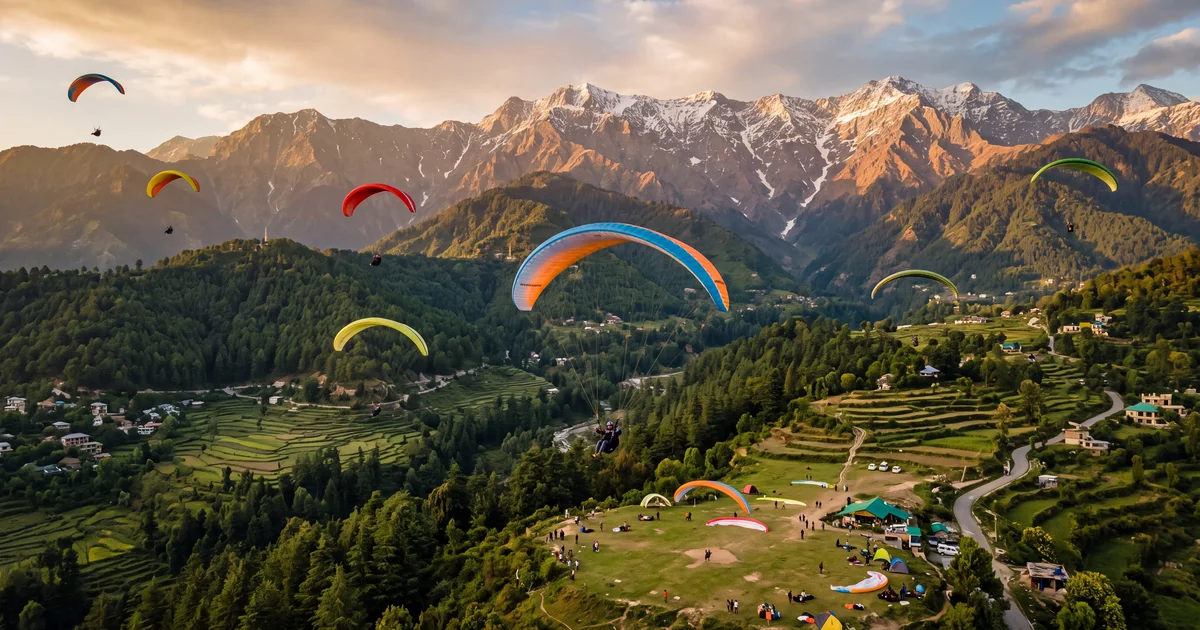
Bir is a Tibetan settlement in Himachal Pradesh's Kangra Valley that became a paragliding magnet without ever trying to be a tourist town. The Billing takeoff site sits at 2,430 metres on a ridge 14 km above the village. Thermal columns off the Dhauladhar range make it one of the best sites in Asia for free flight. The Paragliding World Cup was held here in 2015, and the site has hosted national championships every year since.
But paragliding takes 20 minutes. The question is what you do with the other 71 hours of a three day trip. That is where most guides fall short. They list "Bir Billing" as one destination and move on. The village itself, the monasteries, the tea gardens, the trails into Rajgundha Valley, the absurd density of good cafes for a place with a population under 8,000: that is the real draw. This guide covers 15 places to visit in Bir Billing in 2026 with the kind of specifics that trip planning posts usually skip.
TL;DR
- Bir Billing is in Kangra district, Himachal Pradesh, roughly 520 km from Delhi (12 to 13 hours by bus).
- Best months: October and November for paragliding and views, March to May for pleasant weather.
- Budget: 1,500 to 2,500 rupees per day covering a homestay, three meals and one activity.
- Three days is the sweet spot. Rushing it in one day means you skip everything that makes Bir different from any other paragliding site.
- Compare group trips from Delhi that include Bir, Baijnath and Dharamshala on TripzSearch.
Where is Bir Billing and how do you get there?
Bir is the village. Billing is the paragliding launch site 14 km uphill. They are spoken of as one destination but they are two distinct places connected by a winding road that takes 35 to 45 minutes by taxi.
The village sits at about 1,525 metres in the Kangra Valley. From Delhi, the standard route is an overnight Volvo from Kashmere Gate ISBT to Baijnath (about 460 km, 12 to 13 hours), then a local taxi or auto for the final 30 km to Bir. The ride costs 900 to 1,200 rupees for the bus and about 600 rupees for the taxi.
Flying to Gaggal airport (Dharamshala) and hiring a cab is faster if you find a fare under 5,000 rupees. The Kangra Valley toy train from Pathankot to Ahju station (3 km from Bir) is charming but takes 6 hours for 165 km. Worth it once for the experience. Not something you want to repeat in a hurry.
What makes Billing the paragliding capital of India?
The ridge at 2,430 metres catches thermals that rise off the Kangra Valley floor. On a good October morning, pilots get 45 to 60 minutes of air time. Tandem flights for tourists are shorter, typically 15 to 25 minutes, but even that is enough to see the full valley spread below you with Dhauladhar snow peaks filling the northern horizon.
Tandem flights cost 2,500 to 3,500 rupees per person. The price goes up in October when demand peaks and operators know it. Book at the Billing road ticket counters rather than through Delhi travel agents. You will save 500 rupees and can check the weather before committing.
One caveat: wind conditions ground flights roughly 3 to 4 days per month even in peak season. If paragliding is your only reason for visiting, keep a buffer day. If you have already built in monastery visits and treks, a grounded day just means an extra afternoon in a cafe with mountain views. Not the worst outcome.
Which monasteries in Bir are worth visiting?
Bir's Tibetan settlement was established in the 1960s when refugees arrived through Dharamshala. Five monasteries operate within 5 km of the village, each with distinct architecture and atmosphere.
Chokling Monastery
The largest and most photographed. The main prayer hall has a 15 foot gilded Buddha and murals covering every wall. Morning prayers begin around 6:30 AM and you are welcome to sit quietly at the back. The monastery runs a school and a nunnery on the same campus. Spend 45 minutes here at minimum.
Palpung Sherabling Monastery
About 6 km from Bir toward Baijnath, this is the seat of the Tai Situpa lineage in exile. The complex spreads across a forested hillside and feels more like a retreat centre than a tourist stop. The golden stupa and the main shrine hall are impressive, but the real draw is the quietness. Fewer visitors come here compared to Chokling. Allocate an hour including the drive.
Dzongsar Khyentse Chökyi Lödrö Monastery
Smaller and more austere. The courtyard overlooks the valley and catches afternoon sun in a way that makes you want to sit and do nothing. The monastery is also the production house behind a few Bhutanese films, which is an odd fact that locals mention with pride.
Bir Tibetan Colony Area
Not a single monastery but the neighbourhood around them. Prayer flags string between buildings, momos steam in tiny kitchens at noon, and old Tibetan men play cards outside tea stalls. Walk through between 10 AM and 1 PM for the best atmosphere. This is the part of Bir that does not appear on "top 10" lists but makes the strongest impression.
What are the best cafes and restaurants in Bir?
For a village this small, the cafe density is absurd. Over 30 spots sit within a 1 km radius, most of them opened in the last four years by people who came to paraglide and never left.
June Sixteen Cafe does excellent coffee and breakfast bowls. Gets crowded after 10 AM. Arrive early.
Vairagi has a rooftop with Dhauladhar views and a menu that tries to do everything from shakshuka to thali. The thali is the better bet. About 350 rupees.
The Musafir is where the paragliding instructors eat. Cheap, filling, no pretension. Thukpa for 120 rupees.
Northern Cafe sits on the Billing road and works as a pit stop on the way up or down. The lemon ginger honey is better than it has any right to be at 2,000 metres.
The Tibetan restaurants near Chokling Monastery serve momos that are consistently good across three or four places. Do not overthink the choice. Pick the one with more locals sitting inside.
One honest note: service is slow everywhere. Bir runs on mountain time. If you are in a rush between activities, eat at The Musafir. Everywhere else, assume 30 minutes between ordering and eating.
Is the trek to Rajgundha Valley worth the effort?
Yes. This is Bir's best kept walking secret, though "secret" is generous since every cafe owner will suggest it.
The trail starts from Billing (or just below it) and drops into Rajgundha, a small village in a hanging valley at about 2,400 metres surrounded by peaks on three sides. The hike takes 4 to 5 hours one way. The return route via Bara Gran and back to Billing makes it a loop that fills a full day.
Rajgundha has 5 to 6 homestays offering basic meals and a bed for 500 to 800 rupees per night. The valley is genuinely remote. No road access, no ATM, no reliable phone signal. That is the point.
The trail is moderate in difficulty. One steep descent in the first hour catches people off guard if they expected flat meadow walking. Carry at least 2 litres of water and start before 8 AM to avoid afternoon cloud cover that makes the ridge section less scenic.
If you only have three days and must choose between a second monastery visit and the Rajgundha trek, pick the trek. You will not find this kind of valley anywhere near a paragliding site.
What should you see at Baijnath Temple?
Baijnath is 30 km from Bir and most travellers pass through it without stopping. That is a mistake if you have any interest in temple architecture.
The Baijnath Shiva temple dates to 1204 CE and sits on the bank of the Binwa river. It is a Nagara style stone temple with carvings that have survived 800 years of Kangra Valley earthquakes. The shikhara (tower) is intact. The mandapa has carved pillars with figures that art history textbooks reference. The temple complex takes 30 to 40 minutes.
The town itself is small and unremarkable, but the temple and the river ghat together make a worthwhile stop on the Bir to Dharamshala route. If you arrived from Delhi via bus, you already passed through. Stop on the way back instead.
Are the tea gardens near Bir worth visiting?
Bir sits in the lower Kangra Valley, which produces Kangra tea, one of India's lesser known tea varieties that briefly rivalled Darjeeling in the 1800s before an earthquake destroyed most of the estates.
A few small plantations operate between Bir and Billing. The Bir tea factory (about 4 km from the village centre) offers informal tours if you ask. No entry fee. The tea is not world class by modern standards, but the factory setting with mountains behind it is pleasant, and buying a packet of orthodox green tea (200 to 300 rupees per 250 grams) directly supports the local economy.
The tea gardens also double as a walking route in the mornings. Flat terrain, open views, and nobody else around. Combine it with a sunrise walk if you are up early.
How to plan 3 days in Bir Billing
Day 1: Arrive and settle
Most Delhi buses reach Baijnath by 6 to 7 AM. Grab chai at the bus stand, taxi to Bir, check into your homestay. Spend the morning at Chokling Monastery and the Tibetan colony. Lunch at The Musafir or a colony eatery. Afternoon walk through the tea gardens or the trail toward Billing (do not go all the way; save that for day 2). Evening in a cafe. Early bed, because day 2 starts early.
Day 2: Paragliding and Billing
Taxi or shared jeep to Billing by 8 AM. Tandem flight takes 15 to 25 minutes. After landing in Bir, eat lunch, then drive back up to Billing for the afternoon views and the start of the Rajgundha trail (if you plan a day trek, start from Billing at 8 AM instead of paragliding, and paraglide on day 3 instead). Evening at the cafes.
Day 3: Monasteries and departure
Visit Palpung Sherabling and Dzongsar in the morning. Both are quieter before 10 AM. Stop at Baijnath temple on the way to the bus stand. Afternoon bus or cab to Dharamshala, or direct overnight bus back to Delhi.
Three days is enough. Four is better if you want the Rajgundha trek without sacrificing paragliding. One day is not enough. You will paraglide, eat one meal, and leave thinking Bir is just a launch site. It is not.
What should you know before booking a Bir Billing trip?
The village has limited ATMs and the two that exist occasionally run out of cash on weekends. Carry enough rupees for three days (about 5,000 to 7,000 per person is comfortable). Most cafes accept UPI, but homestays and paragliding operators often prefer cash.
Network coverage is patchy. Jio works better than Airtel in the village. Neither works in Rajgundha Valley.
Accommodation ranges from 600 rupee homestays to 3,000 rupee boutique rooms. October bookings fill 2 to 3 weeks in advance, especially around Dussehra. Book ahead if you are visiting in peak season.
The road from Bir to Billing is not paved beyond a point. During monsoon it becomes genuinely difficult. Shared jeeps run year round but they pack in tight. A private taxi costs about 800 rupees one way.
Finally, bring layers. Bir sits at 1,525 metres but Billing is at 2,430 metres. The temperature difference is real. A fleece or light down jacket is necessary even in October. Mornings at the cafes are cold enough that you will see locals in woolens while tourists shiver in T shirts.
Browse group trips to Himachal or check departures from Delhi to find packages that combine Bir with Dharamshala and Baijnath. For more destinations in the Kangra Valley, explore what other travellers are booking on TripzSearch.
Frequently asked questions
- What is the best time to visit Bir Billing?
- March to June and September to November are the best windows. October and November bring clear Dhauladhar views and ideal paragliding thermals with temperatures between 10°C and 25°C. Avoid July and August because the monsoon grounds all paragliding and trails get slippery.
- How much does paragliding cost in Bir Billing?
- A tandem flight from the Billing takeoff site costs 2,500 to 3,500 rupees per person depending on the season and operator. The flight lasts 15 to 25 minutes and ends at the Bir landing site. GoPro video costs an additional 500 to 1,000 rupees. Book directly at the Billing road rather than through aggregators to save about 500 rupees.
- How do I reach Bir Billing from Delhi?
- The most common route is an overnight Volvo bus from ISBT Kashmere Gate to Baijnath (12 to 13 hours), then a 30 minute taxi to Bir. Alternatively, fly to Dharamshala (Gaggal airport) and take a 70 km cab ride, which takes about 2 hours. There is no direct train to Bir. The nearest railway station is Ahju, 3 km from Bir on the Kangra Valley toy train line.
- Is Bir Billing safe for solo female travellers?
- Bir is one of the safer destinations in Himachal Pradesh for solo travellers. The village has a small, walkable core with plenty of cafes and guesthouses. Most visitors are backpackers and the atmosphere is relaxed. Standard precautions apply after dark on unlit roads toward Billing. Homestays in Bir Colony or near Chokling Monastery are well reviewed by solo women.
- Can I visit Bir Billing in winter?
- Yes, but with caveats. December to February brings temperatures close to 0°C at night, and the Billing road can ice over. Paragliding runs on limited days depending on wind conditions. The upside: almost no crowds, clear mountain views, and Tibetan momos taste better in the cold. Carry proper woolens and confirm your paragliding slot 24 hours before.
- What food options are available in Bir?
- Bir has over 30 cafes and restaurants within a 1 km radius. You will find Tibetan thukpa and momos at monastery area eateries, Israeli and continental food at backpacker cafes, and Himachali dham at a few local dhabas. June Sixteen Cafe and Vairagi are popular for brunch. Expect to spend 200 to 500 rupees per meal.
- How many days are enough for Bir Billing?
- Three days covers paragliding, two or three monasteries, a cafe crawl and one short trek. If you want to add the Rajgundha Valley trek or explore Baijnath temple properly, plan for four to five days. A rushed overnight trip lets you paraglide and see one monastery, but misses the pace that makes Bir worth visiting.