Best Places to Visit in Almora (2026): Temples, Sunsets and Kumaon Quiet
12 places to visit in Almora in 2026 with temple timings, sunset spots and practical notes on reaching this Kumaon hill town.
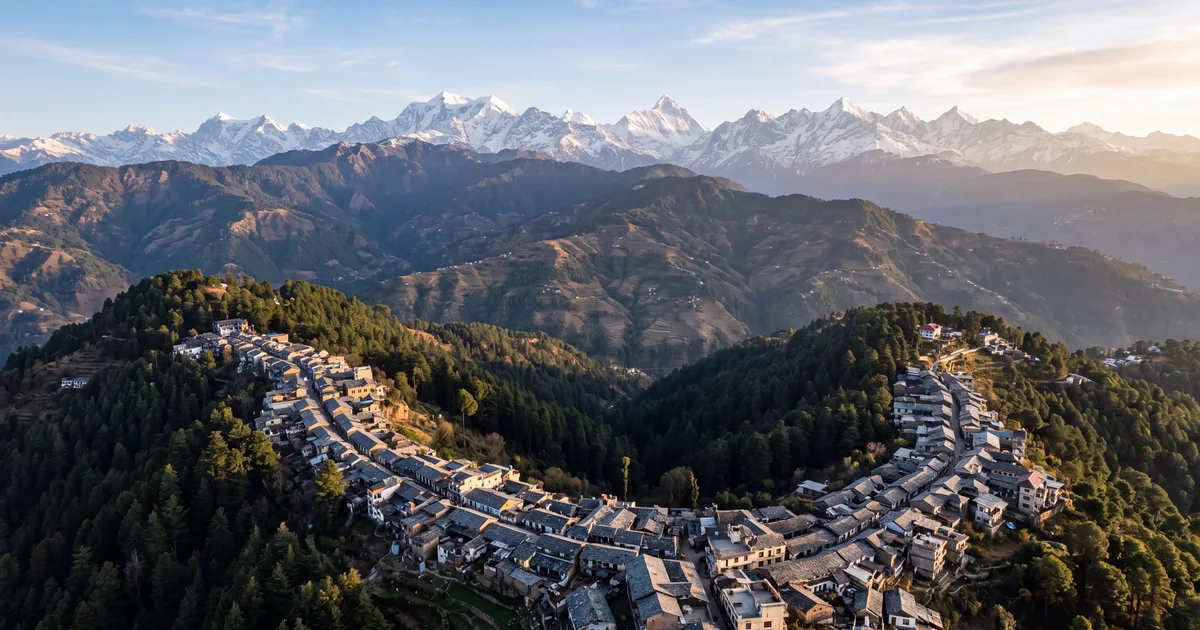
Almora sits on a horseshoe shaped ridge at 1,638 metres in the Kumaon division of Uttarakhand, looking north toward a 300 km spread of Himalayan peaks. The town has been here since the 16th century, when the Chand dynasty kings made it their capital. The ridge positioning was strategic then (defensible, good sight lines) and is scenic now (panoramic, unobstructed, face to face with Trishul, Nanda Devi, and Panchachuli on clear mornings).
About 150,000 tourists visit Almora each year. That is a fraction of what Nainital (65 km away) or Mussoorie pulls. The town has no lake, no mall road with neon signs, no ropeways or amusement rides. What it has instead: 1,000 year old stone temples, a bazaar where bal mithai has been sold from the same shops since the 1920s, a sunset point that photographers fly in from Delhi for, and forest walks where you are more likely to encounter a barking deer than another tourist.
This is not an exciting hill station. It is a quiet one. If that sounds appealing, these are the 12 places to visit in Almora in 2026 that justify the 370 km drive from Delhi.
TL;DR
- Almora sits at 1,638 metres on a ridge in Kumaon, 370 km from Delhi (8 to 10 hours) and 65 km from Nainital.
- Best season: March to June and September to November. Winter offers the clearest Himalayan views but nights drop below 5°C.
- Two days covers the essentials. Three days adds Binsar Sanctuary and unhurried temple visits.
- No entry fees for most attractions. Binsar charges 150 rupees for Indians.
- Browse trips from Delhi and group treks that include Kumaon on TripzSearch.
Bright End Corner: the sunset spot that earns its reputation
Bright End Corner is a flat clearing on the western tip of Almora's ridge, about 2 km from the Mall Road. At sunset, the Trishul massif (7,120 metres) turns from white to gold to pink across roughly 20 minutes, and on clear days the entire Kumaon Himalayan range lights up in sequence from left to right as the sun drops.
The spot itself is simple. A metal bench, a paved path, some pine trees. No vendors, no entry fee, no infrastructure beyond a small parking area. That is part of the appeal. You watch the mountains change colour and then you walk back in the dark (carry a phone flashlight for the path).
October and November mornings are the clearest, but sunset works better here than sunrise because the ridge faces west. The mountains catch last light while the valley below Almora goes blue and cold. Arrive by 4:30 PM in winter, 5:30 PM in summer. The display lasts 20 minutes and then it gets cold fast, 8 to 10°C by 6 PM in November. Bring a jacket.
One caveat: clouds ruin everything. If the sky is overcast by afternoon, skip the walk and come back the next day. A clouded Bright End Corner is just a dark clearing with cold wind.
Chitai Golu Devta Temple: why are there thousands of bells here?
Chitai Golu Devta temple is 8 km from Almora town on the Binsar road. It is dedicated to Golu Devta, a folk deity considered the god of justice in Kumaon. Locals file petitions (written on stamp paper, like a court filing) and tie brass bells to the temple railings when their wish is granted. The result: thousands of bells covering every surface of the temple compound, from railings to trees to purpose built frames.
The bell accumulation is striking. Some bells are small, thumb sized. Others are the size of a watermelon. The sound when wind picks up through the compound is constant, layered, and surprisingly loud. On a windy afternoon, you hear the temple from 200 metres down the road.
The temple is open from 6 AM to 9 PM. No entry fee. Photography is allowed in the outer compound but not inside the main sanctum. The drive from Almora passes through deodar forests on a road that would be scenic even without a destination.
If you are visiting Binsar Sanctuary (30 km further on the same road), Chitai is a natural stop on the way. Do both in one morning trip.
What makes Kasar Devi more than a temple?
Kasar Devi temple sits on a forested ridge 5 km north of Almora town. The temple itself is small, stone, roughly 2nd century in its oldest sections. It is dedicated to a local form of Durga. The architecture is modest Kumaoni temple style: no towering spires, no elaborate carvings. A stone platform, a low roof, and a sanctum that maybe 10 people can stand in at once.
But the ridge is the story. In the 1960s and 70s, the area drew a community of Western seekers, writers, and counterculture figures. Bob Dylan visited. So did Cat Stevens, Timothy Leary, and Alfred Sorensen (Sunyata), a Danish mystic who lived here for decades. The locals called the ridge Crank's Ridge after its unusual residents, and the name stuck in some maps. A few guesthouses from that era still operate, and the vibe of the place, pines, silence, morning fog, remains closer to 1970 than 2026.
There is a geomagnetic angle too. ISRO and NASA studies reportedly found unusual electromagnetic properties in the Kasar Devi ridge, similar to readings at Machu Picchu and Stonehenge. Whether that explains the spiritual attraction or is coincidence depends on what you believe. The sunrise from the temple compound, with mist filling the valley below and the Himalayan range turning pink above, does not require any mystical explanation to be worth the early alarm.
Reach Kasar Devi by auto (80 to 100 rupees from Mall Road) or a 45 minute uphill walk. The road is paved but steep for the last kilometre. Sunrise visits require leaving Almora by 5 AM in summer.
Jageshwar: the forest temple complex that predates Almora itself
Jageshwar is a cluster of 124 stone temples in a deodar forest valley, 35 km northeast of Almora. The temples date from the 7th to 12th century and are dedicated primarily to Shiva. The Archaeological Survey of India maintains the site, and the preservation is better than most temple complexes of this age in the Himalayas.
The setting does most of the work. The temples sit along a stream (Jata Ganga) inside a dense deodar forest where the trees are 30 to 40 metres tall and the light filters through in shafts. The largest temple, Dandeshwar, has detailed Nagara style carvings on its shikhara that reward close inspection.
It is a half day trip from Almora. The road passes through villages and forest, and the last 5 km drops into the valley through progressively denser deodar cover. No entry fee. Open from sunrise to sunset. A guide at the temple complex (200 to 300 rupees, negotiable) adds useful context about the carvings and the site's ASI history.
My one complaint: the parking area is too close to the temples, and on festival days (Shivratri especially) the vehicle congestion undermines the peace. Visit on a weekday morning if you can. By 8 AM, you might be the only person in the oldest section of the complex.
The Almora Mall Road and Lala Bazaar: what the main town looks like
Almora's Mall Road is not the tourist strip you find in Mussoorie or Shimla. It is a narrow cobbled lane along the ridge top, lined with small shops selling woolens, copper items, and the town's famous bal mithai (a dark fudge rolled in sugar balls that has been made here since at least the 1920s). The road follows the ridge curvature and at points you can look down both sides of the horseshoe to valleys 500 metres below.
Lala Bazaar connects to Mall Road at the eastern end and is the older, more local section. The shops here sell dry fruits, Kumaoni spices, iron utensils, and copper paandans (betel leaf containers) that are a regional craft. Bargaining is expected and prices start at roughly double the settled amount.
The best time to walk Mall Road is early morning (7 to 8 AM) when the shops are still opening and the ridge catches first light. The town wakes up slowly. Chai stalls open before anything else. The views from the eastern end toward Nanda Devi are the best on the route.
Buy bal mithai from Khim Singh Mohan Singh Rautela, the shop that claims (credibly) to have invented it. It is near the center of Mall Road. Two pieces cost 20 rupees and that is enough to know whether you like it.
Zero Point in Binsar: is the 300 km Himalayan panorama real?
Zero Point is the highest point in Binsar Wildlife Sanctuary, about 30 km from Almora. The name refers to what the view promises: a 300 km panorama of the Himalayan range, from Kedarnath in the west to Api in Nepal to the east. On a clear morning, you can count named peaks including Trishul (7,120 m), Nanda Devi (7,816 m), Panchachuli (6,904 m), and Chaukhamba (7,138 m).
The "is it real" qualifier matters because the panorama requires exceptional clarity. Post monsoon mornings (October, November) and winter mornings (December through February) deliver it about 60 to 70% of the time. Summer and pre monsoon haze cuts the visible range to maybe 100 km, which is still good, but not the marquee experience.
Getting there: enter Binsar Sanctuary at the Ayarpani gate (150 rupees entry for Indians, 600 for foreigners). Drive 10 km on a forest road to the parking area. Walk 2 km uphill through oak and rhododendron forest to Zero Point. The walk takes 30 to 40 minutes at a relaxed pace. Barking deer and leopard are resident in the sanctuary; you will likely hear the deer's sharp alarm call even if you do not see one.
Budget a full morning. Leave Almora by 6 AM, reach the gate by 7, start the walk by 7:30. The light and clarity peak between 7 and 9 AM. By 10, haze starts building from the valleys below.
Deer Park and the Govind Ballabh Pant Museum: two hours well spent in town
Deer Park is a small municipal park on the eastern edge of Almora, about 1 km from Mall Road. It has a modest collection of Himalayan deer species (barking deer, sambar, spotted deer) in open enclosures, a rose garden, and some walking paths. It is not a wildlife experience. It is a quiet green space where you sit on a bench with a mountain view and slow down for an hour.
The Govind Ballabh Pant Museum (also called the Almora Museum) is 500 metres from Deer Park and houses a small collection of Kumaoni folk art, wooden masks, copper plates, and stone sculptures from the Chand dynasty period. The museum is one room. You can see everything in 30 minutes. The stone carvings from the Katyuri period (7th to 11th century) are the highlight, small pieces but finely carved.
Entry to Deer Park is 10 rupees. The museum is 20 rupees. Neither will change your life, but both reward a quiet afternoon when you have run out of viewpoints and temples.
How to reach Almora from Delhi (the practical version)
The distance is 370 km. No direct train runs to Almora. The options:
Train to Kathgodam, then taxi. The Shatabdi and Ranikhet Express run from Delhi to Kathgodam (the last station on the KGM line, 280 km, 6 to 8 hours). From Kathgodam, Almora is 90 km by road, about 2.5 hours by shared taxi or pre booked cab (1,200 to 1,500 rupees). This is the most popular route.
Overnight bus from Delhi. Uttarakhand Roadways and private operators run AC sleeper buses from Anand Vihar ISBT. They leave around 9 to 10 PM and reach Almora by 6 to 7 AM. Fares range from 600 to 1,200 rupees depending on the bus type. The road after Haldwani is winding, so the back seats are uncomfortable for anyone prone to motion sickness.
Self drive. Delhi to Moradabad via NH9 (180 km, 3.5 hours), then Moradabad to Haldwani (110 km, 2.5 hours), then the hill road to Almora (80 km, 2.5 hours). The hill section has good tarmac but sharp switchbacks. Total: 8 to 10 hours with one stop. Friday departures face Haldwani traffic until 8 PM.
Flight to Pantnagar. The closest airport is Pantnagar (127 km from Almora). IndiGo and Alliance Air operate limited flights from Delhi. The airport is small and flights are frequently cancelled in bad weather. Taxi from Pantnagar to Almora costs 2,000 to 2,500 rupees.
Simtola and Martola: forest walks for people who do not want a temple
Simtola is a forest area 3 km north of Almora town, on the same ridge that extends toward Kasar Devi. The road runs through deodar and pine forest with clearings that offer valley views. It is not a trail in the trekking sense. It is a flat, shaded road where you walk for an hour, see mountains between trees, and turn back.
Martola is a smaller forest patch 5 km south of Almora, quieter and less visited. The British used it as a sanitarium site, and some colonial era bungalows (private, not open to visitors) remain among the trees. The walk from Almora to Martola takes about an hour one way, mostly downhill on the way there and uphill on the return.
Neither is a destination in the conventional sense. Both are the kind of place you end up when you have a free afternoon and want pine scented air without driving 30 km to Binsar. If forest walking is your idea of sightseeing, Almora is the right hill station.
Almora for a weekend: a practical two day plan
Day one: Arrive in Almora by morning (overnight bus from Delhi or early train to Kathgodam + taxi). Drop bags. Walk Mall Road and Lala Bazaar. Lunch at a Lala Bazaar dhaba (try bhatt ki churkani or aloo ke gutke). Afternoon at Chitai Golu Devta temple (8 km, auto 100 rupees). Return for sunset at Bright End Corner (arrive by 4:30 PM in winter). Dinner at a Mall Road restaurant and early bed.
Day two: Sunrise at Kasar Devi (leave by 5 AM, auto 80 to 100 rupees). Return for breakfast. Drive to Binsar for Zero Point (leave by 7:30 AM, reach gate by 8, walk to Zero Point by 9). Return to Almora by noon. Afternoon at Deer Park and the museum if time allows. Depart for Kathgodam by 2 PM if catching an evening train.
For three days, add a half day trip to Jageshwar (35 km) and a morning forest walk to Simtola. Almora rewards slow days. Do not try to rush it.
Compare trips from Delhi and check group travel options on TripzSearch for organized Kumaon itineraries that pair Almora with Nainital, Binsar, or Munsiyari.
Frequently asked questions
- What is the best time to visit Almora?
- March to June for clear Himalayan views and comfortable 15 to 30°C daytime temperatures. September to November is equally good, with post monsoon clarity and fewer tourists. Winters (December to February) drop to 0 to 5°C at night, but the snow capped Trishul and Nanda Devi views are at their sharpest. Avoid July and August unless you enjoy landslide delays and cloud covered viewpoints.
- How far is Almora from Delhi and how do I get there?
- Almora is about 370 km from Delhi by road, taking 8 to 10 hours depending on traffic through Moradabad and Haldwani. The nearest railway station is Kathgodam (90 km, 2.5 hours by taxi). Uttarakhand Roadways runs overnight buses from Anand Vihar ISBT that reach Almora by early morning. There is no airport; the closest is Pantnagar (127 km), with limited flights from Delhi.
- How many days are enough for Almora?
- Two days covers the main temples, Bright End Corner sunset, Kasar Devi, and the Mall Road. Three days lets you add Zero Point, Binsar Wildlife Sanctuary (a 30 km day trip), and a relaxed afternoon at Deer Park. A single overnight from Nainital works if you only want the hilltop temples and one sunset.
- Is Almora worth visiting compared to Nainital?
- Different experiences. Nainital has a lake, boating, and more tourist infrastructure. Almora is quieter, sits on a horseshoe ridge with wider Himalayan views, and has older temple architecture. If you want activity and crowds, Nainital. If you want sunsets, forest walks, and a pace that lets you read a book on a balcony, Almora. Many visitors combine both since they are 65 km apart.
- What is Kasar Devi temple and why is it famous?
- Kasar Devi is a small hilltop temple 5 km from Almora town, dedicated to the goddess Kasar Devi. In the 1960s and 70s, the area attracted writers and seekers including Bob Dylan, Cat Stevens, and Timothy Leary, earning it the name Crank's Ridge. NASA and ISRO studies reportedly detected unusual geomagnetic activity in the area, similar to Machu Picchu and Stonehenge. The temple itself is modest, but the ridge offers some of the best sunrise views in Kumaon.
- What food should I try in Almora?
- Bal mithai (a chocolate coloured fudge coated in sugar balls) is the town's signature sweet, sold at shops along Mall Road since the 1920s. Singori (a sweet wrapped in maalu leaf) is seasonal and worth trying if available. For meals, the dhabas near Lala Bazaar serve Kumaoni dal, bhatt ki churkani, and aloo ke gutke. Almora's food is simple, mountain fare, not restaurant cuisine.
- Are there any treks near Almora?
- Binsar Wildlife Sanctuary has a 2 km nature trail through oak and rhododendron forests that ends at Zero Point, a viewpoint covering a 300 km Himalayan panorama. Kasar Devi to Simtola is a 4 km forest walk suitable for beginners. For serious trekkers, Jageshwar (35 km from Almora) is a base for forest trails leading to ancient temple clusters. Check [group treks](/trips) on TripzSearch for organized departures.