Best Places to Visit in Agra (2026): Beyond the Taj Mahal
12 best places to visit in Agra in 2026, from Agra Fort to Mehtab Bagh, with timings, honest tips, and what most tourists miss.
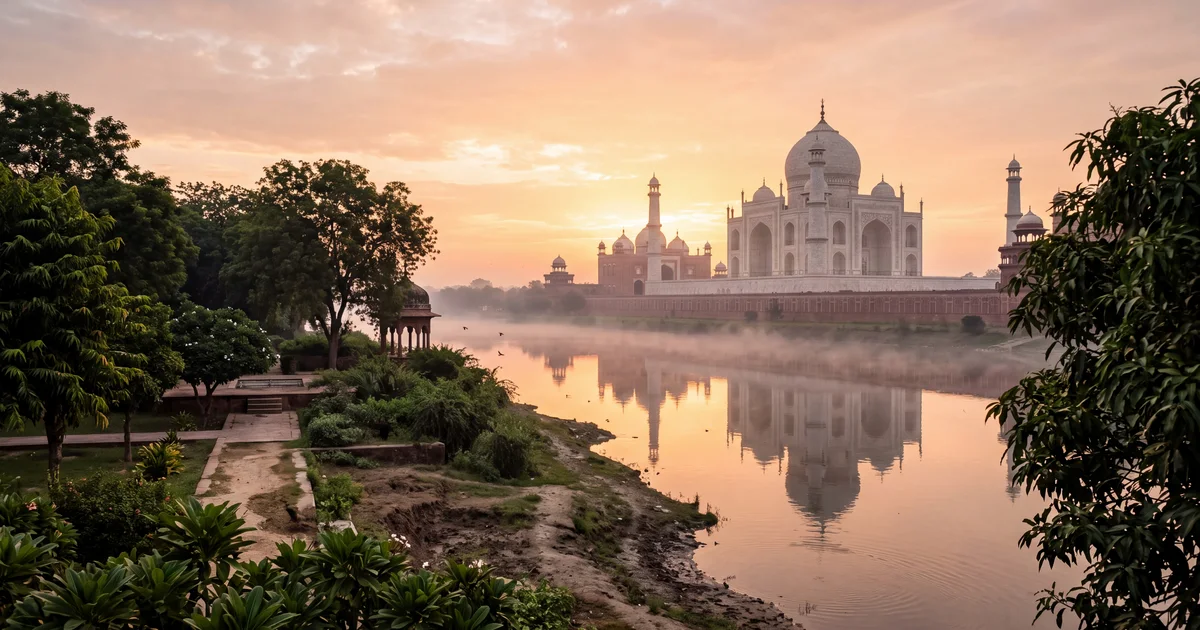
Agra has a problem that most Indian cities would love to have. Its most famous building is so well known that it overshadows everything else. The Taj Mahal pulls in 7 to 8 million visitors a year. Agra Fort, which is 2.5 km away and built by the same Mughal dynasty, gets a fraction of that footfall. Fatehpur Sikri, 37 km out, gets even less. And the old city, Kinari Bazaar, the Jama Masjid, the food, barely registers on most itineraries.
The result is a city that tourists visit for 4 hours, see one building, complain about the touts, and leave. That is a waste.
Agra has 3 UNESCO World Heritage Sites within 40 km of each other. It has Mughal architecture that rivals anything in Rajasthan. It has a street food culture centred on petha and chaat that is older than most North Indian restaurant chains. And it sits 230 km from Delhi on the Yamuna Expressway, making it one of the easiest heritage trips in the country.
This guide covers what is worth seeing, what to skip, and how to plan it properly in 2026.
TL;DR
- The Taj Mahal at sunrise is a different building than the Taj Mahal at noon. Go early.
- Agra Fort is the second must visit. Budget 2 hours minimum.
- Mehtab Bagh at sunset gives you the Taj across the Yamuna without the crowds.
- Fatehpur Sikri (37 km) needs half a day. Go in the morning when it is cooler.
- Budget: 1,500 to 3,000 per day per person depending on hotel tier and meals.
What Are the Must Visit Places in Agra?
Three buildings carry the city. Everything else is secondary.
The Taj Mahal needs no introduction, but the logistics do. Entry is 50 rupees for Indian citizens, 1,100 for foreigners (2026 prices, cash or card). The monument opens at sunrise and closes at sunset. Friday is closed for prayers. Gates open from three sides: East, West, and South. The South Gate is the main tourist entrance and the most crowded. The East Gate (Shilpgram) has shorter queues most mornings.
Sunrise is the best time. Not for the photos, though those are excellent, but because the marble changes colour. At 6 AM it carries a pale blue tone from the sky reflection. By 9 AM it turns flat white. By late afternoon, amber. The crowds at sunrise are a third of the midday rush.
One opinion: the interior of the mausoleum is worth the queue. Most tourists photograph the exterior, peek inside, and leave. The pietra dura inlay work on the interior walls uses 28 varieties of semi precious stones, including lapis lazuli from Afghanistan and turquoise from Tibet. You will not see this level of detail from outside.
Real caveat: the pollution and haze. November to January mornings often have a thick haze that does not clear until 10 AM. If your sunrise visit falls on a hazy day, come back for sunset at Mehtab Bagh instead.
Agra Fort is 2.5 km from the Taj, a 10 minute auto ride. It is a massive red sandstone fort complex that served as the main residence of the Mughal emperors until the capital shifted to Delhi in 1638. Emperor Shah Jahan spent his last 8 years imprisoned here by his son Aurangzeb, in a room with a view of the Taj Mahal. That room (Musamman Burj) is still there, and the view is still there.
The fort covers 94 acres but only about a third is open to visitors. The Diwan i Am (public audience hall), Diwan i Khas (private audience hall), Jahangir's Palace, and the Sheesh Mahal (mirror palace) are the main draws. Budget 2 hours minimum. A guide (300 to 500 rupees) adds context that plaques do not.
This is where most day trippers make their mistake. They spend 3 hours at the Taj, give Agra Fort 30 minutes, and leave thinking Agra is a one building city.
Fatehpur Sikri is 37 km southwest of Agra. Emperor Akbar built this entire city as his capital in 1571, used it for 14 years, and abandoned it because the water supply failed. The Buland Darwaza (Victory Gate) is 54 metres tall, one of the highest gateways in the world. The Panch Mahal, a five storey palatial structure with 176 columns and no two columns alike, is the most photographed building inside.
The complex is large. Walking the full circuit takes 2 to 3 hours. Go in the morning before the sun hits the sandstone, because by noon in any month except December and January, the heat radiating off the stone is punishing. Carry water. Entry is 50 rupees for Indians, 610 for foreigners.
One honest note: the touts outside Fatehpur Sikri are among the most persistent in Uttar Pradesh. Decline firmly and walk past. The official ticket counter is clearly marked.
What Is the Best Way to See the Taj Mahal at Sunset?
You cannot enter the Taj Mahal complex at sunset. The last entry is about 30 minutes before closing time. For the sunset view, go to Mehtab Bagh.
Mehtab Bagh (Moonlight Garden) sits directly across the Yamuna river from the Taj. It was built by Emperor Babur as a pleasure garden and offers a head on view of the Taj with the river in the foreground. Entry is 30 rupees for Indians, 300 for foreigners.
The sunset hour here is the best single hour you can spend in Agra after the sunrise visit. The Taj glows amber against the sky, reflected in whatever water the Yamuna holds that season. The crowd is a tenth of what you would face at the Taj itself. Photographers line up along the northern wall by 4 PM in winter, so arrive early if you want a good spot.
During monsoon months, the river swells and the reflection becomes more dramatic, but the clouds can block the sunset entirely. October and February are the most reliable months for clear sunset light.
The garden itself is worth walking through. It was restored by the ASI and has neat Mughal layouts, though the historical plantings are long gone.
What Else Is Worth Seeing in Agra City?
Beyond the three big names, Agra has a handful of places that reward the curious.
Itimad ud Daulah (sometimes called the Baby Taj) is a Mughal mausoleum on the east bank of the Yamuna, built between 1622 and 1628. It predates the Taj Mahal by 6 years and is considered its architectural prototype. The white marble and pietra dura inlay here are finer and more delicate than the Taj, though the scale is much smaller. Visitor numbers are low. On a weekday morning you might have the courtyard nearly to yourself. Entry is 30 rupees for Indians, 210 for foreigners.
Kinari Bazaar is the old market district near the Jama Masjid. Narrow lanes, shops selling everything from marble handicrafts to zardozi embroidery. The petha shops here (Panchhi, Bhagat Halwai) are where locals buy petha, not the highway outlets. Try the angoori petha (small, translucent) and the paan petha if you want something different from the standard white block.
Jama Masjid sits at the heart of the old city and is one of the largest mosques built by Shah Jahan. It is less polished than Delhi's Jama Masjid but more atmospheric. The courtyard is usually quiet. No entry fee. Shoes off at the gate.
Tomb of Akbar at Sikandra, 10 km north, is where the emperor who built Fatehpur Sikri is buried. The architecture is unusual: a four storey sandstone pyramid topped by a white marble courtyard open to the sky. Deer and monkeys roam the surrounding gardens. It gets far fewer visitors than Agra Fort and is a peaceful stop on the way to or from Delhi.
How to Plan an Agra Trip from Delhi
The Delhi to Agra corridor is one of the busiest tourist routes in India, and the logistics are simple.
By train: The Gatimaan Express (train 12050) departs Hazrat Nizamuddin at 8:10 AM and reaches Agra Cantt at 9:50 AM. The return Gatimaan departs Agra at 5:50 PM. This is the fastest option at 1 hour 40 minutes. Book early because Gatimaan sells out. The Shatabdi (train 12002) is the backup at about 2 hours.
By road: The Yamuna Expressway is a 165 km toll road from Noida to Agra, well maintained and fast. Total drive time is 3 to 4 hours depending on Noida traffic. Tolls add up to about 800 rupees round trip for a car.
Where to stay: The Oberoi Amarvilas is the famous luxury option with a Taj view from every room (starting at 35,000 per night). Mid range options like Crystal Sarovar or ITC Mughal offer clean rooms for 3,000 to 6,000. Budget travellers find decent guesthouses in the Taj Ganj area for 800 to 1,500 a night. Taj Ganj is walkable to the South Gate.
Day tripping from Delhi is popular but limiting. You see the Taj, maybe Agra Fort, and rush back. An overnight stay lets you catch both sunrise and sunset, add Fatehpur Sikri, and eat in the old city.
For group departures that handle the Delhi to Agra logistics and combine Agra with Jaipur and other destinations, check current options. From Delhi the route connects easily to the Golden Triangle circuit.
Practical Tips for 2026
Carry an ID proof. You need it at the Taj Mahal entrance for the Indian citizen ticket rate. Foreign nationals need a passport.
Drones are banned within 500 metres of the Taj and Agra Fort. Do not attempt it; the security response is immediate and the fines are steep.
The Taj Mahal has a strict no food, no tripod, and no selfie stick policy. Bags larger than a standard daypack go to a locker at the gate. Water bottles are allowed.
Agra's street food is worth exploring. Bedai with aloo sabzi for breakfast (try vendors near Rawatpara), chaat from the Sadar Bazaar stalls, and petha from Kinari Bazaar. Mughlai food is the dinner standard, but be selective. The restaurants near the Taj tourist strip charge tourist prices for average food. Locals eat at Pinch of Spice or Dasaprakash for south Indian.
Summer (April to June) is brutal. Temperatures hit 47°C. If you must visit in summer, plan all outdoor sightseeing before 9 AM and after 4 PM. Carry electrolyte sachets.
If you are planning from Bangalore, the easiest route is a flight to Delhi plus the Gatimaan Express. Browse trip options to compare group packages that cover the Golden Triangle route.
Frequently asked questions
- How many days are enough for Agra?
- One full day covers the Taj Mahal, Agra Fort, and either Mehtab Bagh or Itimad ud Daulah. Two days lets you add Fatehpur Sikri (37 km away) and explore the old city markets without rushing. Day trippers from Delhi often regret not staying overnight because the Taj at sunrise and sunset are very different experiences.
- What is the best time to visit Agra?
- October to March is ideal. Temperatures range from 8°C to 25°C, and the air quality improves noticeably compared to summer. November and February see the lowest haze. April to June hits 40°C to 47°C, and the marble at the Taj becomes too hot to walk on barefoot by 10 AM. Monsoon (July to September) brings humidity but fewer crowds.
- Is the Taj Mahal worth the hype?
- Yes. Photos do not capture the scale or the way the marble changes colour through the day. At sunrise it looks pale blue. By mid morning it turns white. At sunset it goes amber. The inlay work (pietra dura) on the interior walls uses 28 types of semi precious stones. Even repeat visitors notice new details each time.
- What should I skip in Agra?
- The crystal world and snow world attractions near Fatehpur Sikri Road are tourist traps. The dolphin water park is poorly maintained. Most guides will push you toward marble inlay workshops that double as showrooms; the craftsmanship is real but the prices are inflated by 3x to 5x. Buy inlay work from the old city shops near Kinari Bazaar instead.
- Is Agra safe for solo travellers?
- Agra is safe for solo travel with normal urban caution. The tourist areas around the Taj and Agra Fort are well policed. Touts and aggressive auto drivers are the main nuisance, not safety threats. Use Ola or Uber for rides (both work here). Solo women should avoid empty lanes after dark in the old city, same as any mid sized Indian city.
- How do I get to Agra from Delhi?
- The Gatimaan Express is the fastest train at 1 hour 40 minutes, departing Hazrat Nizamuddin at 8:10 AM. The Shatabdi takes about 2 hours. By road via the Yamuna Expressway it is 230 km (3 to 4 hours depending on traffic). Flights exist but make no sense given the distance. Most Delhi visitors do a day trip or one night stay.