Parashar Lake Trek (2026): The Floating Island Temple and How to Get There
Parashar Lake trek guide: route from Mandi, the floating island temple, best months, difficulty level and group departures from Delhi.
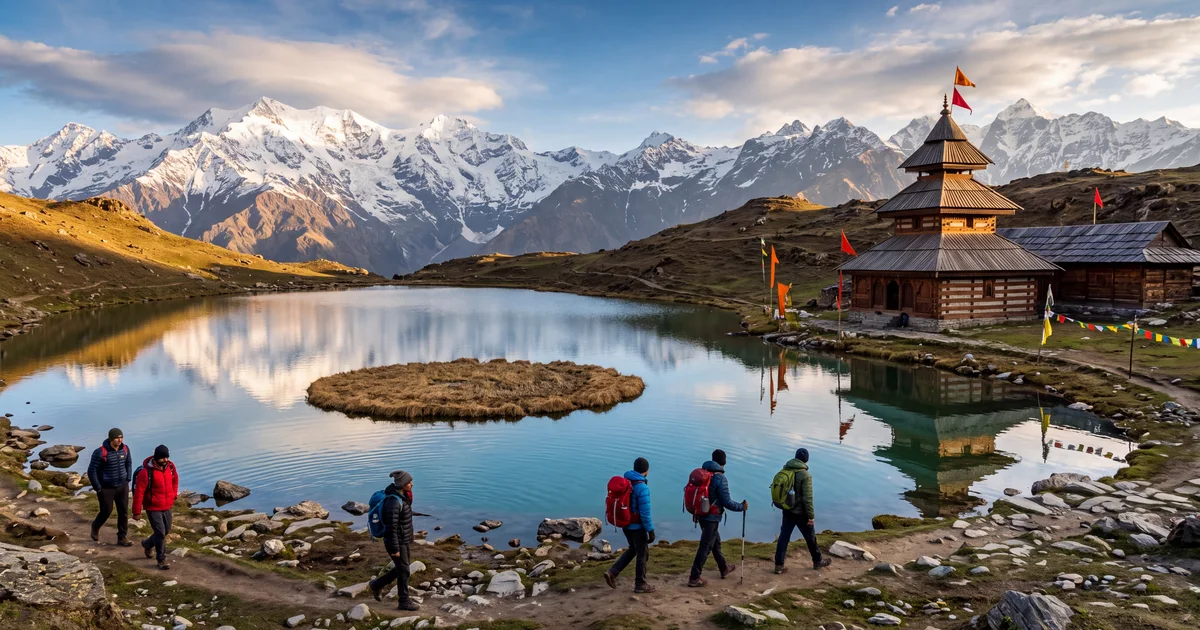
Parashar Lake sits at 2,730 metres in the Mandi district of Himachal Pradesh, and it holds one oddity that nobody fully explains: a small island of earth floats on its surface, drifting from one shore to another with the wind. A three storey pagoda temple, built sometime between the 13th and 14th century, stands at the shore. The lake, the island, the temple, and the quiet cedar forest around them make this one of the strangest places in the lower Himalayas.
The trek to reach it from Baggi village is short. Seven kilometres, roughly 700 metres of climbing, three to four hours at a steady pace. That accessibility is part of why Parashar Lake has gone from a local pilgrimage site to a weekend favourite for people driving up from Delhi and Chandigarh.
TL;DR
- Trek distance: 7 km from Baggi village, 3 to 4 hours one way
- Elevation: 2,730 metres (start at about 2,000 metres in Baggi)
- Difficulty: easy to moderate, no technical sections
- Distance from Delhi: 430 km to Mandi, then 30 km to Baggi (trailhead)
- Best months: March to June and September to November
- The floating island is real, moves with the wind, and nobody has satisfactorily explained it
Why Parashar Lake keeps appearing on every Himachal list
Two reasons. First, the effort to reward ratio is unusually good. Three hours of walking through deodar forest gets you a high altitude lake with a medieval temple and a geological curiosity, then you can be back in Mandi for dinner. Most Himalayan lakes require two to four days of trekking to reach. This one requires an afternoon.
Second, the temple architecture is unlike anything else in the region. The three storey pagoda is built entirely without nails, using interlocking wood joints and stone slabs. The carved panels on the lower storey depict scenes that art historians date to the 13th century. Locals attribute the temple to Rishi Parashar, who they say meditated here. The craftsmanship suggests a wealthy patron, though records are sparse.
One caveat: that accessibility has a cost. On May and June weekends, the lake clearing hosts 30 to 50 tents and the atmosphere shifts from contemplative to festival. If solitude matters to you, go on a Tuesday in October.
How to reach Parashar Lake from Delhi
The journey breaks into two parts: getting to Mandi, and getting from Mandi to the trailhead.
Delhi to Mandi (430 km): The most common option is an overnight Volvo bus from ISBT Kashmere Gate. HRTC and private operators run services daily, departing between 7pm and 10pm. Journey time is 10 to 12 hours. You arrive in Mandi by morning.
Driving takes about 9 to 10 hours via NH44 through Chandigarh and then NH21 along the Beas valley. The road is in good condition throughout, four lanes until Bilaspur and then two lane highway into Mandi.
Mandi to Baggi village (30 km): From Mandi town, a narrow mountain road climbs to Baggi village. Taxis cost around 1,000 to 1,500 rupees one way. The road is paved but narrow with hairpin bends. Budget 60 to 90 minutes. No public bus service runs to Baggi.
Baggi to Parashar Lake (7 km trek): The trail begins at the upper end of Baggi village, past the last houses. Follow the stone path into the forest. It is clearly marked and impossible to lose.
My opinion on logistics: if you are coming from Delhi for a weekend, leave Friday night by bus, trek Saturday, camp at the lake, descend Sunday morning, and catch an afternoon bus back. Trying to do it as a single day from Delhi is technically possible but exhausting.
How difficult is the Parashar Lake trek?
The trail is wide, mostly shaded by deodar and oak forest, and gains elevation at a steady but manageable gradient. There are no exposed ridges, no scrambles, no river crossings.
The first 4 km rise gently through dense forest. The path is a mix of packed earth and stone steps. In monsoon, the earth sections get muddy but not dangerously so.
The final 3 km steepen noticeably as you exit the tree line and cross open meadows. Here the wind hits and the views open up toward the Dhauladhar range. The last 20 minutes before the lake are the steepest pitch of the day, but it is over quickly.
Total elevation gain: about 700 metres over 7 km. Most people with basic fitness and walking shoes manage this in three to four hours without difficulty. Children above eight years old do it regularly.
One honest note: the descent is easy enough that people rush it, and the loose gravel on the meadow sections catches them. Two trekkers I spoke with last year twisted ankles on the way down, not up. Watch your footing on the open stretches.
When to visit Parashar Lake
March to June (spring and early summer): Best overall window. Snow melts off the trail by mid March most years. Rhododendrons bloom in April. May and June bring warm days (15 to 22 degrees Celsius at the lake) and clear mornings. Weekends are crowded.
July and August (monsoon): Heavy rainfall. The forest trail becomes a mud channel. Leeches are active. Cloud cover means you may not see the lake clearly. Skip these months unless you specifically enjoy monsoon trekking.
September to November (post monsoon): The hidden gem window. Skies clear, crowds vanish after Dussehra, and the forest turns gold. October particularly delivers: warm enough to camp comfortably, dry trail, and visibility that extends to the snow peaks.
December to February (winter): Snow covers the lake and trail from late December. The lake partially freezes. This is beautiful but demands proper winter gear, gaiters, and crampons for the icy final stretch. The road to Baggi closes after heavy snowfall. Only go if you have winter trekking experience or are with a group that handles logistics.
The caveat people miss: mornings at 2,730 metres are cold year round. Even in May, temperatures at the lake drop to 5 to 8 degrees Celsius before sunrise. Pack a warm layer regardless of when you go.
The floating island and the temple
The island measures roughly 15 to 20 metres across. It is a mat of vegetation, soil, and organic material that sits on the lake surface and moves with wind. Geologists have proposed that it is a peat raft, a section of the original lake bed that became buoyant as trapped gases accumulated underneath. Locals have a simpler explanation: Rishi Parashar created it.
Whatever the cause, the island has been documented moving for at least a century. It does not stay in one position, and its location changes between visits.
The pagoda temple is the other draw. Built in the characteristic Himachali style with tiered wooden roofs and carved stone base, it sits about 40 metres from the lake shore. The lower floor houses a shrine to Rishi Parashar. The woodwork on the upper storeys shows detailed geometric and floral carvings that art historians compare to temples in Kullu and Mandi from the same era.
The temple compound includes a smaller shrine and the forest rest house (bookable through the HP Forest Department). A caretaker lives there year round and can provide basic information about the site.
What to pack for Parashar Lake
The trek is short enough that you do not need expedition gear. But altitude and weather change the basics:
Footwear: Shoes with ankle support and grip. The forest path is rooty and the meadow sections are gravelly. Avoid sandals entirely.
Water and food: Carry at least 1.5 litres. There is no reliable water source between Baggi and the lake. A small shop near the lake sells basic snacks in peak season but do not count on it.
Warmth: A down jacket or thick fleece for mornings and evenings, even in summer. At 2,730 metres, temperatures swing 15 degrees between noon sun and pre dawn.
Rain gear: If going between June and September, a poncho or rain jacket is not optional. Rain arrives fast and without much warning in this belt.
If camping, add a sleeping bag rated to 0 degrees Celsius (winter) or 5 degrees Celsius (summer), plus a mat. Ground temperatures drop faster than air temperatures at this altitude.
Group treks to Parashar Lake from Delhi
Multiple operators run weekend group treks to Parashar Lake, typically departing Delhi on Friday night and returning Sunday night. The standard package includes transport, camping gear, meals, and a guide.
What differentiates a good group trip here:
- Transport quality matters on the 10 hour overnight run. Ask whether it is a Volvo sleeper or a tempo traveller. The difference between sleeping and not sleeping shapes your entire trek day.
- Some groups drive all the way to the lake on the dirt road instead of trekking. If you want the trek experience, confirm the itinerary includes the walk from Baggi.
- Weekend trips to Parashar Lake fill fast in April, May, and October. Booking two to three weeks ahead is normal in those months.
Browse current departures on /trips or filter by treks from Delhi for operators running Himachal weekend groups. The Himalayan treks collection also lists fixed departure options.
Frequently asked questions
- How difficult is the Parashar Lake trek?
- Easy to moderate. The trek from Baggi village covers about 7 km with 700 metres of elevation gain through forests. Most reasonably fit people, including beginners, complete it in three to four hours. The trail is well marked and there are no exposed or technical sections.
- How do I reach Parashar Lake from Delhi?
- Drive or bus to Mandi in Himachal Pradesh (about 430 km, 10 to 12 hours). From Mandi, drive 30 km to Baggi village. The trek starts from Baggi. Alternatively, take an overnight Volvo to Mandi from ISBT Kashmere Gate, then a local taxi to Baggi.
- What is the floating island in Parashar Lake?
- The lake contains a small floating patch of land that moves position with wind and season. Locals consider it sacred. The island is a mat of organic matter and sediment, roughly 15 to 20 metres across, and has been documented moving across the lake surface for centuries.
- What is the best time to visit Parashar Lake?
- March to June for clear views and comfortable temperatures, and September to November for post monsoon colours. December to February offers snow but requires proper winter gear and caution on the frozen trail. July and August bring heavy rain and leeches.
- Can I drive to Parashar Lake instead of trekking?
- A rough dirt road from Baggi reaches close to the lake, and some SUVs and bikes make it during dry months. However, the road is often damaged in monsoon and closed after snowfall. The trek is more reliable and takes only three to four hours.
- Is camping allowed at Parashar Lake?
- Yes. Flat ground near the lake accommodates tents, and several group operators run camping trips. A forest rest house sits near the temple. In peak season (weekends in May and June), the clearing fills up by late afternoon, so arrive early or book with a group that reserves spots.